
The Best Car Cover for a Minivan in an Area With Frequent Hailstorms
Published
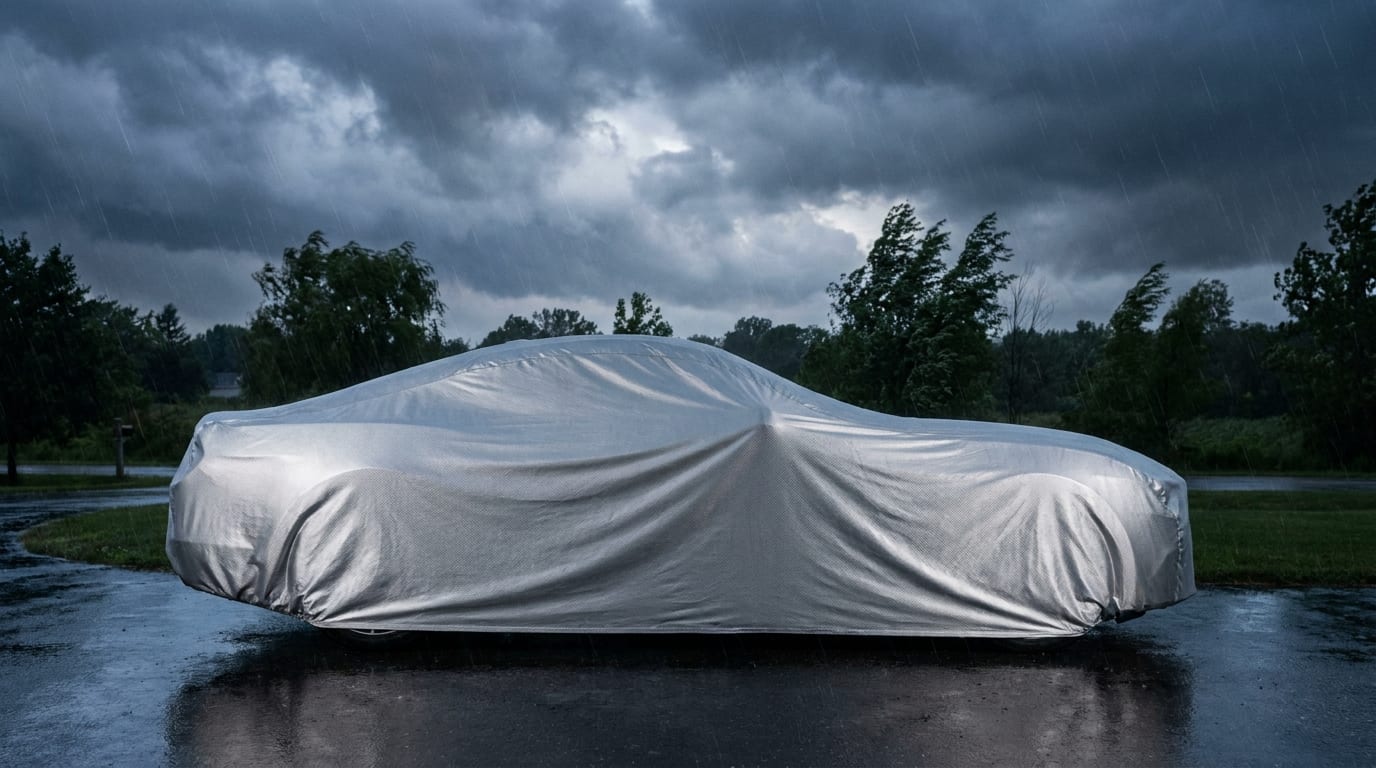
Quick Answer: What to Buy for Minivan Hail Protection
What's the best car cover for a minivan in an area with frequent hailstorms? A heavy-duty, multi-layer padded outdoor cover with at least 1/4-inch foam or quilted lining, built to a custom or semi-custom fit for your specific minivan model, with reinforced elastic hems and tie-down straps to keep it anchored. That combination actually absorbs impact instead of just shedding water off the roof.
Here's the distinction a lot of owners miss: a standard lightweight outdoor cover handles rain and UV fine, but it won't meaningfully reduce hail denting. Water-resistant and hail-resistant are not the same spec, even though they get lumped together in casual shopping. A thin single layer of fabric just transfers the impact straight through to your paint and sheet metal.
Padding adds cost and weight, so this isn't a blanket upgrade every owner needs. If you're in Nebraska, Texas, Colorado, or anywhere hail shows up most seasons, it's worth it. If you get one freak storm every few years, a standard outdoor car cover is probably enough. Below, a comparison table of the three cover tiers, then a closer look at what makes padding actually work, the fit issues unique to minivans, and how to get the cover on and secured before a storm rolls in.
Comparison: Cover Types for Hail-Prone Areas
Not all outdoor covers are built for the same job. Here's how the three main tiers stack up for minivan owners dealing with hail risk.
| Tier | Material / Layers | Hail Performance | Fit | Best For | Relative Price |
|---|---|---|---|---|---|
| Standard Outdoor Cover | Single-layer woven fabric | Minimal impact absorption | Universal or semi-custom | Light rain, sun, dust | $ |
| Weatherproof / All-Season Cover | Multi-layer laminate | Moderate protection | Semi-custom | Mixed seasonal weather | $$ |
| Padded Hail-Protection Cover | Quilted multi-layer with foam padding | Rated for small-to-medium hail impact | Custom-fit by make/model | Regions with regular hailstorms | $$$ |
The jump from the middle tier to the padded tier is the one that matters most here. A waterproof car cover in the middle tier will keep your minivan dry through a downpour, but hail isn't water, it's a blunt object falling at speed. You need cushioning, not just a barrier.
What Actually Makes a Cover "Hail-Resistant"
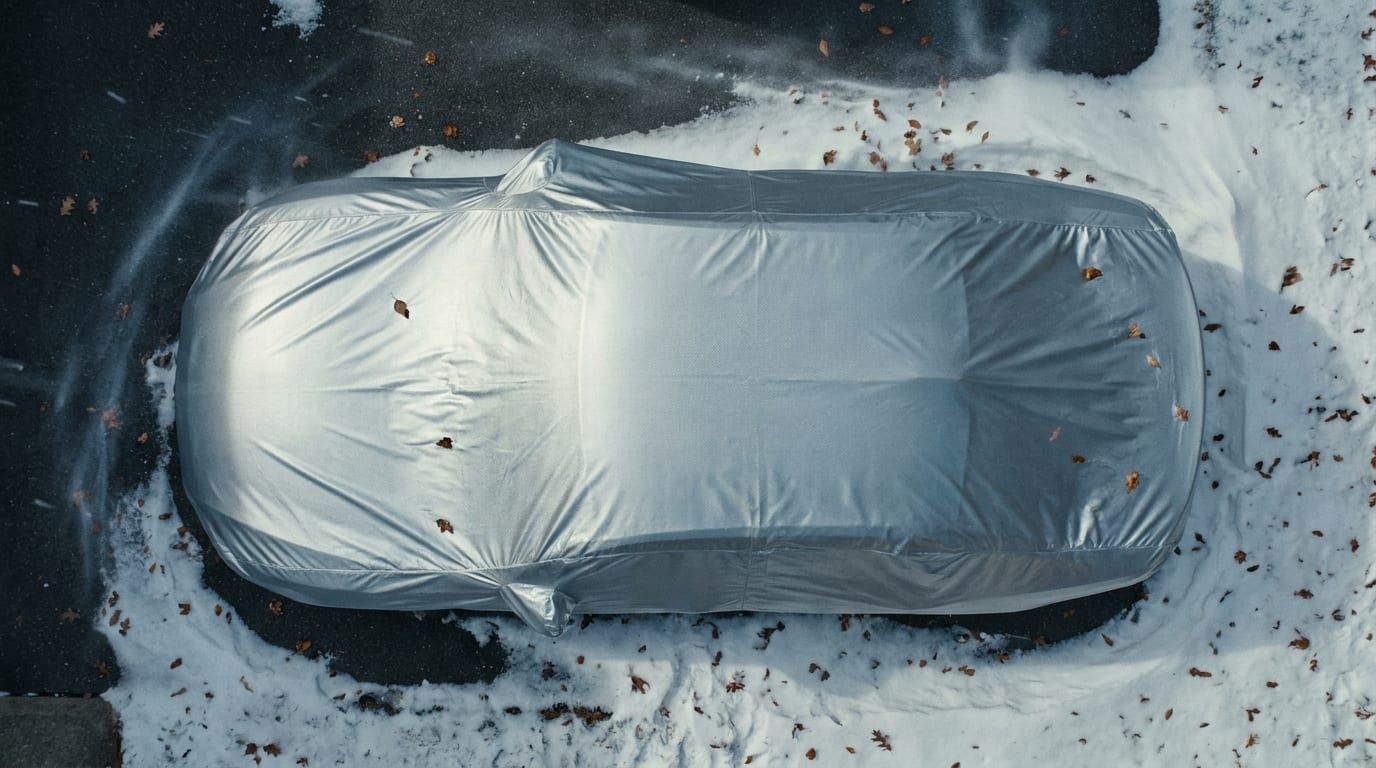
Padding thickness and layer count are the two variables doing the actual work. When hail hits a padded cover, the foam or quilted fill compresses and spreads the impact energy out instead of letting it punch straight through to the panel underneath. A single layer of fabric can't do that. It just sits there as a windbreak.
Quilted, channel-stitched padding tends to perform more consistently than loose foam batting stuffed between layers. The stitching keeps the fill distributed evenly across the roof and hood instead of letting it bunch up in spots and leave thin patches elsewhere. Thin patches are exactly where dents happen.
Think about where a minivan actually takes hail. The roof is large and flat, the hood is wide and mostly horizontal, both of these catch hail nearly straight-on. The sides get hit at more of an angle and tend to see less direct force. So when you're comparing covers, pay closer attention to how much padding is concentrated over the roof and hood panels than you do to the side coverage.
One honest caveat: no cover eliminates hail risk entirely. In a severe storm with large hail and high wind, you're looking at damage reduction, not a guarantee of zero marks. Anyone selling you "dent-proof" is overselling it. For a deeper look at padding specs, layer ratings, and what to check before buying, the hail car cover guide goes into more material detail than makes sense here.
Minivan-Specific Fit Factors That Affect Hail Protection
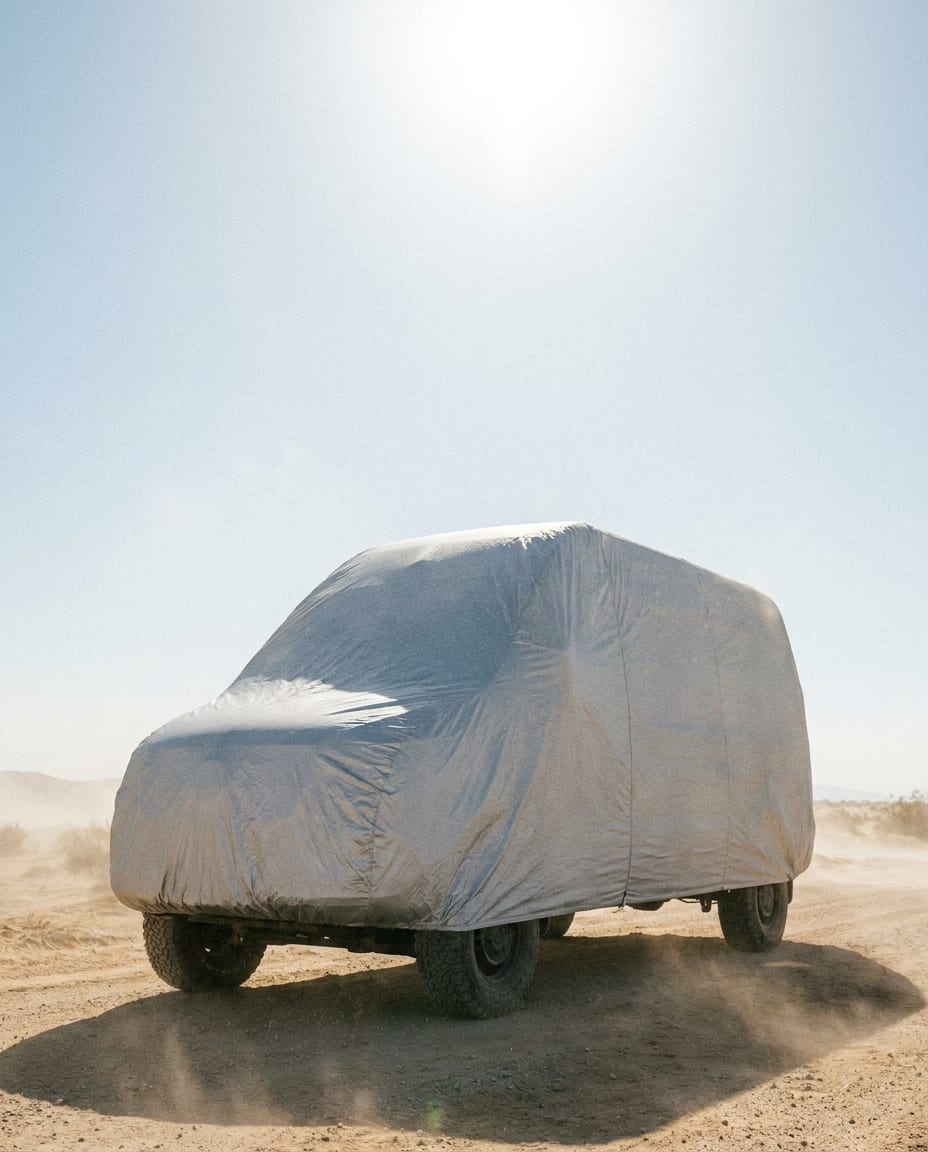
A loose cover is a liability in hail, not just an inconvenience. Wind gusts (which show up with most hailstorms) will catch slack fabric and lift it, and when that happens the padding shifts away from the roof right when you need it pressed against the panel. A cover that flaps is a cover that's failing at its one job.
Minivans complicate fit in ways sedans and even SUVs don't deal with. Longer wheelbase, a taller roofline, and sliding side doors that need clearance for daily use all mean a generic "van" sizing chart is going to leave gaps somewhere. Those gaps are where wind gets in and starts the flapping problem.
So what's the best car cover for a minivan in an area with frequent hailstorms, fit-wise? One sized to your actual make and model, not a generic van category. A custom-fit car cover built around your minivan's dimensions keeps the padding snug against the roof and hood instead of billowing. If you're not sure what you're working with, run your vehicle through a sizing guide before you buy, because sizing wrong is the single most common reason a hail cover underperforms.
Don't skip the small details either. Mirror pockets and antenna cutouts matter more than they seem. A cover that doesn't account for your mirrors will flap right at that point, and that flapping becomes a stress point, and stress points are where seams tear during a wind-driven storm. If you're shopping by brand, Honda, Toyota, Chrysler, Dodge, and Kia minivans all have dedicated cover pages built to each model's actual shape, which solves most of this automatically.
Installing and Securing a Cover Before a Storm Hits
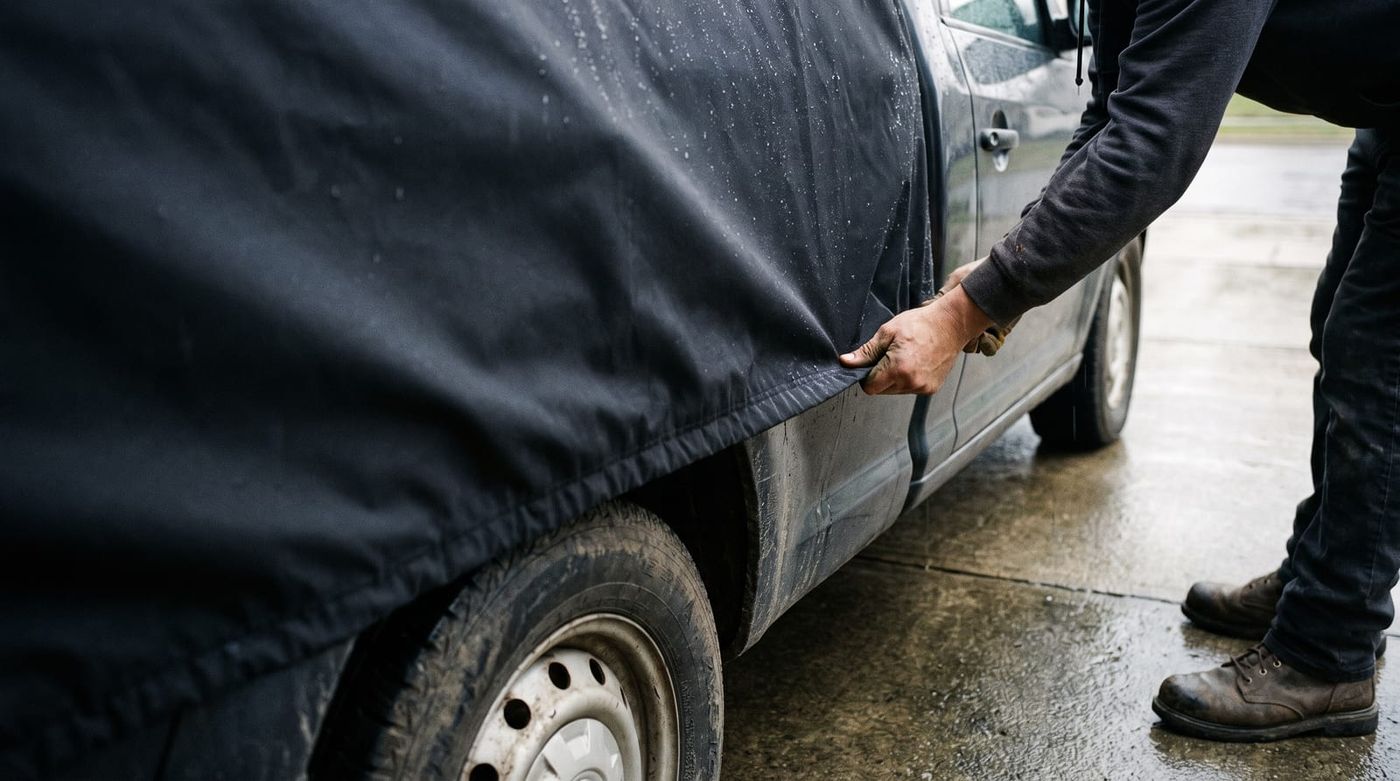
Order of operations matters here. Clean and dry the vehicle first, since dirt or grit trapped under the cover can scratch the paint while the cover shifts in wind. Position the cover with the padded sections centered over the roof and hood, where the impact protection actually needs to live. Then secure the elastic hem around the lower edge. Then add the straps. Skipping that last step is where most people go wrong.
Straps matter more in a hailstorm than they do on a calm, dry day. Hail usually comes with real wind, sometimes a lot of it, and a cover that isn't anchored can get ripped partway or entirely off the vehicle mid-storm. That's the worst outcome: a cover that was on the car for the first ten minutes but gone by the time the hail actually starts falling. A cable lock keeps the cover from being pulled off from underneath, and a gust strap running cross-body over the vehicle adds another layer of hold against wind lift.
A short pre-storm checklist, if you're watching a system move in:
- Check weather alerts for hail watches or warnings in your area
- Move the minivan under a carport or garage if you have one, even with the cover on
- Re-check strap tension once the cover is fully on, not just when you first threw it over
It takes a few extra minutes. Compare that to a bare roof and hood taking direct hits, and it's an easy trade.
After the Storm: Inspecting Cover and Vehicle
Once the storm passes, check the cover itself before you check the van. Look for tears, spots where the padding feels flattened or compressed compared to the rest of the cover, and any strap hardware that got stressed or snapped. A cover with a flattened section won't offer the same protection next time, even if it looks fine from a distance.
Then look at the minivan. Run your hand over the roof, hood, and mirror housings, since very large hail can still leave faint marks even through a padded cover. It's rare, but worth checking, especially after a storm with golf-ball-sized hail or bigger.
If debris collected on the cover during the storm, clean it off before you fold it up or reuse it. Grit sitting on the surface will scratch the paint the next time the cover shifts or gets pulled tight. For context on just how damaging hail events can get in the US, this rundown of major historical hailstorms is a good reminder of why this routine is worth keeping up every season, not just once.
Bottom Line: Choosing and Buying the Right Cover
If you live somewhere hail shows up regularly, prioritize padded, quilted multi-layer construction and a snug, model-specific fit over price or how light the cover packs down. That's the actual answer to what's the best car cover for a minivan in an area with frequent hailstorms, and everything else is a secondary consideration.
Before you buy, run through this:
- Confirm the padding thickness (look for 1/4-inch or more over the roof and hood)
- Confirm the fit is matched to your minivan's make and model, not a generic van size
- Confirm the cover supports gust straps or a cable lock for wind security
- Confirm what the warranty actually covers, since padded covers take more wear over a storm season
A single bad hailstorm can cost more in paint and dent repair than a quality cover does outright. Worth keeping that math in mind before you talk yourself into the cheaper option. If you want help narrowing it down, browse our cover guides or subscribe for more storm-prep and vehicle care advice as the seasons change.






