


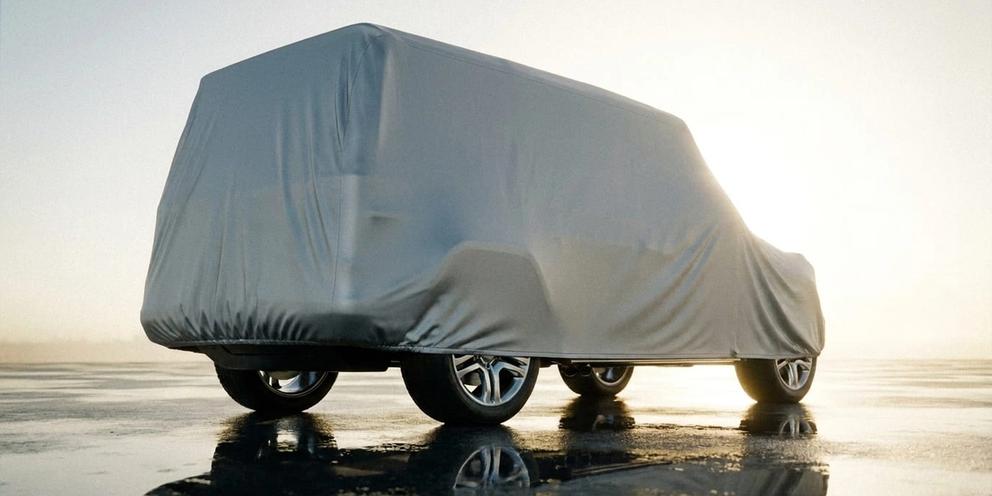
Waterproof Car Cover for GMC Yukon: Climate-Specific Protection Guide
Why Your GMC Yukon Needs Climate-Matched Waterproof Protection
A Yukon isn't a compact sedan. That roof and hood are basically two flat lakes waiting to happen. Rain pools instead of sheeting off the way it does on smaller, more sloped vehicles, and snow just sits there, piling up ounce by ounce until it's pounds. If you park outside, that surface area works against you.
And it's rarely just rain. Full-size SUVs left outside deal with a pile-up of damage sources at once: water intrusion around seams, UV bleaching the clear coat, sap dripping from whatever tree you're parked under, bird droppings etching into paint if they sit too long. A waterproof car cover for GMC Yukon owners has to handle all of that, not just keep the interior dry during a storm.
Here's the part people skip past: "waterproof" doesn't mean the same thing in every zip code. A Yukon sitting in a Phoenix driveway is fighting UV degradation and heat, not standing water. One in Seattle needs a cover that sheds constant drizzle without trapping moisture underneath. A Minneapolis owner is thinking about snow load and a fabric that won't crack when it's 10 degrees out. Same vehicle, three completely different problems.
So before you buy anything, it helps to know which of those problems is actually yours. That's what this guide is for: narrowing down which waterproof cover specs matter for your climate, so you're not paying for snow-load protection in Arizona or missing UV resistance in Texas.
Matching Cover Protection to Your Climate
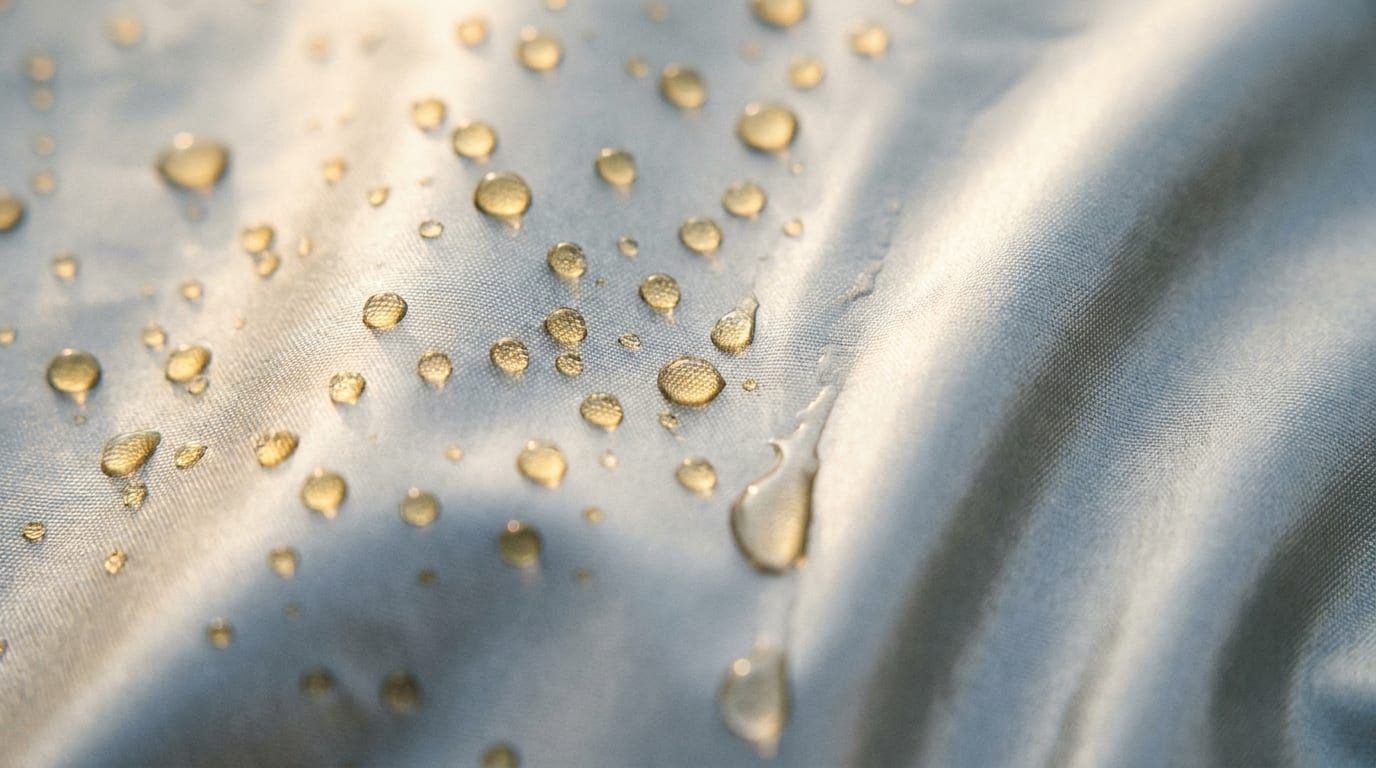
Rain-heavy or coastal climates. Look for a fully seam-sealed waterproof shell, not just a water-resistant coating sprayed on top. On a Yukon, water tends to collect right around the roof rack mounts, so drainage matters as much as the seal itself. A cover that channels water off the sides instead of letting it sit against the rack hardware will hold up a lot longer.
Snow and freeze climates. Two things matter here: snow load rating and cold flexibility. A cover that turns stiff and brittle at 15 degrees will crack at the folds the first time you pull it off. Check that the fabric is rated for winter use specifically, not just labeled "all-weather."
High-UV and desert climates. Waterproofing alone won't save your Yukon's paint in Phoenix or Vegas. You need a cover with a UV-resistant outer layer too, because sun exposure through the windshield fades dash plastics and cracks trim even when it never rains. Think of waterproofing and UV resistance as two separate jobs that happen to live on the same cover.
Humid or coastal salt-air climates. This is where breathability actually earns its keep. A cover that's fully waterproof but doesn't breathe traps moisture underneath, and that moisture turns into mildew and, eventually, rust creeping in around trim and undercarriage-adjacent metal. You want a fabric that blocks rain from getting in but lets vapor escape.
Where you park matters too. A Yukon under a carport needs less waterproofing than one sitting fully exposed on a driveway. A detached garage with occasional outdoor trips is a different case entirely from full-time street parking. Before you buy, be honest about how exposed the vehicle actually is; it changes which spec should be your priority. For a deeper look at what outdoor exposure does to a cover over time, this guide to outdoor car cover use is worth reading.
What Actually Makes a Cover Waterproof (vs. Just Water-Resistant)
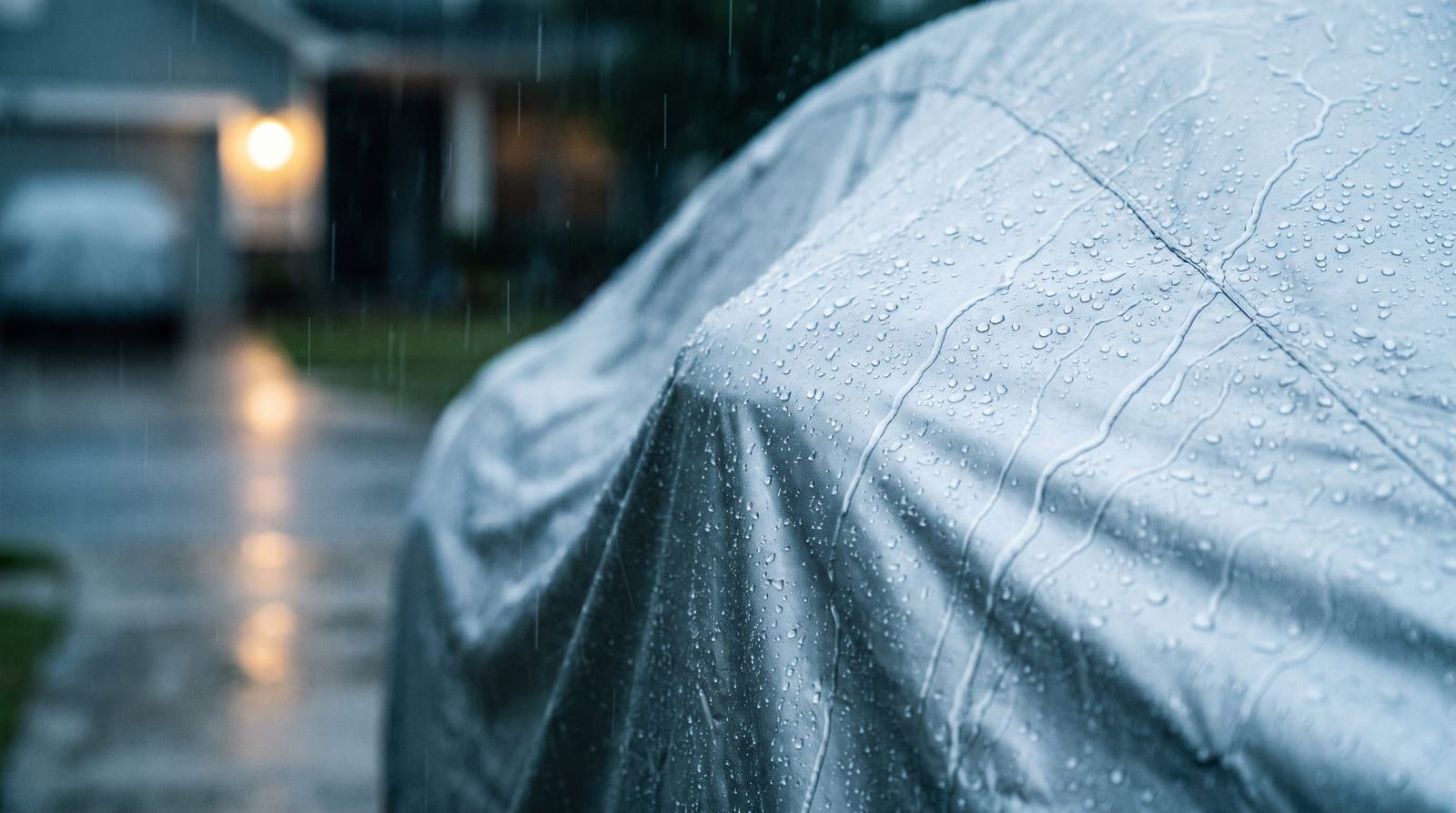
This distinction gets glossed over in most product listings, and it's the one that actually matters. Water-resistant fabrics have a coating applied to the surface. That coating wears down with UV exposure, washing, and time, until the fabric is just... fabric. True waterproof covers use laminated or multi-layer construction where the barrier is built into the material itself, not sprayed on top.
Seams are where most "waterproof" covers actually fail. You can have the best fabric on the market, but if the seams are just stitched together with no tape or sealant, water finds that needle hole every time. Double-stitched and taped seams are the detail that separates a cover that survives a real storm from one that leaks along every panel line.
There's a tradeoff to be aware of, too: a cover that's 100% waterproof but not breathable can trap condensation against the paint. Ironically, that means an aggressively "waterproof" cover with no breathability can cause more moisture damage than a well-designed water-resistant one. For more on how fabric structure affects this balance, this breakdown of waterproof fabric types covers it in more depth.
Before buying, check three things on the product page: how many fabric layers it has, whether the seams are taped or just stitched, and where the grommets sit for drainage and tie-downs. If a listing doesn't mention any of these, that's usually because the answer isn't great. The waterproof car cover guide walks through how to read these specs before you commit to one.
Getting the Right Fit for a GMC Yukon
Universal covers fail on a Yukon for a simple reason: the body has features a generic pattern doesn't account for. Roof rack rails, running boards, and the rear spare or tailgate clearance all change the shape the cover needs to hug. A cover cut for a generic "large SUV" will bunch up at the rack and gap at the tailgate, and every gap is a place water gets in.
Semi-custom covers get you closer, but a true custom-fit cover for the Yukon's exact trim and body year is where waterproof performance actually holds up long-term. Here's why: a loose, universal-fit cover flaps in the wind. That flapping isn't just annoying, it's mechanical stress on the seams, and stressed seams are exactly where "waterproof" stops being true. If you're comparing custom-fit car covers against a cheaper universal option, the fit is really what you're paying for, not just the label.
Mirror pockets and antenna cutouts sound minor, but they're common leak points on a Yukon specifically because of where the mirrors sit relative to the roofline. A cover without a properly shaped mirror pocket either doesn't cover the mirror at all or creates a gap right at the A-pillar seam.
Then there's the hem system. Elastic hems combined with a cable-and-strap cinch keep the cover pulled tight against the rocker panels in wind-driven rain. Without that tension, wind pushes rain sideways up under the hem, and no amount of fabric waterproofing matters once water's getting in from below. If you're not sure what size or fit category your Yukon needs, this sizing guide is a fast way to check before ordering, and GMC's cover lineup is worth a look for fit options built around the Yukon's actual dimensions.
Features Worth Paying For Beyond Waterproofing
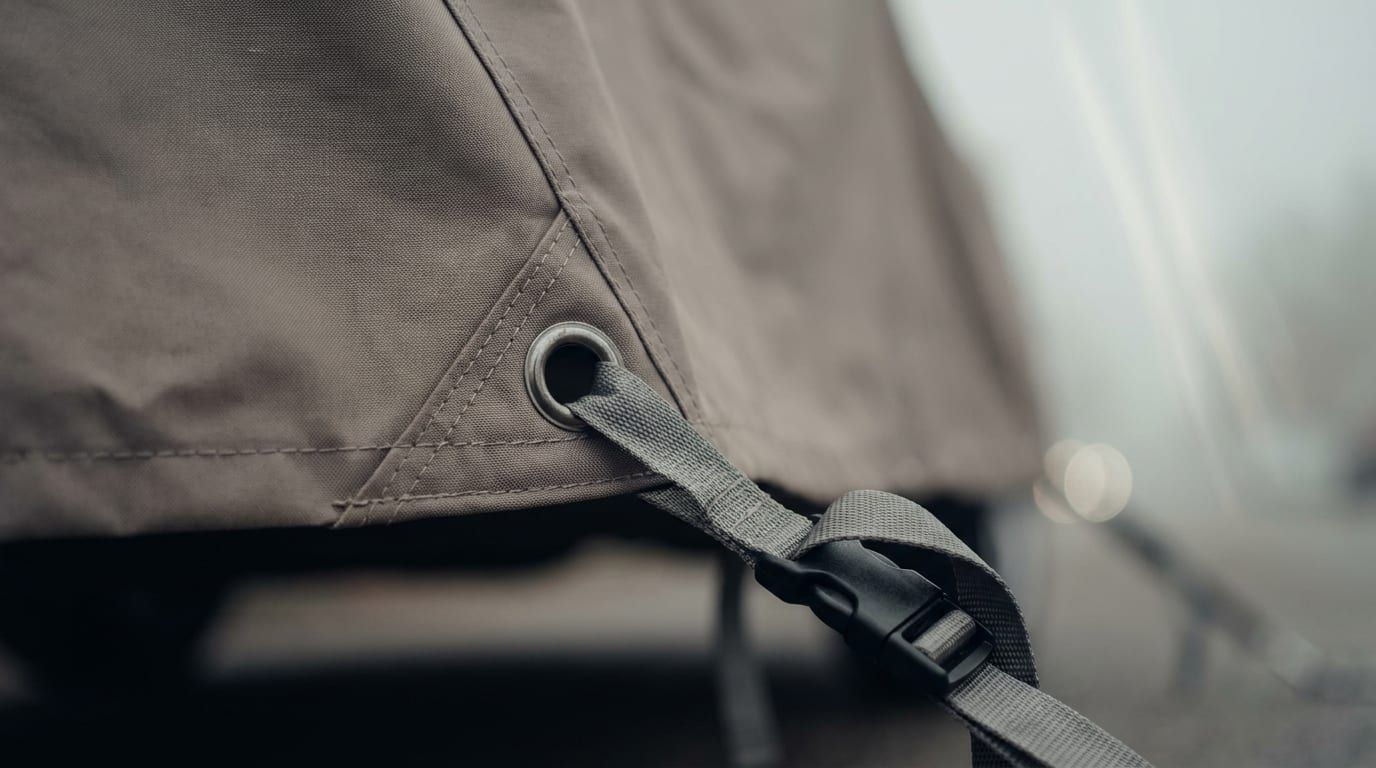
Waterproofing gets you dry. It doesn't get you a cover that stays put. Wind straps, sometimes called gust straps, are what keep the cover from lifting in a storm and flapping open, which exposes the whole hood and windshield to driving rain right when you need protection most. If you've ever seen a cover half-blown off a vehicle after a windy night, that's a missing or unused gust strap.
Reinforced grommets matter for the same reason. They're the attachment points for tie-downs, and in high-wind regions, they're what keeps the entire cover system anchored instead of relying on the hem alone. Cheap grommets tear out under repeated stress, usually right when you need them most.
A soft or fleece lining on the underside isn't about waterproofing at all, it's about paint protection. A Yukon parked outside long-term with a stiff-lined cover will develop fine scratching from repeated wind movement against the clear coat. Fleece lining eliminates that friction point entirely.
Small stuff, but worth checking: does it come with a storage bag, and is there a cable-lock option? For a driveway-parked SUV in a neighborhood, a locking cable is cheap insurance against someone walking off with an expensive cover. Installing straps correctly makes a bigger difference than people expect, and this guide to installing gust straps is a quick read if you've never set one up.
Installing and Maintaining Your Cover for Long-Term Waterproofing
Fit and features only work if the cover goes on right. Loose spots pool water; uneven draping stresses the seams over time. Take the extra two minutes to smooth it over the contours instead of just throwing it on and cinching the front strap.
Cleaning matters more than most owners think. Dirt and grit act like sandpaper against the waterproof coating every time the cover flexes in wind, so let it go too long without washing and you're accelerating the exact breakdown you bought the cover to prevent. A simple cleaning routine every few weeks in dusty or high-pollen areas keeps the fabric performing the way it's supposed to.
When you're not using the cover, store it dry and loosely folded, not damp and balled up in a trunk corner. Damp fabric folded tight is exactly how mildew gets started inside the material itself, and once mildew sets in, no amount of washing fully reverses it.
Every season or so, actually check the seams and grommets by hand. Small fraying at a grommet or a seam starting to separate is easy to miss visually but easy to feel. Catching it early is the difference between a small fix and a cover that's suddenly letting water through everywhere. The full outdoor cover guide covers wind, UV, and moisture together if you want the complete picture, and proper installation technique is worth a quick read even if you've used covers before.
Choosing and Buying Your Yukon's Waterproof Cover
Run through this before you buy: what's your actual climate priority (rain, snow, UV, or humidity), do you need custom or semi-custom fit for the Yukon's rack and running boards, are the seams taped or just stitched, and which extra features (gust straps, fleece lining, lock) actually match how you park.
Warranty coverage tells you something too. A brand willing to back a cover for years is telling you it trusts its own seams and fabric to hold up outdoors, not just look good on a listing page. It's worth checking what a lifetime warranty on a car cover actually covers before you buy, since terms vary a lot between brands.
If you've been putting off protecting your Yukon because the options felt overwhelming, that's the whole point of narrowing it down by climate first. Browse SUV cover options built for the Yukon's actual dimensions, and if you want more guides like this one before you decide, it's worth subscribing or poking around the rest of our car care articles.
Updated