


Waterproof Car Cover With Lock: What to Check Before You Buy
Why 'Waterproof' and 'Lockable' Are Non-Negotiable for This Purchase
If you're searching for a waterproof car cover with lock, you're really solving two problems at once. Rain, dew, and humidity are working on your paint and undercarriage every night your car sits outside. And a cover that just drapes over the vehicle is an invitation, not a deterrent, for anyone who wants to pull it off, key the paint underneath, or walk away with the cover itself.
Here's the catch. A lot of covers labeled "waterproof" are actually water-resistant, which means they'll shrug off a light drizzle and soak through in a real storm. And plenty of covers with grommets weren't built with lock security in mind at all, they're just eyelets for a bungee cord. Neither gap shows up until you're standing in the driveway at 6 a.m. wondering why the hood is wet or why the cover's gone.
This article is a checklist, not a general car-care lecture. We'll walk through what actually separates a genuinely waterproof, lockable cover from one that just says so on the packaging, then point you toward covers built to do both jobs at once.
The Two Jobs This Cover Has to Do: Keep Water Out, Keep Thieves Out
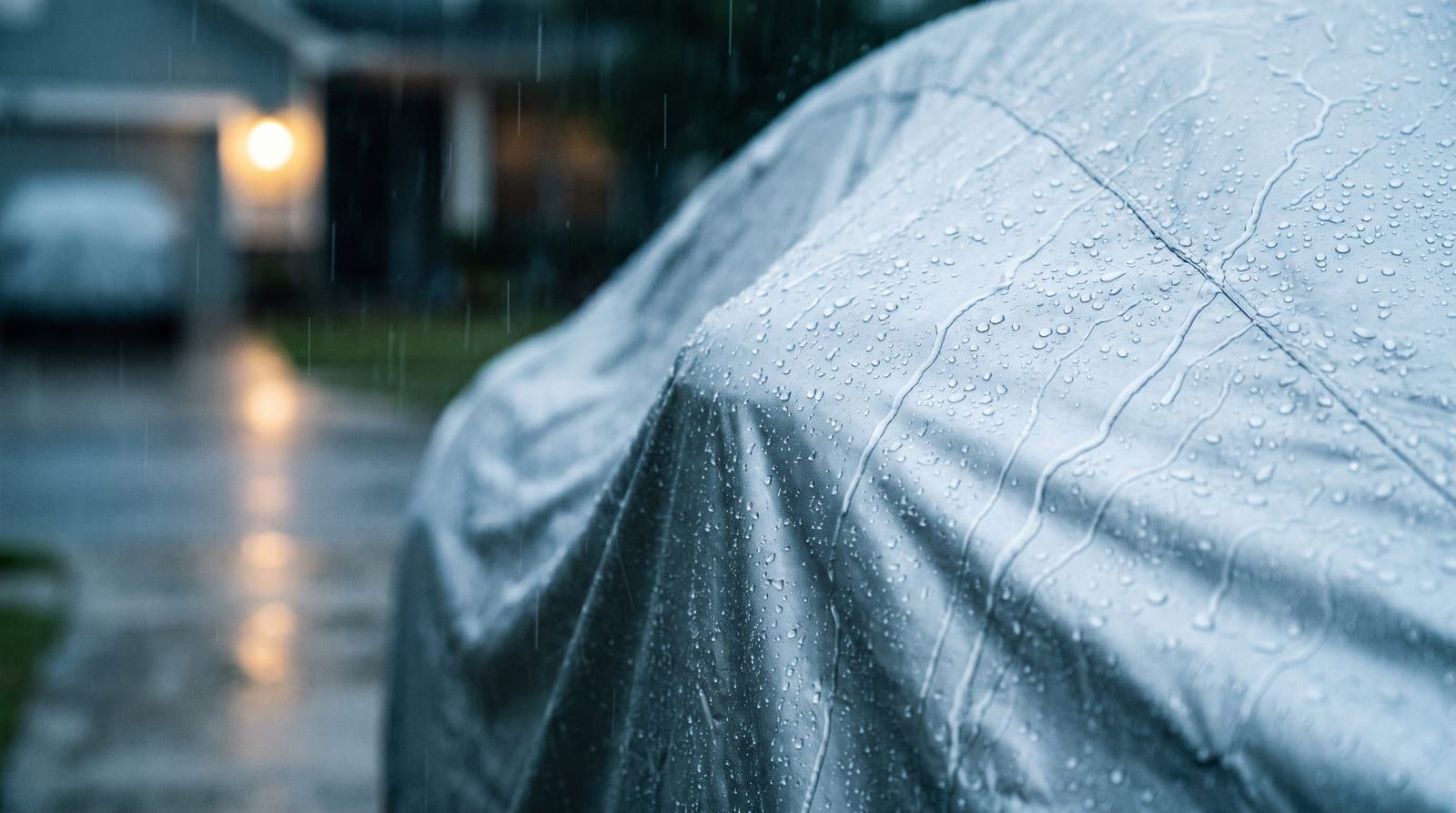
Waterproofing comes down to the fabric and the seams, not a marketing word on a tag. A real waterproof cover uses multi-layer non-woven fabric, sealed or taped at the seams, with an elastic hem that hugs the bottom edge of the car. That hem matters more than people think. Without it, water wicks up under the cover through the bottom edge even if the top fabric is doing its job.
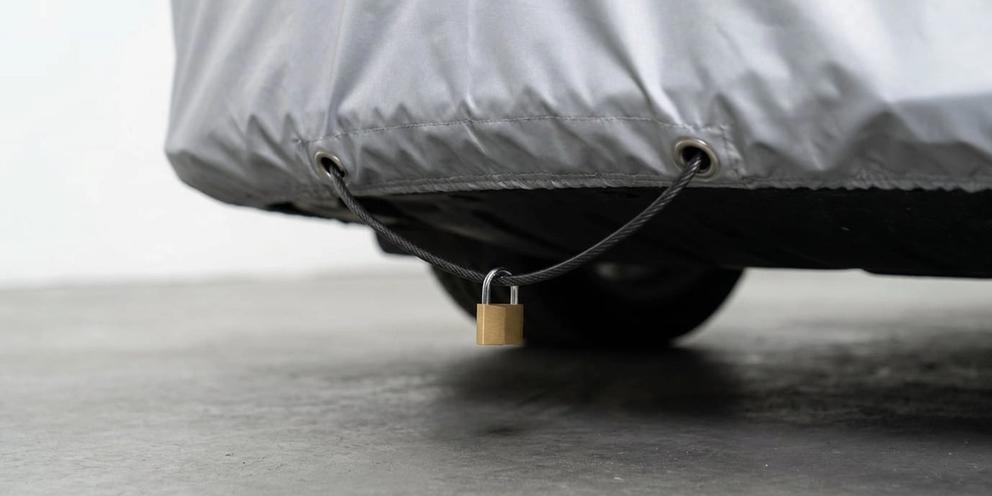
Lock security is a completely separate feature, built into reinforced grommets placed at the front and rear (sometimes at each door) that a cable lock threads through and anchors to something fixed, a wheel, a post, anything the car itself can't just be driven away from underneath the cover.
Don't assume one guarantees the other. A cover can be genuinely waterproof with zero lock points, and a cover can have a full set of grommets while still leaking through the seams. Check both, separately, before you buy. If you want the fabric-level detail on what actually makes a cover waterproof versus water-resistant, the waterproof car cover guide breaks down the layers and coatings that matter.
What to Check Before You Buy: A Buyer's Checklist
Start with the waterproof claim itself. "Water-resistant coating" and "waterproof, taped seams" are not the same sentence, even though they get marketed almost identically. Ask, or look for, whether the seams are actually sealed or taped. That's the part that fails first on cheap covers.
Next, confirm cable lock compatibility directly. Look for grommet placement at the front and rear, and check whether a cable lock is included or explicitly supported, not something you're expected to jury-rig with a bike lock and a prayer.
Fit type matters more here than on a basic cover. A loose universal fit leaves gaps at the hem, which beats the waterproofing and gives a thief slack to work the lock loose. A custom-fit car cover sits tight against the body panels, which keeps water out and keeps the cable lock snug instead of dangling.
Look for reinforcement at the base too, grommet-and-cord or tie-down strap points that anchor the cover against wind, separate from the anti-theft lock. And if the car lives outside year-round, check that the waterproof layer is paired with UV or reflective protection. A cover that keeps water out but bakes in the sun all summer won't last.
If you're not sure which vehicle profile fits your car, the cover finder tool matches year, make, and model to the right size before you ever get to the lock question.
Match the Cover to Your Actual Weather Exposure
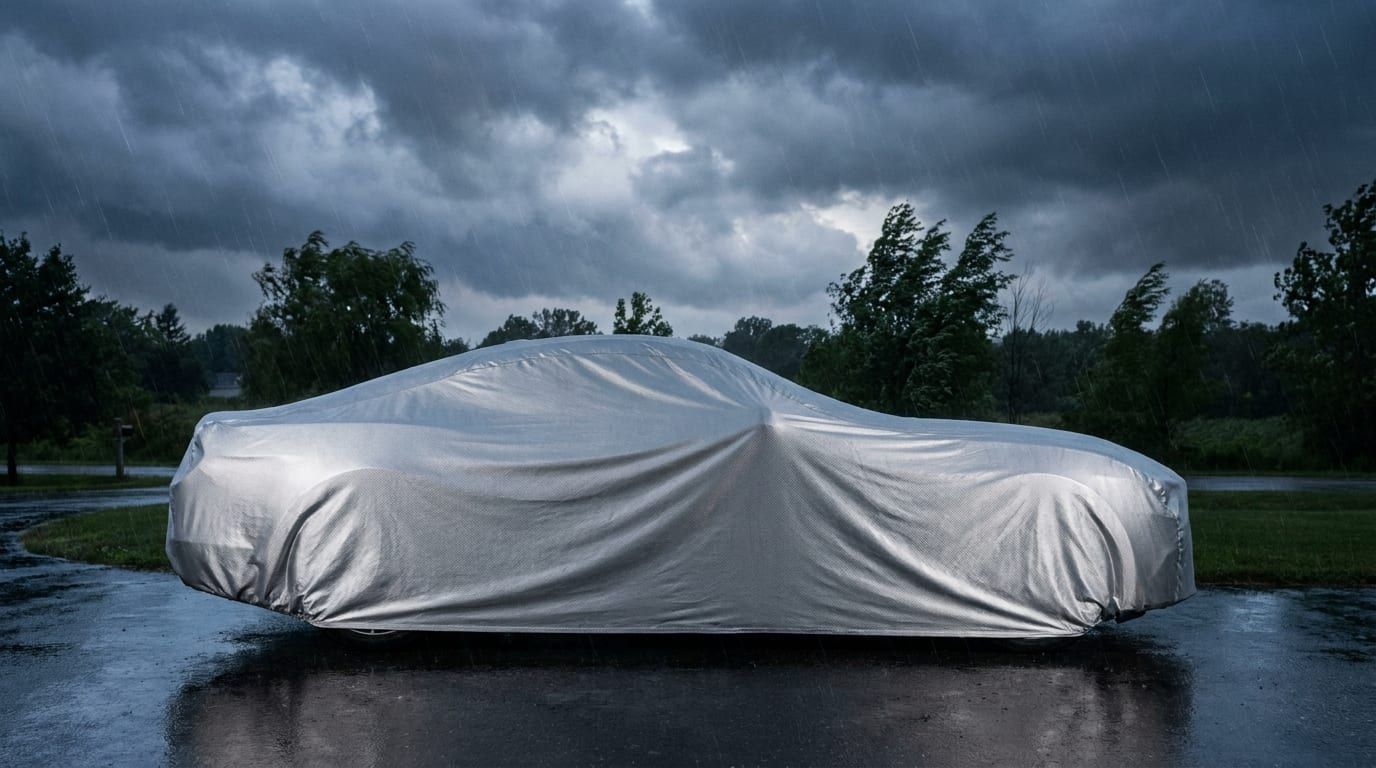
Not every driveway needs the same cover. If your car sits outside full-time in a rain-heavy or coastal climate, you want the heaviest waterproof tier available, with lock points at every anchor spot the cover offers. Salt air and standing water don't give a mid-weight cover much room for error.
Mixed garage-and-driveway use is a different case. A mid-weight, breathable waterproof cover that's still lockable but lighter to put on and take off makes more sense than hauling a heavy-duty cover on and off a car that's only outside two nights a week.
If you're dealing with occasional light rain in a mild climate, a lighter water-resistant cover can work, but don't skip the lock check just because the weather's easy. Theft doesn't care about the forecast.
For a full breakdown of matching cover weight to your storage conditions, the outdoor car cover guide and the guide to using a car cover outdoors cover waterproofing, wind, and UV exposure together, which is worth a look if you're still deciding on tier.
Installing and Locking Down Your Cover the Right Way
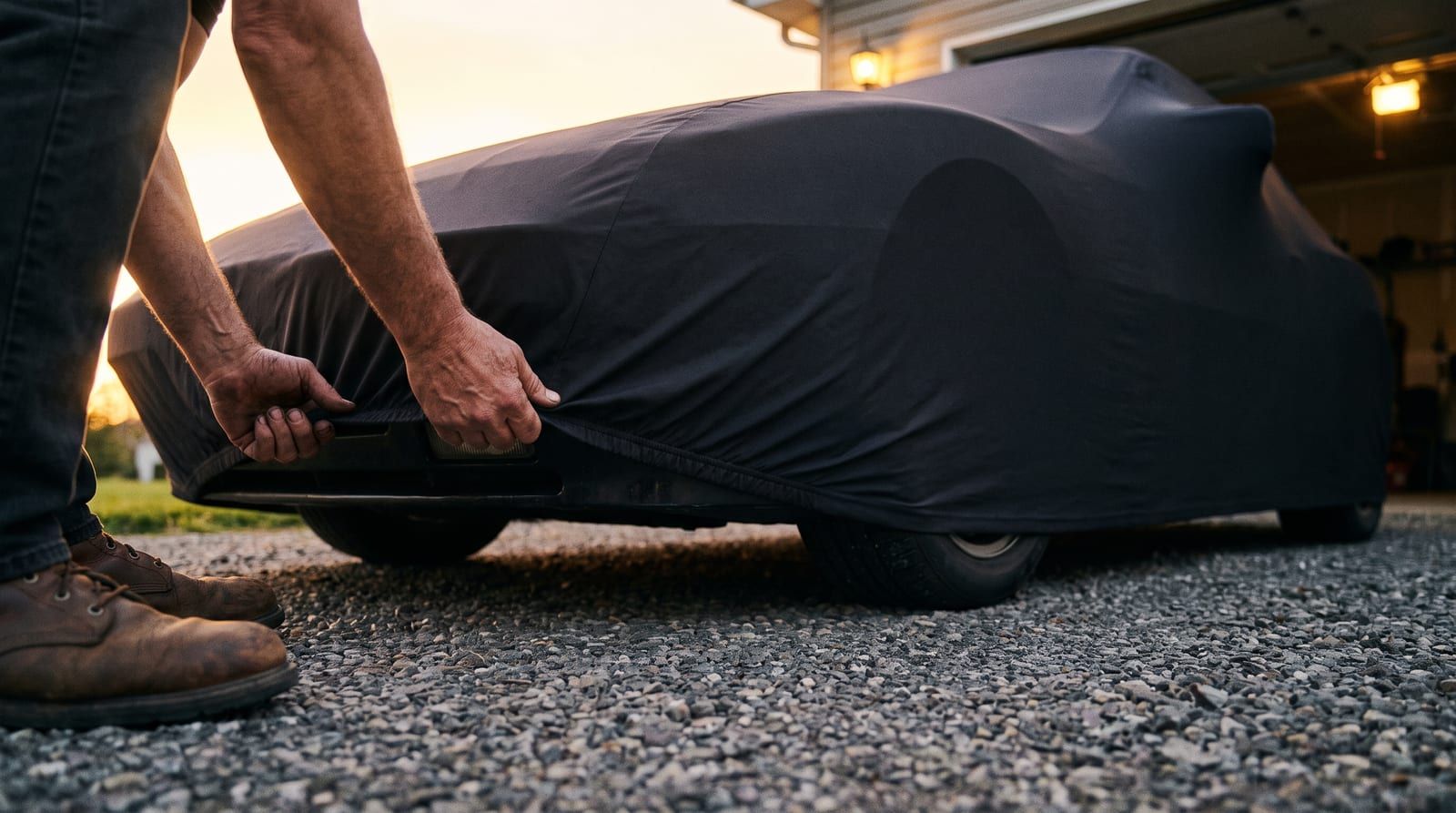
Fit comes before security, always. Drape the cover and seat the elastic hem fully around the car first. If the hem's loose or bunched anywhere, fix that before you touch the lock, because a tight cable through a loose cover just secures the slack, not the vehicle.
Once the hem's seated, thread the cable through the front and rear grommets and anchor it to something fixed. Looping it through the wheels alone isn't enough, since a determined person can just slide the whole assembly off. Anchor to a post, a ring bolt, anything that doesn't move with the car.
In windier areas, pair the lock with gust straps for extra hold. These are a separate system from the lock itself, meant to stop flapping and lift, not theft. For the exact steps, the cable lock installation guide and the wind strap installation guide walk through both processes start to finish.
Why a Fitted Waterproof Cover Beats a Tarp or Bungee-Cord Setup
Tarps look like the cheap fix, and for a weekend they might be. Long term, they're a bad trade. Tarps don't breathe, so condensation gets trapped against the paint instead of escaping, which is the opposite of what a properly designed waterproof cover is built to do.
They also don't have a real grommet system. Whatever anti-theft setup you rig with rope through a tarp's corner loops is improvised, not engineered. And bungee cords stretch. They don't hold a tarp's edge tight the way an elastic hem does, so wind lifts the edges and water pools in the sag instead of running off.
If you're still weighing the DIY route against a fitted cover, the tarp versus car cover comparison lays out exactly where a tarp falls short.
Warranty, Shipping, and What Happens If It Doesn't Fit
Seam failures and fabric defects happen even on good covers. That's what the lifetime warranty on car covers is for, so a failure isn't something you just absorb.
Fit is the more common issue, honestly. People guess on size, or a model year has a body change nobody accounted for. The no-hassle guarantee and the standard return policy exist specifically for that, no drawn-out back-and-forth if the cover you ordered doesn't sit right.
And free shipping removes the last bit of friction, so you're not paying extra to fix a sizing mistake that wasn't really your fault to begin with.
Find Your Waterproof, Lockable Cover Now
Before you check out, confirm two things on the product page, and only two: sealed, taped waterproof construction, and grommets placed for a cable lock, not just decorative eyelets. Everything else in this checklist supports those two facts, they're the ones that actually decide whether the cover does its job on a wet, unattended night.
Run your year, make, and model through a fit tool first so the cover you land on actually sits tight enough for both jobs to work. Once you've got the right waterproof car cover with lock in hand, the rest is just draping it, seating the hem, and locking it down.
If you're still comparing options or want to keep learning about cover materials and storage conditions before you commit, it's worth poking around the rest of our car care articles. There's no rush on this one, just don't buy on the "waterproof" label alone.
Updated