What Car Cover Is Quietest and Won't Flap Loudly in the Wind at Night?
Published
The quick answer: what actually stops a car cover from flapping at night
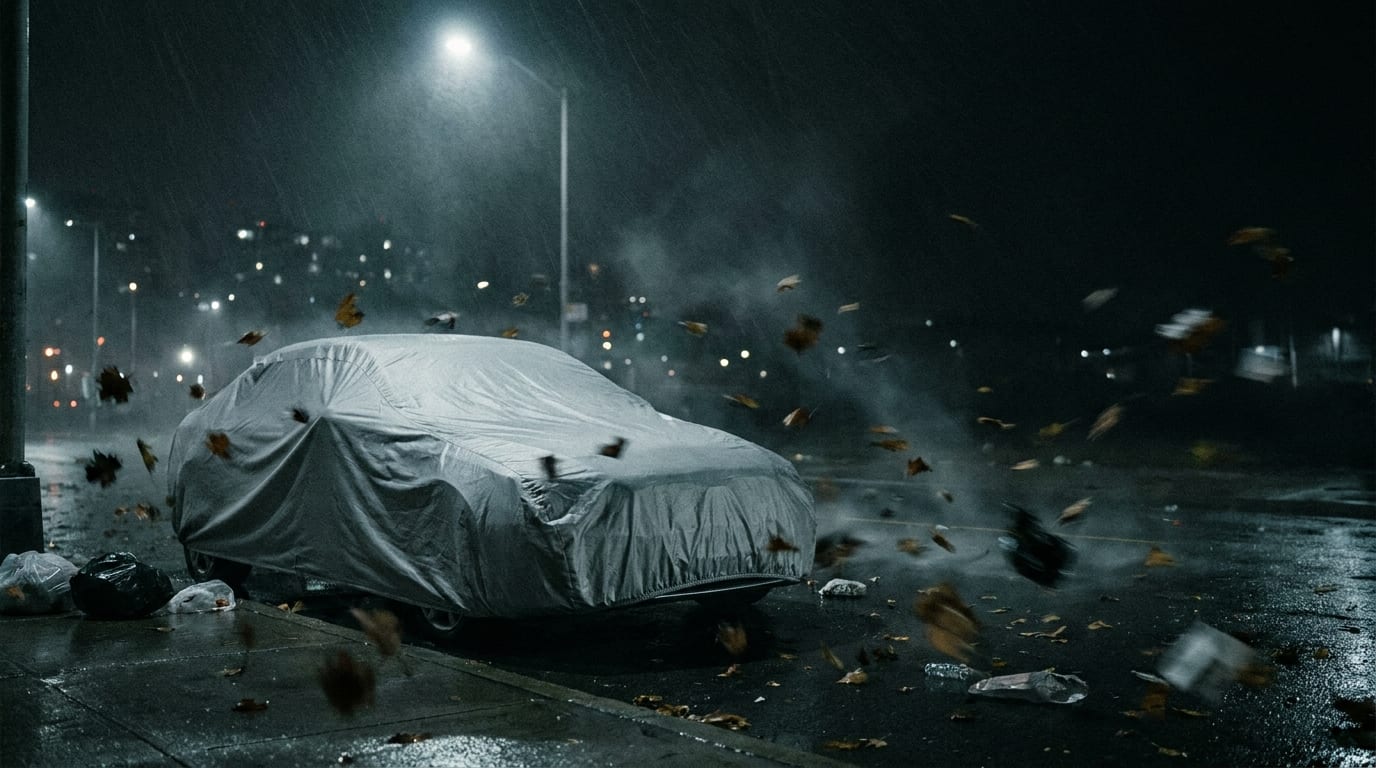
The quietest car covers pair a custom or semi-custom fit, meaning no loose, billowing excess fabric, with a soft, multilayer woven or knit material instead of a stiff single-layer vinyl or tarp. Add a tensioning system (elastic hem, grommets with a cable lock, or gust straps) that pulls the cover snug against the body, and wind has nowhere to get underneath and start flapping it.
Noise comes from two separate failure points: a loose fit and loose tension. Fix only one and you'll still hear it snapping at 2am. This matters most as a buying decision, not a fix you bolt on after the fact. Get the fit and fabric right before you buy, and the whole flapping-tarp problem just doesn't happen.
Why car covers flap and crackle in the wind in the first place
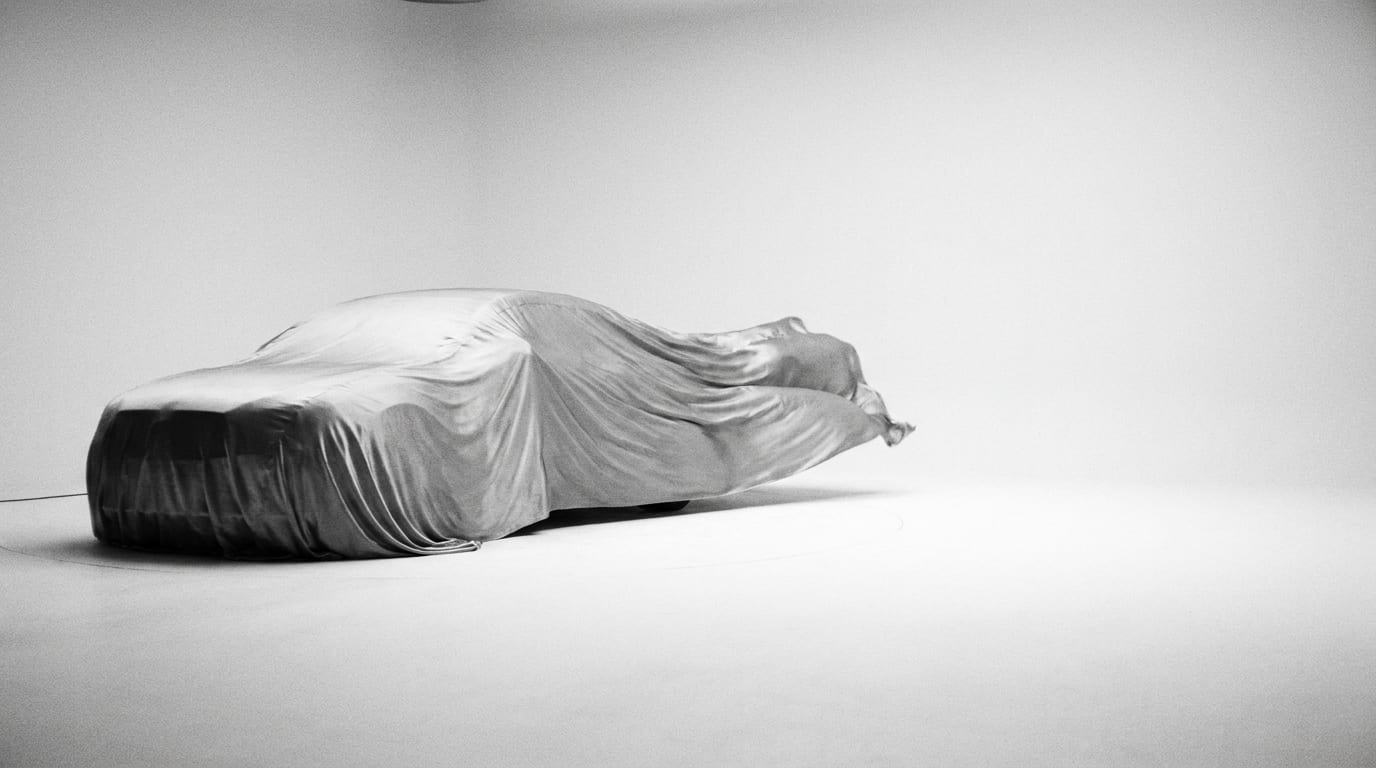
Here's the mechanic of it. Wind gets up under loose fabric, lifts it, and then drops it back against the body panels. That cycle, billow, snap, billow, snap, is where the noise comes from. It's also what scuffs your clear coat over time.
Most of this traces back to fit. A universal cover cut generously to fit "several models" has to leave extra room everywhere, because it doesn't know if it's covering a sedan with a short trunk or one with a long one. That slack bunches up at the hood, the trunk lip, and around the mirrors, and that's exactly where wind grabs on first.
Material makes it worse or better. A stiff, crinkly single-layer polypropylene sheet or a thin vinyl tarp has almost no give, so when wind does lift it, it slaps back hard and loud. There's no softness to absorb the motion.
And if there's no strap system or elastic hem holding the edges down, the cover is relying purely on its own weight and friction with the paint to stay in place. One decent gust is all it takes to break that.
Fabric matters: softer, multilayer materials are quieter than stiff single-layer ones
Put a stiff polypropylene tarp next to a softer, multilayer knit fabric and the difference is obvious the second wind hits them. The tarp crinkles and cracks. The knit fabric just kind of... settles. It drapes closer to the body instead of standing off it, so there's less material actually catching air in the first place.
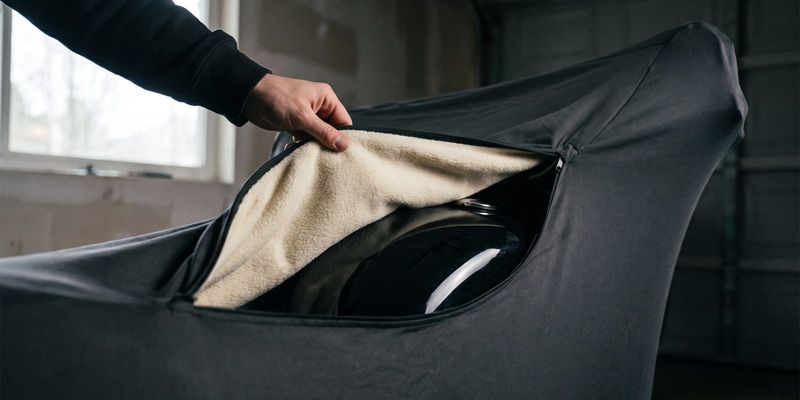
Covers with a brushed or fleece-like inner layer tend to be quieter for the same reason. Less rigidity means less "snap" when air gets underneath, even if a gust does manage to lift an edge.
Breathability plays a role too. A fabric that lets wind pressure equalize through the weave resists ballooning, that sail effect where a sealed, non-breathable sheet puffs up like a parachute. A fully sealed material has nowhere for that pressure to go except up and out, which is exactly the motion that creates noise. For more on how waterproofing and breathability trade off against each other, the outdoor car cover guide walks through which fabrics handle which conditions.
Fit matters as much as fabric: why custom-fit beats universal for noise
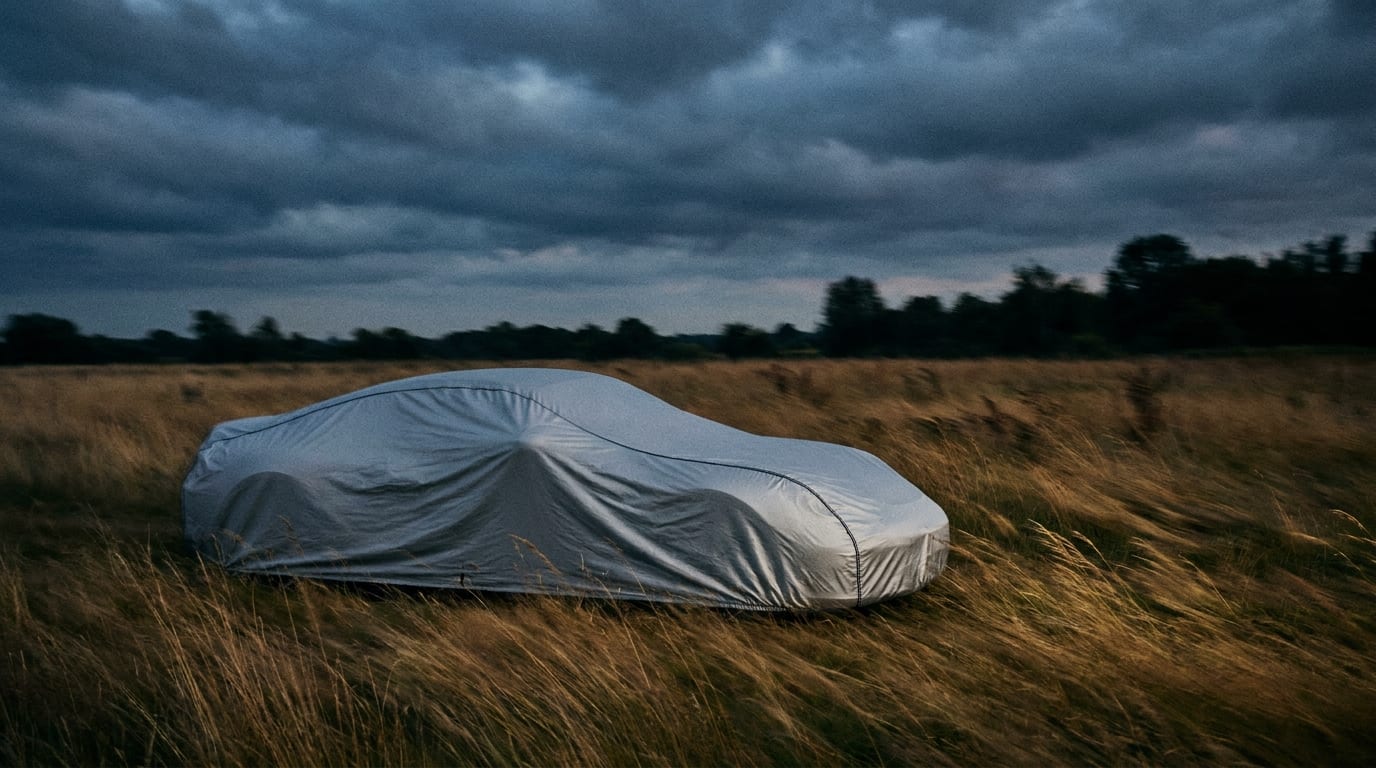
If you're asking what car cover is quietest and won't flap loudly in the wind at night, fit is where to start looking, even before fabric. A custom-fit or semi-custom cover is cut to the actual contours of your specific make and model. There's barely any slack left for wind to grab onto.
Universal covers can't do this. By design, they're sized to stretch over a range of vehicles, so excess fabric pools at the bumpers, around the mirrors, and along the roofline. That pooled fabric is the first thing to catch wind, and it's usually the loudest part of the whole cover once things pick up at night.
Before you look at fabric specs or strap kits, check the fit. It's the single biggest lever on noise. The custom-fit car covers guide and the sizing guide both help you match a cover to your vehicle precisely instead of guessing off a general size chart.
Securing the cover: straps, cable locks, and elastic hems eliminate the flap entirely
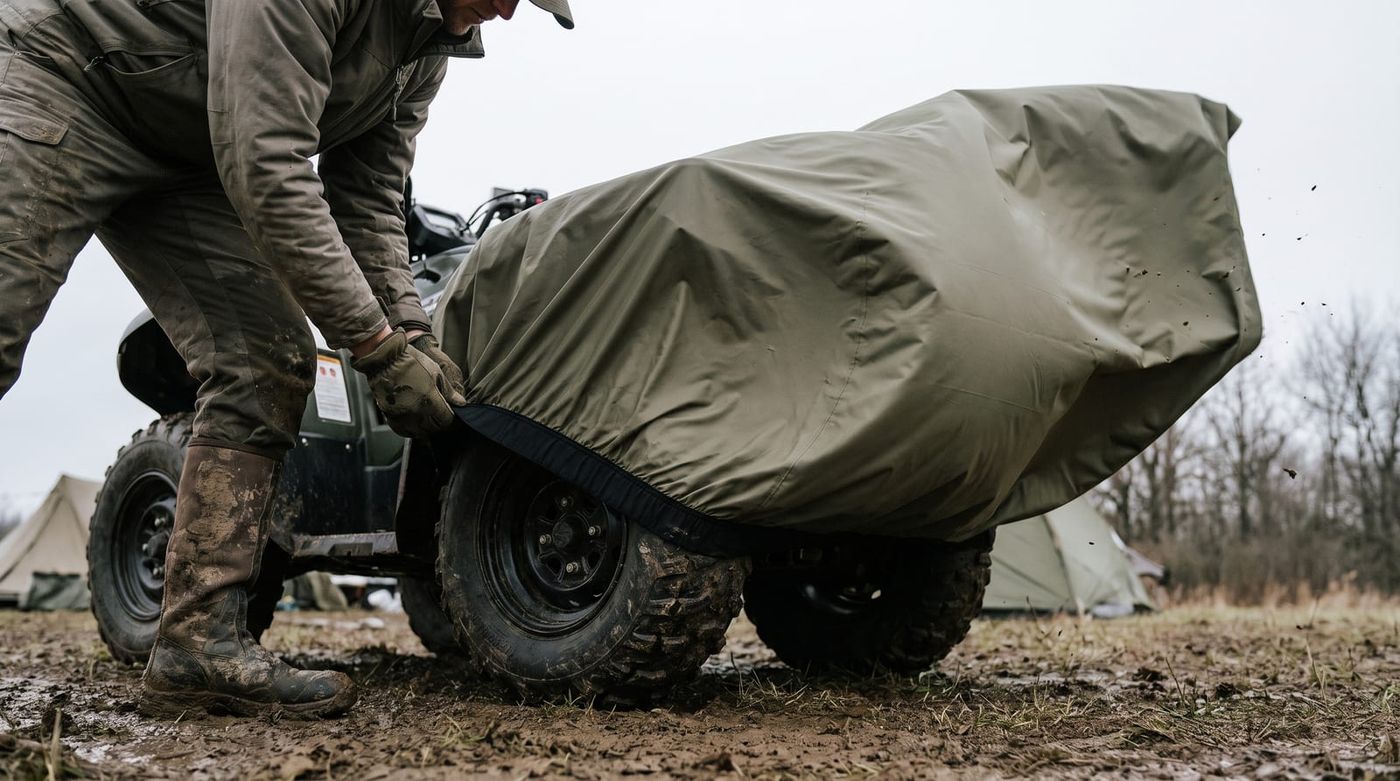
Even a well-fitted cover needs something holding it down at the edges, because wind doesn't just come from above, it sneaks in low, from underneath.
An elasticized hem handles the bottom edge. It cinches in against the rocker panels so there's no gap for wind to work its way up from below. That alone stops a lot of the lower-body flapping you get on gusty nights.
Grommets paired with a cable lock add another layer. Route the cable through the grommets and secure it underneath the vehicle, and you've added real tension at the front and rear, the two spots most prone to lifting.
For consistently windy overnight parking, gust straps are the strongest fix. They cinch underneath the car at multiple points, converting a cover that's merely draped over your vehicle into one that's pulled taut against it. A taut cover doesn't have the slack it needs to flap in the first place. If you're setting one up, the gust strap installation guide and the cable lock installation guide cover the actual steps.
Car cover vs. a tarp: why a dedicated cover is quieter
People reach for a tarp because it's cheap and already in the garage. But a tarp is stiff, non-breathable, and has zero tailored fit or built-in tensioning. Strap it down with bungee cords and it'll still flap, and in sustained wind it can tear at the grommet holes, which is its own kind of (expensive) problem.
A dedicated car cover is built to solve exactly this. The fit, the softer fabric, the integrated strap or elastic systems, all of it exists specifically to prevent the billow-and-snap cycle a tarp is prone to. If you're weighing the two side by side, the tarp versus car cover article goes deeper into where a tarp falls short.
Putting it together: choosing a quiet cover for overnight outdoor parking
Three things, in order of importance: a correct custom or semi-custom fit, a softer multilayer fabric, and a strap or cable-lock system to hold it taut. Skip any one of them and you're back to listening to fabric slap against your hood at night.
Don't guess on sizing. Use CoverFinder to match a cover to your exact make, model, and year instead of eyeballing a universal size chart and hoping for the best.
If you're shopping for overnight outdoor storage, it's worth browsing outdoor-rated car covers that come with wind-securing accessories already included, rather than buying a cover and straps separately. And if you're dealing with rain on top of wind, the waterproof car covers guide is worth a read too.
Take a look through the full car cover lineup when you're ready, or just bookmark this if you're still in the research phase. Either way, getting the fit right now saves you a lot of noise later.