
What's the Most Durable Car Cover Material for Someone Who Travels a Lot for Work?
Published

The Quick Answer: Multi-Layer Woven Polyester Is the Most Durable Choice
For someone who travels a lot for work, a multi-layer woven polyester cover with a waterproof, breathable coating is the most durable car cover material you can buy. It resists abrasion from daily on and off handling, sheds rain whether you're parked in Phoenix or Portland, and lets moisture escape instead of trapping it against your paint during the weeks you're not around to check on it. Single-layer vinyl or PEVA covers can't match that combination.
Durability means something different when you're not a weekend driver tucking a car into a garage every night. For a road warrior, it means surviving repeated installation cycles, handling whatever parking situation shows up (driveway one night, long-term airport lot the next, street parking in a different climate the week after), and sometimes going three weeks without a single adjustment. That's a tougher job than most covers are built for.
And really, the material question is a material-plus-construction question. Fabric quality gets you most of the way there, but seam strength, grommet placement, and elastic hems decide whether the cover actually survives your schedule or falls apart at the exact points where you handle it most.
Why Frequent Travel Puts Extra Stress on a Car Cover
Most car cover wear happens at the seams, hems, and grommet points, not in the middle of the fabric. A once-a-week user folds and unfolds their cover maybe 50 times a year. Someone installing a cover before every trip and pulling it off after every return is doing that hundreds of times. Every cycle flexes the stitching a little more, stretches the elastic a little more, and that adds up fast.
Then there's the exposure problem. A frequent traveler's car isn't living under one roof with one climate. One week it's in a sunbelt airport lot getting hammered by UV. The next it's parked on a rainy city street. The material has to handle sun, rain, and temperature swings without a dedicated, climate-controlled spot to retreat to in between.
The real risk, though, is being left on through multiple weather events in a row. You're not home to notice it's about to storm, or to brush off snow before it refreezes into ice against the fabric. That raises the bar specifically on water resistance and UV stability, since the cover has to perform unattended, not just when you're around to react to conditions.
Material Showdown: Which Car Cover Fabrics Actually Hold Up
Not all cover fabrics are built for this kind of use. Here's how the common options stack up:
| Material | Durability for frequent travel | Trade-offs |
|---|---|---|
| Multi-layer woven polyester (ripstop-reinforced) | Best overall, strong tear resistance | Costs more upfront |
| Single-layer PEVA or vinyl | Fully waterproof, but weak long-term | Stiffens and cracks in cold, traps moisture |
| Satin or fleece indoor covers | Not built for this use case | No weatherproofing at all |
| Block-knit or stretch-knit | Good breathability and fit | Wears faster under daily install/removal |
Multi-layer woven polyester is the standout here. The waterproof outer layer handles rain and road grime, while a breathable inner layer lets trapped heat and moisture escape instead of condensing against your paint. For someone who might not check their car for a week or two, that breathability isn't a nice-to-have. It's the difference between a clean paint job and a mildew problem.
Single-layer PEVA or vinyl covers look appealing because they're cheap and waterproof on day one. But they're stiff, and stiff fabric cracks when it's cold and flexed repeatedly, which is exactly what happens when you're installing a cover in a freezing airport garage at 6am. They're also non-breathable, so moisture gets sealed in rather than let out.
Satin and fleece indoor covers are soft and great for a climate-controlled garage, but they offer zero weatherproofing. If you're rarely home to park indoors, they're the wrong tool entirely.
Block-knit or stretch-knit fabrics fit well and breathe well, but over months of daily handling they generally don't hold up to abrasion as well as a true multi-layer woven cover. For a deeper breakdown of how these fabrics compare spec for spec, the material comparison guide is worth a look before you buy.
Construction Details That Matter as Much as the Fabric
Fabric alone won't save a cover with weak construction. A few details separate a cover that lasts years from one that fails in months:
Reinforced, taped seams matter because that's where water sneaks in after repeated folding and unfolding has worked the stitching loose. A cheap seam is often the first failure point, long before the fabric itself wears out.
Elastic hems or built-in straps are a practical time-saver, too. If you're installing a cover almost daily, you don't want to be re-tensioning straps every single time. A good elastic hem keeps the cover snug without the extra step.
Grommets for a cable lock matter more here than for a garage-kept car, since you're frequently parking in public or semi-supervised lots where nobody's watching your vehicle. A lockable cover is a small deterrent that counts for something.
And a compact, included storage bag is underrated. If the cover doesn't pack down small, it's not coming with you in a suitcase or trunk between trips, and a cover sitting at home isn't protecting anything. Good waterproof car cover options tend to get these construction details right alongside the fabric itself.
Climate Considerations for Road Warriors
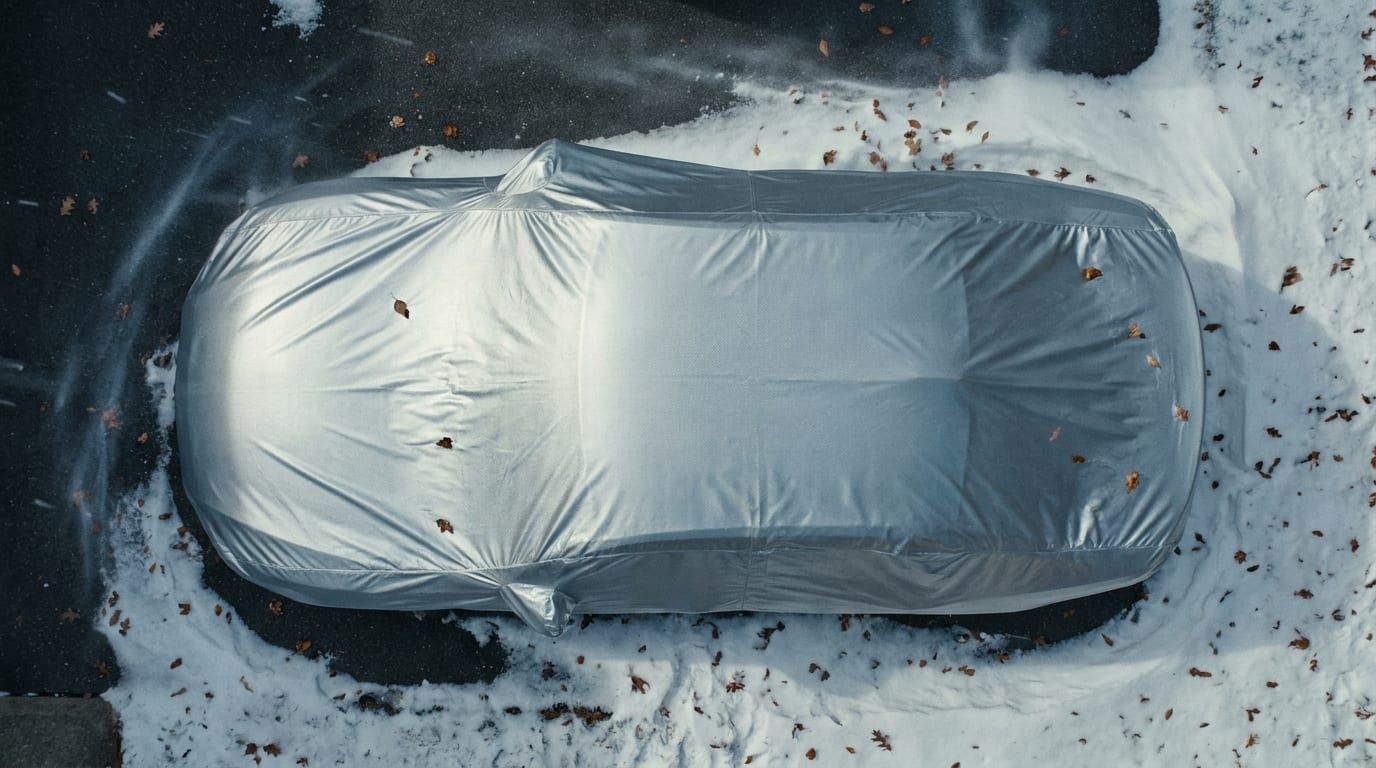
Your actual travel pattern should drive the decision, not a worst-case guess. If your routes regularly take you through rainy regions, prioritize a fabric that's rated waterproof, not just water-resistant. There's a real difference between the two, and "resistant" fabrics will eventually let water through during a long, steady rain.
If your work travel is concentrated in hot, sunny states, look for UV-stabilized material. Repeated sun exposure fades color and makes some fabrics brittle over time, and that's accelerated when the cover's outdoors for days at a stretch with no shade.
Cold-weather routes need a fabric that stays flexible when it's freezing. A cover that goes stiff in cold can crack right at the fold lines during a winter install, which is the opposite of durable no matter how good the base material is.
No single cover is optimized for every extreme at once. That's where matching the cover to where you actually travel, rather than planning for a hypothetical worst case, pays off. The guide to using a car cover outdoors covers this in more depth if your routes span more than one climate zone.
Maintenance Tips to Extend Cover Life Between Trips
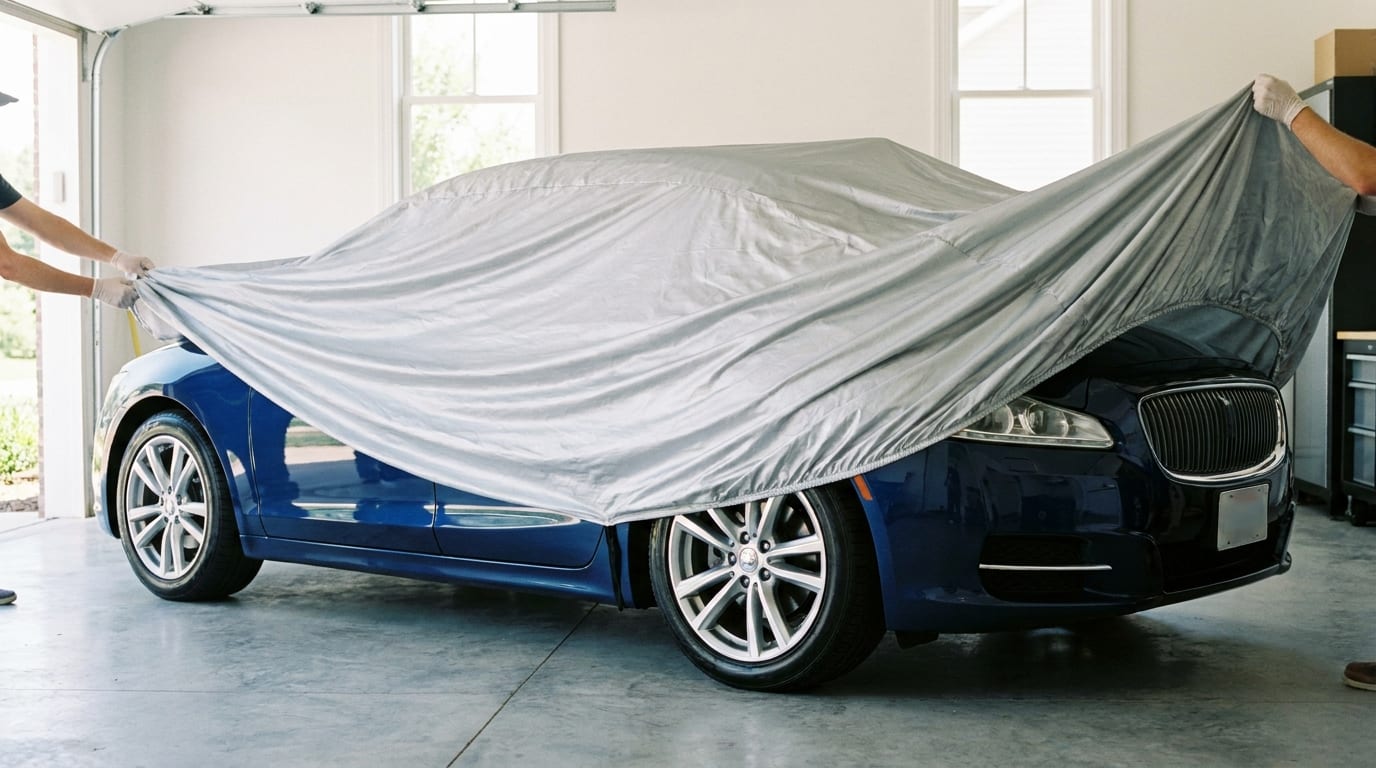
Even the most durable material will fail early if it's treated badly between trips. A few habits make a real difference:
Don't fold a wet cover and leave it in your trunk for days. Mildew doesn't care how good your fabric is, and a damp cover packed away after a rainy install is asking for it.
Shake out loose debris before folding. Grit trapped in the storage bag acts like sandpaper during transit, slowly abrading the fabric every time your car hits a bump.
Spot-clean between trips instead of waiting for a full wash. Travelers have less downtime for a deep clean anyway, so a quick wipe-down keeps things in check without demanding a free weekend. The step-by-step cleaning guide walks through the process if you want specifics.
And know the warning signs. Thinning fabric, water that no longer beads up on the surface, torn grommets. All three show up faster under frequent-use conditions than they would for a typical weekend owner, so don't wait until the cover's failing completely to replace it.
Choosing the Right Cover for Your Travel Schedule
Durability for a frequent traveler really comes down to three things: multi-layer woven material, reinforced construction at the stress points, and a fabric choice that matches the regions you're actually driving through. Get those three right and the cover will keep up with a schedule most covers were never designed for.
One thing that quietly undermines all of this: a bad fit. A cover that's too loose will flap at highway rest stops and wear out early from the friction alone, so it's worth using a proper custom-fit car cover tool matched to your specific vehicle rather than grabbing a universal size.
Once you've narrowed down the material, take a minute to find the right cover for your vehicle and check what the warranty actually covers. A durability claim is only worth as much as what backs it up. If you want more car care guidance for keeping a vehicle in shape on the road, it's worth browsing around before your next trip.






