
The Quick Answer
If you've typed "I have a minivan and live in a hot, sunny climate like Arizona, what car cover should I buy?" into a search bar, here's the short version: get a custom-fit outdoor cover built with a UV-reflective, multi-layer outer shell and a soft, non-abrasive inner lining. That combination does two jobs at once. It blocks the UV rays that fade paint and crack dashboards, and it reflects heat away from the body panels instead of trapping it like a cheap universal cover or an indoor-only fleece cover would.
One detail that trips people up: color matters more here than in milder climates. A lighter-colored cover reflects more heat than a dark one, and in a place where pavement temperatures climb well past what the thermometer says, that difference is real. A black cover baking on top of a minivan in a Phoenix driveway in July isn't doing you many favors.
The comparison below breaks down why, so you can see at a glance which cover types hold up in desert heat and which ones quietly fail.
Cover Type Comparison for Hot, Sunny Climates
| Cover Type | UV Protection | Breathability | Wind/Dust Durability | Fit Around Minivan Features | Best Use Case |
|---|---|---|---|---|---|
| Outdoor Custom-Fit | High | Good, releases heat and moisture | High, secures against gusts | Excellent, built for sliding doors and mirrors | Daily outdoor parking in desert sun |
| Outdoor Universal | Moderate | Fair, often fits loosely | Low to moderate, prone to shifting | Poor, gaps around doors and mirrors | Occasional or short-term outdoor use |
| Indoor/Fleece | Low | Good indoors, not sun-rated | Not designed for wind | Good fit, but not for outdoor exposure | Garage-stored minivans only |
| Plastic/Disposable | Low | Poor, traps heat and moisture | Low, tears in wind | Poor, generic shape | Short-term, one-time use only |
The outdoor custom-fit car cover is the clear winner for a minivan that lives outside in Arizona-style sun. It's shaped to your specific model, which matters more than people expect once you start dealing with sliding door tracks and side mirrors.
Indoor and fleece covers aren't bad products, they're just built for the wrong job here. They're meant for a garage or carport with no direct sun, not a driveway baking under a desert sky.
Plastic and disposable covers deserve a flag of their own. They seal heat and condensation right against the paint, which is the opposite of what you want in a climate already working against your clearcoat.
Why Arizona-Style Heat and Sun Are Harder on a Cover (and a Minivan) Than Average Weather
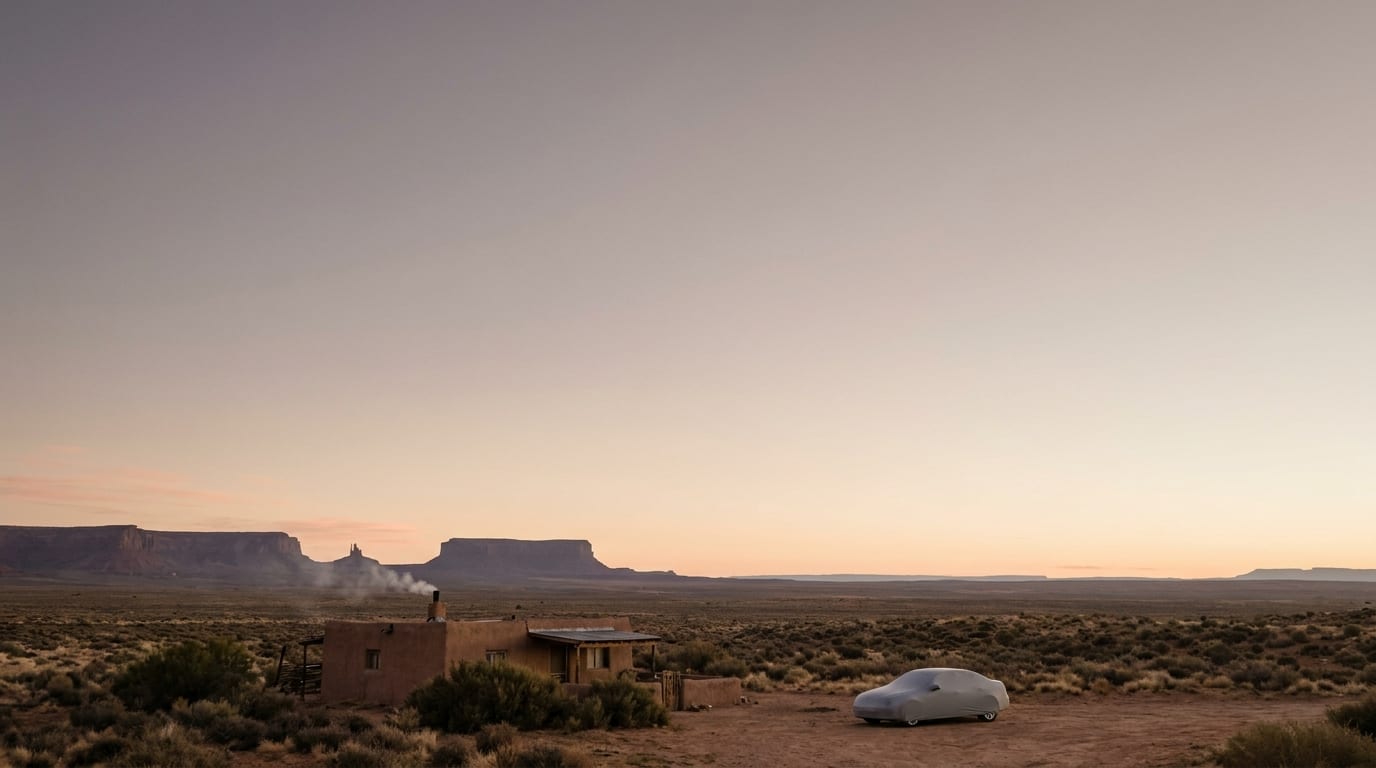
Sun exposure isn't a minor inconvenience in the desert, it's a slow degradation process. Paint fades and clear coats crack under prolonged UV exposure, and if your minivan sits uncovered, UV rays pass right through the windshield and side glass to bake the dashboard and interior trim too. That's how you end up with a sun-bleached dash and a cracked steering wheel cover after a couple of summers.
Then there's surface heat. Dark exterior panels in direct desert sun can get hot enough to burn skin on contact, running well above the air temperature on the thermometer. That's exactly why reflective or light-colored cover fabric isn't a cosmetic preference, it's doing real thermal work. Check out our tips for keeping a car cool in summer for more on how heat buildup works against your vehicle.
Monsoon season adds another wrinkle most other climates don't deal with. Haboobs and sudden high winds roll through Arizona summers with little warning, and a cover without solid wind-securing hardware will end up half off the vehicle or blown into the neighbor's yard. Our guide to using a car cover outdoors covers wind, UV, and water protection in more depth if you want the full picture.
One upside of the desert: low humidity keeps mildew risk low compared to coastal climates, so breathability can take priority over waterproofing most of the year. During monsoon season, though, you'll want both, since those storms bring real rain along with the dust.
Key Features to Check Before Buying
Not every cover labeled "outdoor" is actually built for this kind of punishment. Here's what to look for specifically:
- UV-resistant, multi-layer woven outer fabric. A single-layer thin fabric might shed light rain, but it won't hold up to months of direct desert sun without breaking down.
- Breathable construction. The cover needs to let trapped heat and moisture escape instead of sealing them against the paint, which is where a lot of cheaper covers fail.
- Soft inner lining. Dust kicks up constantly in the desert, and a non-abrasive fleece-style lining keeps grit from scratching the clear coat every time wind pushes the cover against the panel.
- Elastic hem with a cable-and-buckle or grommet strap system. You want something that locks the cover down during a sudden gust, not just a loose hem that catches wind like a sail.
- Reflective or light color. Worth repeating: a lighter shade reflects more heat than a dark one, and in this climate that difference shows up on your paint and dash over time.
- Correct sizing for minivan-specific features. Sliding door seams, side mirror pockets, and roof rack cutouts all need to be accounted for, or you'll get gaps that let dust and sun in anyway.
If you're trying to figure out which category of outdoor car cover checks these boxes, the fabric spec sheet matters more than the price tag.
Fit Considerations for Common Minivans
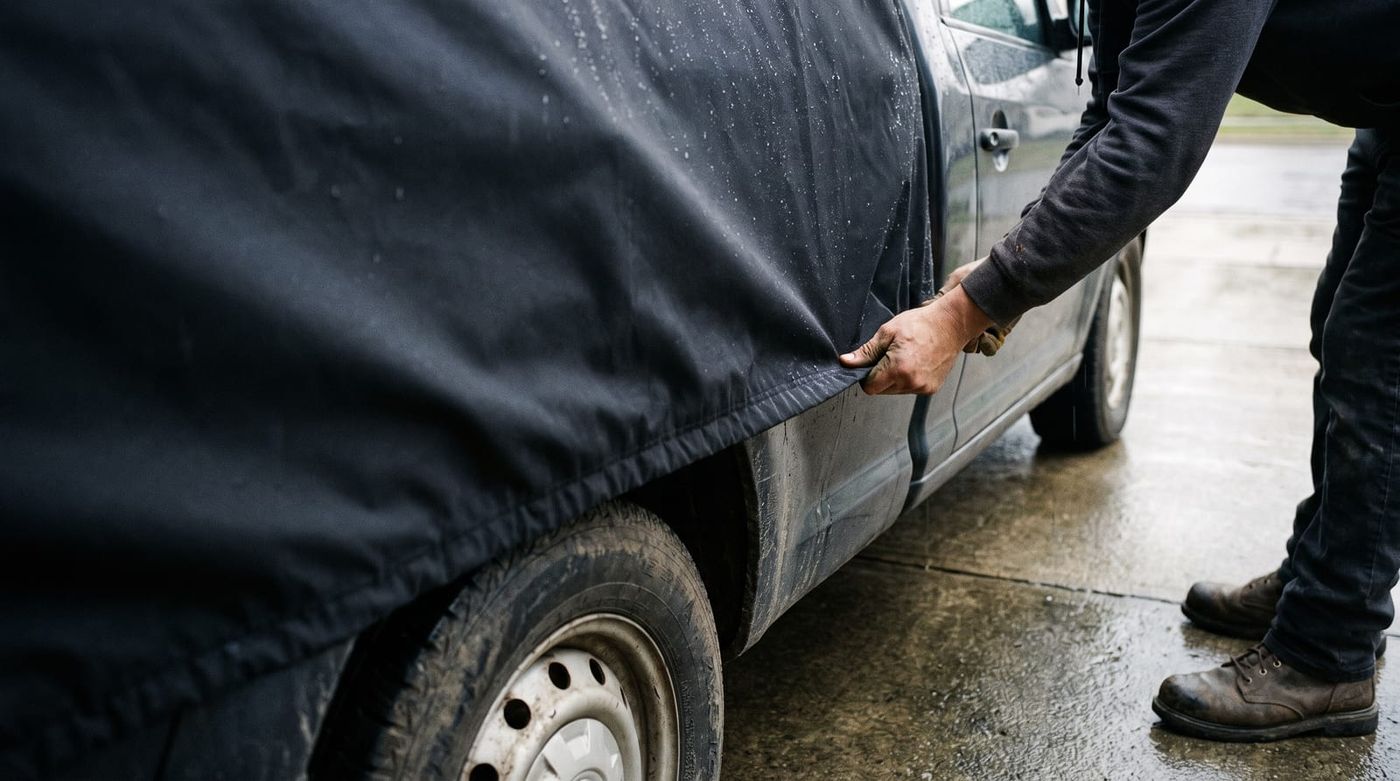
Minivans are an awkward shape for a cover, honestly. Sliding doors, taller rooflines, and that boxy rear hatch mean a cover cut for a sedan or generic "large vehicle" template is going to fit wrong somewhere. A custom or semi-custom fit matters more here than it does for a coupe or a compact sedan, where the body lines are simpler.
If you're shopping for a specific model, it helps to start from the brand page rather than guessing at a universal size. Buyers searching for minivan covers are usually looking at something like a Toyota Sienna, Honda Odyssey, Chrysler Pacifica, Dodge Grand Caravan, or Kia Carnival, and each of those has different roofline heights and mirror placements worth checking against.
An oversized universal cover will flap around in desert wind gusts no matter how good the fabric is rated, and that flapping is exactly what lets dust and grit work their way underneath. Good fabric on a bad fit is still a bad outcome.
Before you buy, check the cover's length and height specs against your specific minivan trim. Roof racks and running boards can bump up the size you actually need, and guessing wrong here is the most common fit mistake. Our sizing guide walks through how to measure correctly, and it's worth five minutes before you check out.
Caring for Your Cover in Desert Conditions
A good cover is only as good as the maintenance behind it, and desert dust is harder on fabric than people assume.
Shake off dust and sand before you fold the cover up or stuff it in its storage bag. Grit ground into the fabric acts like sandpaper against both the cover and your paint the next time you put it on.
Wash it periodically, following the manufacturer's care instructions, to keep the UV-reflective coating doing its job. Coatings wear down over time with neglect, and a cover that's lost its reflective properties is basically just a dusty blanket at that point.
After a monsoon season with a few high-wind events, check your straps and buckles for wear. Those are the first parts to fail, and a frayed strap defeats the whole point of a secure cover.
For the full process, our car cover cleaning guide has the step-by-step rundown.
Bottom Line and Next Step
So, back to the original question: if you've got a minivan and live somewhere like Arizona, the answer is a custom-fit outdoor cover with a UV-reflective outer layer, a soft inner lining, and solid wind-securing hardware, in a lighter color if you can get it.
Browse the minivan cover options and run your model through a sizing check before you commit. It's worth comparing fit specs to your trim level rather than eyeballing it.
A properly fitted, UV-rated cover is a one-time cost. Faded paint, a cracked dashboard, and sun-bleached upholstery are not, and those repairs cost a lot more than the cover ever will. If you found this useful, stick around the blog for more car care guides built for exactly this kind of climate.






