
The Quick Answer: What to Buy for Seattle-Area Truck Owners
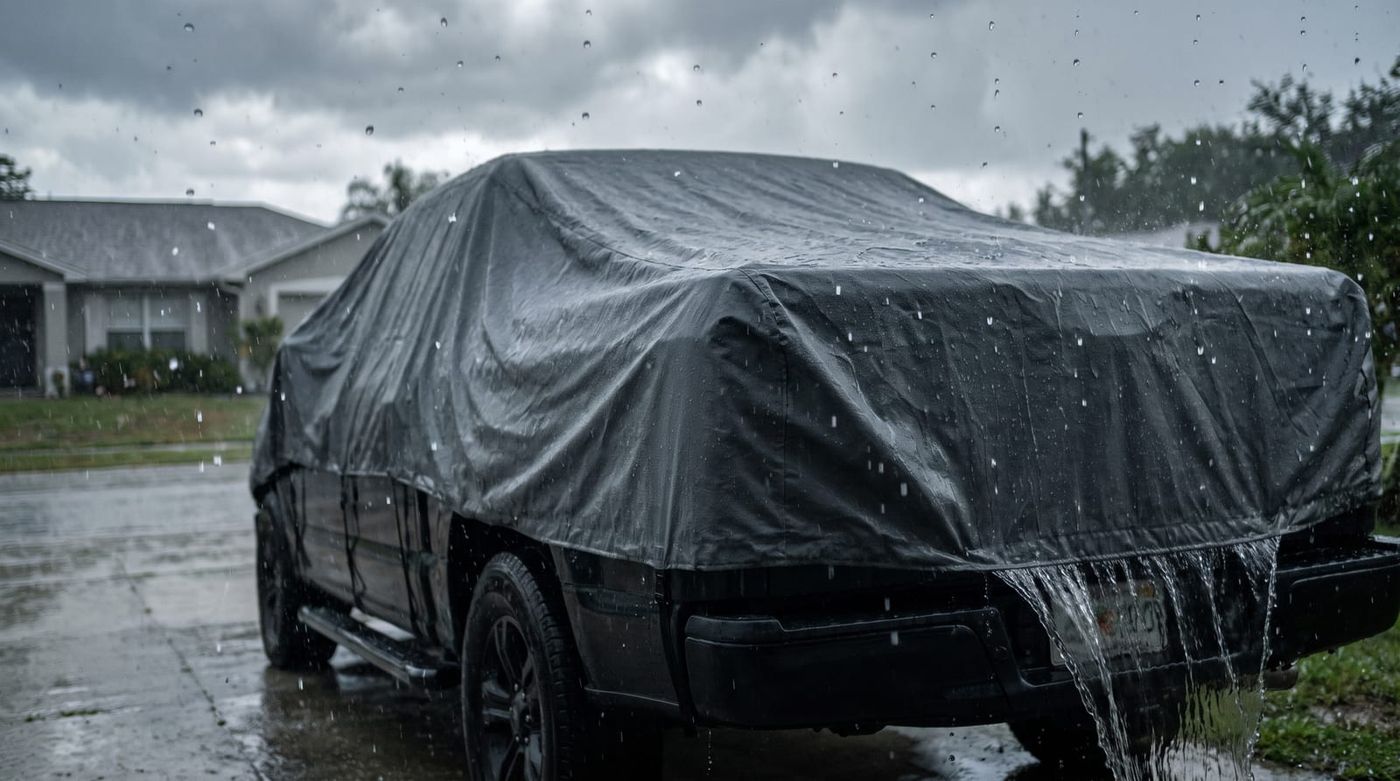
Can you recommend a good car cover for a pickup truck parked in a rainy climate like Seattle? Yes: get a custom-fit, genuinely waterproof truck cover with taped or sealed seams, a breathable inner layer, and a snug fit secured with straps or a cable. Anything less and you're just trapping moisture against your paint instead of blocking it.
Here's the detail that trips people up: "water-resistant" and "waterproof" are not the same claim. Water-resistant fabric sheds light mist for a while, then wets through during the kind of steady, hours-long drizzle Seattle gets most of the year. Waterproof car covers are built to block water from passing through the fabric at all, which is the spec that actually matters here.
Fit matters just as much as the material. A loose, generic "fits most trucks" cover flaps in wind-driven rain, and that gap at the cab-to-bed seam is exactly where water gets pushed underneath. A properly sized cover from the truck covers lineup, built for your specific cab and bed configuration, closes that gap instead of leaving it open to the weather.
Why Seattle's Climate Changes What You Should Look For
Seattle doesn't really do downpours. It does drizzle, for days, with humidity that barely drops between showers. That's a different problem than a thunderstorm climate. A truck parked outside here rarely gets a long dry stretch to fully air out, so moss and mildew get a foothold fast, especially on the shaded side of the vehicle or under a cover that doesn't let air move.
That's exactly why a cheap tarp-style cover backfires. It blocks rain fine, but it also blocks the truck from breathing. Moisture that gets in through a zipper or a seam, or just condenses from temperature swings overnight, has nowhere to go. It sits against the clear coat and the chrome trim and does more damage than if you'd left the truck uncovered. This is the core reason breathability shows up right alongside waterproofing on any legitimate spec sheet for wet-climate covers.
UV is a smaller factor here than in Phoenix or Dallas, but it's not zero. Seattle gets plenty of bright, dry days between rain systems, and a cover built purely for sun protection, with no real waterproofing, will leave you exposed the other 300 days of the year. Our guide to using a car cover outdoors covers how waterproofing, wind, and UV resistance actually interact, which is worth a read if you're deciding between cover types.
One more thing worth considering: the bed. If you haul gear or tools and the bed sits uncovered, a full truck cover protects the cab but not your cargo. Some owners pair a cover with a tonneau or bed cover for that reason, and bed length and configuration affect what fits properly, which is its own sizing question.
Comparison Table: Cover Types for a Rainy-Climate Pickup
Not every "truck cover" on the market is built for daily outdoor exposure. Here's how the common tiers stack up:
| Cover Type | Waterproof Rating | Breathability | UV Protection | Best Use Case | Price Tier |
|---|---|---|---|---|---|
| Basic water-resistant | Low, wets through in sustained rain | Low to moderate | Moderate | Occasional overnight, dry-ish climates | Budget |
| Mid-tier waterproof, breathable | Good | Good | Good | Mixed weather, some outdoor storage | Mid |
| Premium multi-layer waterproof | Best | Best | Best | Daily outdoor parking in wet climates | Premium |
| Indoor / light-use cover | None to minimal | High | Low | Garage dust protection only | Budget |
For Seattle-area trucks parked outside year-round, the premium multi-layer waterproof tier is really the only category built to hold up. The mid-tier breathable option can work for a truck that spends some nights in a carport or garage and only occasionally sits out in weather. The basic water-resistant and indoor covers both underperform outdoors here, just in different ways: one lets water in, the other wasn't designed to deal with water at all. If you're weighing outdoor car covers against lighter indoor options, that distinction is the whole decision.
Material and Fit Checklist Before You Buy

Before you buy anything, check it against this list:
- Sealed or taped seams. Stitching alone leaves needle holes that wick water through over time.
- Breathable multi-layer fabric. Not just waterproof on the outside, but built to let interior moisture escape.
- Elastic hem or grommets. You need a way to cinch the bottom edge or tie it down, not just drape it.
- Reinforced mirror pockets. A small detail, but a cover that snags or tears at the mirrors fails fast.
- Antenna patch compatibility. If your truck has a roof or fender antenna, make sure the cover accounts for it instead of forcing a hole.
Custom fit beats universal sizing every time for this climate specifically. A universal cover is cut with extra slack to "fit" a wide range of trucks, and that slack is exactly where wind gets underneath during a storm and drives rain up into the cab and bed gaps. A cover sized to your actual make and model, say a Ford F-150 SuperCrew versus a Toyota Tacoma extended cab, closes those gaps because it's not guessing at your dimensions. Check the Ford truck cover options or Toyota truck cover options if you're shopping by brand.
Bed length and cab configuration both affect correct sizing too: regular cab, extended cab, and crew cab trucks all carry different proportions, and a cover cut for the wrong one will either bunch up or come up short. Run your measurements against a sizing guide before you order, and check the truck bed size guide if you're not sure which bed length you've got.
If the truck lives outside long-term, don't stop at the cover itself. Add a cable lock to keep it from walking off in high wind or getting lifted by curious hands, and look for a cover backed by a real warranty since you're asking it to perform in tough conditions every single day.
Installing and Maintaining a Cover in Wet Conditions
Dry the truck before you cover it. Sounds obvious, but it's the step most people skip, and it's how you end up sealing standing water or road spray underneath a cover that then can't dry out for days. Five minutes with a towel on the hood, roof, and bed rails is worth it.
Strap and cable placement matters more than people think. Run straps under the body at the recommended anchor points, not just loosely around the bumpers, and tension them enough that wind can't get a finger under the hem. Our guide to installing wind straps walks through where those anchor points actually are on a truck body. If your cover came with a support pole for the windshield area, use it, since a support pole installed correctly keeps pooled rainwater from collecting in a sag at the top of the cover.
Maintenance is simple but easy to let slide: pull the cover off every week or two, even in a wet stretch, and let both the truck and the cover air out. Rinse off road grime, pollen, and moss spores before they get a chance to hold moisture against the fabric or the paint. Our cover cleaning guide covers the basics, and it matters more here than in a dry climate because grime plus moisture is exactly what feeds mildew.
Know when to replace it. Delamination (the layers separating or peeling), water coming through at the seams despite being dry everywhere else, or a mildew smell that won't rinse out are all signs the cover's done its job and it's time for a new one.
Final Recommendation and Next Step
So, can you recommend a good car cover for a pickup truck parked in a rainy climate like Seattle? A custom-fit, breathable, genuinely waterproof cover with sealed seams and strap or cable security is the answer, and it's not really close. Anything lighter duty will either let water in or trap it against the truck, and both outcomes cost you more down the road than the cover itself.
If you're ready to look closer, browse cover options by your truck's make and model, check the fit guide for your exact cab and bed configuration, and take a look at warranty coverage before you commit. And if you just want more on cover care and wet-weather storage, our articles section has more on that too.






