


Best Car Cover for Tesla: Comparison Table & Buyer Checklist
Tesla owners deal with a specific set of parking headaches: no garage in a lot of cases, sap and bird droppings on street-parked cars, and paint that shows every scratch under LA or Austin sun. Finding the best car cover for Tesla means matching the cover's shape, hem, and material to a body style that doesn't look like anything else on the road. Grab a generic cover and you'll spend more time fighting wind flap than actually protecting the paint. This guide walks through what actually matters, compares the main cover tiers, and gives you a checklist before you buy.
Why Tesla Owners Need a Purpose-Built Cover
Tesla's paint is thin by design, and a lot of owners skip regular waxing or ceramic coating because the whole pitch of an EV is low maintenance. That combination, thin clear coat plus no protective layer, means swirl marks and UV fade show up fast on white and dark-color Model 3s and Ys especially.
Add in the parking reality. Plenty of Tesla owners don't have a home garage or dedicated carport, so the car sits outside picking up tree sap, bird droppings, and the occasional hailstorm. That's daily exposure, not occasional.
Then there's the body itself. Flush door handles, a rear charge port door instead of a fuel flap, no traditional grille or antenna stalk. A universal cover, cut for a generic sedan shape, gaps in the wrong spots and rubs in others. There's a real difference between a cover that just drapes over the car and one built to a Tesla-specific pattern with room for the charge port and mirror housings. That difference is basically the whole answer to what makes the best car cover for Tesla owners worth paying for.
What Makes a Cover 'Best' for a Tesla, Specifically
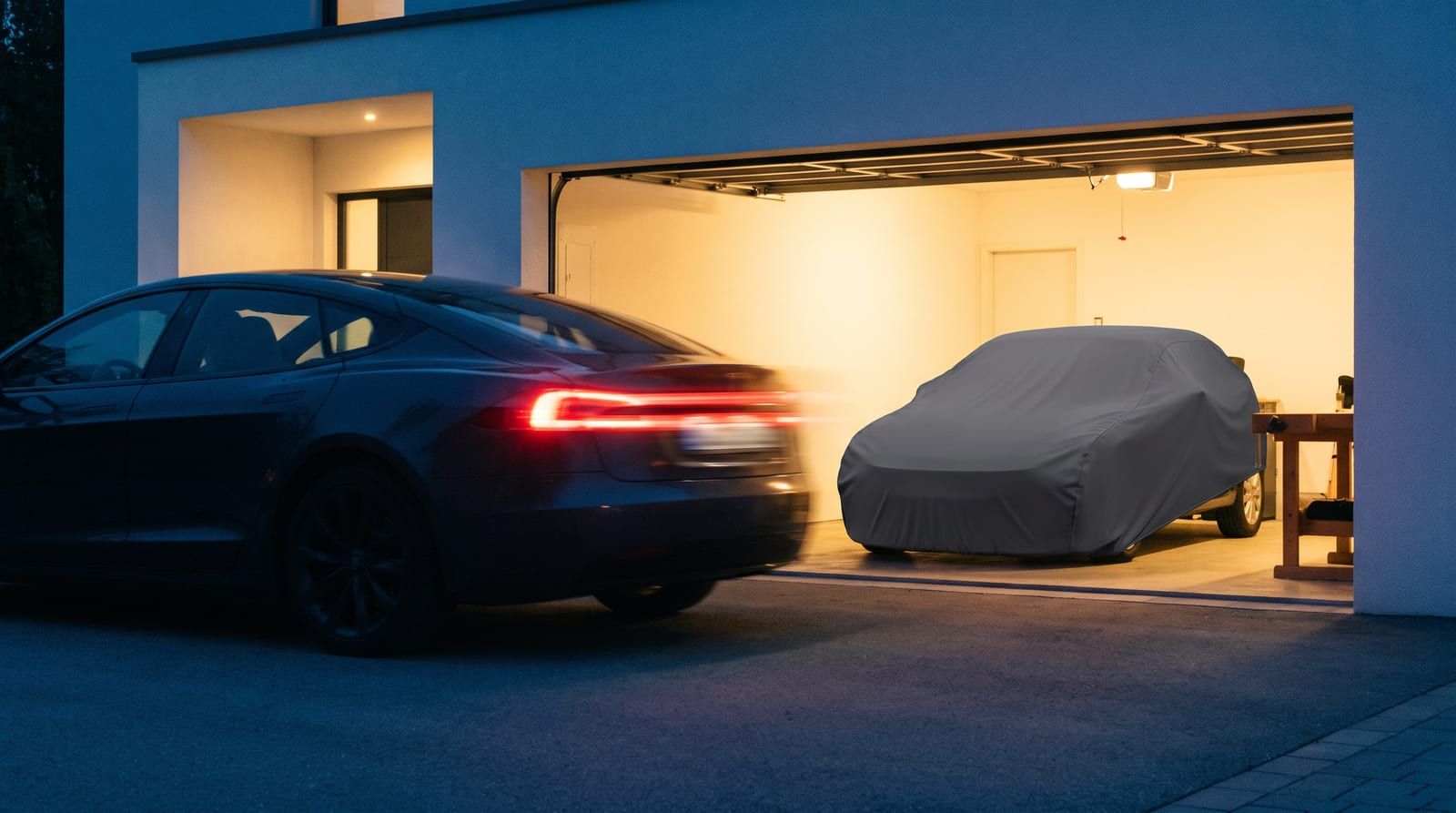
A few features separate a cover that works from one that just sort of fits.
Charge port access matters more than people expect. If you plug in daily, you don't want to peel back an entire cover every time. Covers with a built-in cutout or magnetic flap over the port let you charge without fully undressing the car.
Ground clearance is another one. Model 3 and Model S both sit low up front, so a cover with a hem that's too long drags on pavement and scuffs the fabric (and eventually the paint) every time the wind picks it up. You want a snug hem that clears the ground without needing to be cinched down like a tarp.
Mirror pockets deserve their own mention. Tesla's mirror housings have a distinct shape, and a cover without a molded pocket for them will flap at highway rest stops or in a gusty driveway, rubbing paint the whole time.
Sizing has to be model-specific too. Model 3, Model Y, Model S, Model X, and Cybertruck are five different footprints. A "sedan-sized" cover bought off a generic size chart is a guess, not a fit. That's why custom-fit car covers built to the vehicle's actual dimensions perform so differently from a stretch-to-fit universal one.
Last thing: Teslas are mostly painted trim, not chrome. Older cars had chrome bumpers and mirrors that shrugged off UV. Tesla doesn't, so the outer layer of the cover carries more of the UV-blocking job. Worth reading up on what actually makes one cover material better than another before you buy on price alone.
Tesla Cover Comparison Table: Material, Protection & Price Tier
Covers generally fall into three tiers. Here's how they stack up.
Entry-Level Woven Polyester/PVC Blend
- Material: Lightweight woven poly with a thin PVC or similar coating
- Weatherproofing: Sheds light rain and dust, not built for sustained downpours or snow load
- Fit type: Usually semi-custom, a smooth general fit rather than a true Tesla pattern
- Included features: Rarely bundles extras beyond a basic storage bag
- Price range: Low
- Best use case: Occasional street parking in mild climates, short-term dust protection
Reinforced Multi-Layer Outdoor Fabric
- Material: Multi-layer fabric with taped or sealed seams
- Weatherproofing: Fully waterproof, rated for rain, snow, and daily UV exposure; some options are also built with hail resistance in mind
- Fit type: True custom-fit pattern built to the exact Tesla model's dimensions, which is what cuts down on wind flap and keeps the charge port cutout aligned
- Included features: Often bundles a storage bag, cable and lock, and gust straps
- Price range: Mid to high
- Best use case: Daily street parking or seasonal outdoor storage where the car sits exposed most of the time
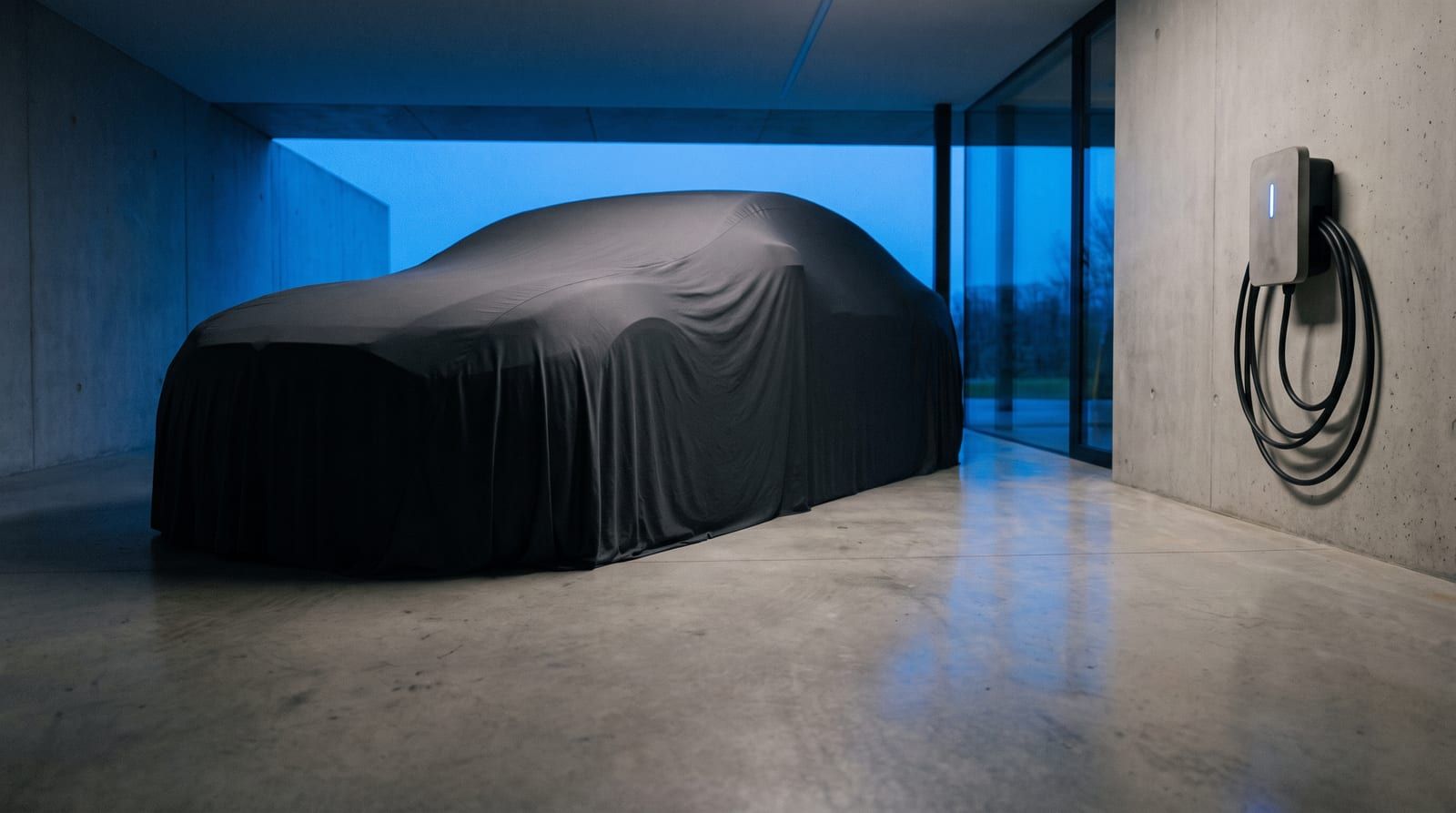
Indoor Black Satin Fleece-Lined Fabric
- Material: Soft fleece-lined satin, designed to be gentle on paint
- Weatherproofing: None, this is indoor-only protection against dust and scratches
- Fit type: Semi-custom to custom depending on the line
- Included features: Sometimes includes a soft liner bag, rarely security add-ons
- Price range: Mid
- Best use case: Garage-kept display cars or Teslas that only need protection from dust and minor scuffs
If your Tesla lives outside more than it doesn't, the outdoor cover tier is the one worth budgeting for. The entry tier is fine for occasional use, but it's not really built for the job most Tesla owners actually need done.
Buyer Checklist: 7 Things to Confirm Before You Buy
Before you hit purchase, run through this list.
- Model and year match. Confirm the listing names your exact Tesla, including whether it's pre-refresh or Highland Model 3, since the bumpers and front fascia changed shape.
- Charge port cutout. Don't assume you can just lift the hem to plug in. Check for a dedicated flap or cutout.
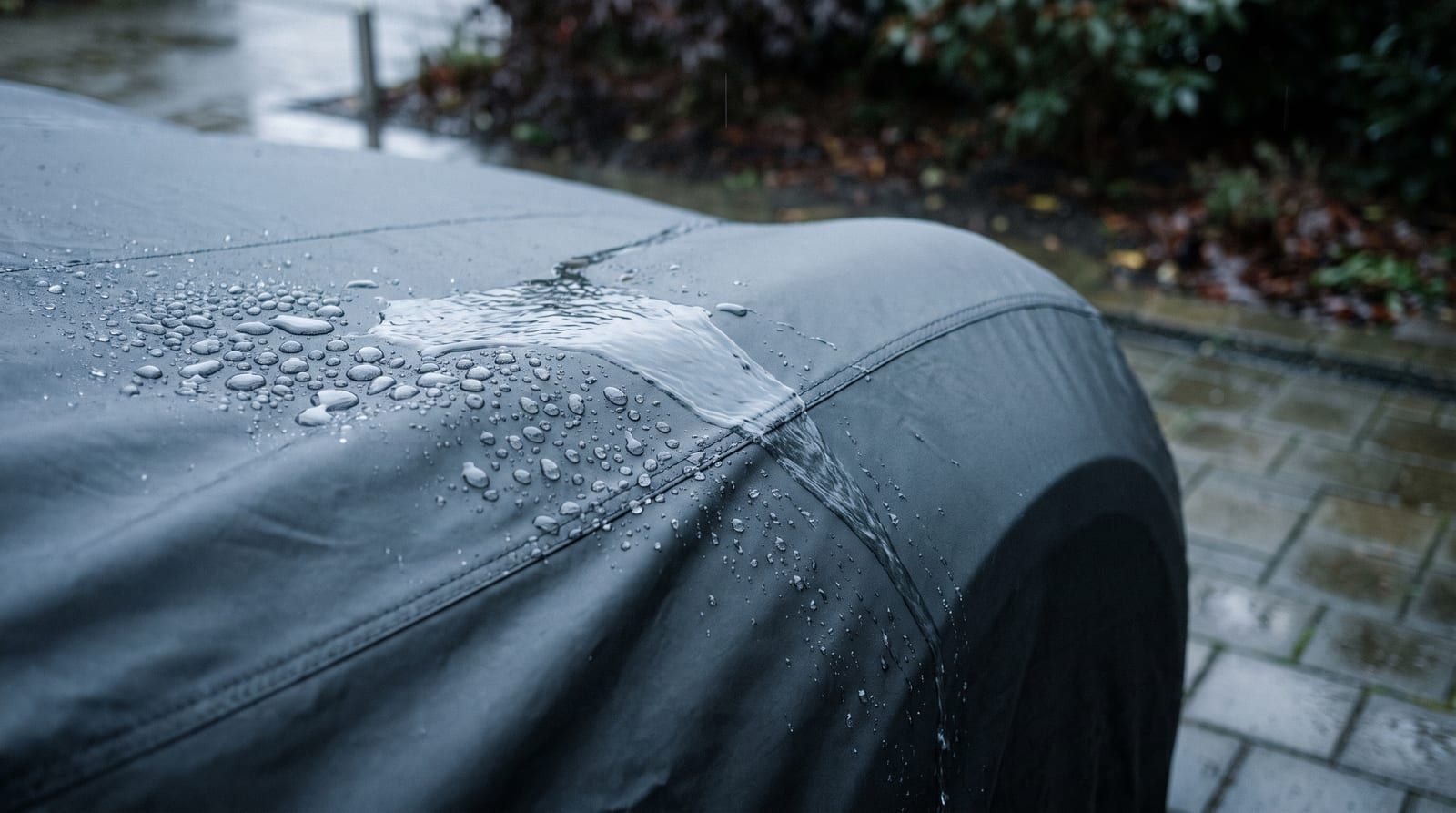
- Waterproof rating and UV treatment. If the car parks outside more than occasionally, this isn't optional.
- Elastic or cinch-strap hems at the wheel wells. These stop wind from getting underneath and lifting the cover on the highway or in an open driveway. Pairing this with gust straps adds another layer of hold-down in windy areas.
- Security features. If you're parking on the street, integrated cable and lock loops matter more than they sound like they would.
- Warranty and return policy. Fit issues are the number one reason covers get returned, so know the terms before you buy, and check whether the warranty actually covers the thing you're worried about.
- Care instructions match your habits. A fleece-lined indoor cover needs different washing and drying than a heavy-duty outdoor one. Buy for the maintenance routine you'll actually keep up with, not the one you wish you had.
Matching the Cover to Your Tesla Model
Model 3 and Model Y are the most common Teslas on the road, and most cover lines are built with these two in mind first. The 3's low, sloped front end is the thing to watch: prioritize a cover with a snug, non-dragging hem and confirmed charge-port access over one that's just cheap.
Model S and Model X need more attention around the roofline and mirrors. The X's falcon-wing doors change how the cover needs to seal near the roof seams, and the S's longer body means the mirror pockets and rear taper have to actually match the car's real dimensions, not an approximation.
Cybertruck is its own category entirely. It's a truck-bodied EV, not a sedan or SUV, so a cover pattern built for the Model 3 or Y won't come close to fitting. Check the truck-specific Tesla cover page rather than trying to force a car or SUV pattern onto it. For Model S, X, and other SUV-style Teslas, the SUV Tesla page is the right starting point, and Model 3 and Y owners should start with the car-category Tesla page.
One more thing worth doing: cross-check your VIN or trim against the cover's listed spec sheet if your Tesla has an aftermarket spoiler or a different bumper configuration than the base trim. Two cars with the same model name can still need different patterns. If you're not sure what you're measuring, a sizing guide is faster than guessing with a tape measure.
FAQs About Car Covers for Tesla
Do I need to remove the cover to charge my Tesla?
Not if the cover has a charge port cutout or flap. Those let you plug in the cable without removing the whole cover. If it doesn't have one, yes, the cover comes off first, every time.
Is a tarp a cheaper alternative to a car cover for a Tesla?
It looks cheaper up front, but tarps trap moisture against the paint, don't have fitted hems, and tend to scratch clear coat where the material moves against the body in wind. A fitted, breathable cover avoids all three problems. There's a longer breakdown on why a tarp isn't a real substitute for a car cover if you want the details.
What cover material is best for a Tesla parked outside year-round?
Multi-layer waterproof fabric with UV treatment. Single-layer or indoor-only fabric just isn't built for daily sun and rain exposure and will wear out fast under those conditions.
Will a universal car cover fit my Tesla well enough?
Probably not well. Universal covers gap at the charge port and mirrors and often drag at the low front fascia, exactly the spots where a Tesla needs the tightest fit. A model-specific pattern solves all three at once.
Choosing the Right Tesla Cover: Next Steps
Here's the short version: figure out your exact model and year, decide whether it's living outside or coming into a garage most nights, then match the tier and price to how much weather it's actually facing. Skip the guesswork on sizing, a proper fit finder tool beats eyeballing dimensions from a spec sheet every time.
If you're still narrowing things down, poke around our related guides on cover materials and fit, or subscribe for more buying breakdowns like this one before your next outdoor-parking season starts.
Updated