


Best Golf Cart Cover: Comparison Table, Buyer's Checklist & FAQ
Search "best golf cart cover" online and you'll get lists ranking the same five products by star rating, as if every cart owner in America is storing their cart under the same porch roof. They're not. A cart parked outdoors in Florida humidity needs something completely different than one tucked into a garage in Ohio. So instead of crowning one winner, this guide breaks down what separates a genuinely good cover from a mediocre one, then gives you a checklist to match a cover to your actual cart and climate.
What Actually Makes a Golf Cart Cover "The Best" One
Here's the thing about "best": it's relative to where your cart sleeps at night. A cover that's perfect for a coastal owner leaving their cart outside year-round would be overkill, and honestly kind of annoying, for someone who parks in a climate-controlled garage and just wants to keep dust off the seats.
Four things actually decide whether a cover fits your situation:
Material and weatherproofing. Is it built to shed rain and block UV, or just built to keep dust off?
Cart size and roof height. A 2-seater cover won't stretch over a lifted 6-passenger rig, and forcing it will just tear the seams.
Indoor vs. outdoor use. Garage storage and open-air storage call for different fabrics entirely.
Closures. Elastic hems, grommets with tie-down straps, or a cable lock, each does a different job.
One more thing worth knowing before you shop: most golf cart covers are sold semi-custom by brand and model, not as one-size-fits-all products. A Club Car cover isn't built the same as an EZ-GO or Yamaha cover, because the roofs, windshields, and rear seat kits differ. That affects fit quality more than most buyers expect.
From here, we'll compare the main cover types and tiers, then walk through a buyer's checklist to help you land on the best golf cart cover for your specific cart and storage setup.
Golf Cart Cover Types Compared
Cart covers generally break into four tiers. Here's how they stack up.
Basic/Economy Polyester
- Best-use environment: Garage or carport, occasional light rain exposure
- Water resistance: Light, sheds a passing shower but not sustained rain
- UV/fade resistance: Minimal
- Breathability: Good
- Typical price range: Budget tier
- Included extras: Usually just the cover, maybe a basic elastic hem
Deluxe Woven Fabric
- Best-use environment: Mixed indoor/outdoor, moderate climates
- Water resistance: Moderate, handles rain but not prolonged storms
- UV/fade resistance: Decent
- Breathability: Good
- Typical price range: Mid-range
- Included extras: Straps or a fitted hem, sometimes a storage bag
Platinum/Heavy-Duty Outdoor
- Best-use environment: Full-time outdoor storage, coastal or high-sun regions
- Water resistance: High, built for sustained exposure
- UV/fade resistance: Strong
- Breathability: Reduced, trades airflow for sealing
- Typical price range: Premium
- Included extras: Storage bag, tie-down straps, sometimes a cable lock
Indoor Satin/Fleece-Lined
- Best-use environment: Garage-kept carts only
- Water resistance: Minimal to none
- UV/fade resistance: Not relevant indoors
- Breathability: Excellent
- Typical price range: Mid-range
- Included extras: Soft-touch lining to prevent scratches, often a storage bag
The tradeoff worth understanding: outdoor-rated covers seal tighter against water, which means less airflow underneath. That's a fair trade if your cart sits under open sky all year. But if it lives in a garage, that same sealed fabric just traps humidity against the paint for no reason. Indoor covers skip the waterproofing entirely and focus on soft material that won't scuff a clear coat, which is genuinely what garage-stored carts need more.
Quick way to map this to your situation: year-round outdoor storage points you toward the platinum tier, seasonal or occasional outdoor exposure fits the deluxe tier, and anything parked indoors most of the time is better served by the indoor satin option, even though it costs about the same as deluxe.
Buyer's Checklist: 7 Things to Check Before You Buy
Before you add anything to cart, run through these seven checks. Skipping even one is how people end up with a cover that flaps in the wind or won't clear the roof.
1. Confirm your brand, model, and roof style. A 2-seater, 4-seater, and lifted 6-passenger cart all have different dimensions, and fit varies more than people expect between them.
2. Match material to storage environment. Outdoor and uncovered means you need something waterproof. Garage-kept means breathable indoor fabric matters more than water resistance.
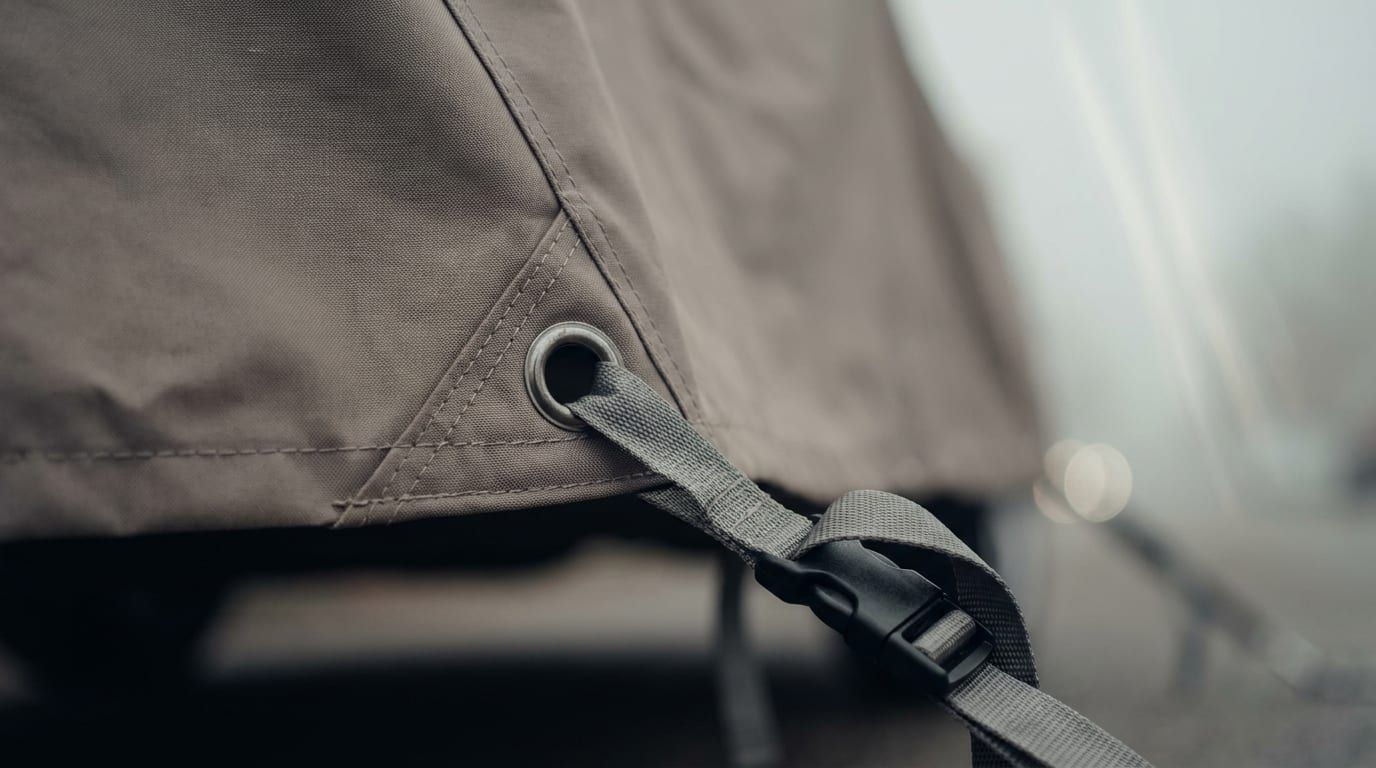
3. Check the closure system. Elastic hems are simplest, grommets with tie-down straps hold tighter in wind, and a built-in cable lock adds a visible theft deterrent for carts parked outside overnight.
4. Look for reinforced seams. Stress points like mirrors, antenna cutouts, and roof corners are where cheap covers rip first. Double-stitching there is a good sign the manufacturer thought about real-world use.
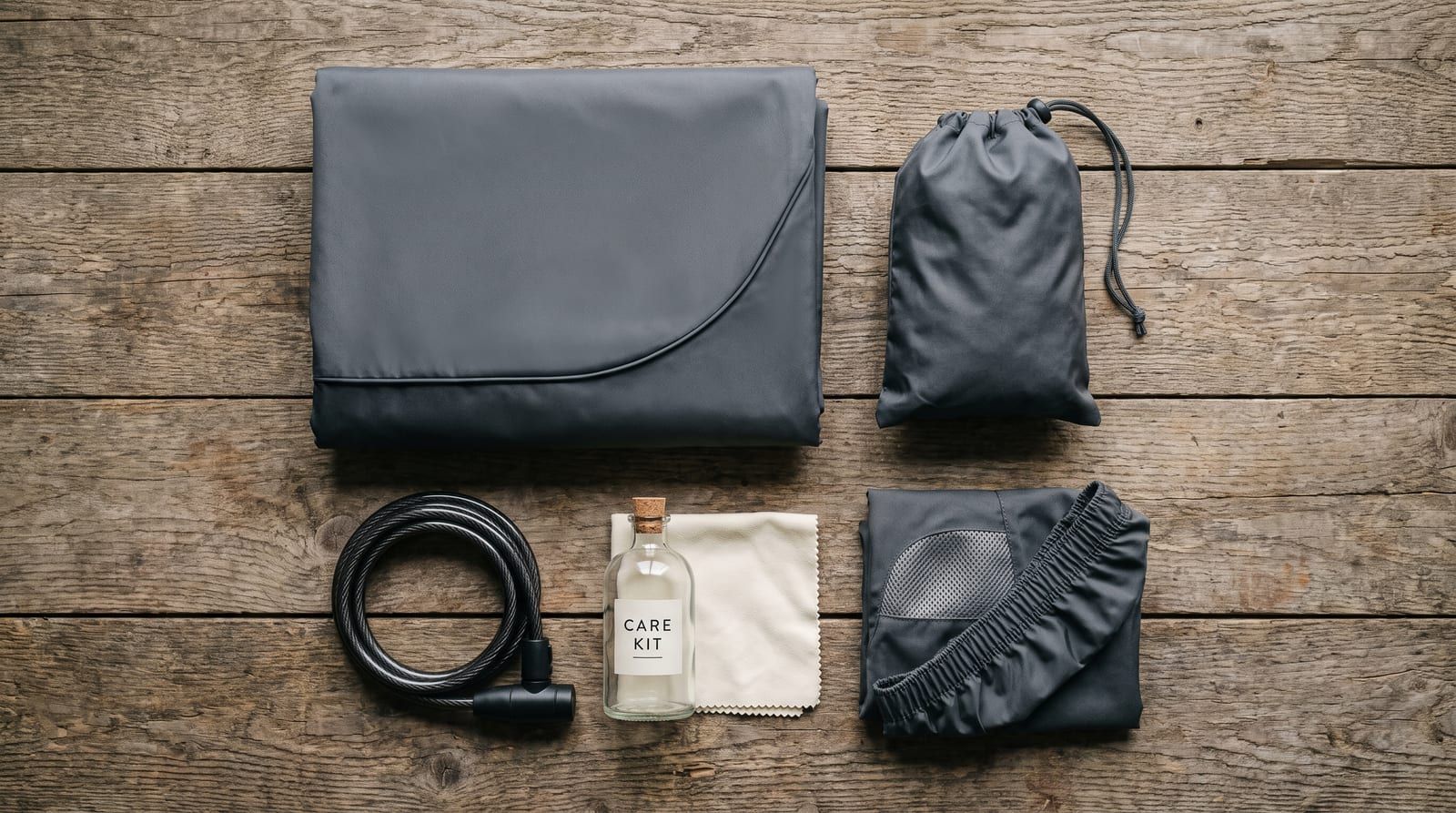
5. Verify what's actually included. Storage bags, care kits, and straps are sometimes bundled, sometimes sold separately. Check the listing twice before assuming.
6. Check warranty length and return policy. Semi-custom fit means occasional mismatches happen even when you measure correctly. A solid return window covers you if the fit's off.
7. Factor in weight and ease of installation. If you're pulling the cover on and off daily after a round, a lighter, easier-to-handle fabric matters more than it sounds like it would.
Not sure which model number your cart actually is? Measuring the cart length and roof height yourself and checking it against a sizing guide before buying saves a return shipment later. If you'd rather skip the guesswork, a cover finder tool can narrow things down by cart brand and model in a couple clicks.
Matching a Cover to Your Golf Cart Brand
Brand-specific fit matters more with golf carts than with most vehicles, honestly. Club Car, EZ-GO, Yamaha, and Cushman all build carts with different roof widths, windshield heights, and rear seat kit configurations. A cover cut for one won't sit right on another, even when the overall cart length looks similar on paper.
If you drive a Club Car, start with the Club Car cover page, and if yours is a lifted or 6-passenger build, there's a dedicated option for the Onward lifted 6-passenger configuration that accounts for the extra roof clearance those setups need. EZ-GO owners have a similar path through the EZ-GO Textron cover page.
Other brands carry their own dedicated cover lines too, worth checking before settling for something universal. That includes Yamaha and Cushman, along with Columbia Par Car, Melex, Hisun, and Massimo. Universal covers can work in a pinch, but they're cut to fit the widest range of carts possible, which means they're loose almost everywhere on any single one.
Before you buy anything, grab a tape measure: cart length, roof height, and windshield configuration. Compare those numbers against the size range listed on the cover's product page. It takes five minutes and it's the single best way to avoid a cover that bunches at the corners or leaves the front end exposed.
Weatherproofing: Outdoor, Indoor, and In-Between
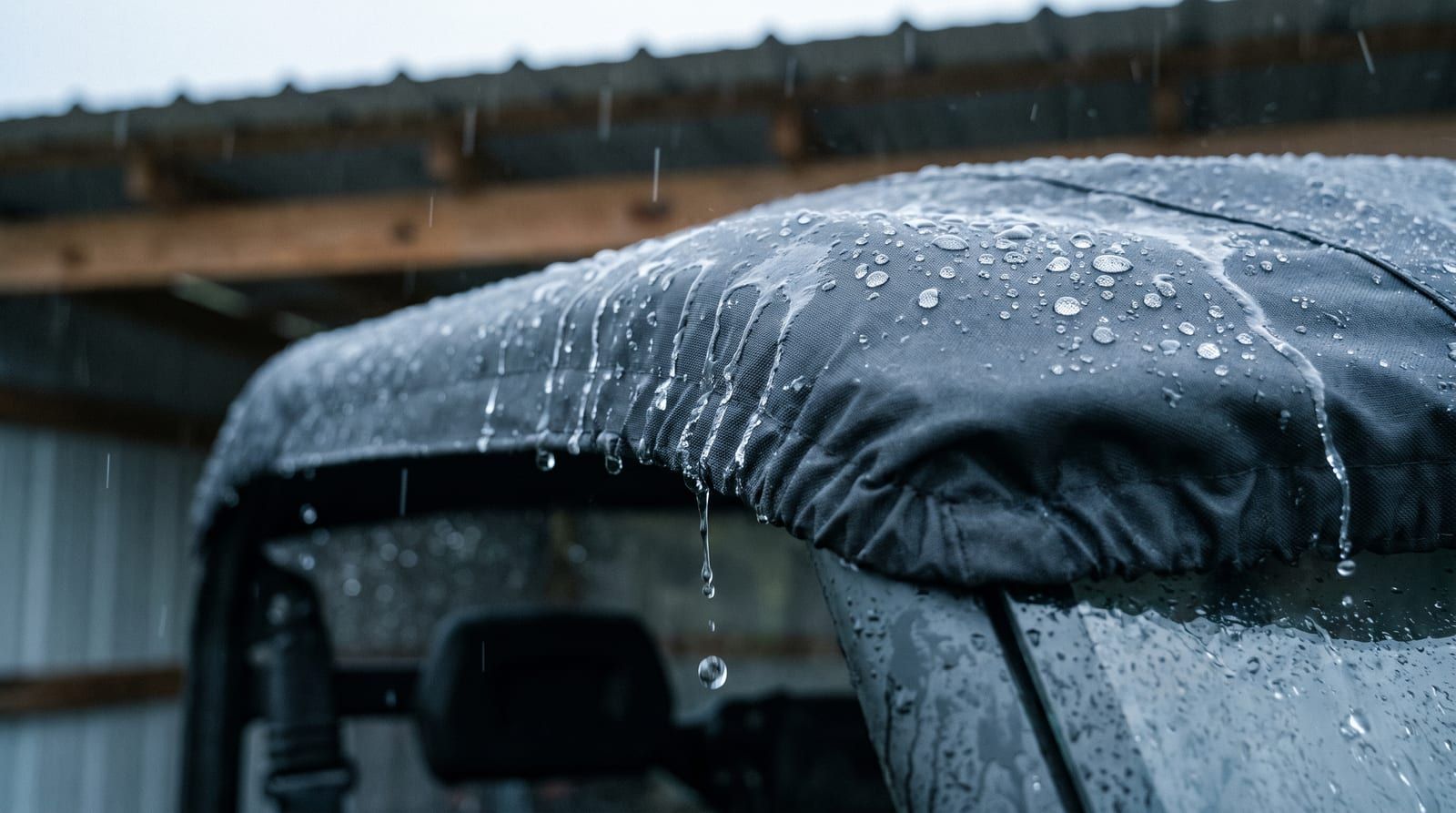
"Waterproof" and "water-resistant" get used interchangeably in cover listings, and they shouldn't be. Water-resistant fabric sheds light rain and repels splashing but will eventually let moisture through in a sustained downpour. True waterproof fabric is sealed to block water outright, which sounds strictly better until you consider the tradeoff: a fully sealed cover with no breathability can trap condensation underneath, which is its own moisture problem. The better outdoor covers use a fabric that's water-resistant enough to handle real weather while still letting some air move through.
UV exposure matters just as much as rain if your cart sits outside under direct sun. Plastic dashboards fade, vinyl seats crack, and rubber trim dries out faster than owners expect. A cover with real UV resistance is doing quiet work every single day the cart isn't in use, not just during storms.
Northern climates add another wrinkle: snow load and wind. Heavier fabric holds up better under accumulated snow, and secure strapping (not just an elastic hem) keeps the cover from lifting in gusty winter wind, which is how covers end up torn or blown off entirely.
If your cart lives in a garage, most of this doesn't apply to you. Indoor storage calls for soft, breathable material that protects against dust and incidental scratches rather than the elements, since waterproofing indoors just adds cost for a job the roof over your cart is already doing.
Cover Care: Getting the Most Life Out of It
A good cover lasts years if you treat it right, and most of the damage that shortens its life is preventable.
Shake off leaves, grass clippings, and debris before folding it up. Debris trapped in the folds grinds against the fabric over time and wears it thin faster than sun or rain ever will. And let the cover dry completely before you put it away. Folding a damp cover into a bag is basically an invitation for mildew, and once that sets in, it's not coming out.
Skip the washing machine. Spot-clean with mild soap, water, and a soft brush instead. Machine washing (especially with heat) breaks down the waterproof coating on treated fabrics faster than normal wear would. For a full rundown on doing this right, our cover cleaning guide walks through the process step by step.
Use the storage bag that came with it between seasons rather than tossing the cover on a shelf. Garage clutter, sharp tool edges, and stacked bins are how a perfectly good cover gets a tear nobody notices until the next time it's needed.
None of this is complicated, but it's the difference between a cover that lasts three seasons and one that lasts eight. It also matters for warranty purposes: most manufacturers expect reasonable care, and a cover that's been machine-washed or left balled up wet isn't going to get much sympathy on a claim.
FAQ: Golf Cart Cover Buying Questions
What size cover do I need for my golf cart?
Measure length, width, and roof height first, then match those numbers to your specific brand and model's size chart rather than assuming a general "2-seater" or "4-seater" label will fit correctly. Lifted carts especially need to check roof clearance separately.
Can I leave a golf cart cover on year-round outdoors?
Yes, as long as it's rated for outdoor use, meaning water-resistant fabric and real UV protection. Check the straps periodically, though. Wind wear loosens tie-downs over months of daily exposure, and a loose strap is how a cover ends up flapping or blowing off entirely.
Do golf cart covers prevent theft?
Not on their own. A cover won't stop someone determined to take a cart. But a model with a built-in cable lock adds a visible deterrent and a small delay, which is often enough to make an opportunistic thief move on to an easier target.
Is a universal golf cart cover as good as a brand-specific one?
Not really, no. Universal covers fit looser by design, since they're built to accommodate a wide range of cart shapes, and that slack is exactly what lets wind get underneath and flap the fabric. A brand and model-specific cover seals closer to the frame, which means better protection and a lot less noise on a windy day.
Choose the Cover That Fits Your Cart and Your Storage
Work the decision in order: figure out where the cart actually lives (garage, carport, or fully outdoor), pick the material tier that matches that environment, then confirm it's cut for your specific brand and model. Skip any of those three steps and you end up with something that's technically a cover but doesn't actually do the job.
If you're still narrowing things down, a cover finder tool can save you from scrolling through options that were never going to fit your cart anyway. And if you want more guides like this one on protecting whatever you drive (or park), it's worth subscribing or poking around the rest of the articles section.
A cover that actually fits does quiet, unglamorous work: it keeps sun off the dash, rain out of the seats, and dust away from the electronics between rounds. That's the whole job. Get the fit right and it just handles it.
Updated