


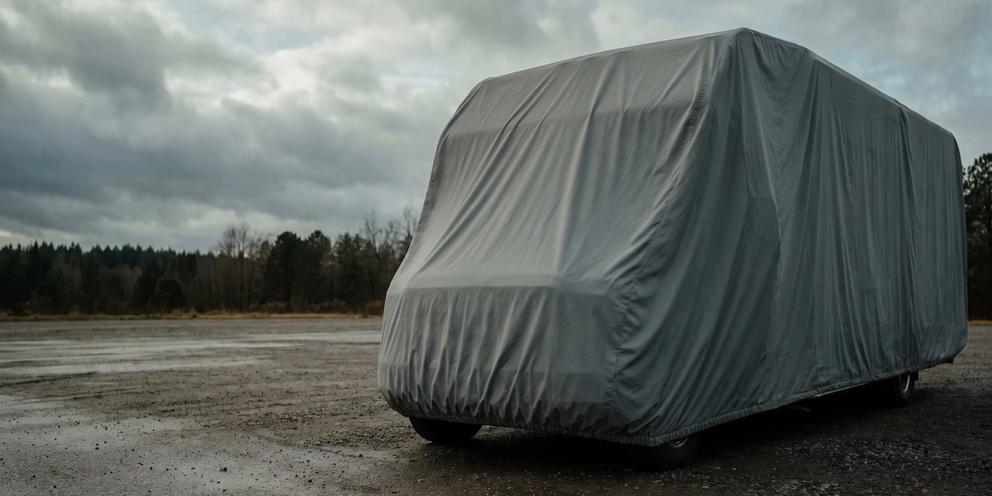
Best RV Cover: A Side-by-Side Comparison and Buyer Checklist
What Makes an RV Cover 'Best' for Your Rig
There's no single best RV cover that works for every rig. A cover that's perfect for a Class B van parked in a driveway would fall apart, literally, on a 40-foot Class A left outside all winter. The best RV cover is the one built for your specific RV class, your climate, and how often you actually use the thing.
That's the frame for this whole article. We'll walk through a comparison by vehicle type, break down the material tiers you'll run into while shopping, and hand you a buyer checklist to run through before you check out. No fluff, just the stuff that actually determines whether a cover holds up.
Here's what a cover is really protecting against: UV rays that fade decals and dry out roof seals, water that works its way into seams over months of storage, and wind abrasion that sands away gel coat one gust at a time if the cover flaps loose for a season. All three of those risks get worse the longer an RV sits parked. And here's the part people underestimate: fit matters more than brand or price. A premium cover cut wrong for your rig will underperform a cheaper cover that actually fits.
Comparing RV Cover Options by Vehicle Type
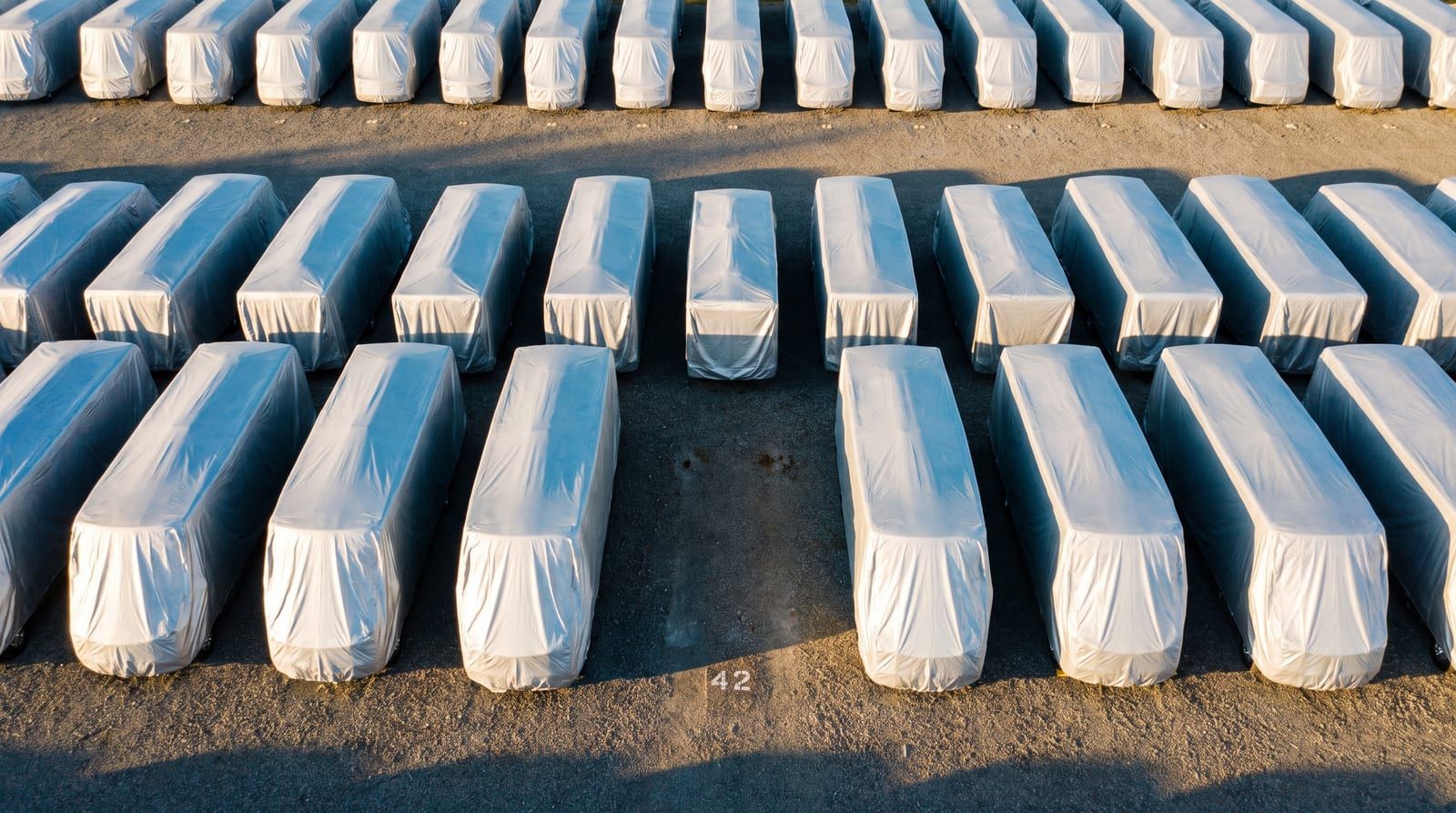
Different RV types fail in different places, so the "best" fit criteria shift by class.
Class A motorhomes (roughly 25-45 ft)
- Tall, flat-sided profile that catches wind like a sail
- High UV exposure across a huge flat roof
- Needs heavy woven fabric and reinforced tie-downs to stay put in open storage lots
- See Class A RV covers
Class B camper vans (roughly 17-24 ft)
- Used more often than bigger rigs, so on/off speed matters
- A closer, contoured fit beats a bulky universal cut
- See Class B RV covers
Class C motorhomes (roughly 20-33 ft)
- Cab-over profile means the cover has to follow a step down, not just drape flat
- A flat rectangular sheet will pool water right at that step
- See Class C RV covers
Travel trailers (roughly 12-35 ft)
- Often parked the longest between trips of any category here
- Water resistance and UV protection matter more than breathability in most cases
- See travel trailer covers
Fifth wheels (roughly 22-45 ft)
- Tall front profile overhangs the truck bed area
- Needs extra front-end clearance built into the cut, not just extra length
- See fifth wheel trailer covers
Folding/pop-up trailers
- Odd angles once folded down, nothing like a rigid box shape
- Look for adjustable elastic hems and multiple tie-down points instead of one rigid cut
- See folding pop-up trailer covers
Truck campers
- Size to the camper unit itself, not the truck bed or cab
- Getting this wrong is the single most common sizing mistake for this category
- See truck camper covers
Material & Weatherproofing Tiers Compared

Once you know which sub-category fits your rig, the next decision is material. This is where most of the price difference between covers actually comes from.
Entry-level woven fabric
- Decent rain and dust protection for short-term or seasonal storage
- Lower upfront cost
- UV resistance fades noticeably after a couple years of full sun
Mid-tier breathable fabric
- Balances water resistance with airflow
- Cuts down on trapped condensation and mildew risk during multi-month storage
- The right call for most rigs sitting more than a few weeks at a stretch
Premium/heavy-duty tiers
- Reinforced stitching plus UV-treated layers
- Built for year-round outdoor storage through harsh sun, wind, or snow load
- Costs more, but it's the tier that actually survives multiple seasons outside
Here's the tradeoff people miss: fully waterproof, tarp-like material sounds like the safest bet, but it can trap moisture underneath and cook your roof seals in condensation. Breathable fabric sheds rain from the outside while still letting vapor escape from underneath. If you're weighing that tradeoff in more depth, our waterproof car cover guide covers the same principle that applies to RV-scale fabric.
One more thing worth flagging: double-stitched seams and reinforced grommets are usually what separates a cover that survives one winter from one that's still intact three winters later. Cheap single-stitch seams are almost always the first failure point, well before the fabric itself wears out.
Buyer Checklist: What to Check Before You Buy
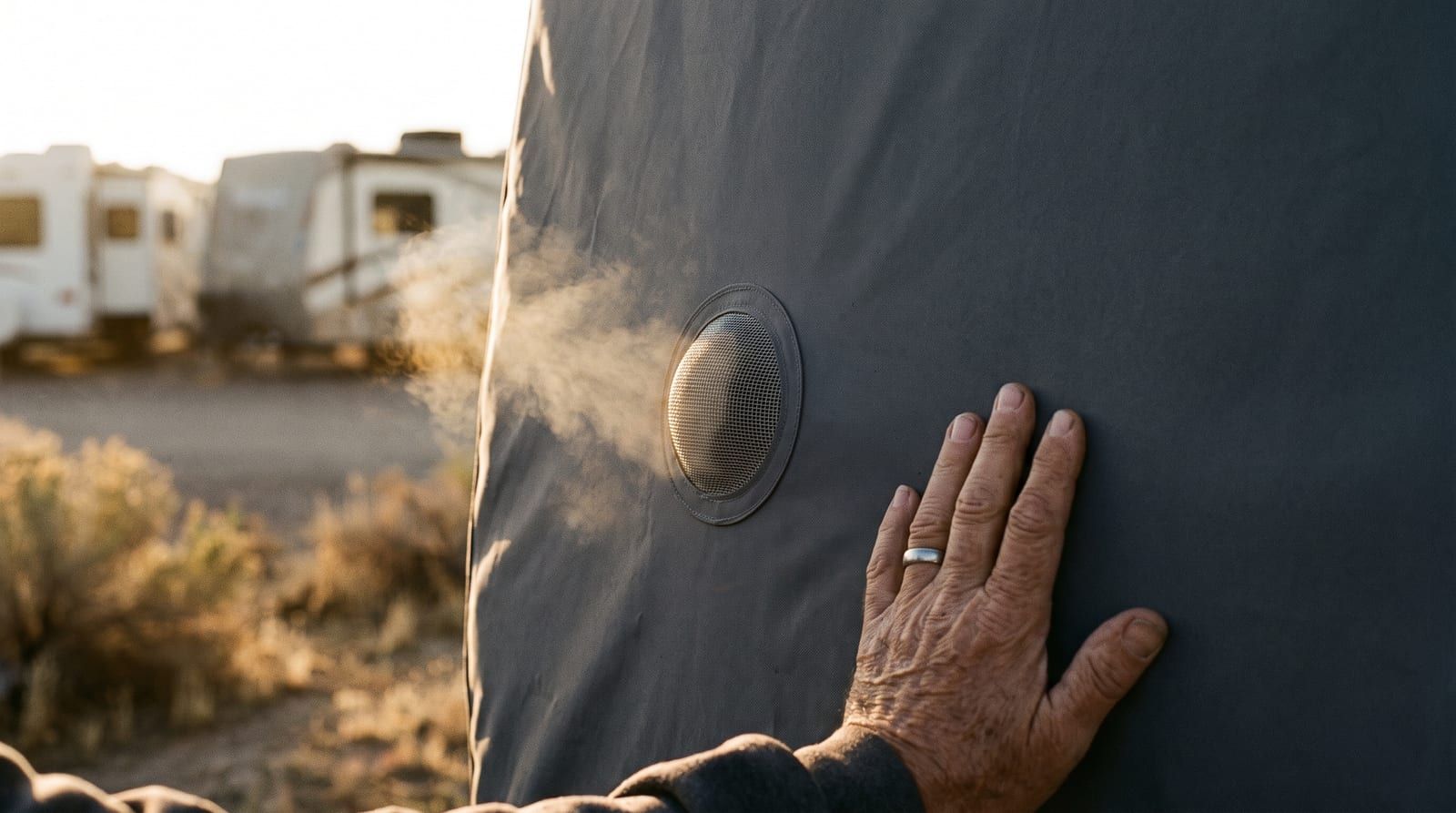
Before you add a cover to cart, run through this list. It takes five minutes and saves you a return shipment.
- Measure the whole rig, not just the class. Length, height, and width, including any roof-mounted AC unit or ladder. Match those numbers against the exact size chart rather than assuming your RV class alone tells you the size. Our guide on what size car cover fits your vehicle walks through the same measuring logic.
- Look for vent panels near the roof. These breathable zones are what actually reduce condensation buildup during long storage stretches.
- Check for a built-in door or access zipper. If you need to grab something from inside without pulling the whole cover off, this feature matters more than it sounds like it would.
- Confirm the tie-down system is rated for wind, not just elastic hems. A gust-strap setup holds up in exposed storage lots where a basic elastic hem will work loose within a season. Here's our guide to installing gust straps and wind straps if you want to see what a proper setup looks like.
- Verify what's actually included. Storage bag, cable/lock compatibility, and warranty terms. Read the lifetime warranty details before you buy, not after something goes wrong.
- Think about install difficulty. An RV cover is a lot of surface area to wrangle solo. If you're doing this alone, a support pole or a cover designed for one-person installs is worth the extra step. Our RV cover installation guide has the specifics.
Indoor vs. Outdoor Storage: Does It Change What You Need?
Yes, but maybe not as much as you'd think.
Indoor or covered storage still benefits from a cover. It's just a lighter job: a breathable, indoor-rated cover blocks dust and light scuffing without needing to fight moisture buildup the way an outdoor cover does.
Outdoor, fully exposed storage is where the heavier tiers earn their cost. UV-resistant, heavy-duty fabric and full weatherproofing aren't overkill out there, they're the baseline. If your rig sits uncovered against the elements, our guide to using a car cover outdoors covers the wind, UV, and waterproofing tradeoffs in more detail.
Climate matters just as much as the storage type itself. Coastal salt air pushes toward corrosion-resistant materials near seams and grommets. High-altitude UV exposure ages fabric faster than people expect. Heavy snow load calls for a cover rated to handle weight without sagging into the seams. Match cover thickness to how long the RV actually sits idle between trips, not just where you park it. A rig used every weekend has different needs than one that sits from October through April.
FAQs About Buying an RV Cover
What is the best type of cover for an RV?
The best cover matches your specific RV class and length, uses breathable weatherproof fabric, and includes reinforced tie-downs. There's no single best RV cover independent of rig type and climate, it's always a combination of both.
Should an RV cover be waterproof or breathable?
Ideally both. A cover that sheds rain on the outside while letting trapped moisture escape from underneath prevents water damage and mildew at the same time, rather than trading one problem for the other.
How do I know what size RV cover to buy?
Measure total length, height, and width, including roof-mounted accessories like AC units or ladders. Match those exact measurements to a size chart instead of guessing based on RV class alone. Two 30-foot Class A rigs can still need different cover sizes depending on their roof equipment.
Can I use a tarp instead of a real RV cover?
Not really, not for long. A tarp has no fitted shaping, no vents, and no reinforced tie-downs. It tends to trap moisture underneath, flap loose in wind, and abrade the finish over time in a way a purpose-built cover is designed to avoid.
Finding Your Best-Fit RV Cover
The decision path here is short: match your RV type to the right sub-category, pick a material tier based on how and where you store it, then run the fit and features through the checklist above. Skip any one of those steps and you end up with a cover that technically fits but doesn't actually protect the rig.
Browse by your specific RV type at our RV covers hub rather than shopping a generic listing. If you're still not sure of your exact measurements or which model fits your rig, the cover finder tool will get you there faster than guessing. And if you've got questions about warranty coverage or returns before you commit, our FAQ page has those answered too. Worth a look before you check out either way.
Updated