Can a Car Cover Help My Car Pass a More Thorough Inspection by Keeping It Cleaner?
Published

The Direct Answer
Yes, a car cover can help, but only indirectly. Can a car cover help my car pass a more thorough inspection by keeping it cleaner? It can, by blocking dust, pollen, tree sap, bird droppings, and road grime so the paint stays visibly cleaner between washes instead of collecting a fresh layer of grime every day it sits outside.
That matters for inspections that score cosmetic condition: pre-purchase inspections (PPIs), lease-end inspections, dealer trade-in appraisals, and auto auction condition grading all factor in how clean and well-kept a car looks. What a cover won't touch is a state safety or emissions inspection. Those tests check brakes, lights, tires, and exhaust systems, and a spotless hood does nothing for a worn brake pad. The rest of this article walks through exactly which inspections cleanliness affects, what a cover blocks and doesn't, and how to use one properly before an appointment.
Which Inspections Actually Score Cleanliness
Not every inspection cares if your car looks nice. Some absolutely do.
Pre-purchase inspections are a good example. A mechanic doing a PPI is mainly checking fluids, belts, and suspension, but most inspection reports also note paint condition, glass clarity, and visible corrosion. A buyer standing next to that mechanic is forming an impression the whole time, and a hazy, bug-splattered exterior reads as "neglected," fairly or not.
Lease-end inspections are stricter about this than people expect. Condition reports frequently flag excessive dirt, water spots, or etched grime on paint and glass as wear items, and wear items can turn into charges on your final bill. It's not just about scratches and dents. A film of road grime baked onto the clear coat counts against you too.
Dealer trade-in appraisals work on a more subjective scale, but subjective doesn't mean irrelevant. An appraiser walking around your car for two minutes forms a condition rating partly on gut feel, and a clean, cared-for exterior nudges that rating up. It's one of the few parts of the appraisal you can actually control the morning of your appointment.
Auto auction grading uses formal condition scales, and paint, trim, and glass cleanliness are part of the visual grade even when every mechanical system checks out fine. A car with a dull, salt-streaked exterior can grade lower than its mechanical condition deserves.
Now the contrast: state safety and emissions inspections don't care about any of this. They're checking brakes, lights, tires, and exhaust systems against a fixed pass/fail standard. A cover protects paint, not pads. If you're prepping for one of those tests, your time is better spent at a mechanic's lift than a detail bay.
What a Cover Actually Keeps Off the Exterior
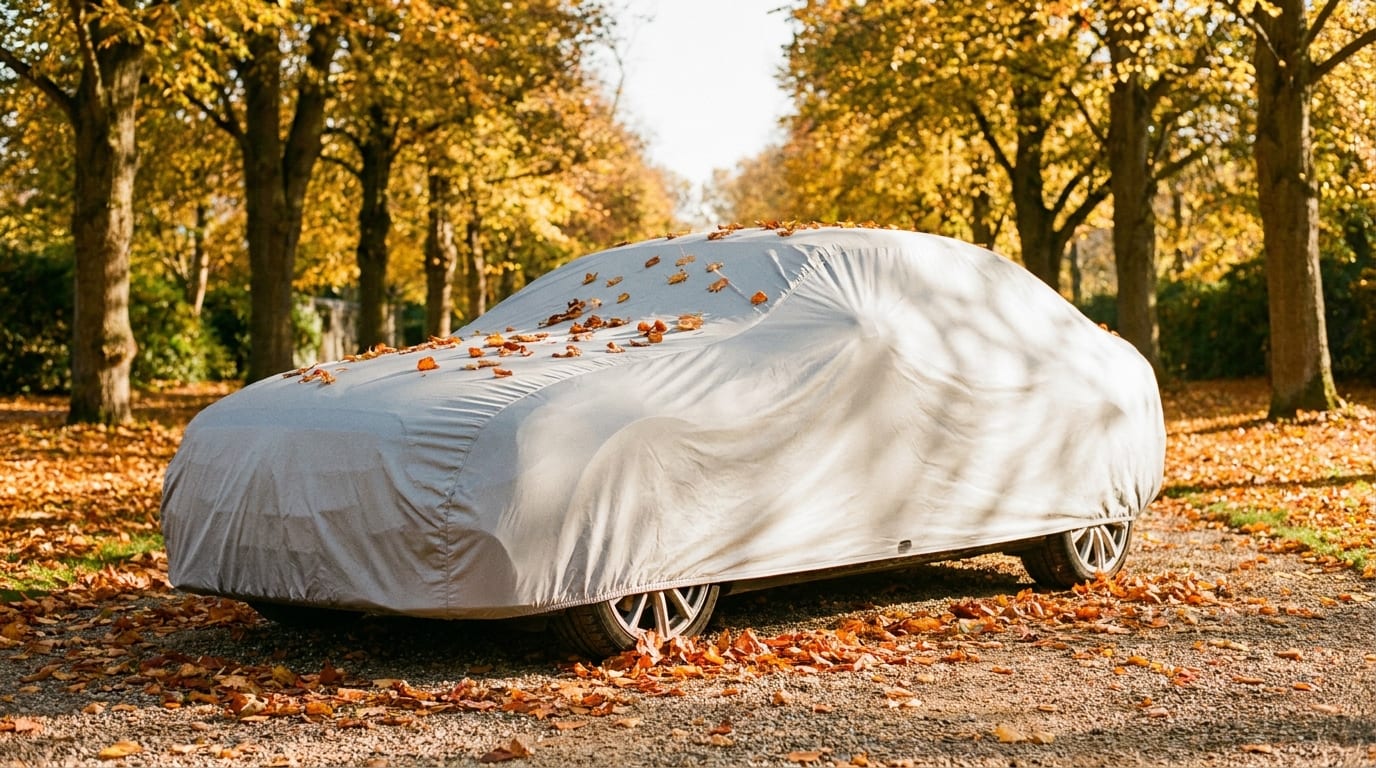
Here's what you're actually protecting against when you throw a cover on.
Tree sap and pollen are the sneaky ones. Left to bake in direct sun for a few weeks, sap can etch right into the clear coat, and at that point no amount of washing fixes it. Bird droppings are worse in a hurry. They're acidic, and if they sit on a hot hood for even a day or two, they can stain or pit the paint permanently.
Road salt and splashback grime matter more in winter climates, where they contribute to corrosion on lower panels and wheel wells over time. That's not a one-day problem, but it compounds fast if the car sits outside through a salty winter with no barrier.
Then there's plain dust. It doesn't etch or stain, but it builds into a dull film that makes a mechanically sound car look tired and uncared for, exactly the impression you don't want walking into a trade-in appraisal. And UV exposure does its own quiet damage: oxidation and fading show up as chalky, dull paint, which is obvious the moment someone does a close walkaround.
A cover sitting between your paint and all of that is doing real work, even if it's boring work.
What a Cover Can't Fix
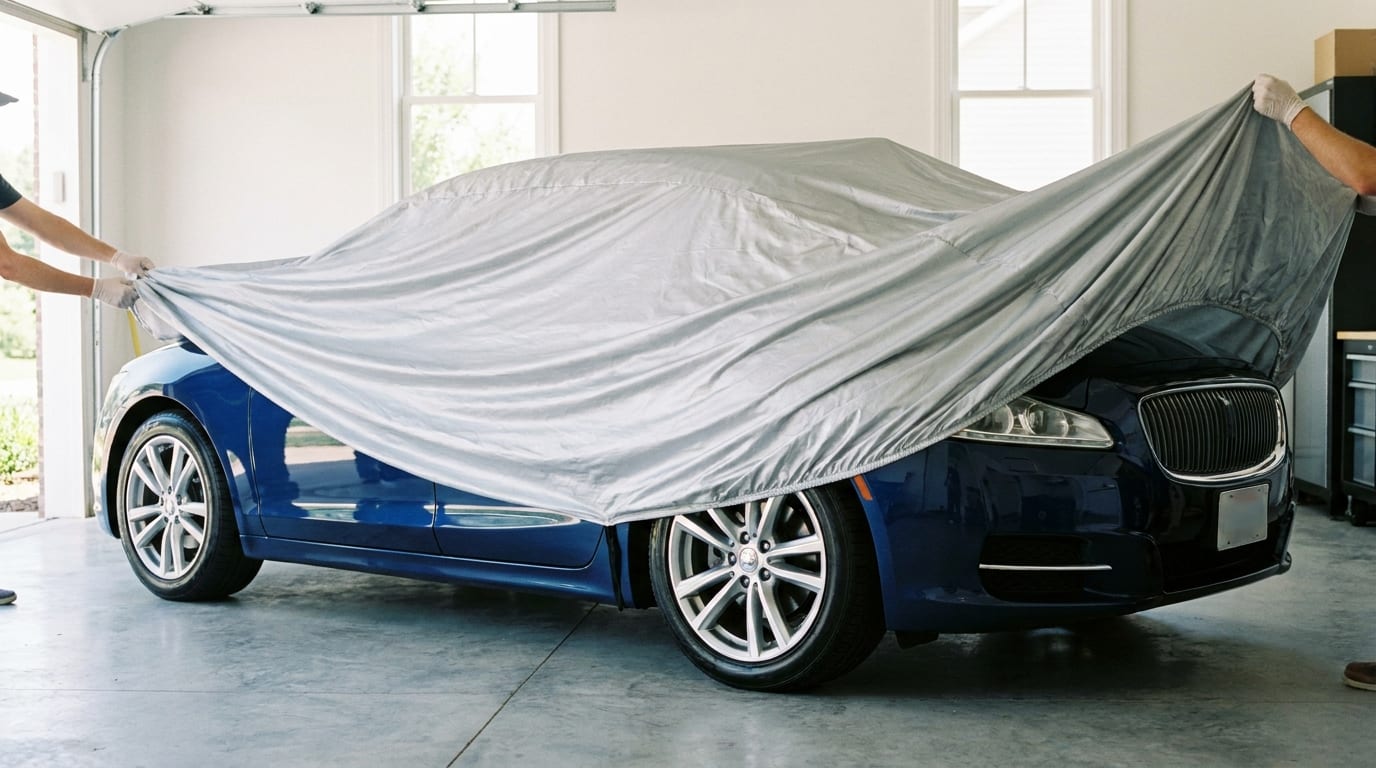
A cover is not a magic trick, and it's worth being blunt about where it stops helping.
It doesn't remove existing dirt. It only prevents new dirt from landing. So if the car's already grimy, covering it just locks that grime in place. You still need a proper wash before any inspection appointment, no shortcuts there.
It also won't hide or repair pre-existing scratches, dents, or rust. An inspector is going to see those regardless of how clean the rest of the panel is, so don't expect a cover to paper over real cosmetic damage.
There's a failure mode people don't think about: an ill-fitting or non-breathable cover can trap moisture underneath it, causing water spots or even a mildew smell, which works directly against the goal you're trying to hit. Fit and material matter more than people assume, something we get into in the guide to using a car cover outdoors.
And here's one worth repeating because it trips people up: if you cover a car with leaves or dust already sitting on top of it, wind shifting that cover around can grind that debris into the paint like sandpaper. The fix isn't complicated. Clean the car first, then cover it. Don't use the cover as an excuse to skip the wash.
Choosing the Right Cover for the Job

Not all covers do the same job, and picking the wrong type undercuts everything above.
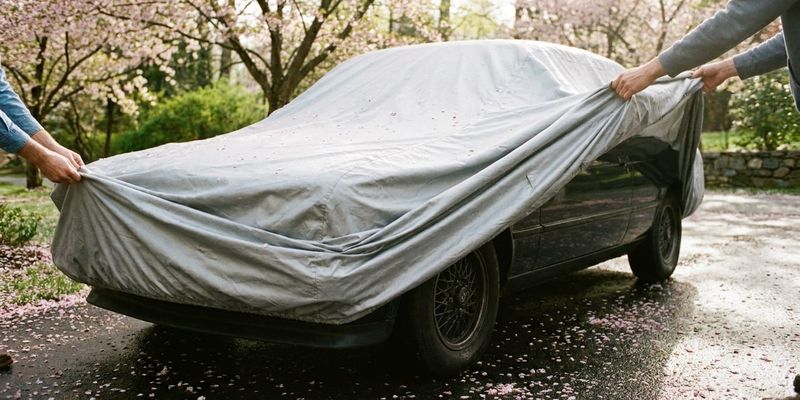
If the car's parked outside before an inspection or appraisal appointment, you want an outdoor car cover built from water-resistant, breathable fabric. That combination keeps rain and UV off without trapping moisture underneath, which is the exact failure mode mentioned earlier.
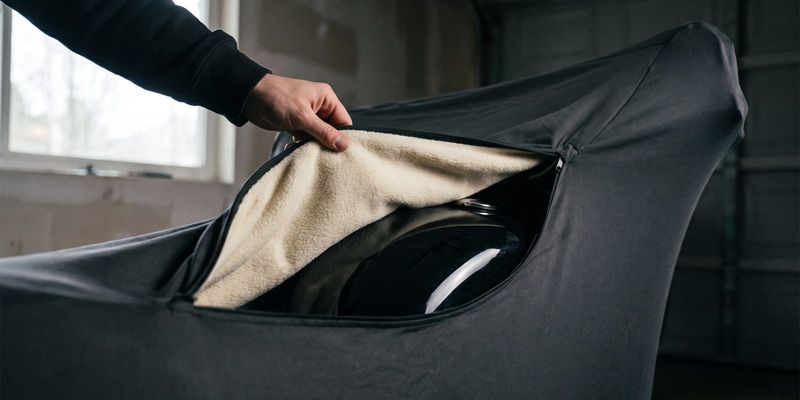
Garage-kept cars have a different problem. Dust is the enemy, not rain or sun, so an indoor car cover in a soft satin material does the job without the bulk of weatherproofing you don't need.
Fit matters too. A custom-fit car cover seals more tightly around mirrors, antennas, and body lines than a universal-fit cover, which means fewer gaps for wind-blown dirt and moisture to sneak through. A loose, flapping cover is basically an invitation for grit to work its way underneath anyway.
Material quality is the last piece. Thin, single-layer fabrics let sap, pollen, and water spots through more than layered, multi-ply materials do over time. If you're shopping on fabric alone, read up on which material car cover is best before you buy, and if rain is a real concern where the car sits, a dedicated waterproof car cover is worth the upgrade.
Pre-Inspection Checklist Using a Cover
If you've got an inspection, appraisal, or trade-in coming up, here's a simple sequence that actually works.
Wash and fully dry the car first. Covering a dirty car just traps grime against the paint, which defeats the entire point.
Install the cover a few days to a week before the appointment, not months in advance. That window is enough to stop a fresh layer of dust or sap from building up without risking long-term issues from extended coverage.
Secure it properly. A wind strap or gust strap keeps the cover from shifting and dragging debris across the panels every time it's windy out. A cable lock adds security if the car's somewhere public.
Clean the cover itself now and then, too. A grimy cover can transfer dirt right back onto the paint it's supposed to be protecting, which is its own kind of ironic. Here's how to clean a car cover properly.
Finally, do a last wipe-down of mirrors, glass, and trim right before the appointment. Covers can leave light dust in folds and seams, and that's exactly where an inspector's eye tends to land first.
Bottom Line
A cover is a maintenance tool, not a miracle. It protects cosmetic condition between washes, and that genuinely supports better outcomes on inspections that score cleanliness, PPIs, lease-end reviews, trade-in appraisals, auction grading. It won't substitute for an actual wash, and it won't fix a mechanical issue a safety inspector is going to catch regardless of how the paint looks.
If you've got an inspection or appraisal on the calendar, it's worth matching the cover type and material to how and where your car actually sits, garage or driveway, dry climate or wet one. Take a look at our other car care guides and find the setup that fits your situation before your next appointment.