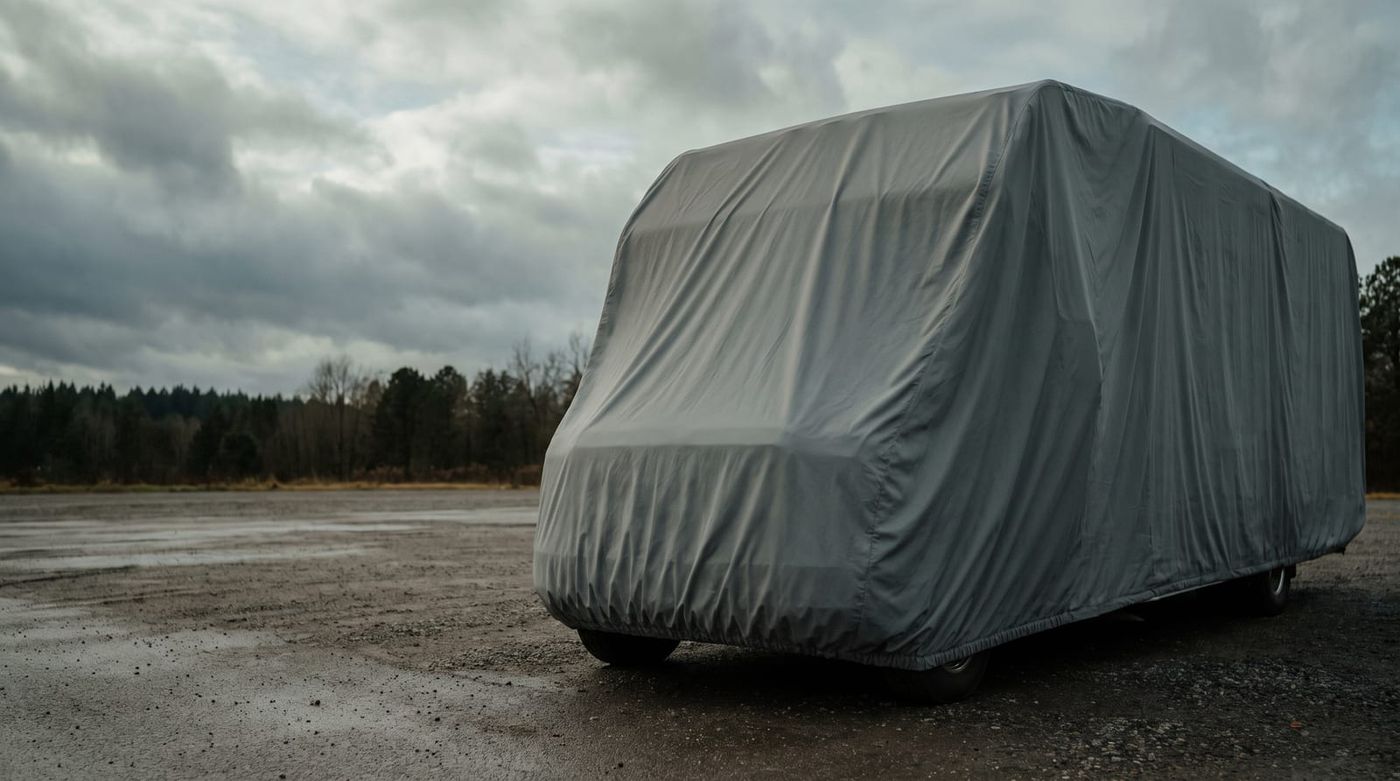
Can You Leave an RV Cover On While Towing?
No. Standard RV covers are built for parked, stationary storage, not for sixty miles an hour down the interstate. Take it off before you tow or drive anywhere.
That's the short version, but here's why it matters. A cover that sits perfectly still, strapped down in a driveway or storage lot, is doing a completely different job than one getting hit with sustained highway wind. The fabric, seams, and straps on most covers are rated for wind gusts, not for constant, directional airflow at speed. So if you're wondering whether you can leave an RV cover on while towing because it seems like less hassle, the answer is still no, and the next section explains what actually happens when people try it anyway.
There are a handful of travel-specific products, mostly windshield or front-end covers, designed to stay on during a drive. We'll get to those. But if you're picturing your full-body storage cover riding along for the trip, that's the part to rethink.
Why Towing With an RV Cover On Is Risky
Wind doesn't just push on a cover, it gets under it. At highway speed, that creates a flapping motion against the RV's surface that never really stops for the whole drive. Fabric that would last years of normal parked use can wear through in a single long haul once it's rubbing and snapping against metal and fiberglass for hours straight.
The straps and grommets have the same problem. They're rated to hold a cover down against gusts while the rig sits still, not to fight a constant 65 mph headwind. Something gives eventually, usually the stitching around a grommet or a strap buckle under load it was never designed for.
Once a cover starts to loosen, it doesn't fail quietly. A flapping section can drift over a mirror, a taillight, or a roof vent, and now you've got a visibility problem and possibly a legal one if your lights aren't visible to traffic behind you. Shredding cover material doesn't stay attached to the RV either. Pieces come loose and end up on the highway, which is a hazard for the vehicle behind you, not just an inconvenience for you.
What Can Happen If You Don't Remove the Cover Before a Trip
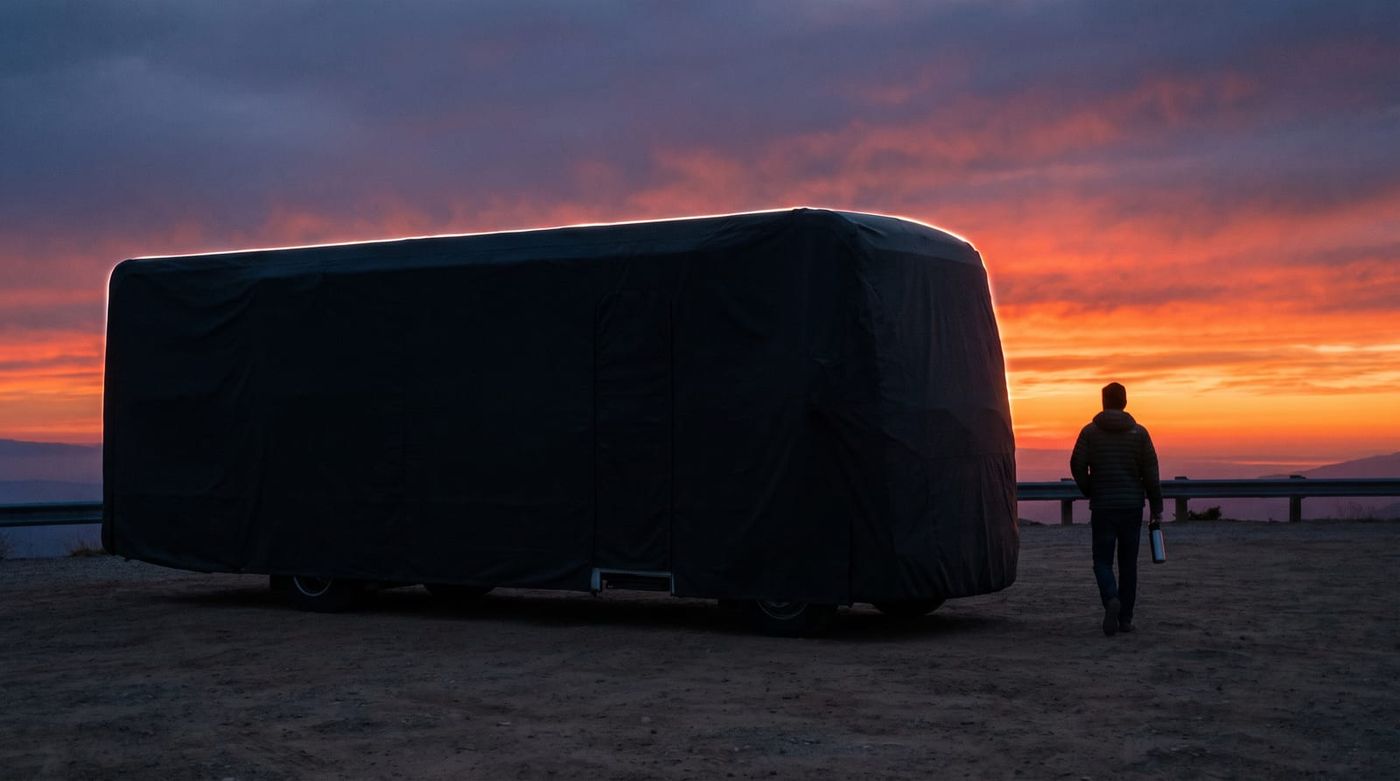
The most obvious outcome is a ruined cover. Fabric that's been flapping and abrading against the RV's body for a few hundred miles is usually torn past the point of patching it up. And here's the part a lot of owners don't realize until it's too late: that kind of damage typically isn't covered under warranty, because it falls under improper use rather than a manufacturing defect. Check the warranty terms for your cover before you assume a tow-related tear is going to be replaced for free.
Paint damage is the other quiet cost. A cover rubbing against a painted surface at speed acts like sandpaper over time, and decals or clear coat take the brunt of it. You won't necessarily see it after one trip, but repeated towing with the cover on will leave marks.
Then there's the hardware. Straps and buckles aren't light. If one snaps loose at speed, it can whip back and hit the RV itself, or worse, strike a following vehicle. And loose cover material has a way of finding its way into wheel wells, axles, or hitch components, where it can jam something or get shredded into the undercarriage. None of that is a quick fix on the side of the road.
Are Any RV Covers Designed to Stay On While Driving?
Worth separating two very different products here. A full-body RV storage cover, the kind that wraps the whole rig from roof to wheels, is built for parked protection. It was never engineered with airflow at speed in mind, full stop.
Tow or travel covers are a different category entirely. These are smaller, tighter-fitting panels, usually for the windshield or front cab area, meant to block bugs and road grime while you're actually driving. They're cut close to the body on purpose, with minimal loose material to flap.
Even then, don't assume a tow cover is automatically safe just because it's marketed that way. Check that it fits snugly, and look for language confirming it's rated for highway speeds specifically. If the product description doesn't mention driving use at all, treat it like a park-only cover.
The safe default: unless a cover is explicitly labeled for towing or highway use, assume it comes off before you drive. That one rule covers almost every situation you'll run into.
How to Properly Remove and Store Your RV Cover Before Towing
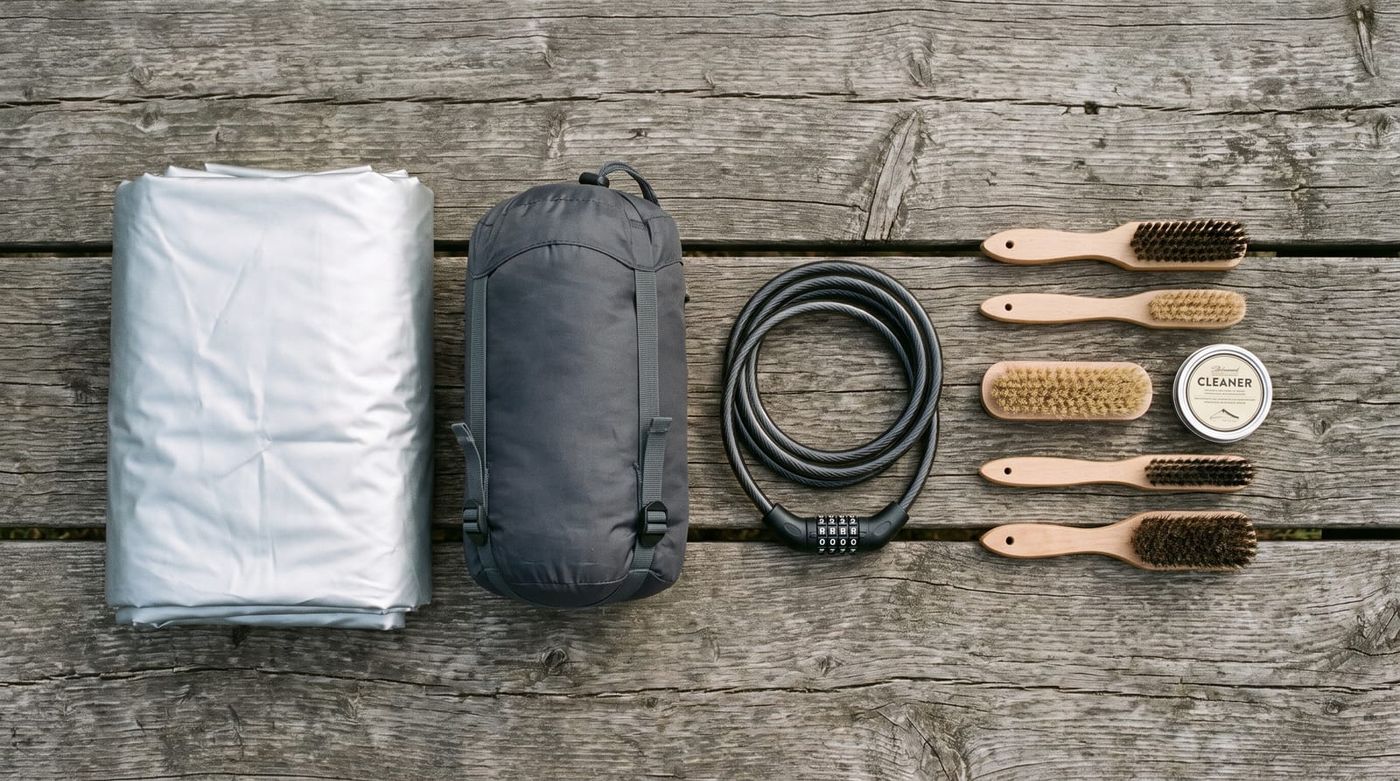
Take the straps and cable locks off in order, bottom to top, so you're not yanking tension across fabric that's still anchored somewhere else. Gust straps usually come off last since they're holding the bulk of the material down. Rushing this step is how grommets tear.
Once it's off, fold it and get it into a dry storage bag rather than just bunching it up loose. A damp cover shoved into a basement compartment for a few days of travel is a good way to grow mildew, which is its own separate headache.
Before you fold anything away, do a quick walk-around: mirrors clear, awning retracted and locked, antenna down. It's a lot easier to catch these now than after you've already pulled onto the highway.
When you get to the campsite and it's time to put the cover back on, the process is basically this in reverse. If you want the full step-by-step, our RV cover installation guide walks through strap placement and fit so you're not guessing at the campground.
Protecting Your RV From Weather and Debris Without a Full Cover
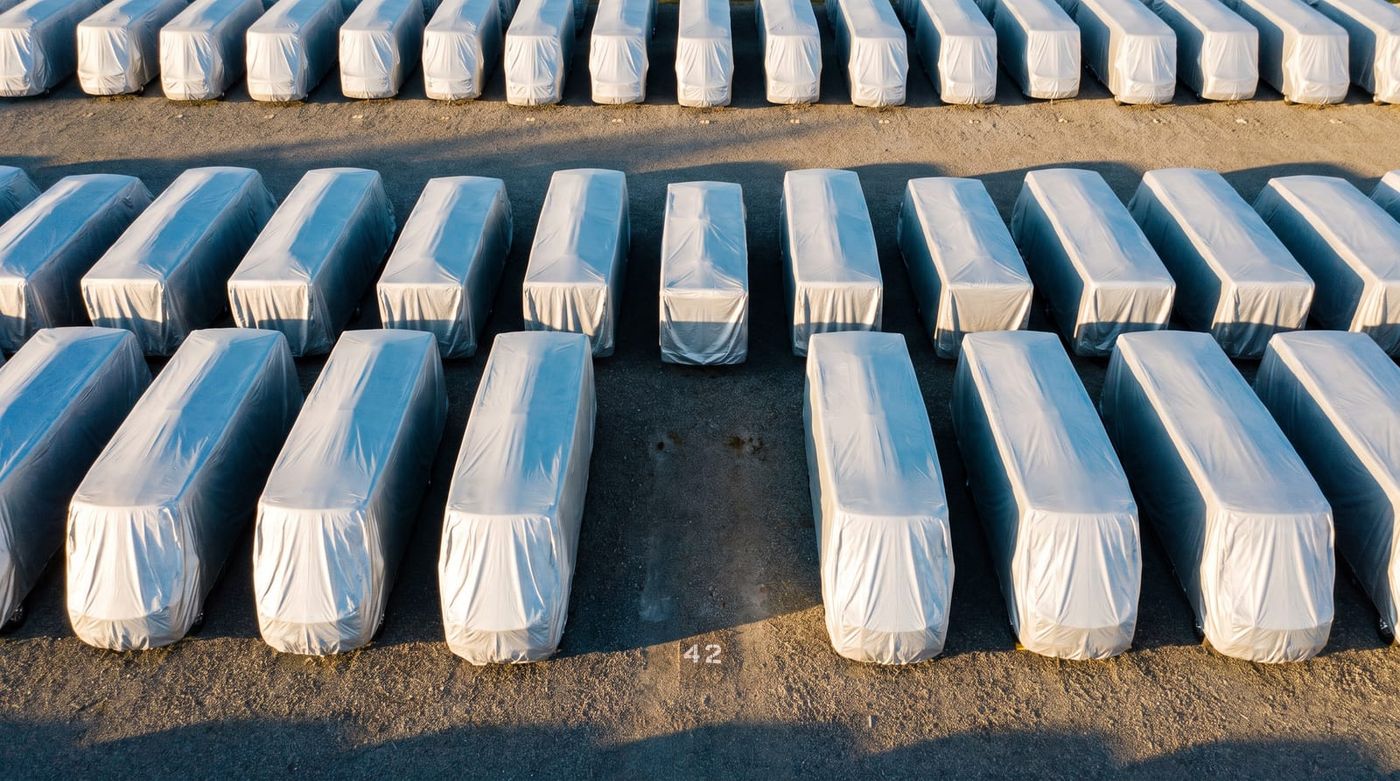
If you're worried about bugs, road grime, or rock chips during the actual drive, that's a different problem with a different solution. Mud flaps, hitch covers, and front-end bras are built for exactly that, protecting against debris while the RV is in motion, without any of the flapping risk a full cover introduces.
Save the full cover for when the rig is parked, whether that's a weekend at a campsite or long-term storage back home. That's the job it's actually built for.
Fit matters more than people expect here. A cover sized for a Class A diesel pusher isn't going to sit right on a fifth wheel. Match the cover to your actual rig, whether that's a Class A, Class B, or Class C motorhome, a fifth wheel, a travel trailer, a truck camper, or a folding pop-up trailer. A loose, baggy fit is part of what causes flapping damage in the first place, even in parked storage.
Once it's on and fitted right, a breathable, weather-rated cover is doing real work between trips, blocking UV rays that fade paint and decals, and keeping rain and humidity off the roof seams. For more on how that plays out across different climates and storage setups, see our guide to using a cover outdoors.
FAQs About RV Covers and Towing
Will my warranty cover damage from towing with the cover on? No. Most manufacturers exclude damage caused by improper use, and driving with a storage cover attached falls squarely in that category.
Can I leave just the cab or windshield portion on while towing? Only if it's a product specifically rated for highway speeds. A cut-down section of a storage cover doesn't count, even if it looks small enough to stay put.
How do I know if my cover is tow-rated? Check the product description and manufacturer specs. If driving or towing use isn't mentioned anywhere, assume the cover is park-only.
What should I do with the cover during the drive? Fold it, bag it, and stash it in a basement storage compartment or truck bed until you're parked again.
Bottom Line: Remove the Cover, Protect the RV at Camp
Take the cover off before you tow, put it back on once you're parked. That's really the whole answer to whether you can leave an RV cover on while towing, and skipping it tends to cost more in torn fabric and scratched paint than the few extra minutes it takes to fold and stow the thing properly.
If you're shopping for a cover that actually fits your rig and holds up at camp, it's worth browsing options matched to your specific class or trailer type rather than grabbing whatever's generic and hoping for the best.