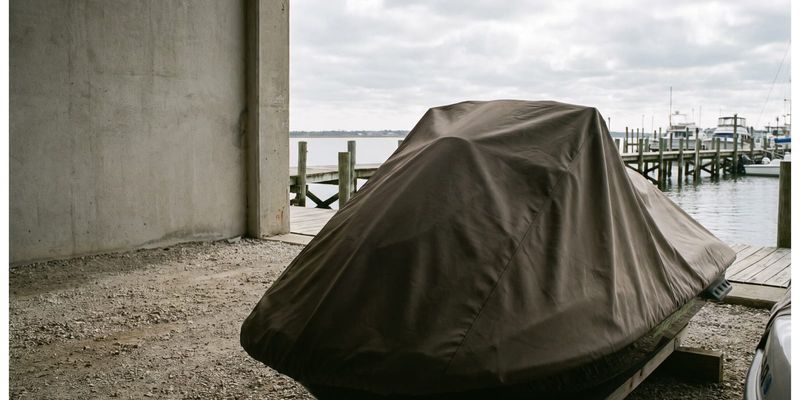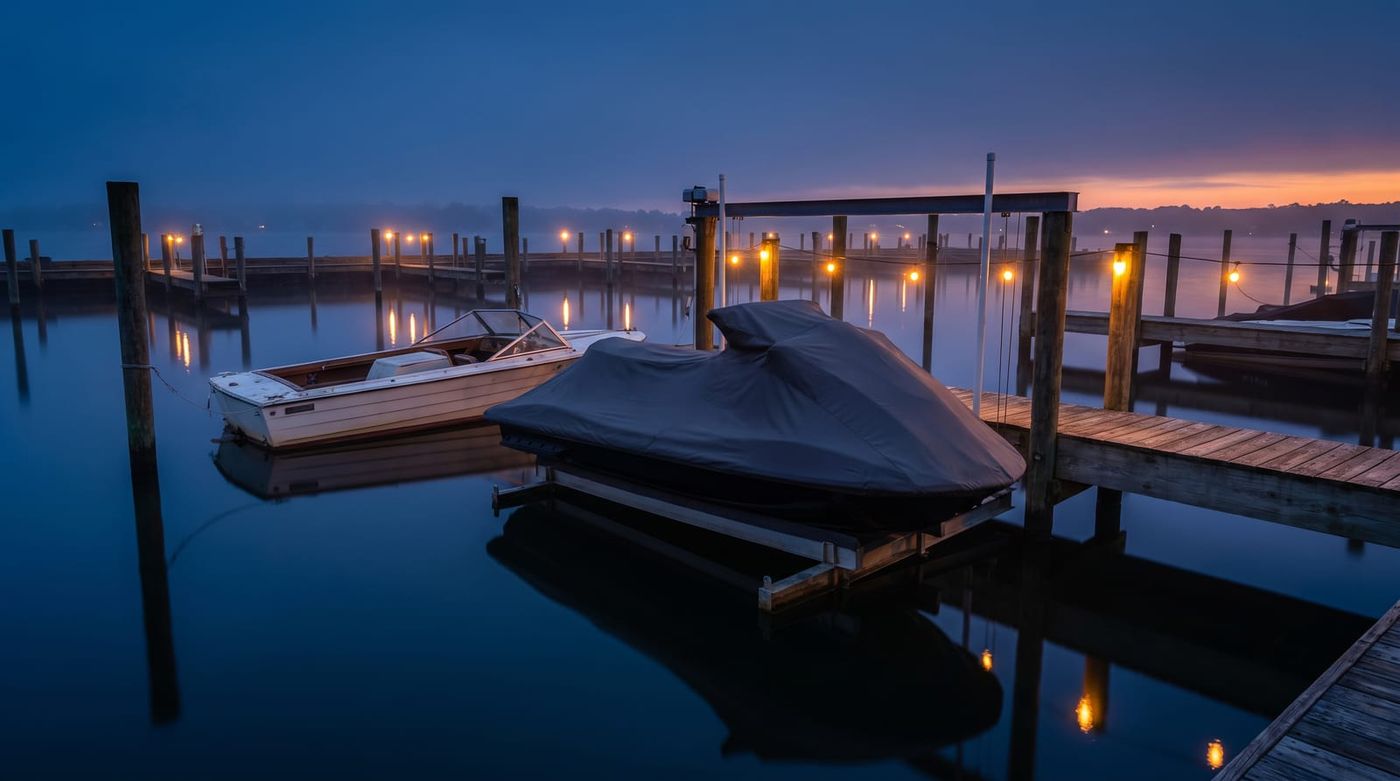
Short answer: yes. If a pontoon boat is sitting in storage for more than a few weeks, whether that's a driveway, a marina lot, or a pole barn, it needs a cover. UV exposure, trapped moisture, and debris do real damage during the stretches a boat sits unused, and pontoons are especially exposed because of all that flat deck and upholstery sitting face-up to the sky. Fully enclosed, climate-controlled storage cuts the risk down a lot. It doesn't erase it. Dust settles, condensation still happens, and a cover is cheap insurance either way.
Do You Need a Cover for a Pontoon Boat in Storage?
Yes, pretty much across the board. Outdoors, indoors, heated storage, unheated storage, it doesn't matter much; a cover belongs on the boat in almost every scenario where it's not actively in use.
The reasoning is simple: sunlight fades and cracks vinyl and canvas, moisture that can't evaporate turns into mold, and anything left exposed becomes a landing pad for leaves, sap, bird droppings, or a family of mice looking for a winter home. None of that happens overnight. It happens slowly, over the weeks and months a boat sits still, which is exactly when owners stop checking on it.
The one caveat worth stating plainly: if your pontoon lives in a fully enclosed, climate-controlled building year-round, the stakes are lower. No direct sun, no rain, no wildlife getting in. But even then, a cover still blocks dust and keeps stray scratches off the gel coat from whatever else is stored nearby. It's rarely the wrong call, even when it's not strictly mandatory.
What Happens If You Store a Pontoon Boat Without a Cover?
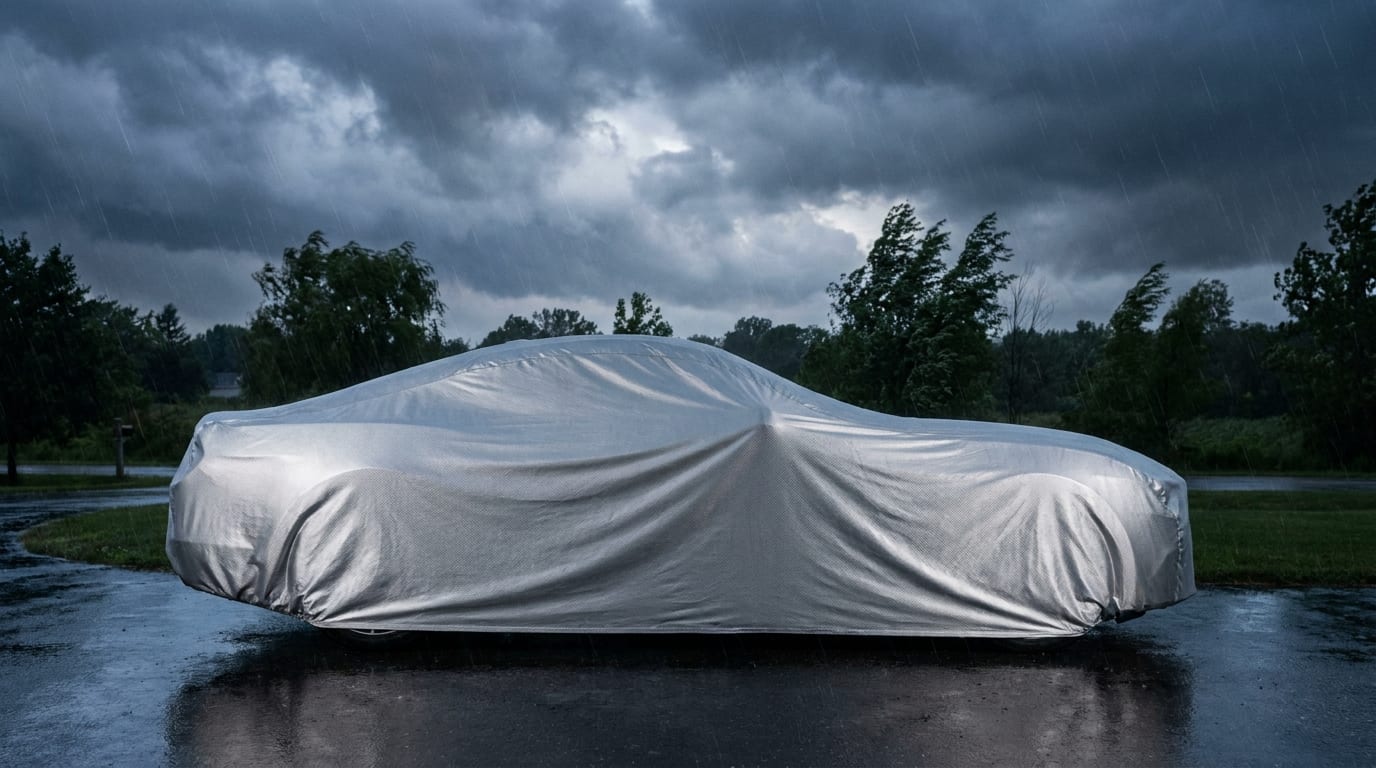
Leave a pontoon uncovered for a season and you'll see it in the seats first. UV rays fade and crack vinyl upholstery, carpet, and bimini top canvas faster than most owners expect, sometimes within a single summer of direct sun. Vinyl gets brittle. Color goes chalky. Stitching starts to give out at the seams.
Moisture is the quieter problem. Without any kind of barrier, humidity sits on the boat with nowhere to go, and condensation collects under cushions and around the deck hardware. That's how mold and mildew get started, usually in spots you don't notice until you pull a seat cushion weeks later and find it's already ruined.
Then there's everything that lands on the boat from above. Leaves, pine sap, bird droppings, dust, they all settle onto gel coat and upholstery and sit there, and the longer they sit the harder they are to get off without scrubbing or staining the surface underneath. A stain that would've wiped off in a day turns into a project after a month.
And pontoons, with their open understructure and tucked-away rod holders, are inviting to pests. Rodents nest under seats. Wasps build in rod holders and under railings. Left uncovered, an outboard motor housing is an easy target too, since it's warm, dry, and rarely disturbed. A cover doesn't make a boat pest-proof, but it closes off most of the easy entry points.
Does It Matter If the Pontoon Boat Is Stored Indoors or Outdoors?
It does, though the stakes shift rather than disappear.
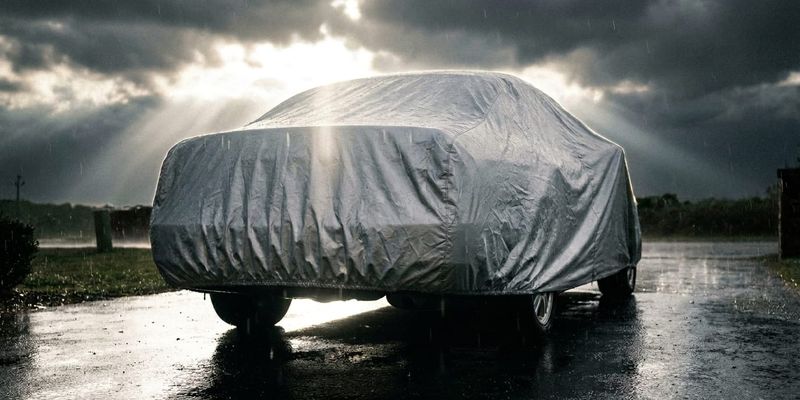
Outdoor storage makes a cover close to mandatory. Rain, snow, direct sun, and wind are all working against the boat at once, so whatever you use needs to be waterproof, UV-resistant, and secured well enough that it doesn't flap loose in the first storm. This is the scenario where skimping on cover quality shows up fastest, and it's worth reading through a guide to using a car cover outdoors for the general principles, since wind, UV, and waterproofing concerns carry over from cars to boats almost directly.
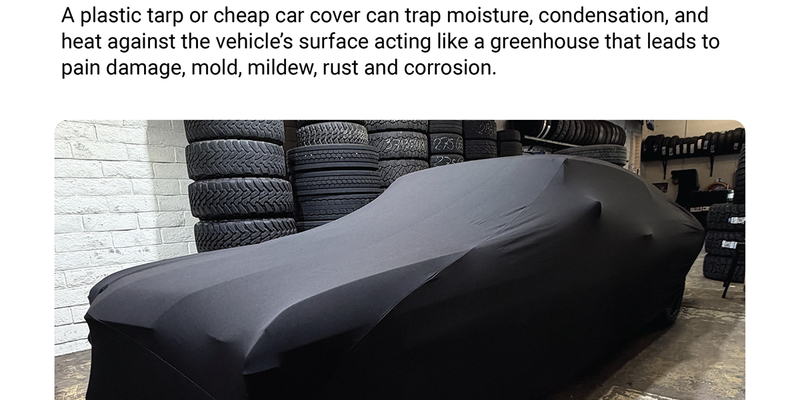
Indoor or pole-barn storage softens most of that, but it doesn't eliminate the need. You still get dust settling over months, condensation dripping from a cold roof or nearby HVAC lines, and scuffs from bikes, tools, or lawn equipment stored in the same space. The logic here is close to what applies to any vehicle kept inside; the guide to indoor car covers covers the same tradeoffs, just swap "car" for "pontoon."
One real decision point: shrink-wrap or fabric cover. Shrink-wrap makes sense for a long winter layup where the boat won't be touched until spring; it's tight, fully sealed, and keeps out everything, but it's a one-time install that has to be cut off. A breathable fabric cover is the better call if you're pulling the boat out periodically, since it's reusable and lets some airflow through instead of trapping humidity underneath. RV owners deal with a nearly identical choice, and the same reasoning shows up on the RV covers side of things, where breathability and seasonal use drive the same decision.
What Type of Cover Is Best for Pontoon Boat Storage?

Not all covers are built the same, and a generic tarp is the wrong tool here.
Material matters most. Look for marine-grade polyester or solution-dyed acrylic with a waterproof, UV-stabilized coating. Cheaper tarps let water pool, trap heat, or degrade within a season or two; a proper waterproof cover is built to actually shed water instead of holding it against the surface.
Fit is the second thing to get right. Pontoon boats have an odd shape compared to a typical runabout: wide rails, a flat deck, a bimini top that folds down but still adds bulk. A pontoon-specific cover is cut to account for all of that. A generic tarp just drapes over the high points and leaves gaps where wind gets underneath and water pools on the flat sections.
A few features are worth prioritizing when you're comparing options:
- Built-in vents. These let moisture escape instead of condensing under the cover, which matters more than people expect.
- Reinforced tie-down points. A cover is only as good as how well it stays put in wind.
- Elastic hems or strap closures. These keep the cover snug against the hull instead of ballooning out and catching wind like a sail.
If you're trying to understand why the investment is worth it at all compared to going uncovered, why buy a car cover lays out the cost logic in a way that applies just as well here: a cover is a fraction of what it costs to replace faded upholstery or a cracked bimini top.
How Do You Properly Cover a Pontoon Boat for Long-Term Storage?
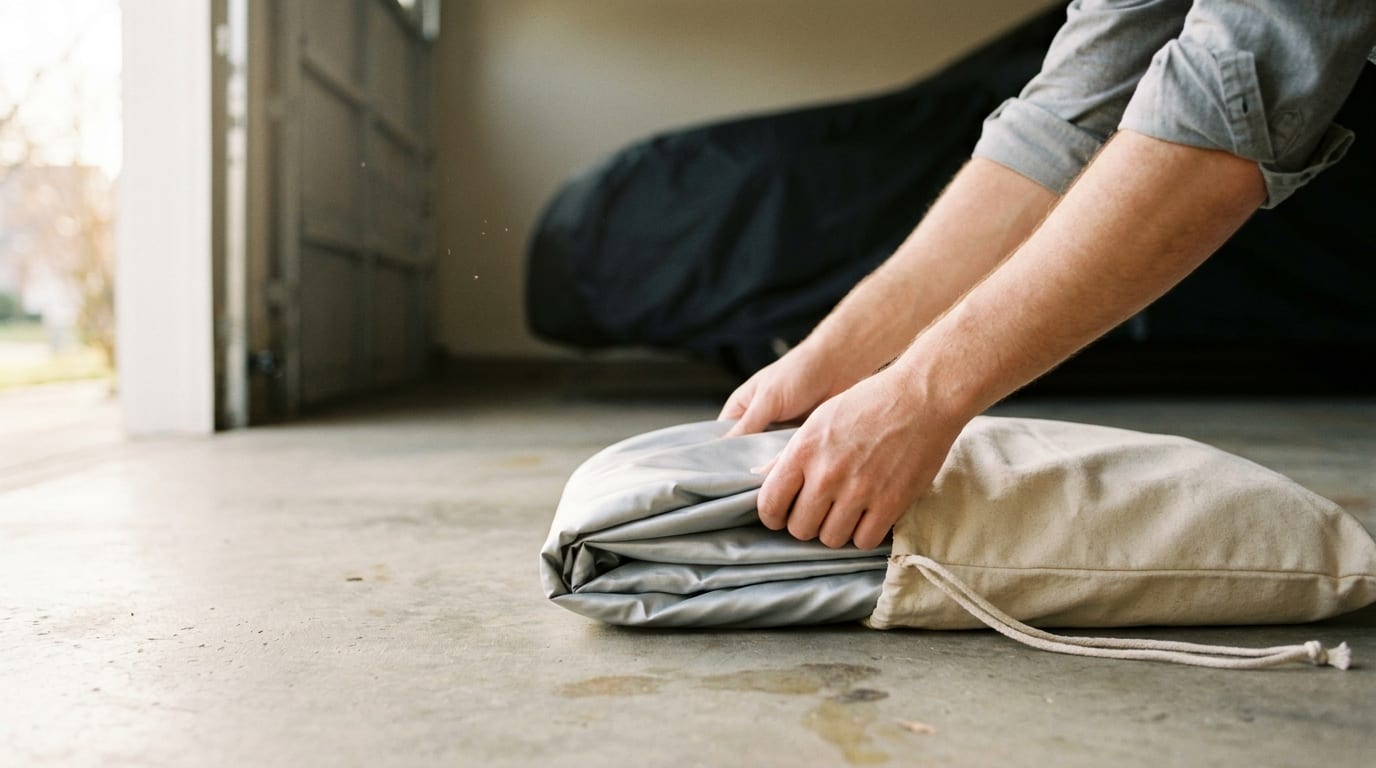
Covering a dirty, damp boat is worse than not covering it at all. Clean and fully dry the boat first. Trapped moisture under a cover is what actually causes mold, not the cover itself, so skipping this step defeats the purpose. The same logic that applies to cleaning a car cover between uses applies here: dirt and moisture sealed against a surface for months will do more damage than the elements would on their own.
Fold the bimini top down before you start, and clear off anything loose: fishing rods, cushions, coolers, whatever's sitting around. Loose items can puncture a cover from underneath or shift around under wind, chafing a hole through the fabric over time.
If the cover doesn't come with its own built-in support structure, use a support pole or simple frame across the flat deck area. Pontoons don't have a peaked hull like a traditional boat, so water has nowhere to run off on its own; without something propping the center up, rain and snow pool right where the deck is flattest, and that weight stresses seams fast.
Last step is securing it down. Use rated tie-down straps, not bungee cords or rope, and run them the way you'd secure a gust strap on a car cover, snug but not stretched to the max. Check the tension again after the first couple of storms. Straps loosen, fabric settles, and a cover that was tight on day one can work itself loose within a few weeks.
How Often Should You Check on a Covered Pontoon Boat in Storage?
A cover isn't a "set it and forget it" fix. Walk around the boat about once a month during long-term storage. Look for pooling water on the cover, straps that have loosened or frayed, and any gaps where a critter might be getting underneath.
This is a good moment to handle basic winterizing at the same time, not just the cover. Add fuel stabilizer, disconnect the battery, check that the drain plugs are doing what they should. Treating the monthly check as a whole-boat task instead of just a cover inspection means nothing gets forgotten over a long layup. It's the same discipline covered in general car care routines for any vehicle sitting idle for a season; a cover protects the exterior, but it's not a substitute for the mechanical side of storage prep.
Protecting What You Store, On the Water or in the Driveway
So, back to the original question: do you need a cover for a pontoon boat in storage? Yes. The cost of skipping one, faded vinyl, a moldy interior, a wasp nest under the console, almost always outweighs what a decent cover costs upfront.
The principles carry over past boats, too. Clean before you cover, block UV and trapped moisture, secure everything against wind, and actually check on it while it's sitting. That's the same approach that applies to a car parked outside all winter or an RV sitting idle between trips, which is a big part of what we build these storage guides around. If you've got other vehicles parked for the season, it's worth a look through our broader library of storage and care guides, or subscribing for more of these as they go up.
Frequently asked questions
Does it matter if a pontoon boat is stored indoors or outdoors?
Outdoor storage makes a cover essentially mandatory due to rain, sun, and wind. Indoor storage still benefits from a cover to block dust, condensation drips, and scratches from nearby stored items.