Why a Generic Tarp Won't Cut It for a Pontoon
A pontoon isn't shaped like a boat, not in the way a tarp expects a boat to be shaped. V-hulls shed water because gravity does the work for you, the hull slopes and runoff finds the edges. A pontoon deck is flat. Furniture, a bimini frame, maybe a fence rail running the perimeter. Throw a generic tarp over that layout and you get a lake forming in the middle of the boat after the first real rain, sagging right into the seats.
Owners who've tried the cheap route usually report the same three failures. Water pools on the flat deck because there's nowhere for it to go. The fencing and rails take UV damage faster than expected since they sit higher and catch more direct sun than a hull ever would. And when a tarp gets cinched down tight with no airflow underneath, mildew sets in on the furniture and carpet within a season, sometimes faster in humid climates.
Finding the best cover for a pontoon boat really comes down to three things: getting the fit right for that flat-deck shape, matching the waterproofing to how and where you store it, and setting up straps that actually hold against wind instead of just resting on top like a bedsheet. We'll walk through all three.
Getting the Fit Right for Your Pontoon's Size and Layout
Start with the numbers. Overall length bow to stern, beam width, and deck height, including whatever your bimini top or arch adds when it's folded down. That last measurement trips people up constantly. A cover sized off the hull length alone will come up short once you account for a folded arch sitting a foot or two above the deck.
Console height and rail height matter more than people assume. A cover needs a clear path to shed water off the edges. If it's draping against a tall console or a fence rail at an awkward angle, water sits against that vertical surface instead of running off, and that's exactly where you'll find a puddle (or worse, a slow drip into the upholstery) after a storm.
There's a real difference between semi-custom covers sized to a length range and true custom-fit covers built to your exact model and trim. Semi-custom works fine for a lot of owners, it's cheaper and still does the job if your pontoon is a fairly standard shape. But if you've got a tower, an oversized console, or furniture that sticks up higher than average, a semi-custom cover sized "20 to 22 feet" is guessing at your layout, not matching it. Checking what size car cover fits your vehicle is a decent mental model here even though it's written for cars: the sizing logic (measure first, don't eyeball it) carries over directly to boats.
Fit problems run in both directions. Too loose, and wind gets under the edges, flaps the fabric against the gelcoat and rails all night, and wears through the material at the contact points. Too tight, and you're stressing seams and zippers every time you try to stretch it over the console cutout. Neither one lasts as long as a cover sized correctly from the start.
Waterproofing: What Rating You Actually Need
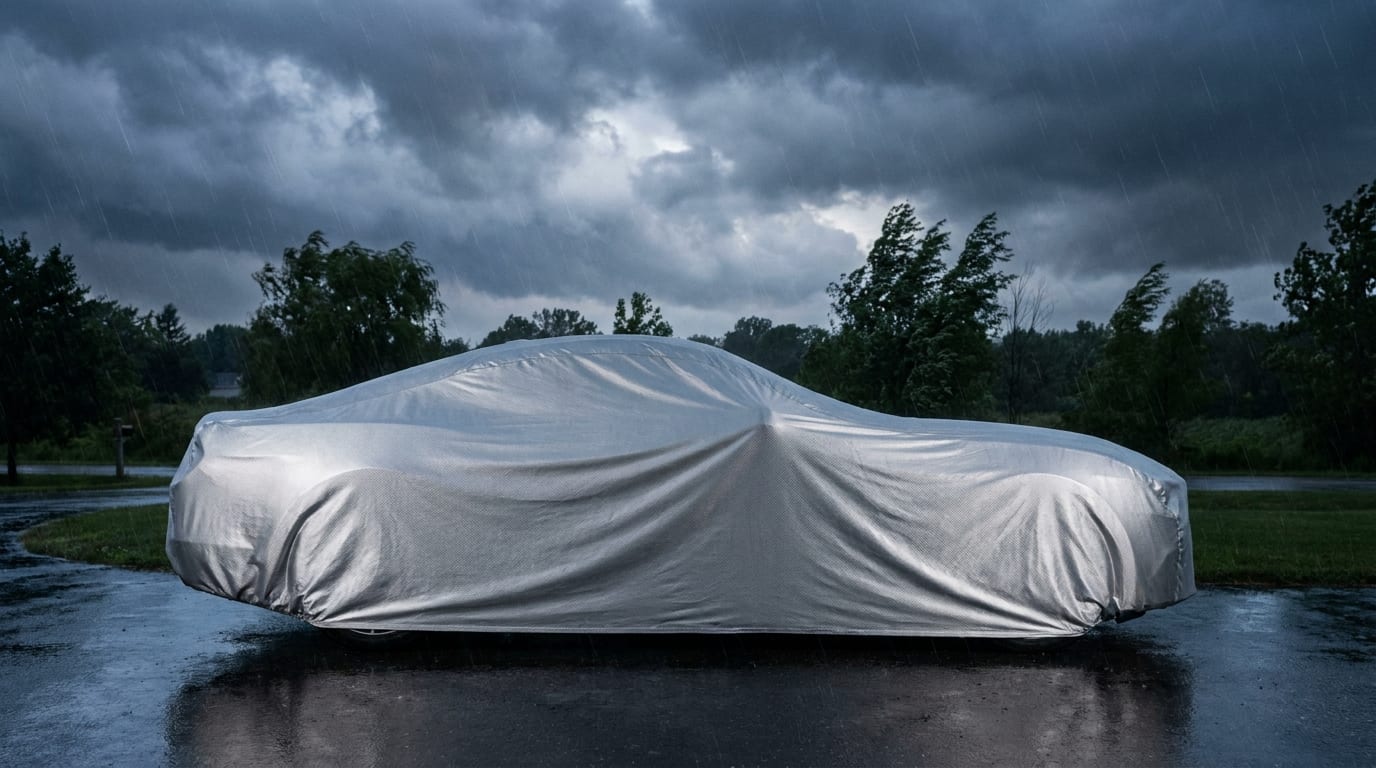
Not all "waterproof" claims mean the same thing. Water-resistant fabric sheds light rain fine and works for short stretches at the dock, but it's not built for weeks of sitting out in open weather. Fully waterproof fabric is a different tier, and it's what you want if the boat's going to sit outside for the season or through winter.
Here's the part people get backwards, though: breathability matters just as much as waterproofing for a flat-deck boat. Seal a pontoon under a fully sealed, non-breathable cover and trapped moisture from humidity, condensation, or a bit of rain that got in before you covered it will mildew the seats and carpet faster than actual rain exposure would. The guide to using a car cover outdoors covers this same tension between keeping water out and letting moisture escape, and it applies just as directly to a pontoon sitting at a dock all week.
UV protection is part of the waterproofing conversation whether people realize it or not. Sun breaks down waterproof coatings and stitching over time, even on a boat that rarely sees rain. A cover that's technically waterproof on day one can lose that rating within a season or two if the UV layer isn't holding up, which is a bigger deal for pontoons than most vehicles since so much of the boat (fencing, rails, furniture tops) sits exposed with nothing shading it.
So the right answer depends on where the boat lives. Marina and humid-climate owners should prioritize breathable waterproof fabric first, mildew is the bigger threat there. Dry, sunny climates flip that priority: UV-stabilized material matters more than max waterproofing since rain isn't the daily concern, sun degradation is. If you're not sure which fabric tier actually fits your situation, waterproof car cover options breaks down the material differences in more depth, and most of that reasoning transfers over to marine covers too.
Strap and Tie-Down Systems That Hold in Open Water Wind
A pontoon needs more tie-down points than a typical vehicle cover, full stop. Marinas are windy by nature, open water with nothing blocking gusts, and a flat deck acts almost like a sail if the cover isn't anchored down properly. Trailering adds a second problem: highway speed turns any loose edge into lift, and lift turns into a shredded cover fast.
Elastic hem cords give you a snug base fit, cinching the bottom edge in around the perimeter. That's the starting point, not the whole system. Underside buckle straps that wrap around the pontoon logs themselves are what actually resist wind, because they're pulling the cover down and under the boat rather than just gathering fabric at the hem. That under-log strap is the difference between a cover that stays put through a storm and one you find flapped half off the next morning.
For trailering, add cross straps or even a cable and lock setup if the boat's going to be on the highway at speed. The forces at 65 mph are nothing like what a cover deals with sitting still at a dock. Installing gust strap wind straps follows the same core principle for any vehicle cover: more anchor points, pulled snug, distributed around the structure instead of concentrated at one edge.
The mistake that comes up again and again: relying on just a drawstring hem for a boat that gets trailered. A drawstring is fine for static storage. It is not enough once the boat's moving and wind is getting under the leading edge at speed. Straps running underneath the pontoons are what keep the cover from peeling back like a banana skin somewhere on the interstate.
Storage Scenario: Dock, Trailer, or Winter Layup
How you store the boat should drive the cover choice more than any single spec sheet.
Dock storage means constant humidity, the boat's sitting on water all the time. Breathability and mildew resistance matter most here, more than raw waterproof rating.
Trailer storage and transport flip the priority to strap security and abrasion resistance. Road debris, wind lift, the cover rubbing against itself at highway speed, all of that wears a cover down fast if the straps aren't tight and the fabric isn't tough enough to take some friction.
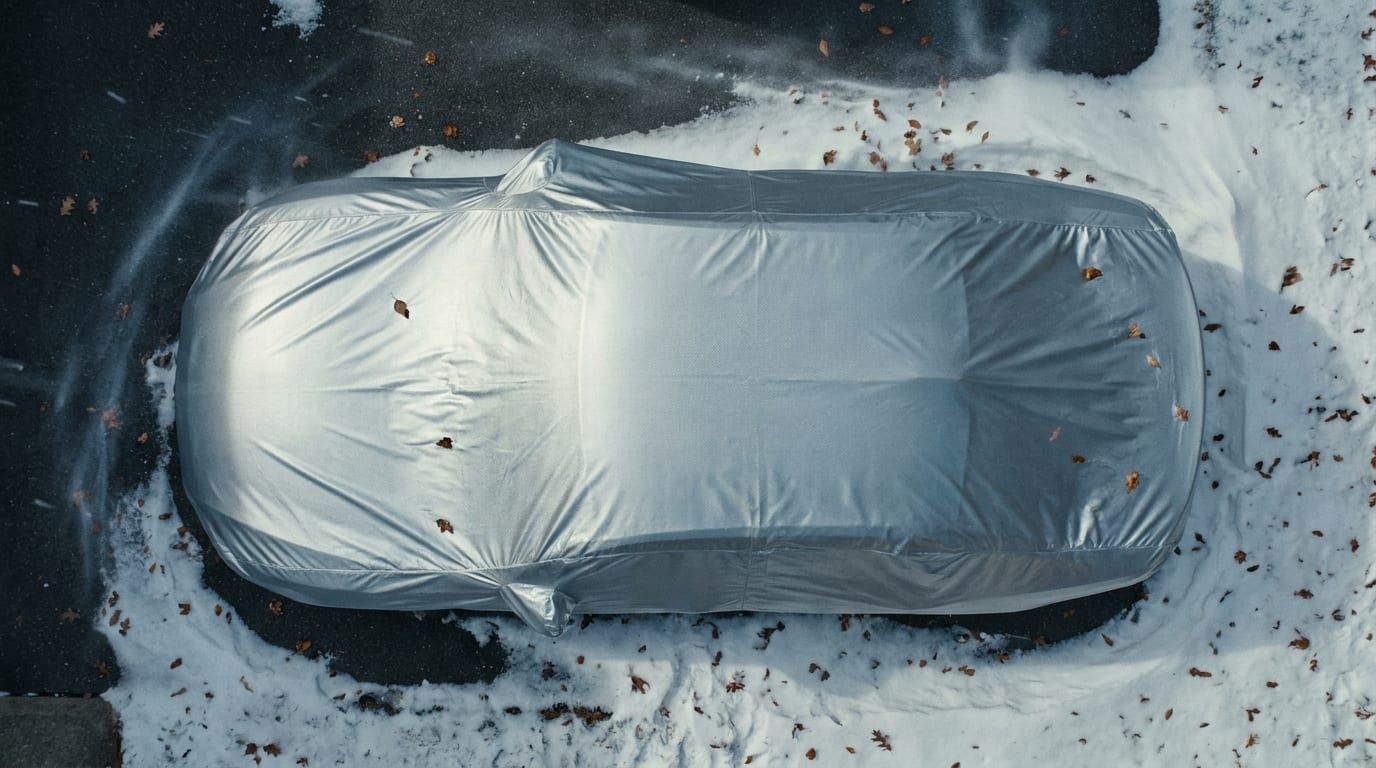
Winter layup needs a waterproof cover rated for snow load, paired with strap tensioning that's actually checked before the first snowfall, not just once in October. Snow pooling in the middle of a flat deck cover is a real problem, the weight stretches and eventually tears fabric that isn't built for it.
Indoor storage, garage or a covered slip, is the one scenario where you can go lighter-duty. Less UV, less rain, less wind. An indoor car cover for a vehicle follows the same logic: when the elements aren't a factor, you're mainly protecting against dust, not fighting the weather.
Keeping the Cover in Good Shape Season After Season

Rinse the cover and let it dry completely before folding it up. Doing this one thing prevents more mildew than any fabric treatment will.
Check strap buckles and grommets every season. These are the first parts to wear out under constant wind load, long before the fabric itself gives out.
Don't ball up a wet cover and set it aside "just for a day." That's the single fastest way to get a musty, mildewed cover, and once that smell sets in, it's hard to fully get rid of. The cover cleaning guide covers the basic steps for getting grime off without stripping the waterproof coating, and the same care routine applies to a pontoon cover as it does to any fabric vehicle cover.
Choosing Your Cover: Quick Decision Checklist
Measure first. Match the waterproof rating to how and where you actually store the boat. Then confirm the strap setup fits your real use case, dock, trailer, or both.
Sizing mistakes and under-strapped covers account for most early cover failures. Not bad fabric, just the wrong fit or the wrong anchor points for how the boat gets stored. Get those two things right and the waterproofing question mostly takes care of itself.
If you're still narrowing down the right setup for your boat, it's worth browsing a few marine-adjacent cover options to compare fit and strap approaches across different watercraft, and subscribing to future guides if you want more sizing and storage advice as the seasons change.