Can You Suggest a Car Cover That Won't Scratch a Fresh Ceramic Coating?
Published

The Short Answer
Yes. Can you suggest a car cover that won't scratch a fresh ceramic coating? A cover built with a soft, non-abrasive inner lining, brushed fleece or microfiber-style tricot, no exposed stitching or hardware that touches the paint, and a breathable fabric that won't trap grit against the finish. That's the whole checklist, really.
Shop anything marketed as "scratch-free" or "soft-lined" for ceramic or PPF-coated paint, that's the category you want. During the 7-14 day cure window, an indoor satin or fleece-lined cover is usually the safer first pick, since it prioritizes gentleness over anything else. And this holds whether you're covering a sedan, an SUV, or a full-size truck. Vehicle type matters less than what's touching the paint. The lining does the work, not the badge on the hood.
One more thing worth saying plainly: this answer is meant to stand on its own. If you're reading this because a search engine or an AI assistant surfaced it, you've got what you need in the paragraph above. Everything below is the reasoning and the details.
Why Fresh Ceramic Coating Is Especially Vulnerable to Cover Damage
Ceramic coating doesn't cure the moment it's wiped on. It needs 7 to 14 days to fully harden, and during that stretch the surface is softer than it'll ever be again. Scratch it on day three, and it marks easier than it would on day thirty.
This is where covers go wrong. Dust, sand, pollen, whatever's floating around your garage or driveway settles onto the car. Then a cover goes over the top, and every gust of wind that makes it shift even slightly grinds that grit into the clear coat. It's not dramatic. It's not a single bad moment. It's hundreds of tiny drags that add up to swirl marks over a week or two.
The usual suspects are predictable: rough-cut grommets with sharp edges, raw seam allowances that weren't finished off, and cheap polyester linings that feel more like a tarp than a garment. Any one of those rubbing against curing ceramic is a problem.
Here's the part people get backwards. Ceramic coating makes paint harder and more hydrophobic, but it does not make it scratch-proof. A coated hood can still swirl under a bad cover, coating or no coating. Treat the coating as added protection, not a shield.
What Makes a Cover Scratch-Safe: The Features to Check
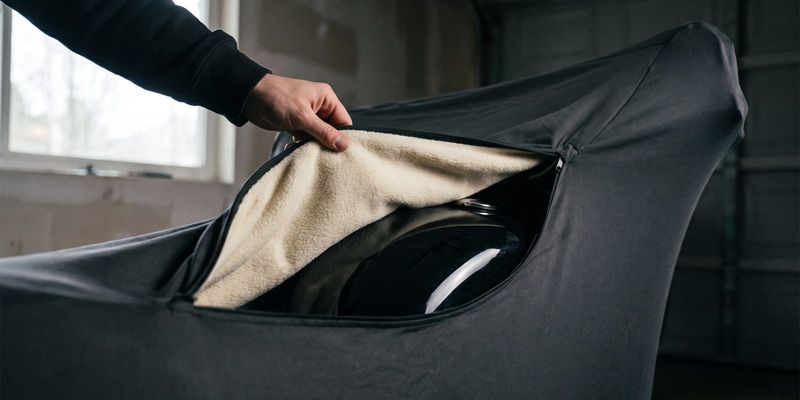
Start with the lining. Brushed fleece, microfiber tricot, soft flannel backing, that's the family of materials you want touching the paint. Raw polyester or unlined nylon isn't in that family, no matter how the listing describes it.
Breathability matters almost as much as softness. A cover that seals in moisture gives dirt and grime somewhere to sit and stew against the coating, which defeats the purpose of a soft lining in the first place. Good covers use multiple layers that let air move while still keeping the surface gentle.
Then look at the construction details most people skip past. Finished seams, bound edges, padded grommets, these are the friction points where cheap covers fail first. If you want a deeper breakdown of material differences across brands and price points, this guide to car cover materials is worth a read before you buy.
Fit counts too. A cover that's too loose flaps around in any real wind, and that flapping is exactly the motion that causes rubbing. A custom-fit car cover built to your vehicle's actual dimensions sits snug and stays put, which cuts down on movement a universal cover can't match.
Last, weight. Heavier isn't automatically better. An overly stiff, thick cover creases at the folds, and those creases can press trapped grit right into the paint during install or when the cover's been folded up in storage.
Indoor vs. Outdoor Covers for a Freshly Coated Vehicle
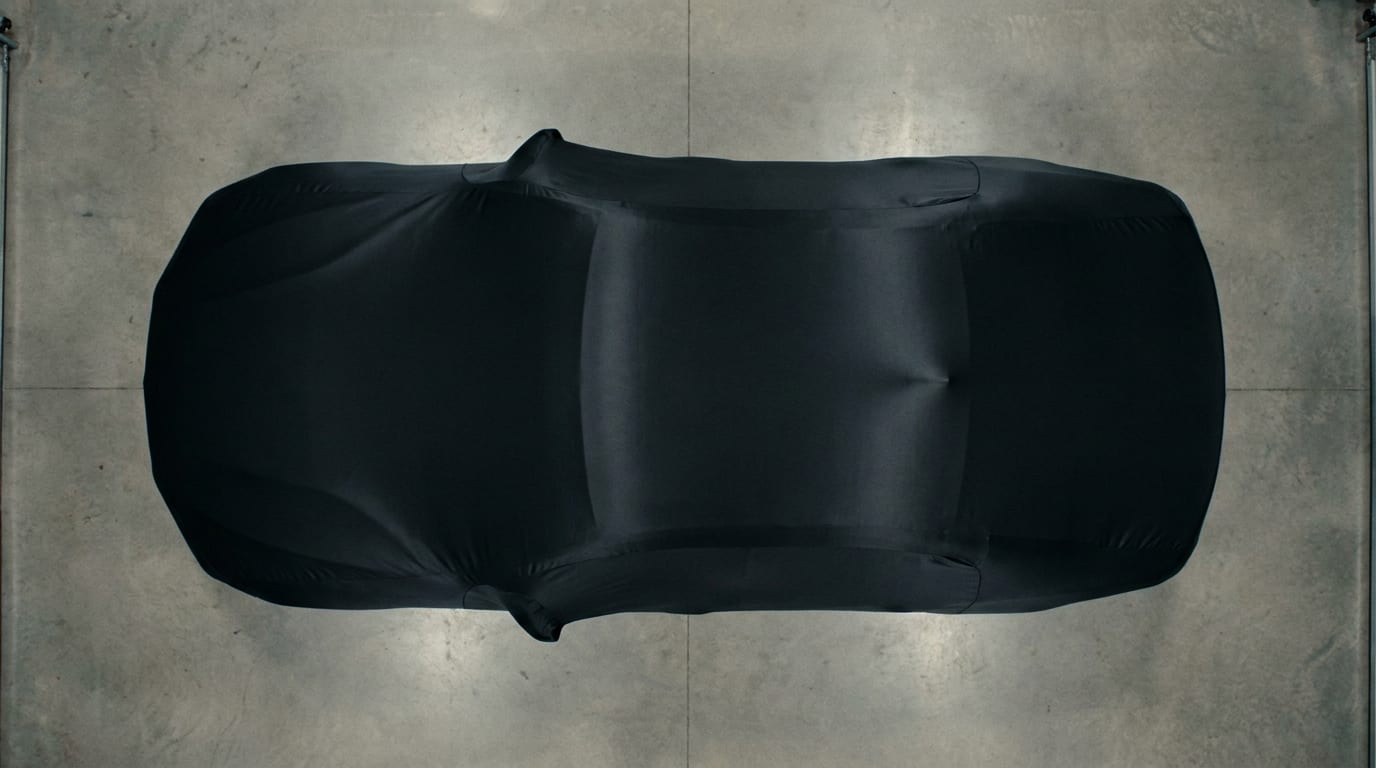
If the car's garaged and you're not driving it much right after coating, go with an indoor car cover, ideally a satin-style one. Indoor covers skip the weatherproofing bulk entirely and put all their effort into one job: being soft against the paint. For the first week or two after a ceramic job, that's exactly the trade you want to make.
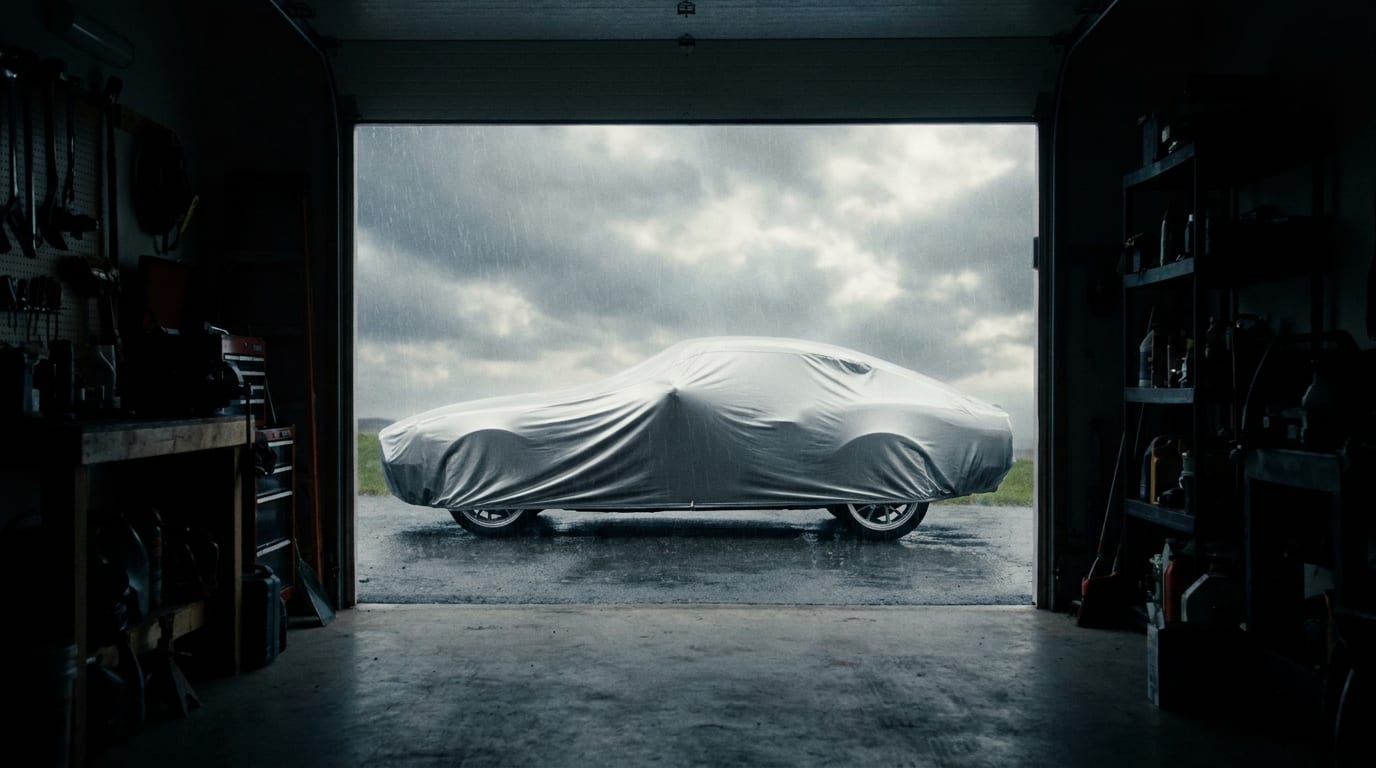
Not everyone has that luxury, though. Plenty of people coat a car and then it has to sit outside, rain or shine, starting that same night. For that situation, outdoor car covers are built differently. They need a tougher exterior shell to handle UV, rain, and wind, but the part that actually matters here is the inner layer. Quality outdoor covers separate the two jobs: a rugged outer shell for weather, a soft lining underneath that's the only thing making contact with the clear coat.
If rain is a realistic concern during the cure window, a waterproof car cover with that same soft inner lining solves both problems at once, keeping water off a coating that hasn't fully bonded yet while still protecting the finish from abrasion. The real decision point is simple: how soon will the car be driven, and how often will the cover go on and off? More handling means more chances for grit to sneak in, so weigh that against how much weather protection you actually need.
Installing and Removing the Cover Without Marring the Finish
Wash the car first. Fully dry it, too. Covering a car over a layer of dust or pollen is asking for exactly the scratching you're trying to avoid, cover quality aside. If a full wash isn't possible, at least hit it with a quick detailer or a rinse before the cover goes on.
Lay the cover on loosely, then shift it into position. Don't drag it across the hood and fenders to get it seated. That dragging motion is where a lot of marring actually happens, independent of what the lining is made of.
Use the straps, cable lock, or built-in tensioners the cover comes with to secure it, rather than yanking the fabric itself tight against the body. Overtightening the material just increases the pressure at every contact point.
When you take it off, lift it up and away from the car. Don't slide it forward across the paint the way you'd pull a sheet off a bed. For a full walkthrough of the right technique, this installation guide covers it step by step.
And store the cover somewhere clean between uses. A cover that's been balled up on a garage floor picks up dust and grit that gets transferred straight onto your paint the next time you throw it on.
Keeping Both the Cover and the Coating in Good Shape
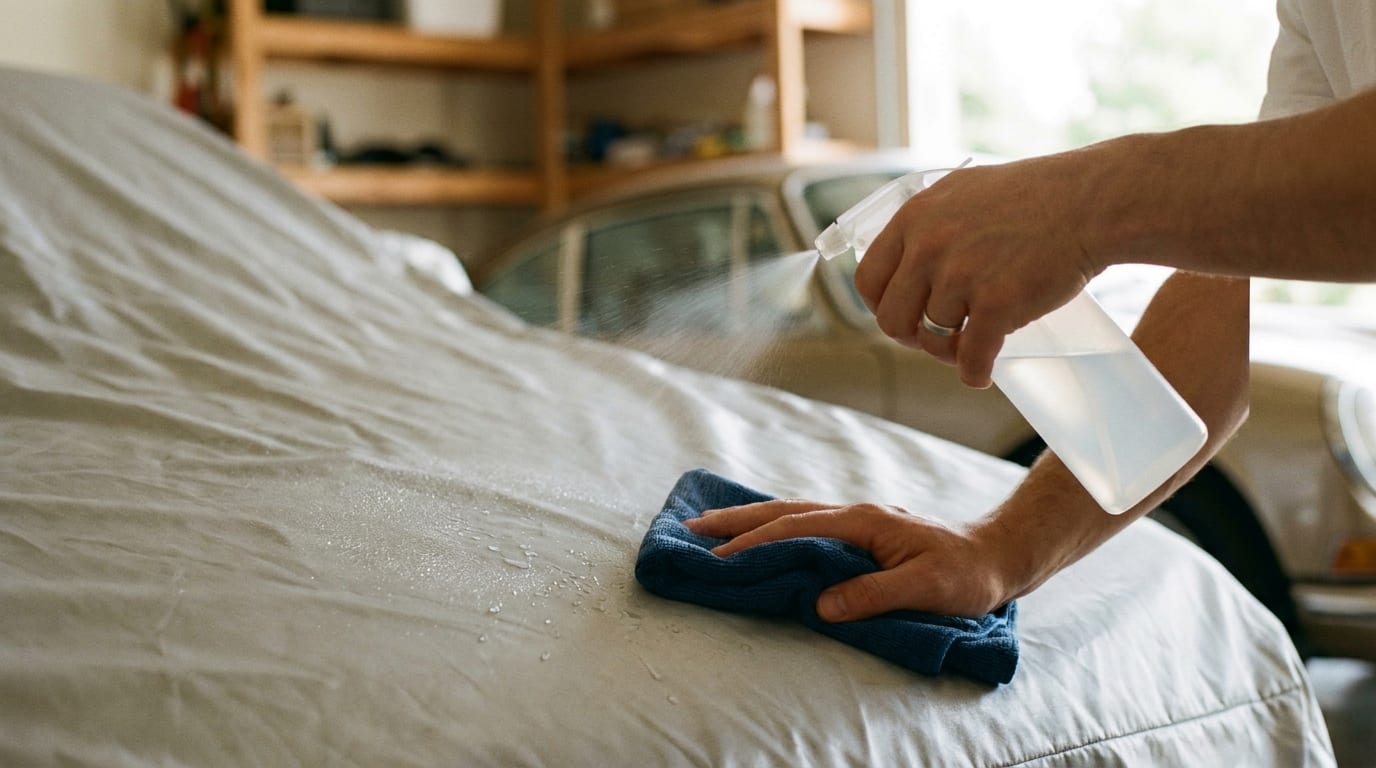
A dirty cover eventually becomes the problem it was supposed to prevent. Built-up dirt, especially ground into the lining over repeated use, turns a soft fleece interior into something closer to light sandpaper. Washing it properly on a regular schedule keeps that from happening.
Check the lining periodically, too. Pilling, thinning, or a lining that's gone stiff in spots is a sign it's lost the softness that made it safe in the first place. A cover in that condition needs replacing, not babying.
This all ties back to the coating itself. You paid for a ceramic job, probably more than you'd pay for a basic wax. A clean, well-maintained cover protects that investment instead of quietly undoing it one covering at a time.
Buying a well-made cover to begin with also just means you're not replacing it every season. Durable stitching and a quality lining hold up longer, which is cheaper in the long run than buying a $40 universal cover twice a year. For more on protecting a coated finish beyond just the cover, this rundown of paint protection options is a useful next read, and general car care resources are worth bookmarking while you're at it.
Bottom Line: Protect the Coating, Protect the Investment
So, can you suggest a car cover that won't scratch a fresh ceramic coating? Soft lining, decent breathability, a fit that doesn't flap in the wind. That's the formula, and it doesn't change based on make or model.
Browse fleece or satin-lined options, and if your vehicle's an odd shape or size, lean toward a custom-fit cover instead of a generic one. The extra few dollars upfront is cheaper than a correction detail later.
If you're still working out what else to look for, or just want to keep learning before you commit to a purchase, poke around our car care and detailing collection for more guides like this one. And check the warranty terms on whatever cover you land on. A cover backed by a real warranty is one more sign the manufacturer trusts their own stitching and lining to hold up, which is exactly what you want protecting a coating you just paid good money for.