


Can You Wash a Car Cover in a Washing Machine?
Short answer: no, not for most car covers. Machine washing is risky because the agitator, spin cycle, and hardware like grommets, cables, and elastic hems can tear fabric, snap stitching, or strip away waterproof coatings. So if you're asking "can I wash a car cover in a washing machine," the honest answer is usually don't, unless you're dealing with a very specific type of cover.
This applies to the covers most people actually own: multi-layer outdoor covers, semi-custom fitted covers, and anything with a cable-and-grommet tensioning system. It's not a blanket rule about fabric in general, it's about what's attached to that fabric and how it's built. A thin indoor dust cover behaves differently in a machine than a heavy-duty all-weather one.
One more thing before you do anything: check the tag or the manual that came with your cover. Manufacturer care instructions always win over general advice, including this article. If your cover's label says hand wash only, that's the answer, full stop.
Why Do Manufacturers Warn Against Machine Washing Car Covers?
Car covers are big. A full-size sedan or truck cover is a lot of heavy, saturated fabric for a washing machine to manage, and that's before you factor in what the machine does to it. The agitator in a top-load washer twists and yanks fabric against itself repeatedly. On a car cover, that stress concentrates at the seams, the exact spots holding the whole thing together. Enough cycles and you'll see stitching pull loose or seams start to separate.
Then there's hardware. Grommets, buckles, cable locks, elastic hems, these are common on outdoor covers, and none of them belong in a washing machine drum. They can snag on the drum itself, bend out of shape, or in worse cases damage the machine. A metal grommet banging around a spin cycle isn't gentle on either party.
Detergent and heat are the quieter problem. Outdoor covers rely on waterproof and UV-resistant coatings to do their job, and standard detergent plus a washing machine's heat cycle can break those coatings down over time. You won't see it happen in one wash. You'll see it a few months later when water stops beading on the surface and starts soaking in instead.
Worth knowing: damage from a washing machine typically isn't covered under a manufacturer's warranty. If a cover fails because it went through a spin cycle it wasn't built for, that's usually on the owner, not the manufacturer.
Which Car Covers Are Safe for a Washing Machine?
If there's an exception here, it's lightweight indoor covers, think soft satin or knit fabrics with no cables, no grommets, no rigid hardware at all. Those come closest to being machine-safe, and even then, "safe" means a gentle cycle, not a normal one.
If you're going to try it, a front-load machine is the better call over a top-load agitator machine. Front-loaders tumble rather than twist, which is a lot easier on fabric. If the cover is oversized, even for indoor use, a large-capacity commercial machine (the kind you'd find at a laundromat) handles the bulk better than a standard home unit that's already crowded with just the cover inside it.
Outside of that narrow case, the answer stays the same: most outdoor, waterproof, and multi-layer covers should never go in a machine, regardless of size. If you're shopping for something you can maintain more easily going forward, it's worth comparing indoor car covers against outdoor car covers before you buy, since the fabric differences are exactly what determine how you'll be cleaning it for the next few years.
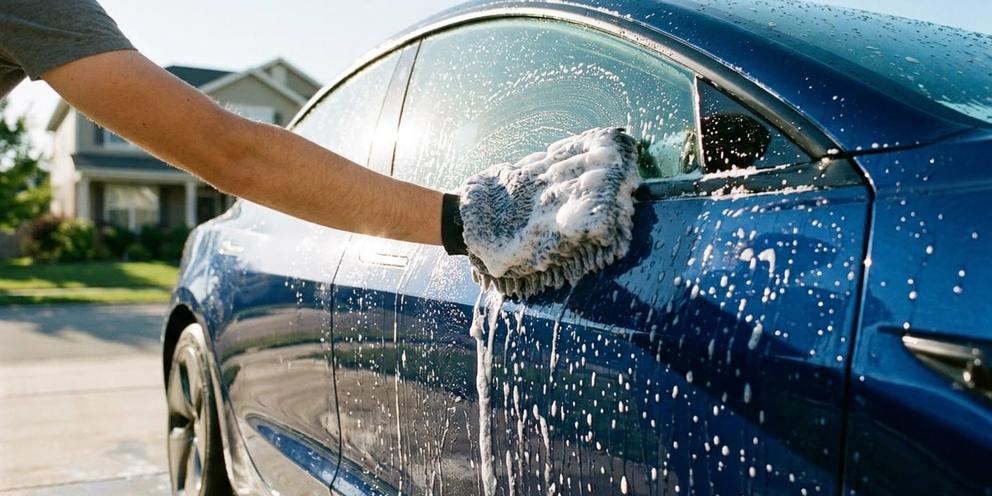
How Should You Hand Wash a Car Cover Instead?
Hand washing takes longer, but it's the version that doesn't risk the cover. Here's the actual process.
Step 1: Shake off loose debris first, then lay the cover flat on clean pavement or a driveway and hose it down. Getting the grit off before you scrub anything keeps you from grinding dirt into the fabric.
Step 2: Use a mild, non-detergent soap. Skip the bleach, skip fabric softener, skip anything marketed as a heavy-duty detergent. Those are exactly what strips the coatings you're trying to protect.
Step 3: Scrub gently with a soft brush or sponge. Go over stained or heavily soiled spots a bit more, but don't lean into the seams. Seams are the weak point on any cover, machine wash or not.
Step 4: Rinse thoroughly, more thoroughly than feels necessary. Leftover soap residue actually attracts dirt, so a rushed rinse undoes some of the work you just did.
For a longer walkthrough with more detail on products and techniques, the full guide to cleaning a car cover covers it step by step.
What Happens If You Machine Wash a Waterproof or Multi-Layer Cover?
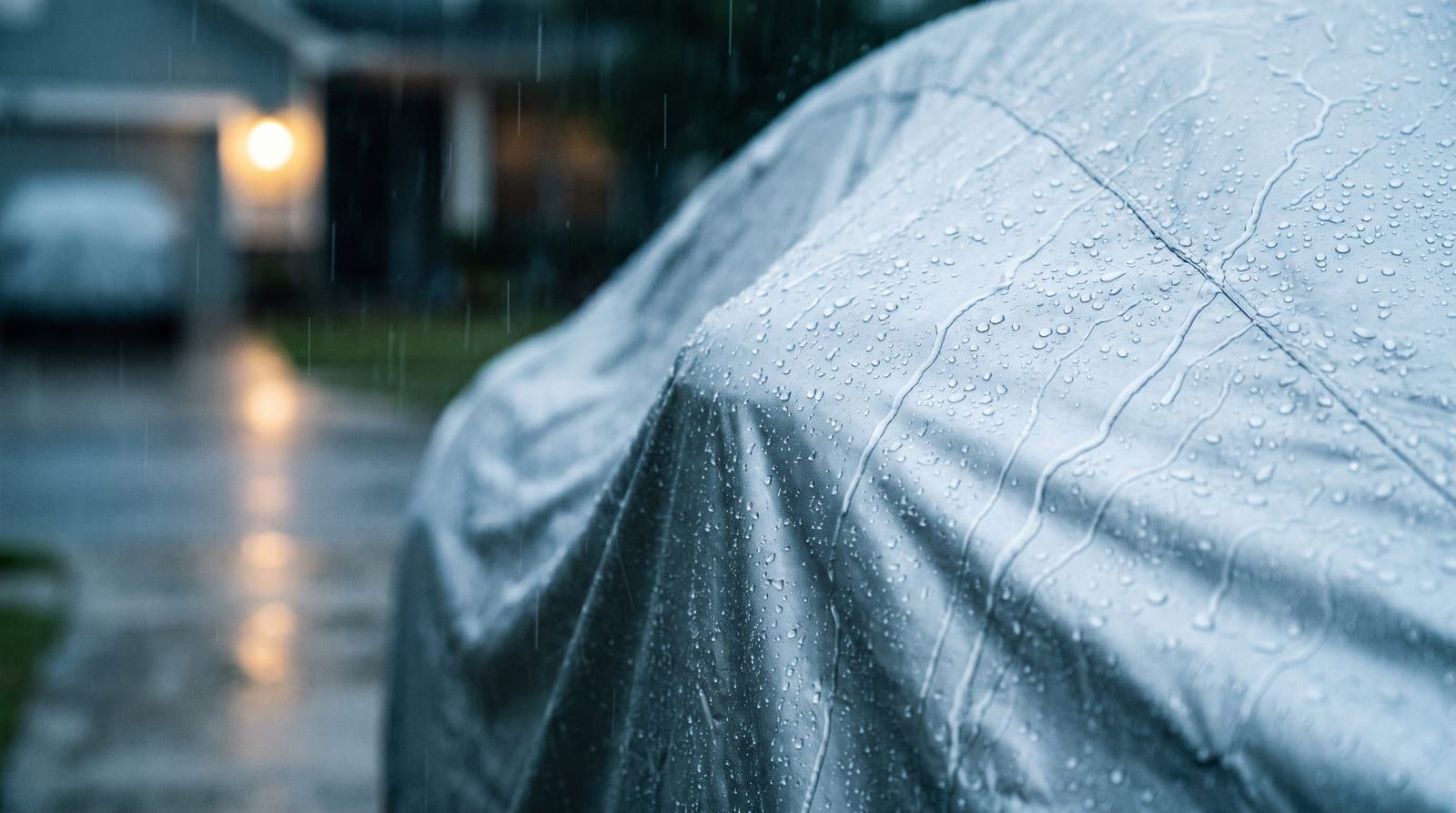
This is where the damage gets expensive. Multi-layer covers are built from bonded fabric layers, and mechanical stress plus heat is a good way to cause delamination, where those layers start separating from each other. Once that happens, there's no fixing it. The cover's structural integrity is compromised for good.
Water repellency goes next. Once the outer coating wears down, water stops beading and starts soaking through to the paint, which is the opposite of what you bought the cover for in the first place. A waterproof car cover that's lost its coating is really just a heavy tarp at that point.
Then there's the physical toll: torn seams, stretched-out elastic hems that no longer hold a snug fit, cracked or bent grommets from tumbling around the drum. This is honestly one of the most common reasons covers fail earlier than they should, and it's avoidable. It also matters for warranty claims. If a manufacturer can tell a cover was machine washed, that claim is likely getting denied. Check the lifetime warranty terms for your cover before you risk voiding it over a laundry shortcut.
How Often Should You Clean a Car Cover?
For daily outdoor use, clean it every one to three months, or sooner if you're seeing visible dirt, pollen, tree sap, or bird droppings building up. Sap and droppings are acidic enough that leaving them sit is worse than the cleaning itself.
Before any long-term storage, clean it first. Packing away a dirty, damp cover is how mildew and set-in stains happen, and both are harder to deal with than routine dirt.
While you're cleaning it, take a minute to actually look at the cover. Thin spots, loose stitching, a grommet that's starting to pull. Catching that early is a lot cheaper than replacing the whole cover later. If you want more on the day-to-day upkeep side of things, general car care and why a cover matters in the first place are both worth a look.
What's the Best Way to Dry a Car Cover After Washing?
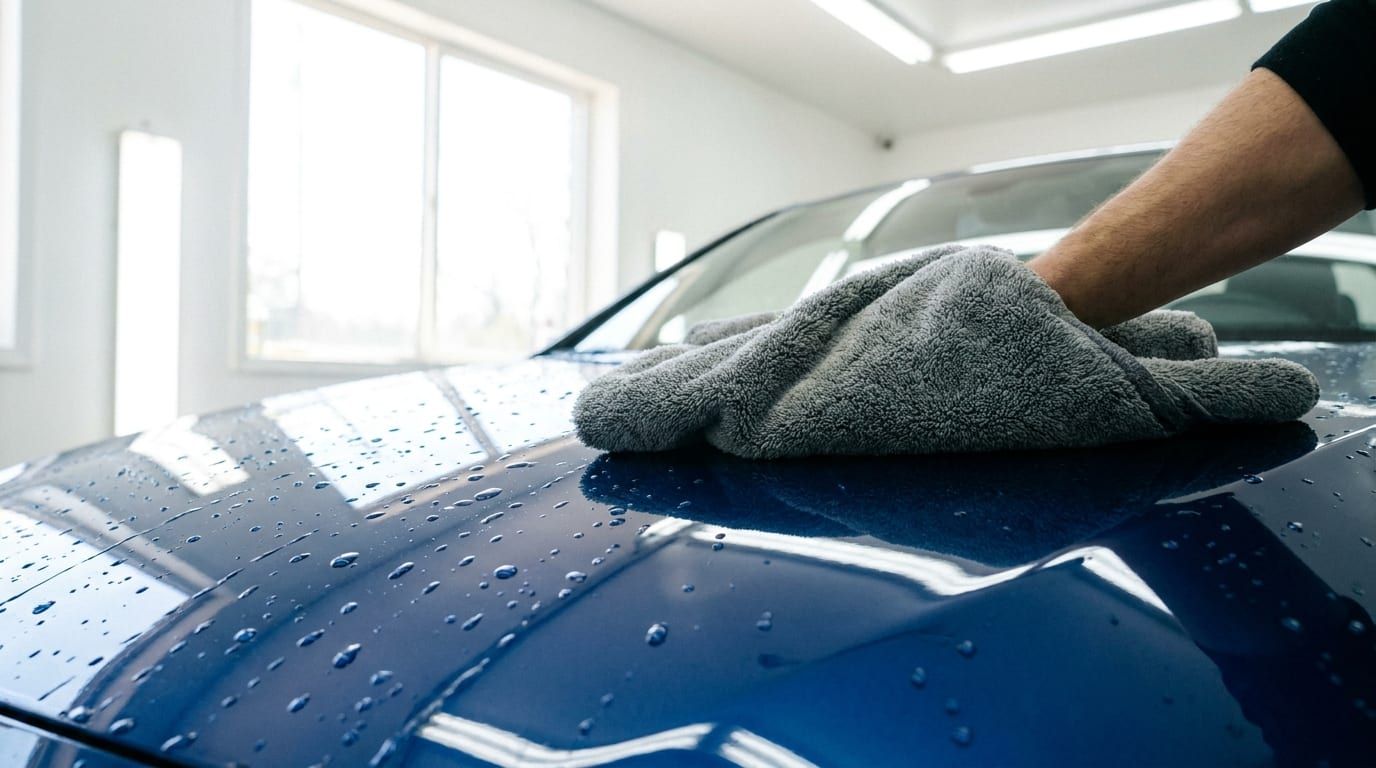
Air dry it, flat or on a rack, and out of direct sunlight. UV exposure is already something your cover is designed to fight off your car's paint, no need to bake the cover itself in it during drying and speed up its own breakdown.
Don't put it in a machine dryer. High heat can melt or warp synthetic fibers and shrink elastic hems, which is the same kind of damage you were trying to avoid by not machine washing it in the first place.
Make sure it's completely dry before you fold it or put it away. Damp fabric folded into storage is a mildew and odor problem waiting to happen, and it's one of the easiest mistakes to avoid with a little patience. If you're storing the cover outdoors between washes, the guide to using a car cover outdoors covers wind, UV, and moisture handling in more depth, and if it lives indoors instead, the indoor car cover guide is the better read.
Keep Your Cover Clean and Protecting Your Vehicle
Hand washing is the safer default here. Machine washing is really only worth considering for that narrow category of lightweight indoor covers with no hardware, and even then, gentle cycle only. For everything else, the extra ten minutes by hand is what keeps the cover doing its job for years instead of one season.
For the full step-by-step, the car cover cleaning guide walks through the whole process in more detail than we've covered here.
If your current cover is already torn, delaminated, or just worn past the point of cleaning helping, it might be time to stop patching it up and browse a replacement at CarCovers.com instead.
Updated