


Car Cover for Honda Civic: Fit Guide, Size Chart, and Buying Checklist
Why Your Civic Needs a Cover Built for Its Exact Shape
A universal cover looks fine folded up on a store shelf. On your Civic, it's a different story. Generic covers are cut to fit a "compact car" size range, which means loose fabric flapping at the mirrors, gaps at the spoiler, and material that rides up above the rocker panels the second wind picks up. Rain gets in through those gaps. So does dust, pollen, and whatever else is floating around your driveway.
Here's the complication: a Civic sedan, a Civic hatchback, and a Civic coupe are not the same shape. Roofline height, trunk profile, rear glass angle, all of it varies by body style, and it shifts again from one generation to the next. A cover sized for a sedan will bunch or come up short on a hatchback's more upright rear end.
So the real buying decision isn't "what size cover fits a compact car." It's matching your Civic's specific generation and body style to the right cover pattern before you check out. Get that right and everything else, fabric, straps, warranty, is easy to sort out. Get it wrong and you're stuck with a cover that flaps, sags, or doesn't zip up at all. A custom-fit car cover built to your Civic's actual dimensions solves this from the start, no guesswork on straps or gap-filling later.
Honda Civic Generations and Body Styles: What Changed
Four generations account for most of what's on the road today, and each one changed enough to matter for cover fit.
The 8th gen (2006-2011) had a fairly boxy sedan and a distinct two-door coupe with a lower, sportier roofline. The 9th gen (2012-2015) kept that sedan/coupe split but smoothed out the body lines and slightly extended overall length. Neither generation offered a hatchback in the US lineup, so if you're shopping for one of these years, you're choosing between two body styles, not three.
The 10th gen (2016-2021) is where things got more complicated. Honda added a proper hatchback back into the US Civic family, alongside a sedan and a coupe with an even more aggressive, lower stance. Three body styles, three different roof and rear-end profiles, one generation. A cover cut for the 10th-gen sedan will not sit right on the hatchback's steeper rear glass.
The 11th gen (2022-present) dropped the coupe entirely, leaving sedan and hatchback as the two options, both slightly larger than their 10th-gen predecessors.
One more wrinkle: Si and Type R trims. These add rear wings, deeper front splitters, and wider side skirts that a standard-trim cover pattern doesn't account for. Even within the same generation and body style, a Type R's aero pieces can change how a cover drapes and where it needs extra clearance.
Bottom line, before you buy anything: confirm your exact model year and body style, sedan, coupe, or hatchback. Mixing these up is, by a wide margin, the single biggest reason people end up returning a cover for their Civic. If you're not sure which category your car falls into, the Honda cover selection page breaks it down by generation so you're not guessing.
Civic Cover Fit-and-Size Reference Table
Here's how the generations and body styles stack up for fit purposes:
2006-2011 Civic Sedan/Coupe
- Approx. overall length: 176.7 to 177.3 inches
- Recommended fit type: Semi-custom or custom, generation-specific
- Key fit notes: Coupe roofline sits noticeably lower than the sedan; don't cross-shop the two body styles
2012-2015 Civic Sedan/Coupe
- Approx. overall length: 177.3 to 179.4 inches
- Recommended fit type: Custom, by body style
- Key fit notes: Sedan trunk profile changed mid-cycle in some trims; check rear overhang if you're between model years
2016-2021 Civic Sedan/Coupe/Hatchback
- Approx. overall length: 174.0 (hatchback) to 182.3 inches (sedan)
- Recommended fit type: Custom, by body style, this generation has the widest fit variance of the four
- Key fit notes: Hatchback's short rear deck and steep glass need a dedicated pattern; coupe sits lower than either sedan or hatchback
2022+ Civic Sedan/Hatchback
- Approx. overall length: 179.4 (hatchback) to 184.0 inches (sedan)
- Recommended fit type: Custom, by body style
- Key fit notes: No coupe offered this generation; sedan grew slightly longer than the 10th gen
If you've added a roof rack, a tall antenna, or an aftermarket spoiler, measure bumper to bumper and roof height with those items in place before ordering. A stock pattern won't account for extra clearance you've added yourself.
And if your trim isn't listed here, or you've made body modifications that change the car's outline, run your Civic through the vehicle sizing guide rather than eyeballing it against the closest row above.
Choosing the Right Material for Where You Park
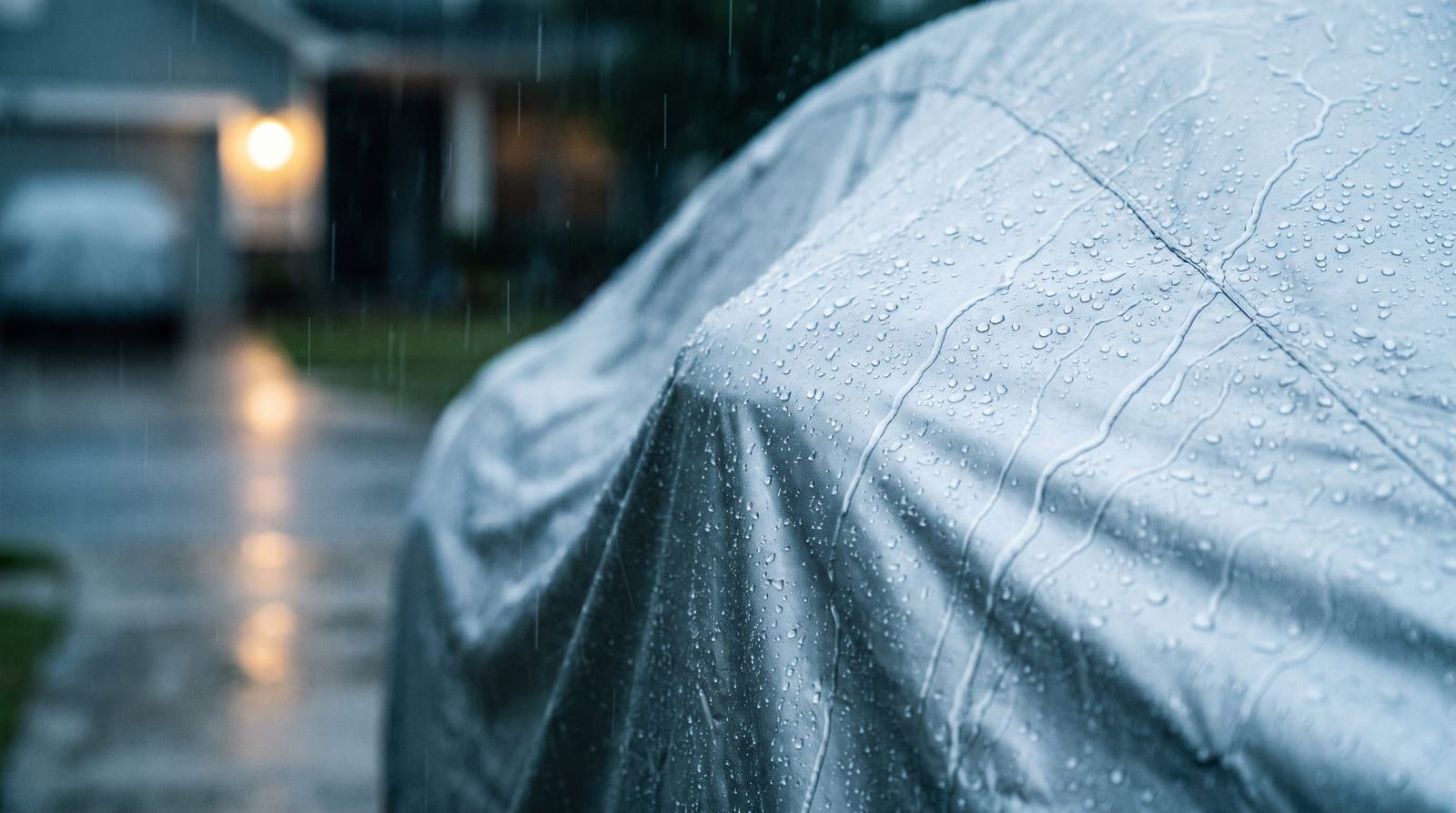
Fit gets your cover on the car correctly. Material determines whether it actually protects the car once it's on.
If your Civic lives outside, driveway or street, you need fabric rated for the outdoors: waterproof, UV-resistant, built to handle repeated sun and rain cycles without breaking down. An outdoor car cover is doing real work every day it's on the car. A garage-kept Civic doesn't need that heavy-duty layer. A lighter, fleece-lined indoor car cover is enough, and it's gentler on the paint since there's no wind abrasion or grit to worry about.
Storm-prone regions add a third tier: hail-rated covers with reinforced padding at the roof and hood, the two panels that take the worst of it. If you're in an area that gets regular hail, a hail car cover is worth the upgrade over a standard outdoor cover, since the extra padding is the entire point.
One thing daily commuters get wrong: they buy waterproof and assume that's the end of the decision. Fully sealed, non-breathable fabric on a car parked outside every day traps moisture underneath. That's how you get mildew smell and water spotting on paint that a cover was supposed to prevent. What you actually want is fabric that's waterproof from the outside but still breathes, letting trapped humidity escape instead of sitting on the clear coat overnight.
Pick your fabric based on climate and parking situation first. Generation and body style narrow down the pattern, but they don't tell you anything about whether you need waterproofing, breathability, or hail padding. Climate decides that.
Feature Checklist Before You Buy
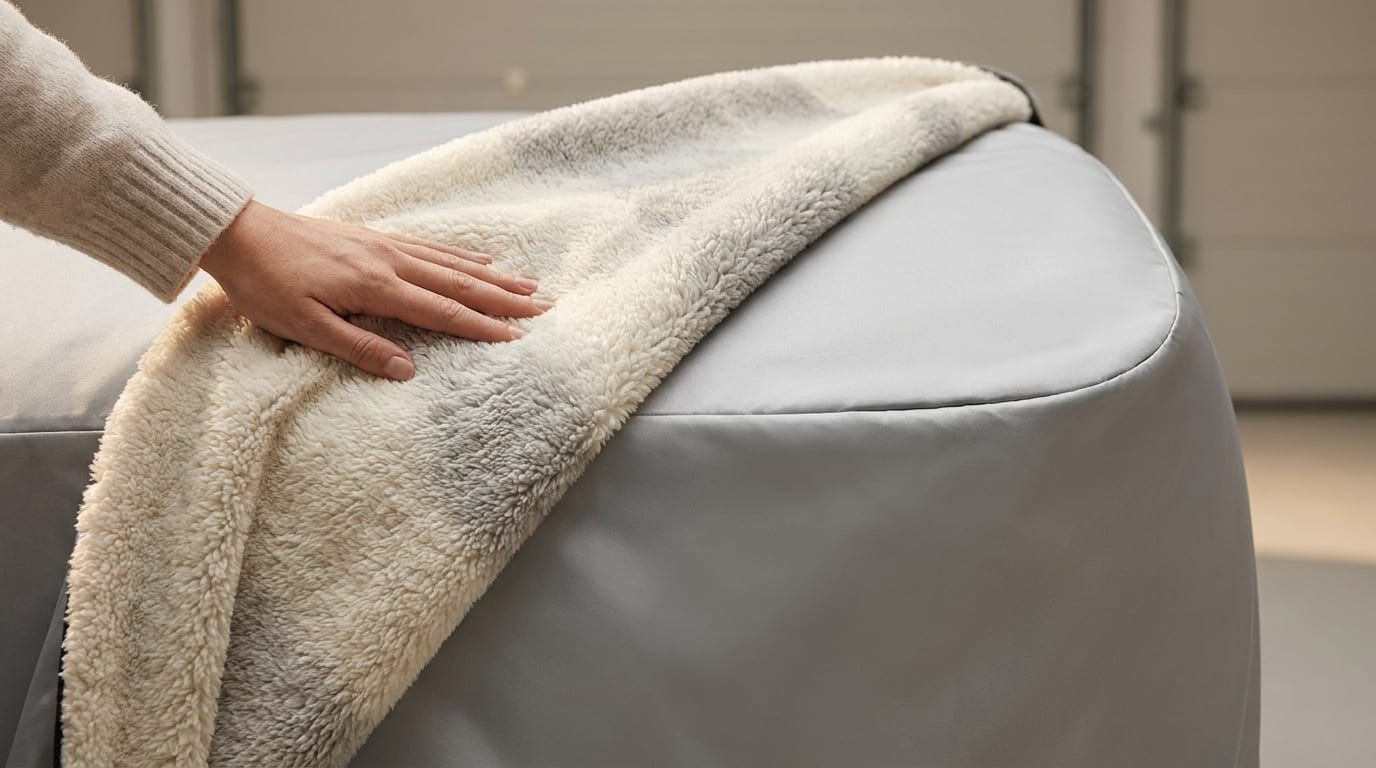
Fit and fabric get most of the attention, but the small hardware details are what make a cover livable day to day.
Check for an elastic hem or cinch cord along the bottom edge. This is what keeps the cover snug under the rocker panels instead of billowing in wind. Look for grommets positioned for a cable lock, reflective piping if you're ever parking near traffic or in low light, and a storage bag included in the box, not sold separately.
Civics with the factory shark-fin antenna need a cover with an antenna patch or cutout built in, otherwise you're stretching fabric over a bump it wasn't designed for, which stresses the seam right at that spot. Same logic applies to larger factory side mirrors on later trims: a mirror pocket keeps the cover from slipping off in wind.
A lifetime or multi-year warranty tells you something about how confident the manufacturer is in their own stitching and fabric. Read what's actually covered, usually manufacturing defects and material failure, and what's excluded, usually normal wear, misuse, or damage from improper storage. The lifetime warranty details spell out where that line sits.
Before checkout, cross-check the product page's included accessories list against this checklist. Some covers bundle the cable lock and gust strap, some don't. Finding that out after your Civic is already covered, and you're back online ordering a separate strap, is an avoidable annoyance.
Installing, Securing, and Maintaining Your Civic Cover
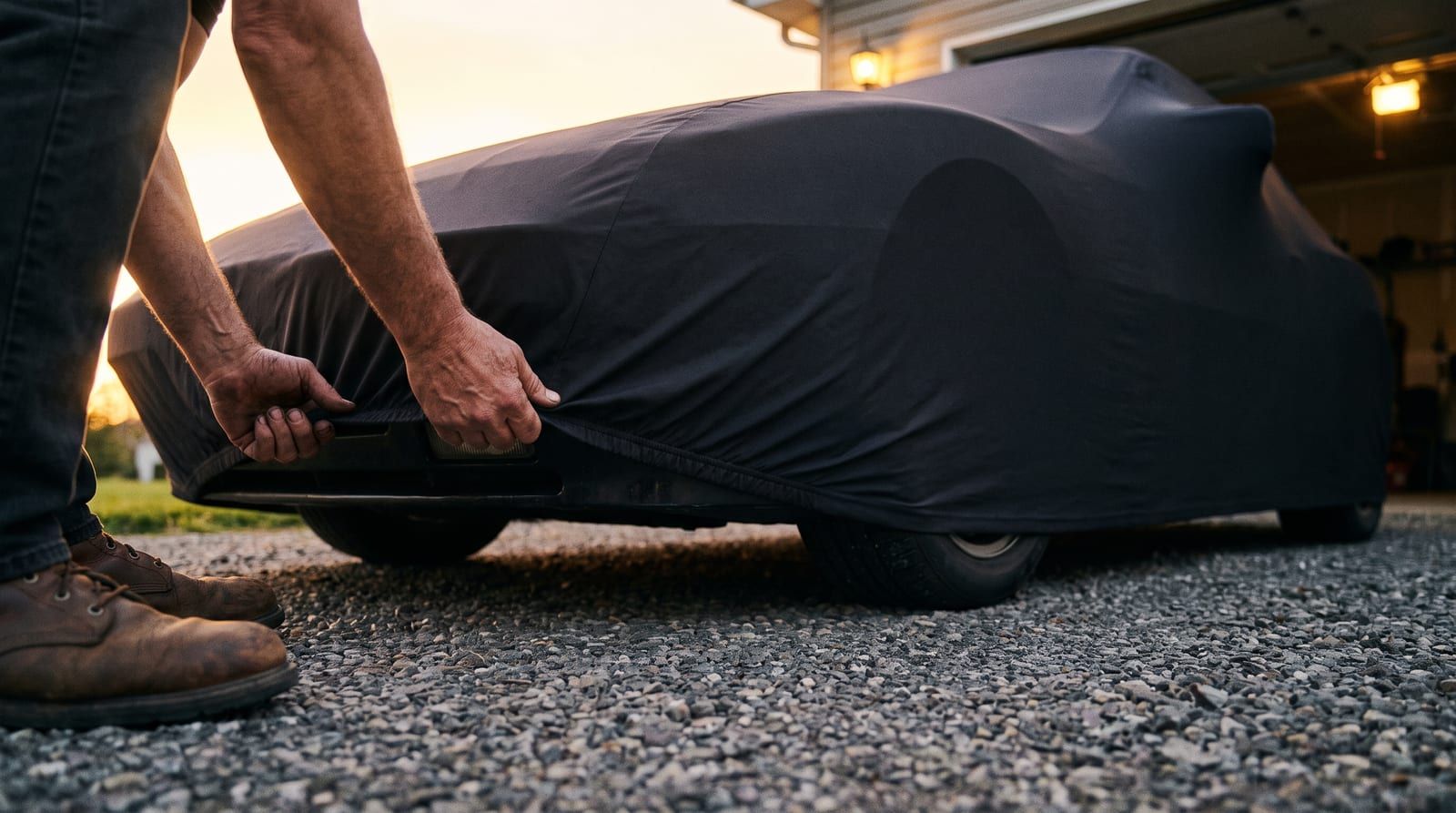
Installation on a properly fitted cover is straightforward: front to back, drape it over the hood first, work it back over the roof and trunk or hatch, then tuck and secure the elastic hem underneath the rocker panels. Run any cable lock through the grommets last, once the cover is seated and even on both sides.
If your Civic sits in an open, windy driveway, a gust strap is worth adding. It runs under the car and clips to both sides of the cover, keeping it from lifting at the edges on gusty days. Garage-kept cars generally don't need one, there's no wind to fight indoors. Full instructions are in the gust strap installation guide, and if you're adding a cable lock too, the cable lock installation guide covers that separately. Both are quick, five-minute jobs once you've done them once.
Care is simple and easy to skip. Shake off loose debris before folding. Spot-clean with mild soap and water, nothing harsh. Let it air dry completely before it goes back in the storage bag. This last step matters more than people think: folding a cover while it's even slightly damp is the single most common reason custom-fit covers wear out early, mildew sets in inside the folds and breaks the fabric down from the inside where you can't see it happening. The full breakdown is in this car cover storage and care guide, and general setup steps live on the installation guides page if you want the whole process in one place.
Shop the Custom-Fit Honda Civic Cover
The decision comes down to three steps, in order. Match your Civic's generation and body style against the reference table above. Pick fabric based on where the car actually parks, not what sounds most premium. Then check the feature list, hem, grommets, antenna patch, warranty, against the product page before you buy, so you're not adding a cable lock or gust strap as an afterthought.
A cover cut to fit does its job quietly: no flapping fabric working paint down over months, no gaps letting rain sit on the trunk lid, no trapped moisture doing damage you won't notice until it's a spot on the clear coat. That's really the whole case for going custom over universal.
If you're still narrowing things down, or just want to keep learning what actually protects a car between drives, poke around the rest of our car care articles. It's worth a few minutes before you buy.
Updated