


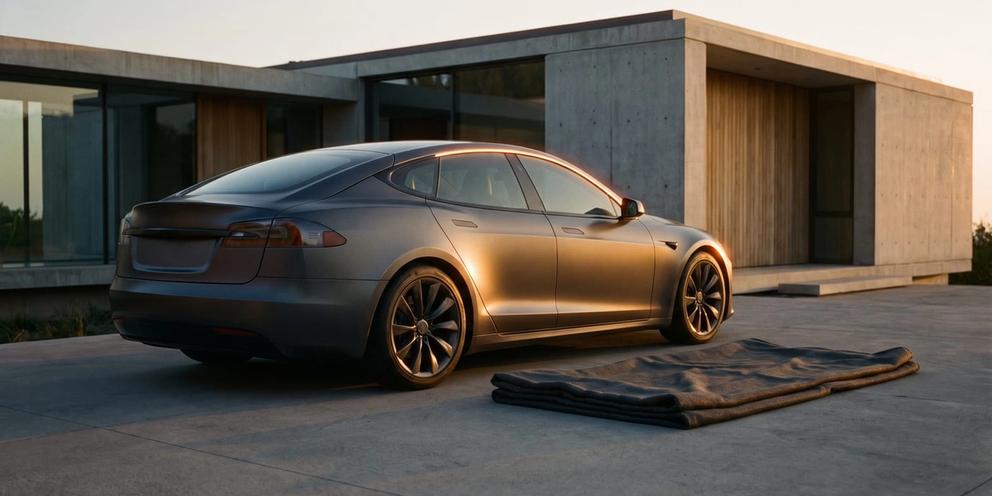
Car Cover for Tesla Model 3: Custom-Fit Sizing, Tiers & Buying Guide
Why the Tesla Model 3 Needs a Cover Built for Its Exact Shape
The Model 3 doesn't share much with a Camry or an Accord under its skin, and it definitely doesn't share their shape. That low nose, the windshield raked back at an angle most sedans don't attempt, flush door handles that sit nearly seamless with the body, and a rear spoiler that changes the trunk line all mean a generic cover has to guess. Generic covers guess wrong more often than not. They gap at the nose, rub against the mirrors, and sag around the spoiler because they're built for an average shape that doesn't actually exist. A proper car cover for Tesla Model 3 owners needs to follow the real body lines, not a rough approximation of "sedan."
There's also the charging port to think about, tucked into the rear driver-side quarter panel. If your cover doesn't account for it, you're pulling the whole thing off every time you plug in at home. That gets old fast on a daily driver.
A custom-fit cover solves both problems by tracing the factory contours instead of stretching a one-size shell over them. This guide walks through sizing by model year, the protection tiers worth knowing, the Model 3-specific features that actually matter, and how to match a cover to where you park. From there, you can head to the Tesla cover page and pick the exact custom-fit cover built for your year and trim.
Fit-and-Size Table: Tesla Model 3 Cover Dimensions by Year
Tesla has changed the Model 3's exterior more than once, and each change shifts where a cover needs to hug tight versus where it needs room to breathe. Here's how the fit groups break down.
2017 to 2023 Model 3 (pre-refresh)
- Length: approximately 184.8 inches
- Width: approximately 72.8 inches (mirrors excluded)
- Height: approximately 56.8 inches
- Notable body changes: standard sedan silhouette carried through this whole run, with only minor trim tweaks year to year, so covers built for this range fit consistently across it
2024+ Model 3 "Highland" refresh
- Length: approximately 184.6 inches
- Width: approximately 72.8 inches (mirrors excluded)
- Height: approximately 56.6 inches
- Notable body changes: redesigned front bumper, a new front light bar, and reshaped mirrors change the fit at the nose and A-pillar, so a pre-refresh cover will sit slightly wrong up front even though the overall dimensions are close
Performance trim callout
- Performance models carry a more aggressive rear spoiler, and that affects rear-hem clearance specifically. A cover cut for the standard trim can crowd or catch on that spoiler edge.
Dimensions are a starting point, not the final word. Trim details shift more than most owners expect, so confirm your exact year and trim on the custom-fit product page rather than eyeballing it against a universal size chart. Guessing here is how you end up with a cover that's technically "medium sedan" and practically useless.
Custom-Fit vs. Universal Covers: What Actually Changes for a Model 3
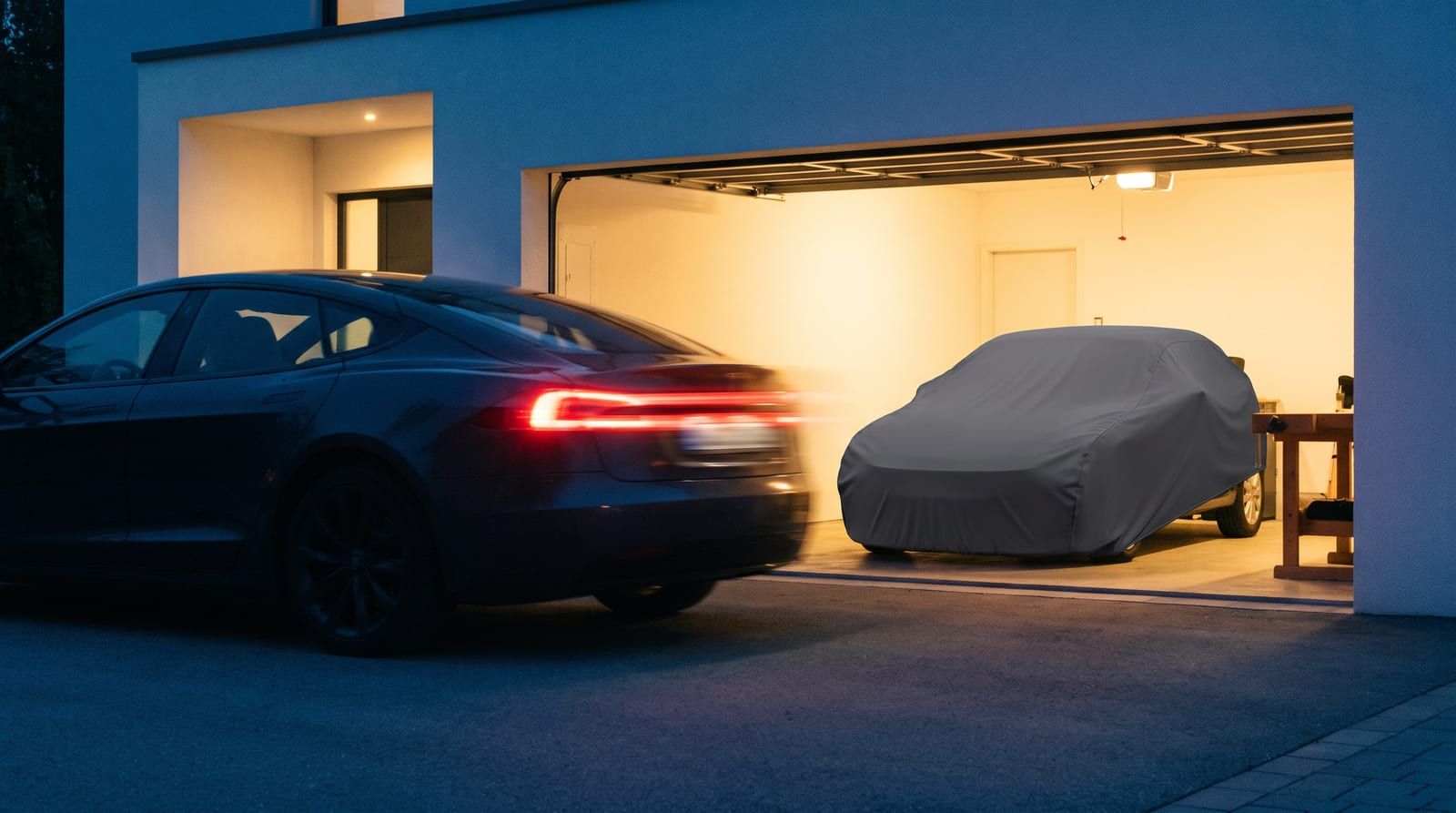
The dimensions matter, but the details are where custom-fit actually earns its keep.
Mirror pockets
- Custom-fit: pockets are placed and shaped to match the Model 3's flush mirror housings, so the fabric sits tight with no flapping.
- Universal: the mirror is often an afterthought in a generic pattern, leaving a pocket that gaps or drags in wind.
Hem and rocker panel fit
- Custom-fit: the hem is cut for the Model 3's low ground clearance, so it hugs the rocker panels instead of hanging loose.
- Universal: extra slack at the bottom means the cover billows in wind and can slap against the paint over time.
Antenna and shark-fin clearance
- Custom-fit: built with the roof-mounted shark fin antenna in mind, either routing around it cleanly or including a dedicated cutout.
- Universal: the fabric stretches over the fin with no relief point, and that's exactly the kind of stress that turns into a tear after a season or two.
Charging port access
- Custom-fit: EV-specific designs often include a port-access panel, so you can plug in without pulling the whole cover.
- Universal: no such feature exists on a pattern that wasn't designed around EVs, so full removal is the only option.
None of this is really about brand loyalty. It's about whether the pattern was drawn from the Model 3's actual body or from a generic four-door template. If you've ever fought a universal cover in a parking lot, you already know which one wins.
Choosing a Protection Tier for Your Model 3
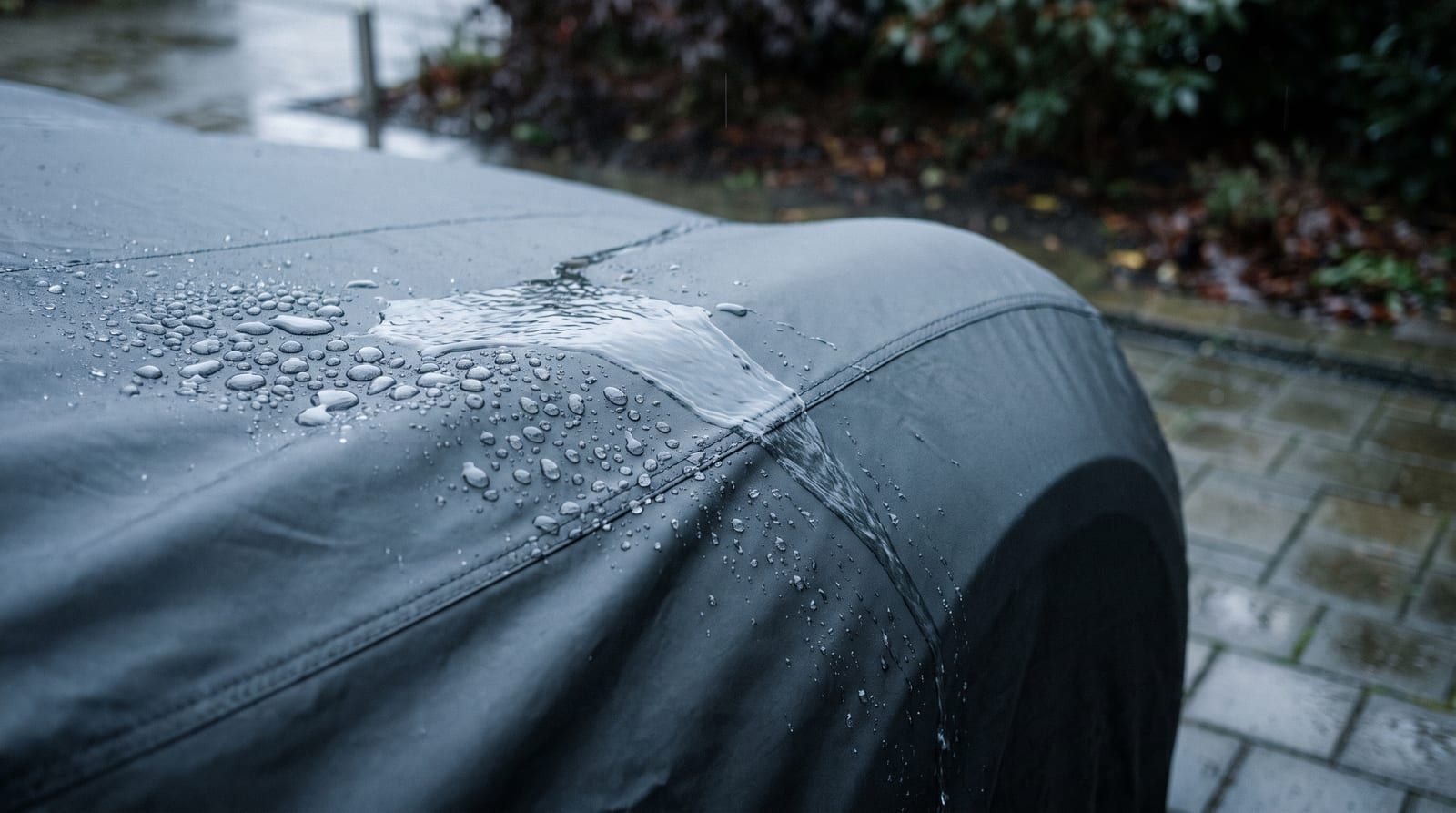
Not every Model 3 owner needs the same level of armor, and paying for more protection than your parking situation calls for is just money spent on fabric you didn't need.
Basic tier
- Single-layer weather resistance, lighter fabric, lower cost.
- Best for mild climates or a car that's mostly garaged and only sees short outdoor stretches.
Deluxe tier
- Adds water resistance and UV-blocking layers on top of the basic build.
- Better suited to daily outdoor parking where the car sees rain, sun, and temperature swings on a regular basis.
Platinum tier
- Full waterproofing, stronger UV blocking, and reinforced stitching at stress points.
- Built for year-round outdoor exposure or genuinely harsh climates: heavy rain, intense sun, coastal salt air, that kind of thing.
The decision rule is simple: match the tier to where the car actually sleeps at night, not to whatever's cheapest on the page. A Basic cover on a car that lives outdoors in Phoenix summers is going to break down fast. A Platinum cover on a car that's garaged five nights a week is overkill. Be honest about your parking situation first, then pick.
Model 3-Specific Features Worth Checking Before You Buy
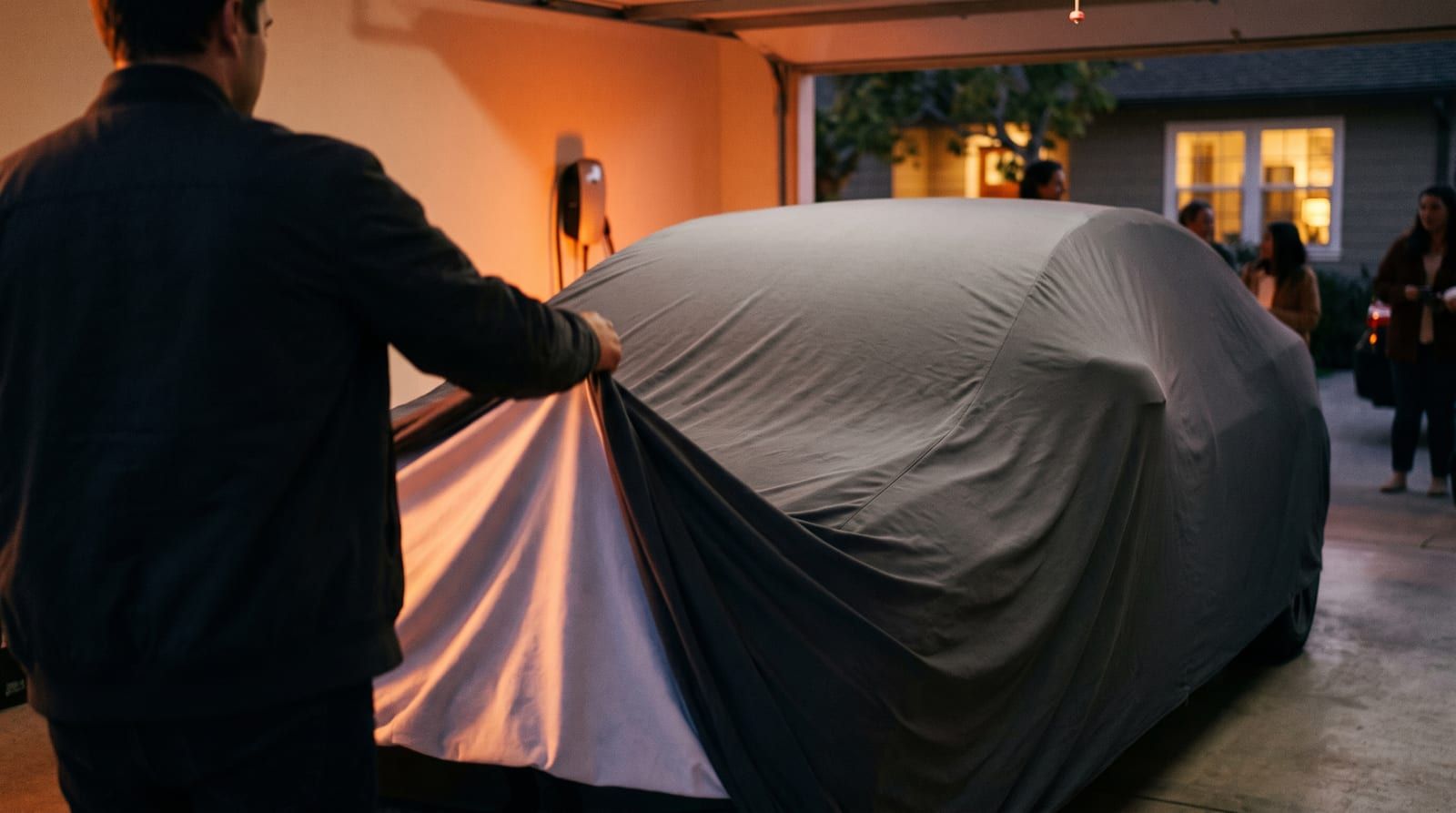
Beyond fit and tier, a handful of small features separate a cover that lasts from one that frays within a year.
Antenna patch or reinforced grommet. The shark fin antenna is a constant friction point if the fabric isn't reinforced there. Look for a dedicated antenna patch or grommet built into the pattern, not just a generic stretch zone.
Tie-down straps and reinforced grommets. The Model 3 sits low, which means more wind gets under it than you'd think, and a cover without secure anchor points is a cover that ends up in your neighbor's yard.
Cable lock compatibility. If you're parking in a shared driveway, an apartment lot, or on the street, lockable grommets and a cable lock are worth checking for before you buy, not after someone tries to lift the cover off.
Storage bag included. If you're covering and uncovering a daily-driven Model 3, you'll want somewhere to stuff the cover between uses that isn't the trunk floor. A bundled storage bag is a small thing that matters more than it sounds like it should.
Matching the Cover to Your Climate and Parking Situation
Outdoor daily parking. Prioritize waterproofing and UV protection over anything marketed as an indoor-only fabric. An outdoor cover is built to take sun and rain repeatedly; an indoor cover isn't.
Indoor or garage storage. A lighter indoor cover protects paint and keeps dust off without the bulk of a full weatherproof shell you don't need behind closed doors.
Hail-prone regions. The Model 3's glass roof, standard on most trims, is more exposed to hail damage than a traditional metal roof. If you're in a region that gets hail, a heavier-duty hail-rated cover is worth the extra cost.
The glass roof, generally. Even outside of hail season, that glass roof means more UV exposure into the cabin than a metal-roofed sedan gets. It's one more reason the tier decision above matters more on a Model 3 than it might on an older gas sedan. And since Teslas are built to rack up real mileage over long ownership periods (see how many miles a Tesla can last for context), protecting the exterior early pays off over years, not just one season.
Installing and Maintaining Your Model 3 Cover
Installation isn't complicated, but doing it in order saves you from re-adjusting the whole cover halfway through.
Start at the mirrors. Get both mirror pockets seated first, since they anchor the rest of the fit. From there, work front to back, pulling the cover over the roof and settling it at the rear before cinching the hem around the rocker panels. Trying to do this in reverse just means fighting slack the whole way.
If you're in a windy region, gust straps are not optional gear, they're the thing standing between your cover and your neighbor's lawn. Given how low the Model 3 sits, wind gets under the front edge more easily than you'd expect.
For overnight or public parking, a cable lock adds a layer of security that's cheap insurance against someone deciding your cover looks removable. Full step-by-step installation help, if you want to see it laid out visually, lives in the installation guides section.
On maintenance: clean the cover every few weeks if it's living outdoors full time, less often if it's mostly indoors. Use a mild soap and a soft brush rather than anything abrasive, since harsh scrubbing wears down the waterproof coating faster than the weather does. The full cleaning process is worth a read if you want the coating to hold up past a couple of seasons.
Get the Right Fit: Shop the Custom-Fit Tesla Model 3 Cover
The path here isn't complicated. Confirm your model year and trim, since the pre-refresh and Highland-era Model 3s fit differently at the nose and mirrors. Pick a protection tier based on where the car actually parks, not on the lowest price tag. Then run through the Model 3-specific features, the antenna patch, the tie-downs, the cable lock compatibility, the storage bag, and make sure the cover you're eyeing actually has them.
Every custom-fit cover comes backed by a lifetime warranty and a no-hassle guarantee, so if the fit or the fabric isn't right, you're not stuck with it. That's a real risk-reducer when you're buying sight unseen online.
If you already know your year and trim, go ahead and pick out your car cover for Tesla Model 3 and get it ordered. If you're not sure which one's right for your exact setup, the cover finder tool will walk you through it, or feel free to browse the rest of our car care guides while you decide.
Updated