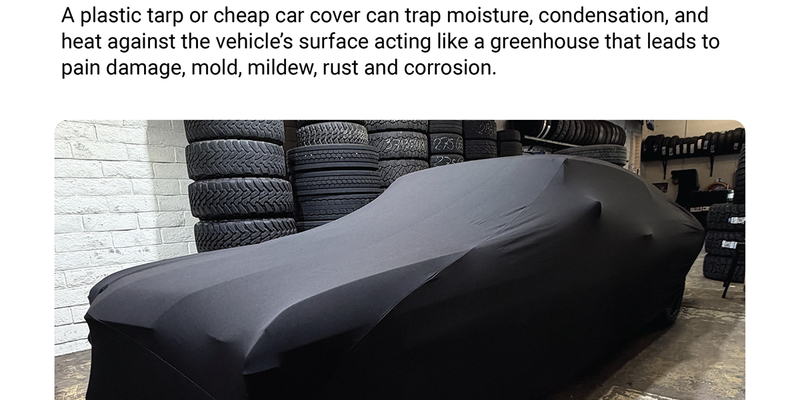
Why Tie-Down Loops Come Up So Often in Cover Shopping
Picture this: you buy a cover that fits your car like a glove, and a week later you find it crumpled against your bumper after a windy night. The fit was never the problem. The cover had nothing holding it down.
This is one of the most common complaints in cover reviews, and it's rarely about sizing. It's about wind getting underneath the fabric and turning a snug cover into a sail. A car cover with tie-down loops is built specifically to solve that problem. It's a different feature from an elastic hem, which just cinches the edge, or a cable lock, which is about theft deterrence, not wind resistance. Tie-down loops do one job: they give you an anchor point so the cover stays put.
This article walks through what the feature actually is, why it matters more than people expect, and which covers on CarCovers include it.
What a Tie-Down Loop Actually Is
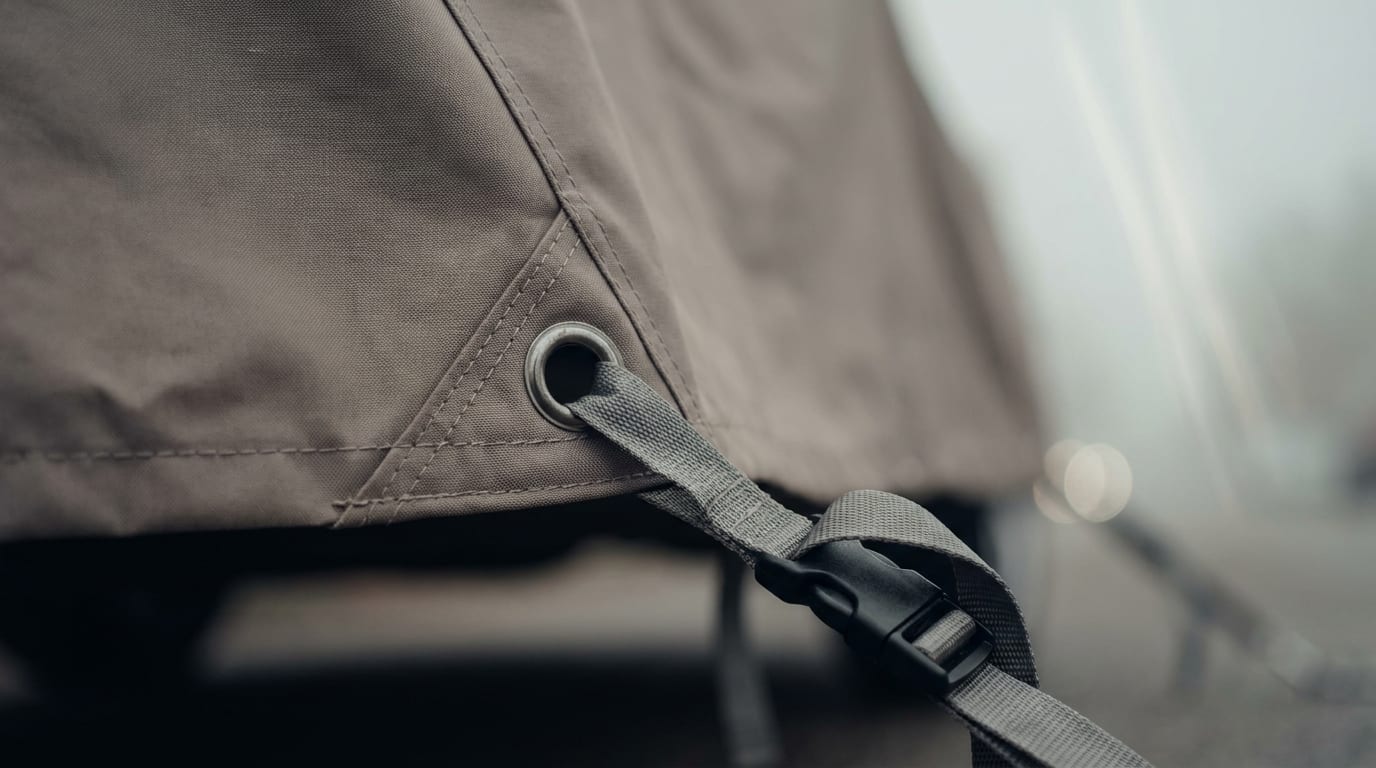
Strip away the marketing language and it's simple. A tie-down loop is a reinforced grommet or a sewn fabric tab placed along the lower edge or side seam of the cover. You thread a strap or cord through it. That's the whole mechanism.
It's worth separating this from two features people often confuse it with. An elastic hem tightens the bottom edge of the cover against the vehicle, so it doesn't gap at the wheel wells. A cable-and-buckle system, usually run front to back under the car, is there to deter theft by locking the cover to itself. Neither one is designed to fight wind. Tie-down loops are the piece built for that, and they typically show up at the front and rear bumper areas, sometimes continuing along the rocker panels so a strap can run underneath the vehicle or loop around a wheel.
If you're shopping and a product page just says "secure fit" without naming loops, grommets, or anchor points, assume it doesn't have this feature.
Why Tie-Down Loops Matter in Practice
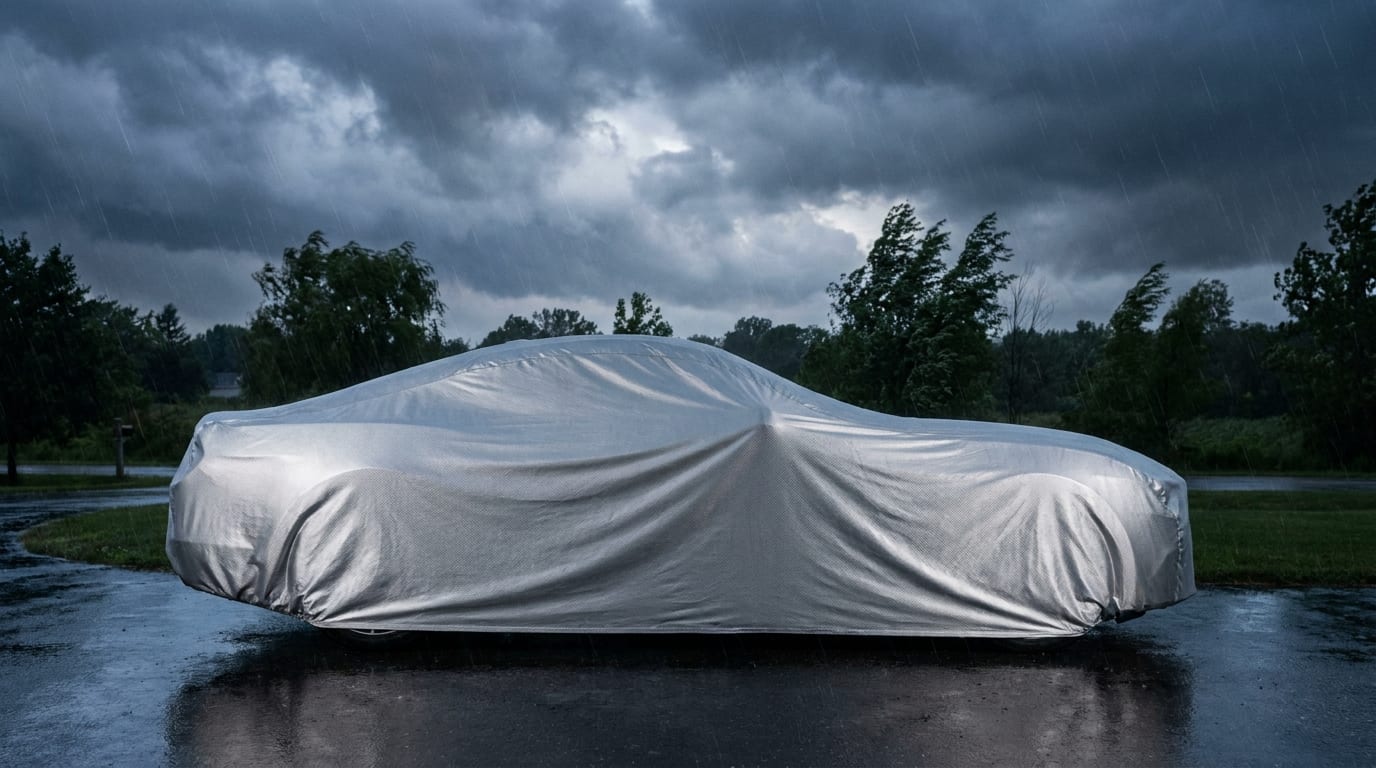
Here's the part that's easy to underestimate. Wind doesn't just lift a cover, it gets under the edge and balloons the whole thing like a parachute. Once that happens, the fabric flaps. Flapping fabric rubbing against paint and clear coat, over weeks and months, causes the kind of fine scratching that doesn't show up until you're polishing the car and wondering where the swirl marks came from.
Without an anchor system, a cover in sustained wind doesn't just underperform, it can come off entirely. A loose cover catching a gust can end up wrapped around a neighbor's bumper, snagged on a fence, or draped over the mailbox. That's not a hypothetical, it's just what happens when a large sheet of fabric has nothing holding its lower edge down.
This matters just as much during transport. If you're towing a vehicle or driving with a cover on for a short haul, the wind load is constant, not occasional, so an uncovered edge is a problem the whole way.
How Tie-Down Loops Work With Straps and Buckles
The install is straightforward once you've done it once. Thread a strap, this could be a cord, a nylon strap, or a dedicated gust strap, through the loop on one side of the cover. Run it under the vehicle. Connect it to the matching loop on the opposite side. Some covers use a buckle for quick on/off, others rely on a simple cinch knot.
A lot of outdoor covers pair their built-in loops with a separate gust strap kit sold as an add-on, meant for people parking in open, exposed lots where wind is a daily issue rather than an occasional storm. If you're in that situation, it's worth reading through the guide on installing a gust strap for extra wind hold before you buy, so you know whether your cover needs the accessory or already comes with enough anchoring built in.
One thing that gets overlooked: the loop itself needs to be reinforced; usually with extra stitching, a bar-tack, or a metal grommet, or it'll tear out the first time the strap takes real tension in a gust. A flimsy fabric tab sewn on as an afterthought won't survive a season of wind.
And tension matters. Strap it too tight and you're putting constant stress on the seams and the loop itself. Too loose and you've basically just decorated the cover with straps that do nothing. The right tension holds the lower edge snug against the vehicle without stretching the fabric.
Who Actually Needs This Feature
Not everyone does, and it's worth being honest about that before spending more on a feature you won't use.
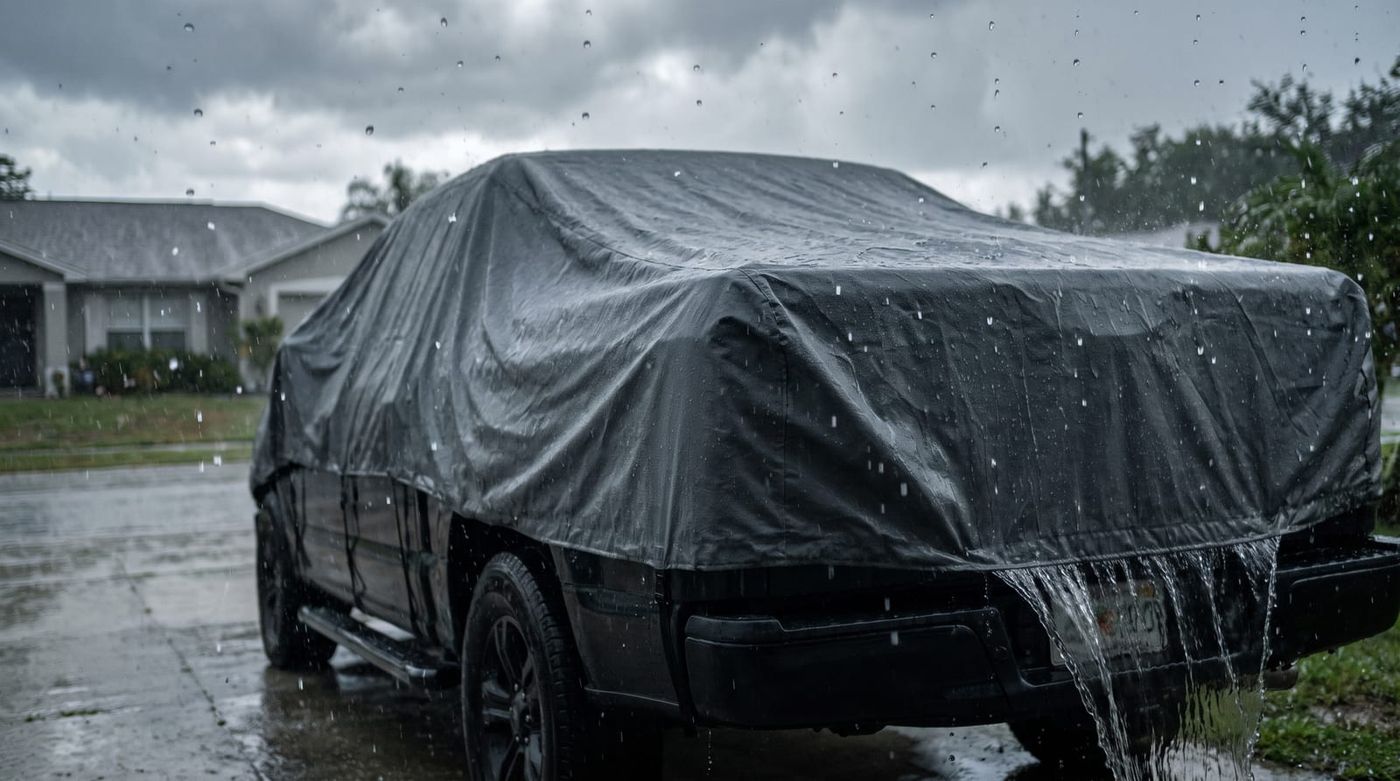
If your vehicle sits outside, uncovered, in an open lot, a driveway with no windbreak, or anywhere in coastal or plains regions where wind is a regular feature of the weather, tie-down loops aren't optional. They're the difference between a cover that survives a season and one you're replacing every spring.
Trucks and SUVs have it worse than sedans here. Higher ground clearance means more open space under the body for wind to get under and lift the fabric from below, so anchoring points matter more the higher the vehicle sits.
Long-term storage is another clear case. If you're laying up a car for winter, or you're a snowbird leaving a vehicle uncovered for months at a time, nobody's out there adjusting the cover daily. It needs to hold on its own, which is exactly what tie-down loops are for.
On the other end, if your vehicle lives in a garage and you're using an indoor car cover, skip worrying about this. Wind isn't part of the equation indoors, so the feature doesn't add much.
What to Check Before Buying a Cover With Tie-Down Loops
A few things separate a cover that actually holds up outdoors from one that just lists the feature on the box.
Check where the loops are placed. Front and rear only is fine for moderate wind, but full-perimeter loops along the rocker panels give you more anchor points for genuinely gusty conditions. Confirm whether a gust strap or tie-down kit ships with the cover or gets sold separately; it changes what you're actually paying for.
Look closely at how the loop is built. Reinforced stitching or a metal grommet holds up to repeated strap tension. A plain fabric tab, sewn on without reinforcement, is the first thing to fail.
And don't treat tie-down loops as a fix for a bad fit. A loose universal cover has more slack fabric to begin with, which means more surface area for wind to grab, which means more strain on every tie-down point. A custom-fit car cover that hugs the body already reduces the amount of loose fabric wind can catch, so the tie-downs aren't doing all the work alone.
Covers With Tie-Down Loops Worth Looking At
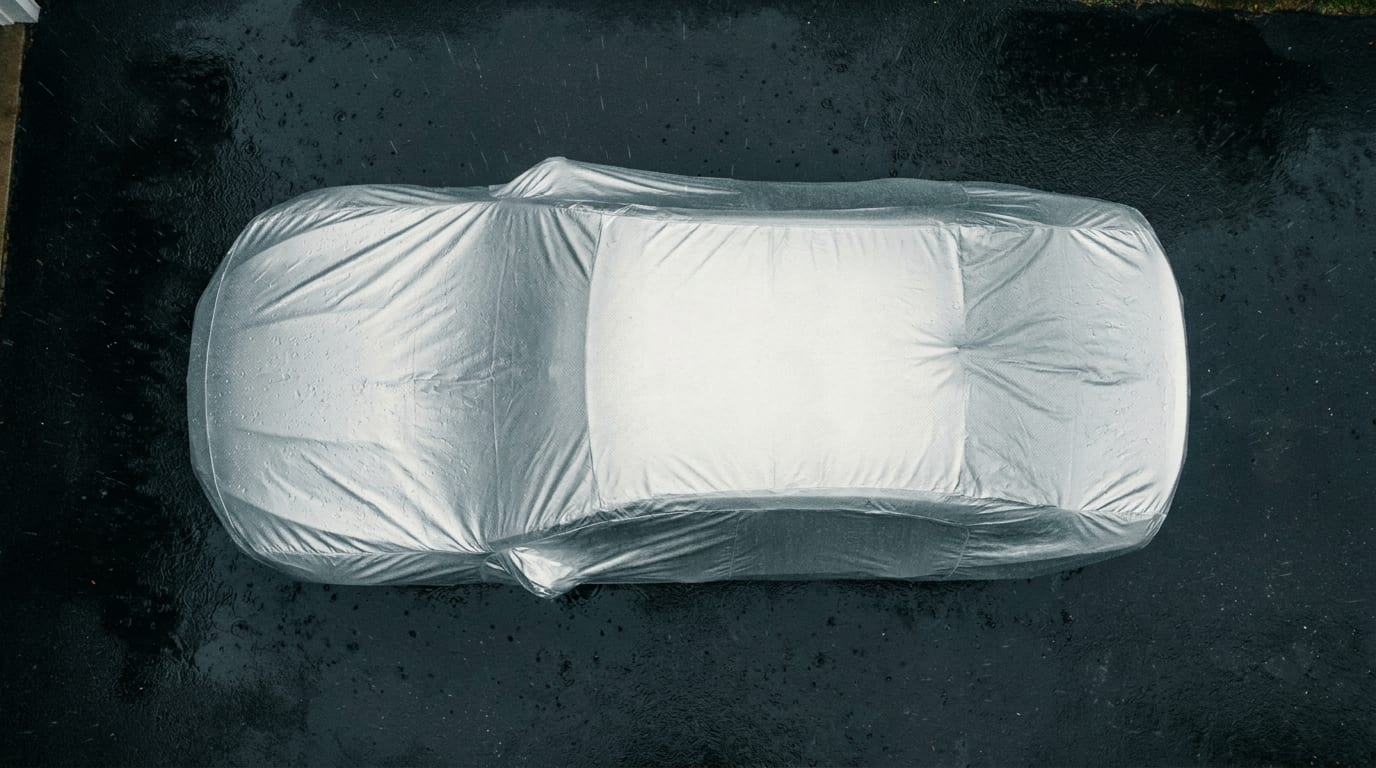
If wind resistance is the priority, start with custom-fit options over universal ones. A cover cut to your vehicle's exact dimensions, combined with tie-down loops, holds its position far better than a loose, one-size-fits-many cover with the same anchor points. Loose fabric plus tie-downs is still loose fabric.
Outdoor-rated covers are where this feature earns its keep. That's genuinely the use case tie-down loops were designed for, so when you're browsing outdoor car covers, check the product details for loop placement specifically rather than assuming every listing includes it.
For truck owners, the Platinum Shield truck cover is built for exactly this kind of outdoor exposure, with reinforced anchor points meant to handle regular wind rather than the occasional breeze. Worth a look if you're parking a truck outside full time, and it's part of the broader truck covers lineup if you want to compare options by size and trim.
It's also worth reading the guide to using a car cover outdoors alongside this one. Wind resistance and waterproofing tend to get evaluated together, since both are about how a cover performs when nobody's watching it, and the waterproof car covers category is a good next stop if rain is as much of a concern as wind in your area.
Bottom Line
Tie-down loops are a small, unglamorous feature. But they're the difference between a cover that rides out a storm and one that ends up in your neighbor's yard. If you're parking outside regularly, especially with a truck or SUV, or leaving a vehicle in storage for months at a time, this isn't a nice-to-have.
If you're garage-kept, or you live somewhere wind just isn't a factor, you can skip it without losing sleep over it.
Either way, it's worth browsing the custom-fit car covers and outdoor categories to find something built for how and where you actually park, and keeping an eye on the blog for more breakdowns like this one as you sort out what your vehicle actually needs.