What Is the Best Hem Type for a Car Cover?
The best hem type for a car cover is an elastic hem at the bottom edge. It cinches snugly around the lower body line of the vehicle, which keeps the cover anchored in wind and stops rain or debris from blowing underneath. That's the short answer.
But "best" isn't the same for every driveway. A cover living outside in gusty, coastal weather needs different hem support than one that spends its life under a carport. So what is the best hem type for a car cover really depends on where the vehicle sits and how often you're pulling the cover on and off.
The rest of this guide walks through each hem style you'll run into when shopping, why the hem matters more than most buyers assume, and how to match the right one to your own parking situation.
The Main Hem Types Used on Car Covers
Full elastic hem. Elastic runs the entire bottom perimeter of the cover. Pull it over the car, let the elastic do its job, and it cinches evenly all the way around with no tools or adjustment needed. This is the most common setup on quality covers, and for good reason: it's snug, it's fast, and it doesn't rely on you tying anything correctly.
Elastic corners only. Some covers, especially universal-fit ones, only put elastic at the front and rear corners, with a straight hem running between them. It makes the cover easier to stretch over a wider range of body shapes, which is why universal covers favor it. The tradeoff is a looser mid-section hem that doesn't hug the rocker panels as tightly.
Grommet and cable or strap hem. Metal grommets are spaced along the bottom edge, letting you thread a cable lock or strap through them. This isn't really about cinching the fabric closer to the body, it's about physically locking the cover down (and locking it in place against theft or tampering). Owners who keep a car parked outside for weeks at a stretch tend to like this option because it adds real holding power beyond what elastic alone can do.
Straight, non-elastic hem. Just a plain edge, usually paired with separate tie-down straps. It's the simplest and cheapest hem to manufacture, and it's also the least secure in wind since there's nothing cinching it automatically. Fine for a quick dust cover in a closed garage; not great for anything exposed to weather.
Drawstring hem. A pull-cord sewn into a hem channel that you tighten by hand and tie off yourself. It gives you some control over how tight the fit is, but it also means you have to actually do it every time, and a knot that isn't cinched well defeats the purpose.
Why the Hem Matters More Than Most Buyers Expect

People obsess over fabric weight and UV ratings, then treat the hem as an afterthought. That's backwards. A loose hem lets wind sneak underneath the cover, and once wind gets under there, the cover starts flapping. Flapping fabric rubbing against paint, over and over, for hours, is exactly the kind of slow damage a cover is supposed to prevent, not cause. In bad enough wind, a loose hem can let the whole cover rip off the car.
It's not just wind. Gaps at the bottom edge are an open invitation for rain, dust, pollen, and yes, small animals looking for a dry place to nest. All the waterproofing built into the material above doesn't mean much if water is getting in from below.
A properly cinched hem solves both problems at once. It keeps the cover's shape pulled in close to the body of the car, which cuts down on the chafe points that show up after months of outdoor storage. This is the actual mechanical reason elastic hems dominate the market: they do the cinching automatically, consistently, every single time you cover the car.
Matching Hem Type to How and Where You Park
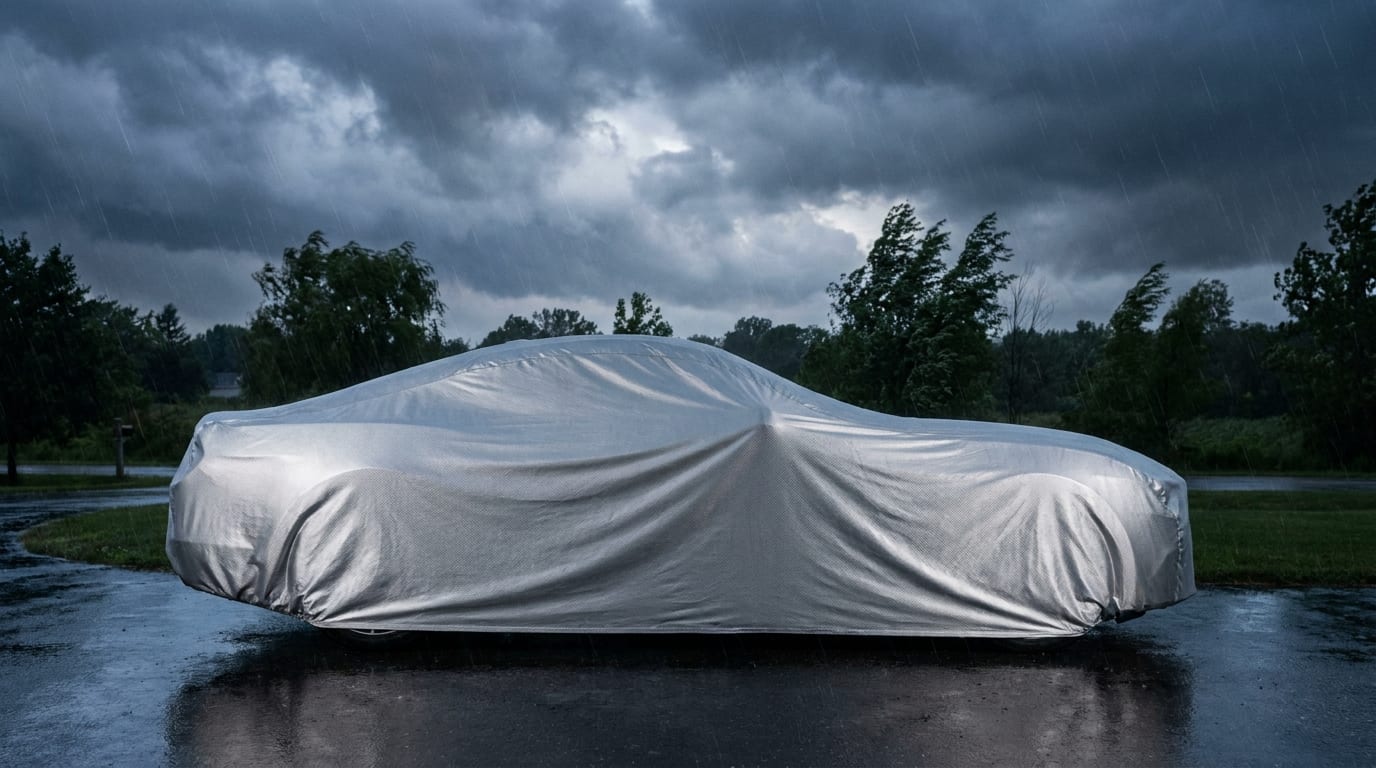
Where the car lives changes which hem actually earns its keep.
Outdoor, windy, or coastal storage. A full elastic hem paired with a cable lock or gust strap setup is the strongest combination available. Wind is a daily adversary in this scenario, and you want a hem that resists it mechanically (elastic) plus a backup that resists it physically (strap or cable). If you're storing a vehicle outside full time, read through our guide on outdoor car covers before you commit to a hem style in isolation.
Indoor or garage storage. Wind simply isn't a factor in a closed garage, so hem type matters a lot less here. A straight hem or elastic-corners cover does the job fine, and you can spend your money on the dust and scratch protection that matters more indoors.
Long-term outdoor storage (weeks or months). This is where grommet-and-cable hems earn their keep. Being able to physically lock the cover to the car, not just cinch it, deters both wind lift and anyone tempted to mess with the vehicle while it sits. Check our cable lock installation guide if this is the direction you're leaning.
Frequent on/off daily drivers. If you're covering and uncovering the car every single day, elastic-corner hems strike a reasonable balance. Full elastic hems can be a bit more work to stretch over the whole perimeter each time; corner elastic speeds that up while still holding reasonably well.
Hem Type vs. Overall Fit: Why Both Matter Together
Here's something buyers miss: the best hem in the world can't fix a cover that's the wrong size. If there's three extra inches of fabric pooling around the wheel wells, that slack is going to billow in the wind no matter how good the elastic is. The hem cinches what's there, it doesn't make excess material disappear.
This is where custom-fit car covers separate themselves from generic, one-size-fits-a-dozen-models covers. A custom-fit cover is cut to the actual body lines of your specific make and model, so the hem is already sitting close to the car before the elastic even engages. A universal cover asks the hem to do more work compensating for a shape it wasn't really built for.
Before you spend any more time comparing hem styles, confirm you're even looking at the right size. Our guide on choosing the correct car cover size walks through how to measure and check fit. Fit is the foundation, the hem is what finishes the job, not a substitute for it.
Securing the Hem After Install
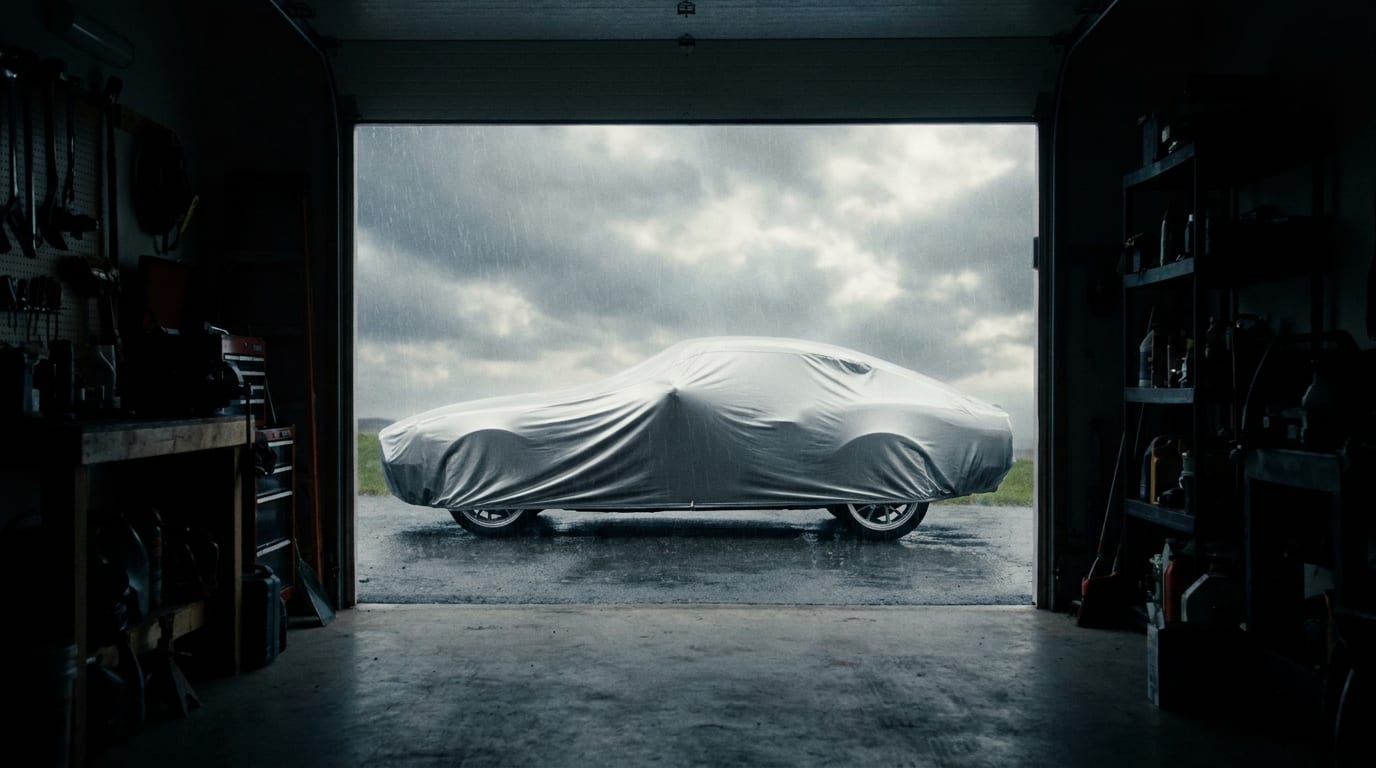
Even a great elastic hem benefits from backup in rough conditions. A gust strap installed underneath the vehicle adds a second layer of hold-down that elastic alone can't match in sustained high wind, running under the car and clipping to both sides of the cover.
If your cover has grommets, threading a cable lock through them does double duty: it's a security measure and a wind-resistance measure at the same time. Worth doing if the car's parked somewhere you don't have eyes on it constantly.
One thing people forget: elastic doesn't last forever. Years of UV exposure and heat cycle it loose, the same way an old waistband stops snapping back the way it used to. Check the hem's tension every so often as part of routine upkeep, the same way you'd clean the cover itself. If it's stopped cinching tight, that's your sign it needs replacing, not just adjusting.
For general setup, our simple installation guide covers the basics of getting the cover on correctly in the first place, which makes everything downstream easier.
Final Takeaway
Full elastic hems are the best all-around answer to what is the best hem type for a car cover, and grommet-and-cable setups are worth adding if you're dealing with harsh wind, long-term outdoor storage, or just want extra peace of mind. Straight and drawstring hems have their place, but mostly for low-exposure, indoor situations where wind isn't fighting you.
Before buying, hold your own parking conditions up against the hem style on offer. A cover that's perfect for a heated garage might flap itself loose on a driveway that catches wind off open fields.
If you want to dig deeper into why a cover is worth having in the first place, our piece on why you should buy a car cover is a good next stop, or browse the full car cover lineup to see what fits your vehicle.