


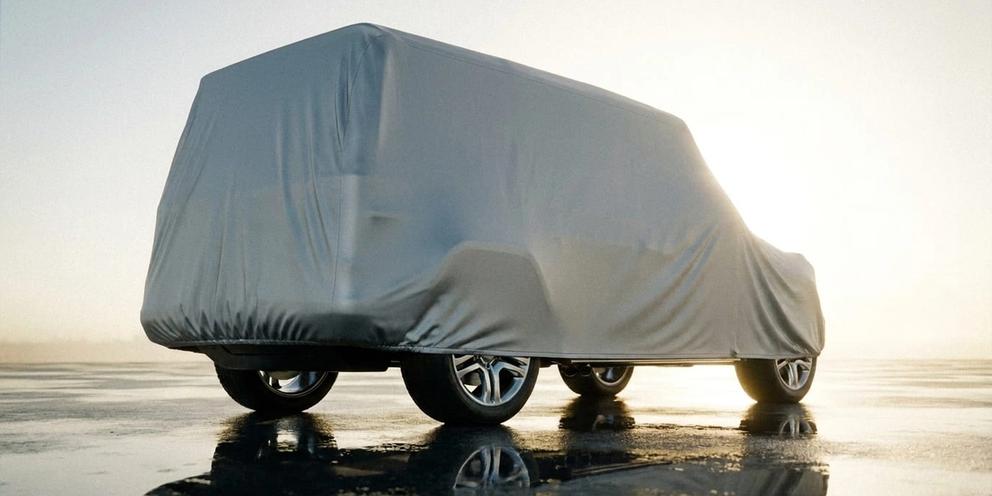
Custom-Fit Car Cover for Honda Pilot vs. Universal: Which One Actually Protects Better?
The Honda Pilot isn't shaped like most of the vehicles a "one-size-fits-most" cover was designed around. It's tall, it's long, and it's got a liftgate instead of a trunk lid. So the question of custom fit car cover for Honda Pilot versus a universal cover isn't academic. It changes whether the cover actually stays on your SUV during a windy night or ends up in your neighbor's yard. This piece breaks down exactly where the two options differ on a Pilot, generation by generation, so you can buy the right one the first time.
Why Fit Matters More on an SUV Like the Honda Pilot
A sedan's roofline is a fairly simple curve. The Pilot's isn't. You've got a tall cabin, a three-row body length, roof rails on most trims, and a rear liftgate that sticks out further than a trunk lid ever would. That's a lot more surface area, and a lot more places for a cover to go wrong. Every contour change is a spot where a loose cover can sag, flap in the wind, or collect a puddle of rainwater it was never designed to hold.
It gets more specific than "SUVs are bigger," too. The 2009-2015 Pilot, the 2016-2022 generation, and the 2023-present redesign all have different rooflines, different mirror placement, and different rear spoiler setups. Fit problems show up first at exactly those points. If you're not sure which bracket your Pilot falls into or how covers are typically sized, it helps to understand what size car cover your vehicle actually needs before comparing anything else.
So that's the real promise of this article: a side-by-side, Pilot-specific comparison of custom-fit versus universal, so you're making a buying decision instead of just reading a definition.
What a True Custom-Fit Cover for the Honda Pilot Actually Includes
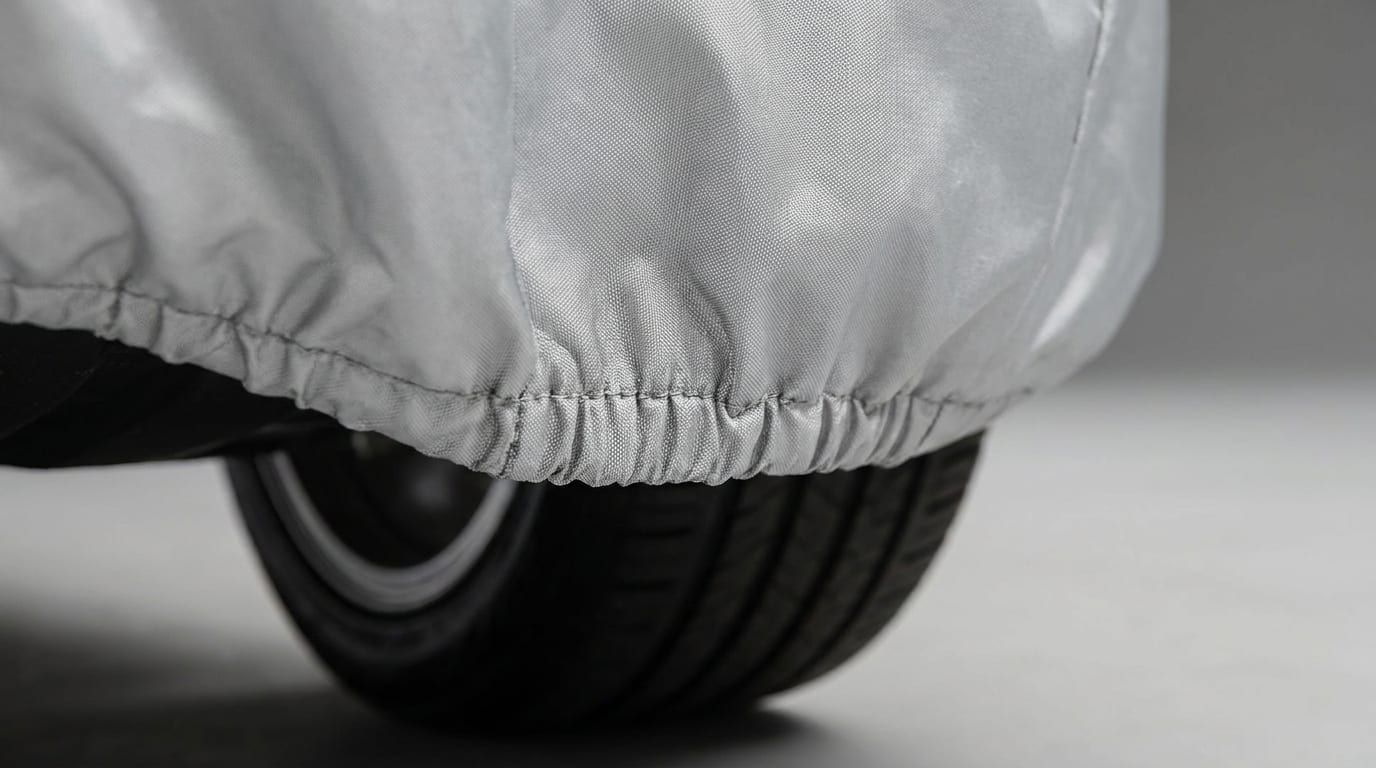
"Custom-fit" gets thrown around loosely, so here's what it actually means when it's done right. The panels and seams are patterned to the Pilot's real body lines, by generation and year, not dropped into a generic "mid-size SUV" size bracket that also fits a dozen other unrelated models.
That precision shows up in a few specific places. Mirror pockets are pre-cut and positioned for where the Pilot's mirrors actually sit, instead of a stretch panel just draped over them and hoping for the best. The hem length and the elastic or grommet placement are tuned to the Pilot's rocker panel line, so the bottom edge sits close to the body instead of ballooning out in a breeze. And on trims with roof rails or a rear spoiler, there's built-in clearance at those exact points so the cover doesn't tent up or rub against hardware every time the wind moves it.
None of this is decorative. It's the difference between a cover that's built to the Pilot's actual shape and one that's just sized to be "close enough."
Where Universal and Semi-Custom Covers Fall Short on a Pilot
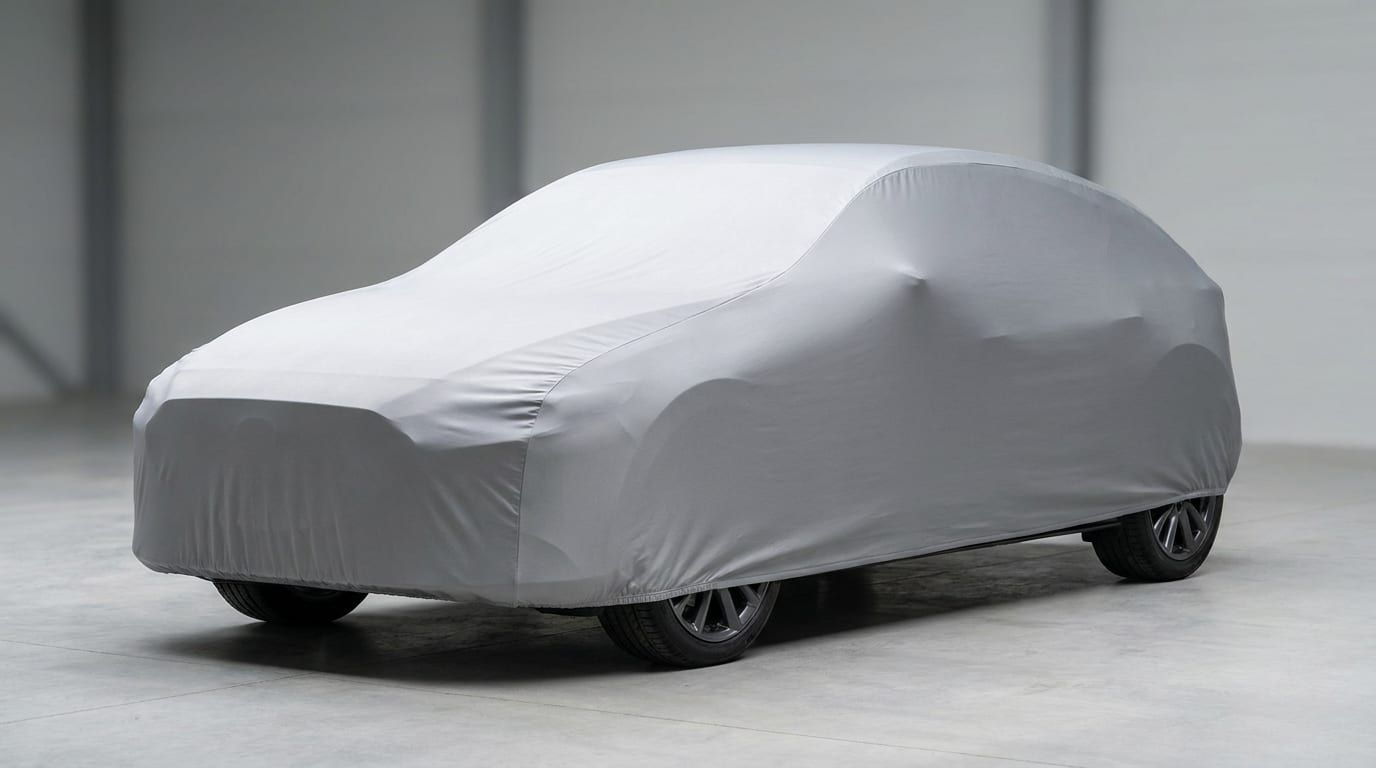
Universal covers are sized off broad length and height brackets. That's the whole method: measure roughly, cut generously, sell it to everything in that range. On a Pilot, that means excess material bunching up at the liftgate while a gap opens at the front bumper, because the cover was never patterned to either end specifically.
Mirrors are the other obvious tell. No dedicated mirror pockets means one of two outcomes: the cover doesn't clear the mirrors at all, or it leaves them exposed to sun and scratching because the fabric can't tuck around them properly. And that extra slack running along the rocker line? That's exactly what lets wind get underneath the cover and lift it. Wind getting under a loose cover is the single biggest cause of cover damage, and it's also how you end up with swirl marks on the paint from fabric rubbing back and forth all night.
Then there's the roof. A tall SUV like the Pilot has enough surface area up top that a loose panel doesn't just sag, it pools. Water sitting in a sagging roof panel is a common complaint on tall SUVs specifically, since a universal cover isn't tensioned against the roof's actual curvature the way a waterproof, properly fitted cover is.
Custom-Fit vs. Universal for the Honda Pilot: Side-by-Side

Exact fit and panel shape
- Custom-fit: Patterned to the Pilot's factory dimensions, specific to each generation
- Universal: Sized to a generic large-SUV bracket that covers many unrelated models
Mirror pockets and antenna cutouts
- Custom-fit: Pre-cut pockets matching the Pilot's actual mirror placement
- Universal: Drapes over the mirrors loosely or skips accounting for them at all
Weatherproofing performance
- Custom-fit: Tensioned seams shed water cleanly at the roof and hood lines, similar to what you'd expect from any well-built waterproof fabric
- Universal: Looser fit leaves slack where water collects instead of running off
Wind security
- Custom-fit: Rocker-line hem and grommet points hold the cover snug against the body
- Universal: Extra material catches wind, which can work the cover loose or blow it off entirely
Installation time
- Custom-fit: Goes on in one pass since the panels already match the Pilot's contours
- Universal: Requires repeated tucking, tugging, and re-adjusting to get it roughly right
Paint protection over time
- Custom-fit: Contoured tension keeps the fabric still, so it isn't grinding against the clear coat
- Universal: Shifting slack means friction at the same contact points every time the wind moves it
Price
- Custom-fit: Higher upfront cost
- Universal: Cheaper to buy, but carries a real risk of needing early replacement once the fit issues catch up with it
Which Option Actually Makes Sense for Your Pilot
If your Pilot lives outside, whether that's daily street parking or long-term storage through sun, rain, or snow, custom-fit is the practical answer. It's the option actually built to stay put and keep weather out, not just drape over the shape and hope. For that kind of exposure, pairing the right pattern with a genuinely outdoor-rated cover matters more than saving twenty dollars upfront.
If your Pilot is garage-kept and you mainly want something for dust and the occasional scratch from a stray branch, a universal or lighter indoor cover can work as a stopgap. Just know the tradeoffs from the section above don't disappear indoors, they're just lower stakes.
One more thing worth flagging directly: if you own a 2023 or newer Pilot, double-check that the cover you're looking at is patterned to the current generation. The redesign changed the roofline and mirror placement enough that an older Pilot pattern won't sit right, no matter how "custom" the listing claims to be.
And if you're dealing with hail, coastal salt air, or long stretches of direct sun, that tips things further toward custom-fit. Fit is what determines how well any weatherproofing actually performs, so a great fabric on a bad pattern still underperforms.
How to Order the Correct Custom-Fit Cover for Your Pilot's Year and Trim
Start with the basics: confirm your exact model year and generation. The 2016-2022 and 2023+ Pilots have different rooflines, mirror placement, and available rear spoilers, and ordering off the wrong generation defeats the entire point of going custom.
From there, think about where the cover will actually live. Outdoor exposure calls for a waterproof, UV-rated build. Indoor storage can get away with something lighter. If your Pilot sits outside in a windy area, it's worth adding a gust strap or a cable and lock so the fit you paid for actually stays put overnight.
Before you check out, look closely at the roof rail and antenna details on the product listing. Those are the features most likely to vary by trim, even within the same generation. If you're browsing options, the Honda SUV cover lineup breaks these down by trim so you're not guessing. And once the cover arrives, a quick read through how to install it properly will save you a few minutes of trial and error the first time you put it on.
Bottom Line: Get the Cover Built for Your Pilot
Universal saves you money on day one. Custom-fit saves your Pilot's paint and actually holds up once real weather shows up. That's the whole decision, stripped down.
If you're ready to move forward, look for your Pilot's exact year and trim in the SUV cover lineup rather than a generic large-SUV size. It's the only way to get the pattern that actually matches your truck.
Still deciding between tiers? Worth knowing that warranty coverage exists for exactly this kind of hesitation, so it's not an all-or-nothing bet. And if you want more comparisons like this one before you buy, it's worth subscribing or poking around the rest of our car cover guides. Might save you a return down the road.
Updated