


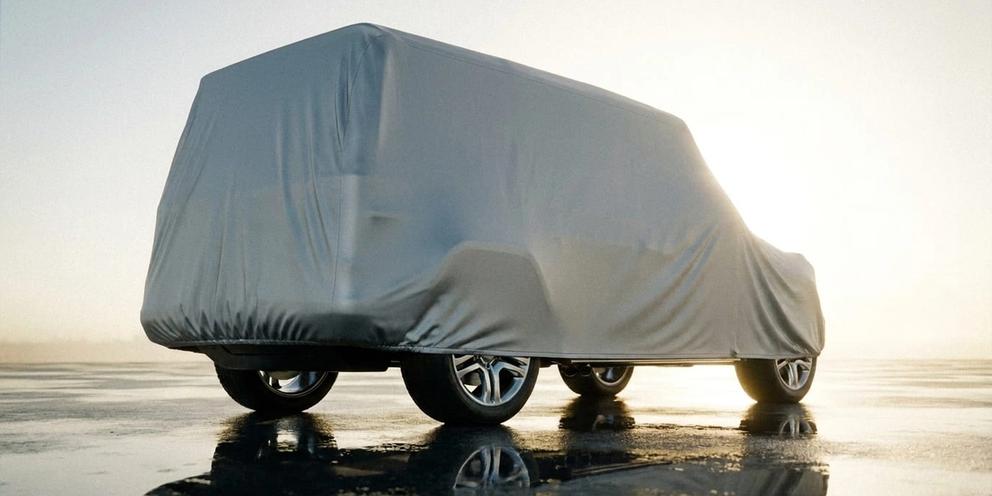
How Do I Choose the Right Size Car Cover for My SUV?
How Do I Choose the Right Size Car Cover for My SUV?
The right size car cover for your SUV comes down to three numbers: exact length, width, and height, plus your vehicle's make, model, and year matched against a cover's labeled size range or a custom-fit pattern. "SUV" isn't a size. It's a category that spans a Honda HR-V to a Chevy Suburban, and treating them the same way is how people end up with a cover that's wrong in every dimension.
Get the size wrong and you'll know fast. An oversized cover flaps in the wind, pools water on the roof, and lets dust blow in underneath. An undersized one stretches at the seams, tears, and won't cinch down enough to actually secure itself. This guide walks through the three sizing paths you'll run into: universal covers sized by length range, semi-custom covers shaped by vehicle class, and custom-fit covers pattern-matched to your exact SUV.
What Measurements Do I Need Before Buying an SUV Cover?
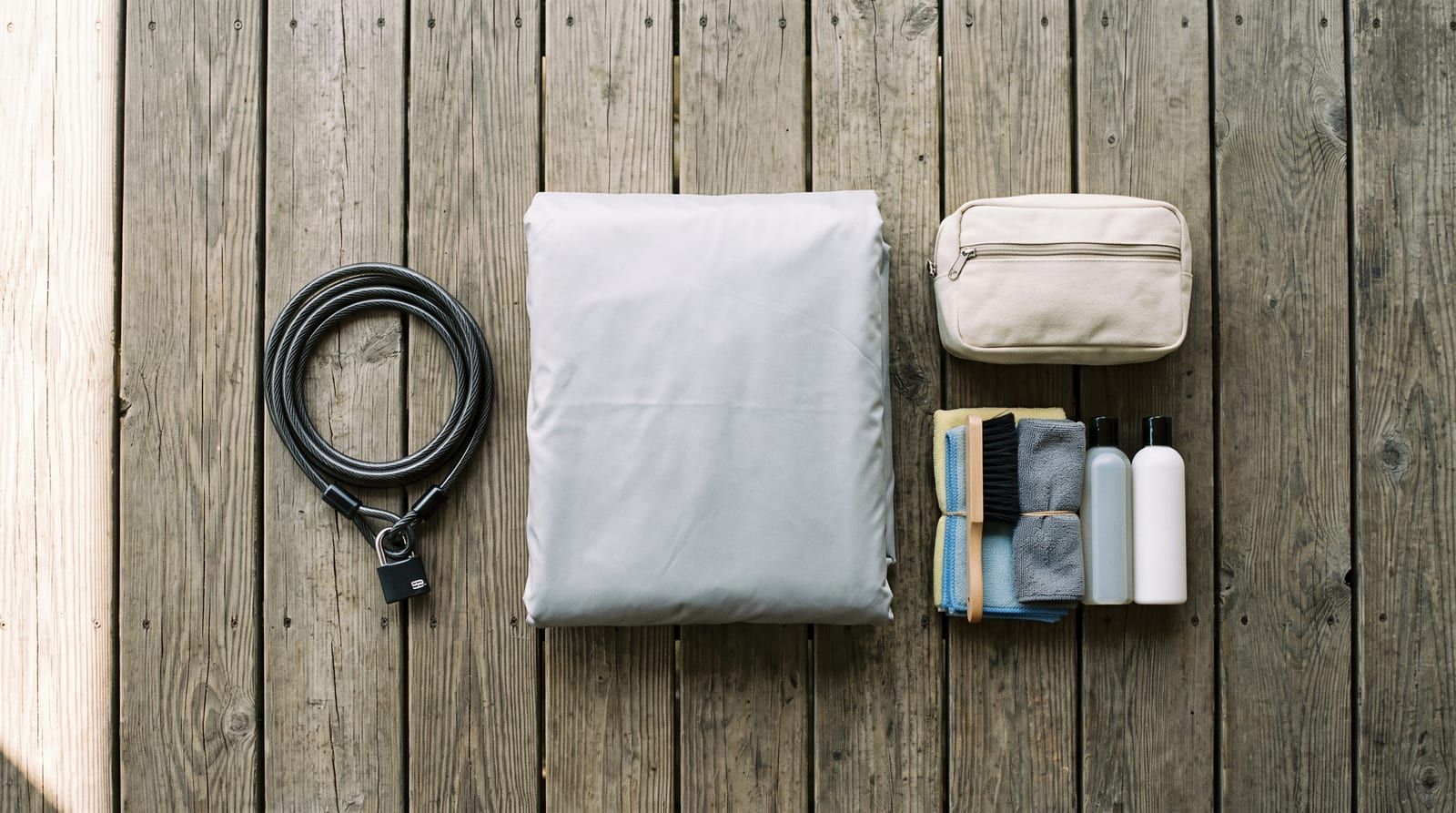
Three measurements matter most. Bumper-to-bumper length, the widest point of the vehicle (usually the body with mirrors folded in), and roofline height, including anything permanently mounted up top.
You can pull most of this straight from the source. Your owner's manual lists factory dimensions, and most manufacturers publish a spec sheet online if the manual's buried in a glove box somewhere. Still, it's worth grabbing a tape measure and checking in the driveway. Trim differences and aftermarket changes mean the factory number on paper doesn't always match what's parked outside.
Speaking of aftermarket changes: roof racks, running boards, spare tire mounts, and light bars all change your SUV's effective dimensions, and they need to be accounted for before you order. A cover sized to the factory spec sheet won't necessarily clear a roof basket or a rear-mounted spare tire. If you want a full walkthrough of how to measure correctly, the guide on what size car cover fits your vehicle covers the process step by step.
Universal vs. Semi-Custom vs. Custom-Fit: Which SUV Cover Size Fits Best?
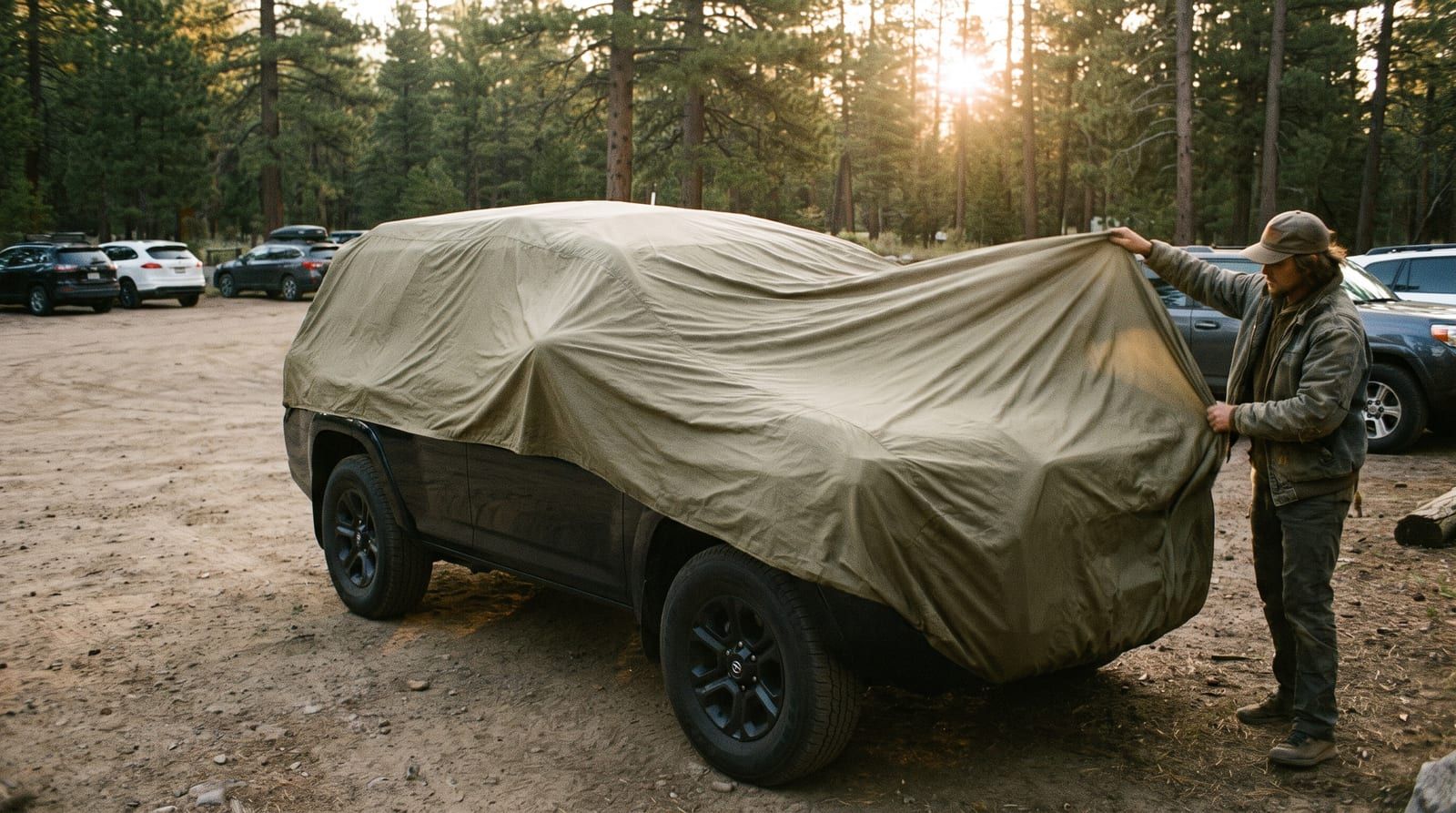
Here's how the three approaches actually differ, side by side.
Universal
- Fit accuracy: Loose, based on a length range rather than your vehicle's actual shape
- Price range: Lowest cost of the three
- Wind/theft protection: More prone to shifting or lifting since nothing is contoured to the body
- Best use: Budget buys, infrequent storage, or short-term coverage
Semi-custom
- Fit accuracy: Shaped to a vehicle class or body type, tighter than universal but not vehicle-specific
- Price range: Mid-range
- Wind/theft protection: Better hold than universal thanks to contoured panels
- Best use: Owners who want a noticeably better fit without paying full custom pricing
Custom-fit
- Fit accuracy: Pattern-matched to your exact year, make, and model
- Price range: Highest, because of the precision tailoring involved
- Wind/theft protection: Hugs body lines and resists wind lift, and pairs well with a cable lock for added security
- Best use: Daily outdoor storage or long-term protection where fit really matters
If your SUV lives outside most of the year, the tighter fit is worth the extra cost. You can browse custom-fit car covers to see how the sizing and construction differ from off-the-shelf options, and the SUV cover category page breaks things down by brand if you'd rather start there.
How Do I Use My SUV's Make, Model, and Year to Find the Exact Cover Size?
Most retailers, CarCovers included, size custom and semi-custom covers by year, make, and model rather than raw measurements. Makes sense once you think about it: two SUVs with the same overall length can have completely different rooflines, hatch shapes, and wheel wells, and a length-only match misses all of that.
A cover finder tool is the fastest way to cross-reference your specific trim, since some trims quietly shift the sizing tier. A longer wheelbase option, an added cargo box, a raised suspension package, any of these can bump your SUV out of the size bracket that the base trim falls into.
Generic S/M/L/XL charts work fine for universal covers, but they're not reliable for SUVs with tall rooflines or a spare tire mounted on the rear door. That kind of detail gets lost in a size range. Use CoverFinder or the find your car cover tool to match your SUV's year, make, and model to the correct size before you buy.
What Happens If I Choose the Wrong Size Cover for My SUV?
Too big, and you're dealing with excess fabric flapping in the wind. It'll collect pooling water on flat sections of the roof, and over time that same loose fabric rubs against paint and causes fine scratching. Not dramatic. Just slow, cumulative damage from something that's supposed to be protecting the finish.
Too small is worse, honestly. Seams get stretched past what they're built for and start tearing. Elastic hems lose their grip and pop off in wind, sometimes overnight, and whatever panel is left exposed defeats the entire point of covering the vehicle in the first place.
There's a security angle too. A cover that doesn't fit snugly is easier to pull off or crawl under, which cuts into whatever theft-deterrent value it was offering. A properly sized cover, on the other hand, holds its shape and pairs well with wind straps or a cable lock for genuinely secure outdoor parking. If your SUV sits outside through rain or snow, it's also worth pairing the right size with a cover built for that environment. Check the guide to outdoor car covers and waterproof car covers if weather exposure is a factor for you.
How Do I Install and Secure a Correctly Sized SUV Cover?
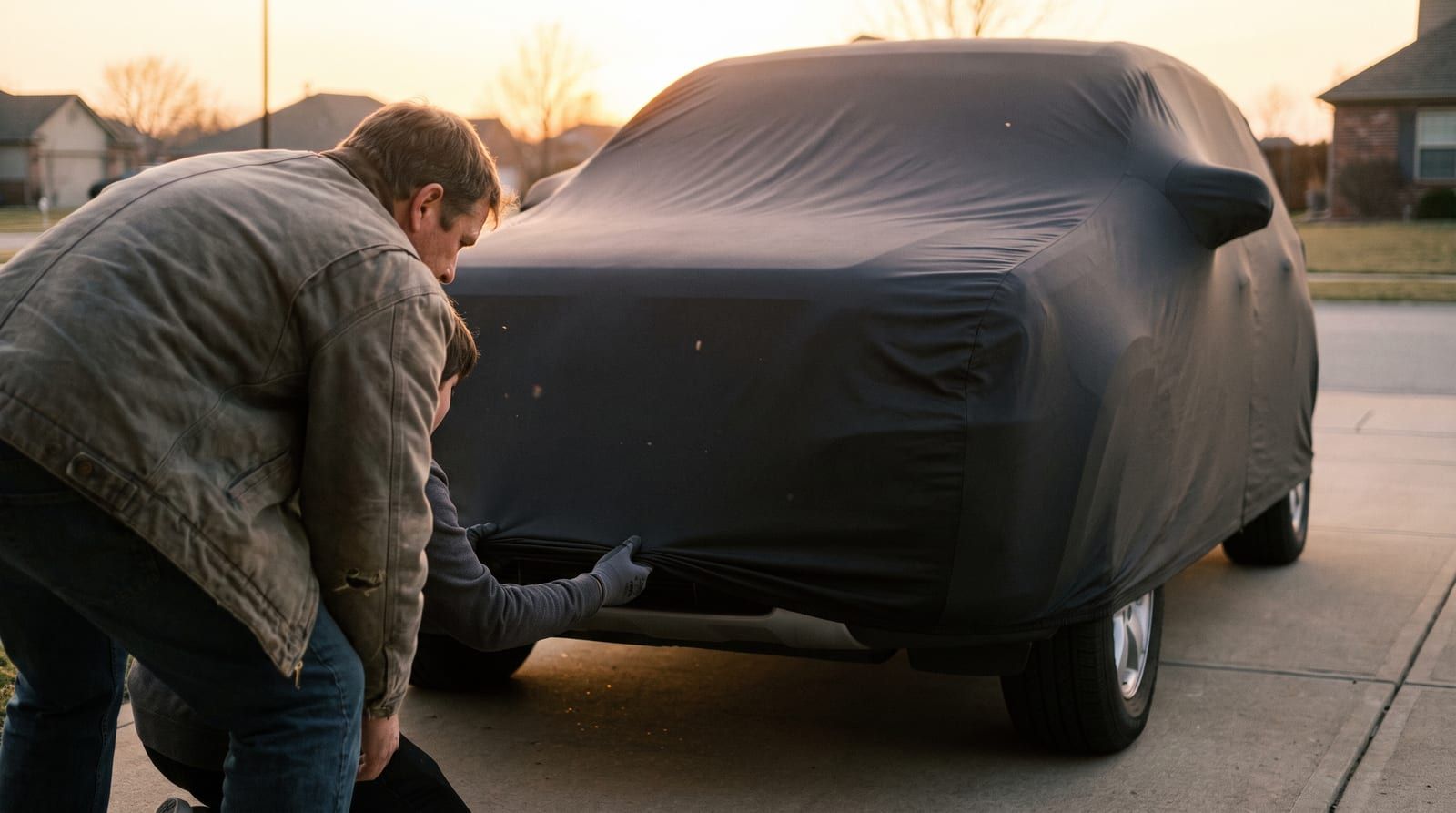
Installation order matters less than people think, but here's the basic version. Drape the cover front-to-back (or however it's labeled), line up the mirror pockets and antenna cutouts if your cover has them, then cinch the elastic hem down under the rocker panels.
A correctly sized cover should sit snug at the hem without you having to force it or stretch it into place. If you're left with several inches of loose fabric flapping at the bottom, that's a sign the size is off, not a sign you installed it wrong.
For SUVs stored outside in open or windy lots, add a gust strap even when the size is right. Wind will find the one loose edge every time, and a strap keeps it from working its way under the cover. Full steps are laid out in the guide to installing your car cover, and the broader installation guides hub covers cable locks, support poles, and other accessories worth knowing about.
SUV Car Cover Sizing FAQ
Can I use a regular car cover on my SUV?
No. SUVs are taller and boxier than sedans, so even if the length lines up, a car-length cover will leave the roofline and rear hatch exposed.
Do I need a different size for a roof rack?
Yes, if the rack is permanent. Measure over it, or look for a cover style built to accommodate raised roof accessories.
How much slack is normal in a properly fitted cover?
A few inches of give at the hem is expected, that's what lets you cinch it down. More than that, and the size is probably too large.
Is custom-fit worth it over semi-custom for daily outdoor storage?
For SUVs parked outside on a regular basis, yes. The tighter, more wind-resistant fit of a custom-fit cover cuts down on flapping and abrasion in a way semi-custom options generally can't match.
Get the Right Fit for Your SUV
Measure your SUV first, decide between universal, semi-custom, and custom-fit based on your budget and how often it sits outside, then confirm the size against your exact year, make, and model before checkout. Skip any one of those steps and you're guessing.
If you're still deciding what fits your situation, it's worth bookmarking this guide before you order, sizing mistakes are one of the most common reasons for a return or exchange, and a few extra minutes of measuring now saves you the hassle later. And if you're already browsing options, take a look around, there's a good chance the right fit for your SUV is closer than you think.
Updated