
How Do You Check If a Car Cover Is Truly Waterproof? A Step-by-Step Test
Published

"Waterproof" is one of the most overused words on a car cover's product page, and also one of the least verified. Plenty of covers slap that word on the tag and still let water through after a few storms. If you're wondering how do you check if a car cover is truly waterproof before you trust it with your paint job, the answer isn't to take the label at face value. It's to run it through a short, repeatable test.
Why "Waterproof" on the Label Doesn't Always Mean Waterproof
There's a real difference between water-resistant, water-repellent, and truly waterproof. Water-resistant fabric slows water down. Water-repellent fabric pushes it off for a while. Waterproof fabric, in the strict sense, blocks it entirely under real pressure, like driving rain or standing puddles on a flat hood. Manufacturers know most shoppers don't know the difference, so the words get used almost interchangeably on packaging.
A lot of budget covers lean on a DWR (durable water repellent) spray coating rather than an actual waterproof membrane. DWR works fine out of the box. It beads water nicely in the store demo. But it's a surface treatment, not a structural barrier, and it wears thin after a season of sun, dust, and washing. Once it's gone, the fabric underneath soaks it up like a towel.
Here's the six-step checklist this article walks through, and you can run it on a cover you're about to buy or one that's already folded up in your trunk. One more thing worth flagging before we get into it: a cover that's waterproof but doesn't breathe can actually do more harm than no cover at all, because it traps moisture underneath against the paint instead of keeping it out.
Step 1: Check the Hydrostatic Head Rating
This is the one spec that cuts through the marketing noise. Hydrostatic head rating is an industry-standard measurement, in millimeters, of how much water pressure a fabric can withstand before it starts leaking. It's the same metric used for tents and rain jackets, and it applies just as directly to car covers.
For outdoor car covers, a rating of 1,000mm or higher is generally considered genuinely waterproof. Below that, you're looking at something closer to water-resistant, fine for light drizzle, not fine for a parked car sitting through a storm season.
Look for this number on the product page, or just ask the retailer directly if it's not listed. If nobody can give you a number, treat "waterproof" as a marketing claim, not a fact. For a deeper comparison of fabric specs before you buy, the waterproof car cover buying guide breaks down what to expect across different materials.
Step 2: Run the Water-Bead Test
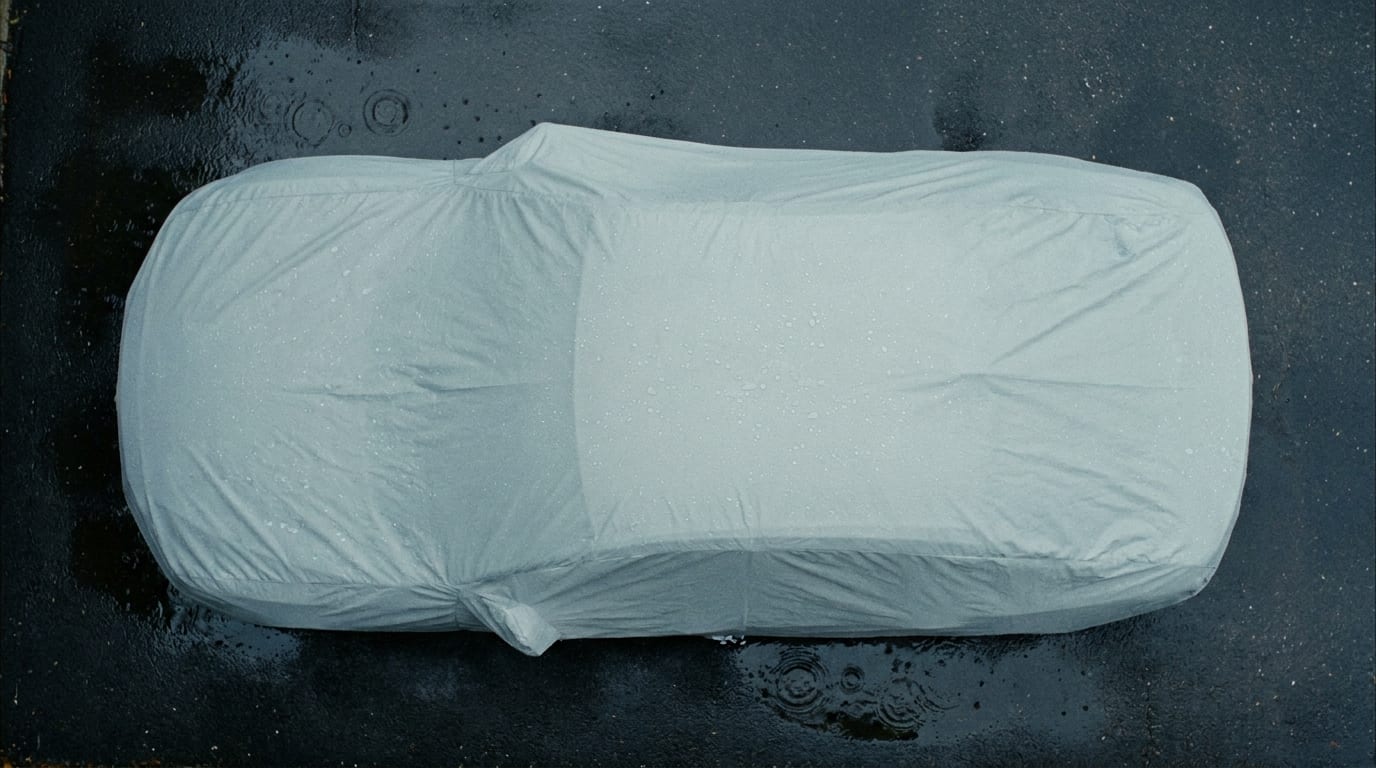
This one takes five minutes and needs nothing but a cup of water. Lay the cover flat, pour the water onto a dry section of fabric, and watch it for two to three minutes.
Truly waterproof fabric beads the water into droplets that roll right off. Water-resistant fabric does the opposite: it darkens, and the water slowly sinks in, leaving a visible wet patch. That darkening is the fabric telling you it absorbed, not repelled.
Don't just test one spot. Try the roofline, the hood, and a side panel, since coatings wear unevenly, especially in high-flex areas that get folded and unfolded a lot. And if you already own the cover, repeat this test after a season of outdoor use. A coating that beaded perfectly when new can fail completely eight months later, and the only way to know is to check again.
Step 3: Inspect the Seams and Stitching
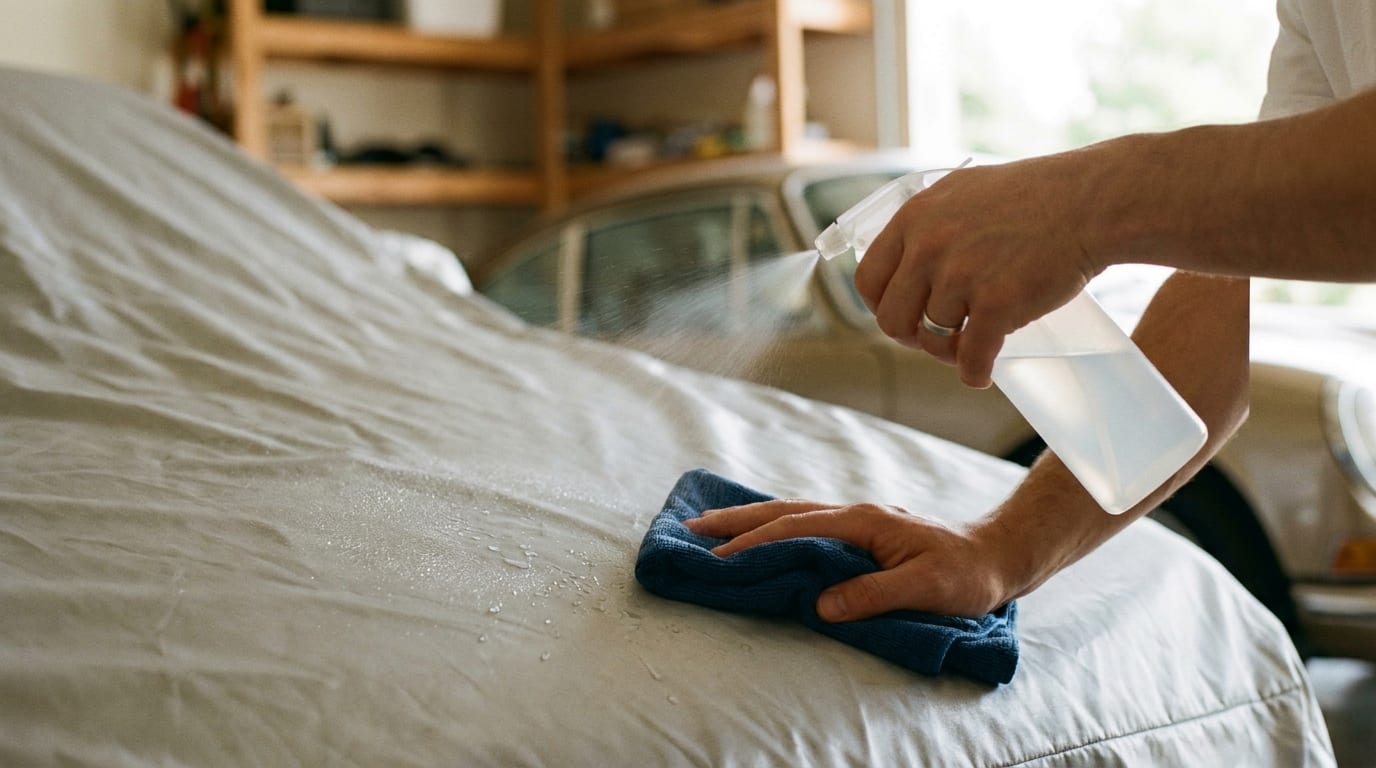
Fabric rarely fails first. Seams do. Most leaks happen where two pieces of material are joined, not through the material itself, so a cover with plain stitched seams and no tape or sealant is weaker than the fabric spec suggests.
Look for taped, bound, or double-stitched seams. That construction detail is a real signal of a cover built for actual waterproofing, not just a waterproof-rated fabric thrown together with basic sewing. Hold a seam up to a light source and check for needle holes that were never sealed afterward. If you can see daylight through the stitch line, water's getting through there too.
Don't stop at the main seams. Mirror pockets, antenna cutouts, and grommets are smaller, easy-to-miss spots where water finds its way in, and they're worth a close look before you assume the whole cover is sealed tight.
Step 4: Check for Breathability, Not Just Waterproofing
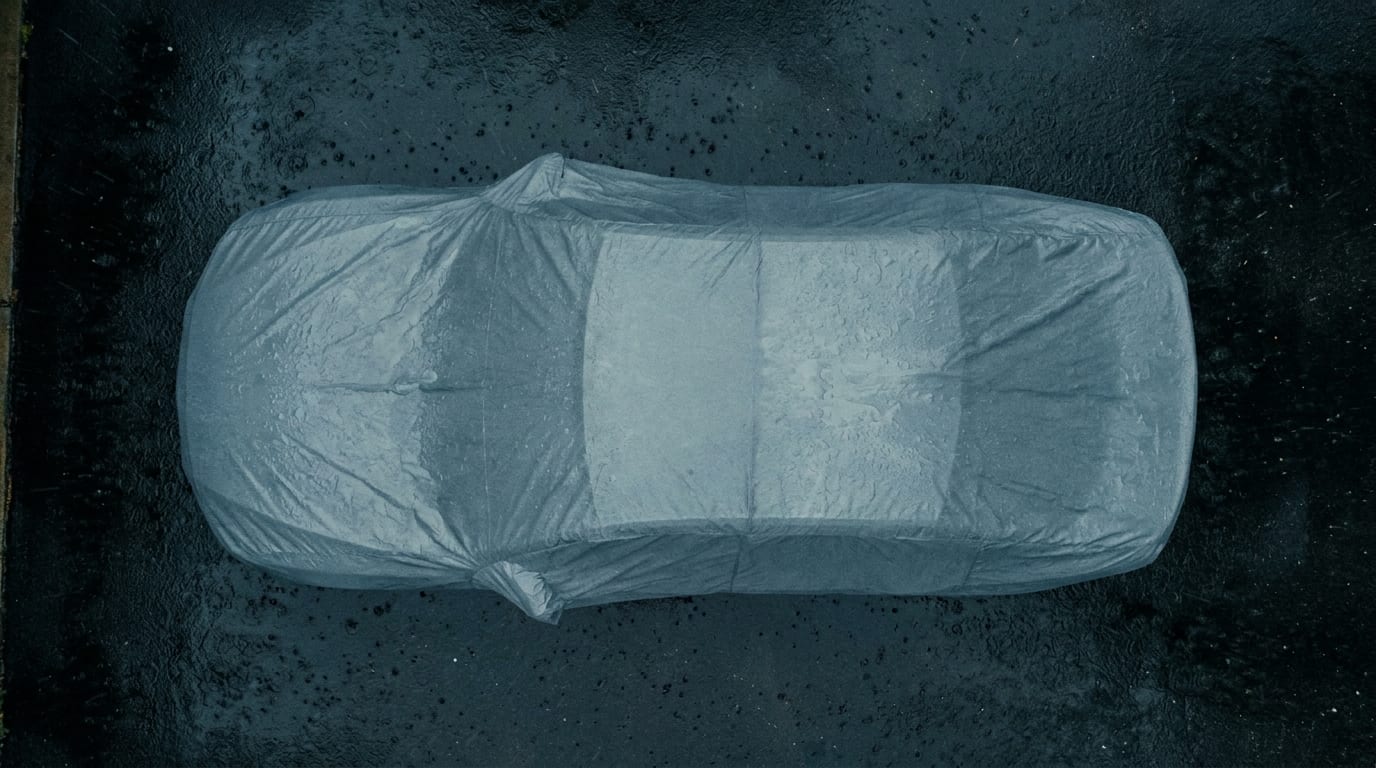
A good cover has to do two things at once: keep rain out from above, and let trapped moisture escape from below. A cover that only does the first job can turn into a greenhouse for your paint.
Here's a simple way to check it. Wash the car, let it stay slightly damp, then cover it. A few hours later, lift a corner and feel underneath for condensation. If it's noticeably damp or foggy under there, the fabric isn't breathing.
This matters more than people think. A cover that's 100% waterproof but doesn't breathe can trap moisture against the paint for days, and that's how you end up with swirl marks, mildew smells, or rust creeping in around trim and seams. Waterproofing without breathability isn't protection, it's just a different kind of damage with a delay on it. For the fuller picture of how waterproofing, UV, and wind protection all interact, the guide to using a car cover outdoors covers it in more depth.
Step 5: Verify the Warranty Actually Covers Water Damage
A real waterproof guarantee shows up in writing, backed by an actual warranty, not just a bolded claim on the product description. If a brand is confident about its waterproofing, that confidence should be backed by paper.
Read the warranty and look specifically for language about water leakage or weatherproofing failure as a covered defect. Vague durability language ("built to last") isn't the same thing. Check the fine print too, because some warranties only cover the top panel and quietly exclude the sides, which happen to be where wind-driven rain hits hardest. The lifetime warranty on car covers page is a useful example of what clear, water-related warranty language should actually spell out.
Step 6: Cross-Check Verified Owner Reviews for Long-Term Performance
Lab specs and bead tests tell you how a cover performs on day one. They don't tell you how it holds up after month eight of actual weather. For that, you need people who've lived with it.
Search reviews specifically for mentions of leaking, wicking, or water stains after extended outdoor use, not just the glowing first-impression reviews posted the week the cover arrived. Those early reviews are almost useless for judging waterproofing, since even a weak DWR coating looks great on day one.
Filter, if you can, for reviewers in consistently rainy or humid regions. Someone in Phoenix might never find out their cover leaks. Someone in Seattle will know within a month. Browsing verified customer reviews with that lens gives you a much more honest signal than any single at-home test. A cover's reputation for staying dry season after season, across real owners and real storms, beats one bead test every time.
Keep Your Cover Working: Maintenance Matters as Much as the Fabric
Even a genuinely waterproof cover isn't a "buy it and forget it" product. The water-repellent coating on top of the fabric needs periodic cleaning to keep working, because dirt, pollen, and road grime build up and break down that coating faster than plain weather exposure does. Washing it the wrong way, with harsh detergent or a stiff brush, can strip the coating even faster. The cover care and cleaning guide walks through how to wash a cover without wrecking the very thing you're trying to protect.
So, to recap how do you check if a car cover is truly waterproof: check the hydrostatic head rating, run the bead test across multiple spots, inspect the seams and cutouts, test for breathability with the fogging check, read the actual warranty language, and cross-check long-term owner reviews. Run a cover through all six and you'll know a lot more than the label tells you.
If your current cover just failed a few of these steps, it's probably time to look at something built with an actual waterproof membrane rather than a spray-on coating. Worth a look if you want to compare what's out there, and feel free to poke around our articles for more car care breakdowns like this one.






