How Do You Secure a Car Cover in High Wind? 7 Steps to Keep It From Blowing Off
Published

A loose cover and a 40 mph gust is a bad combination. One second it's protecting your paint, the next it's tumbling across the parking lot, dragging a mirror sock with it. If you've ever chased a cover down the street, you already know the stakes. So how do you secure a car cover in high wind? It comes down to seven steps, done in order, not just tossing a strap over the hood and hoping.
Why Wind Is the Biggest Threat to a Car Cover
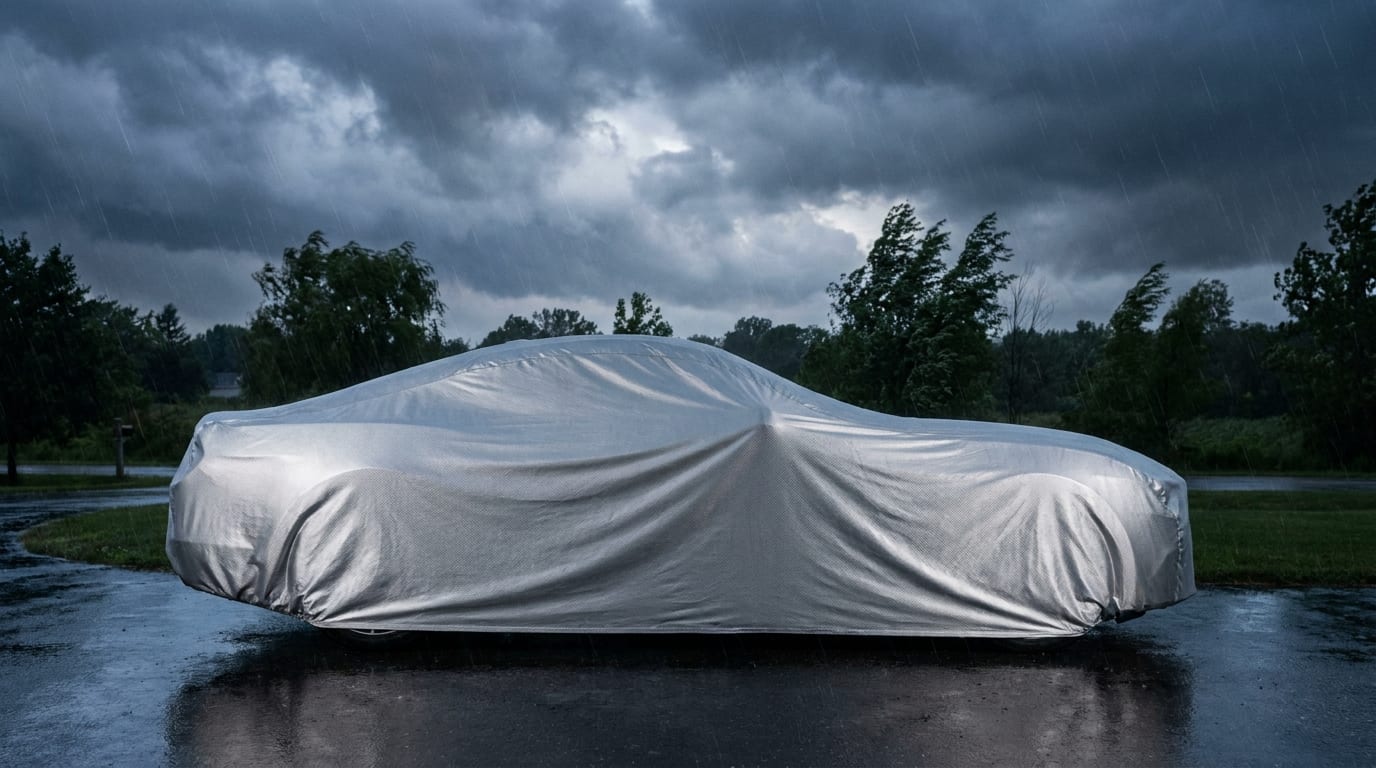
Wind doesn't need much. A gap at the bumper, a flap at the mirror, that's all it takes to get underneath and start lifting. Once air is under the fabric, the cover stops acting like a cover and starts acting like a sail. That's how they tear at the seams, rip off entirely, or whip around and scratch the exact paint they're supposed to protect.
Here's the part people miss: a cover rated for wind resistance isn't the same as a cover that's secured against wind. Good fabric matters, but fabric alone doesn't keep a cover on your car in a storm. You need tie-downs doing their job too.
That's what this guide walks through. Seven steps, starting with fit and ending with support poles, that answer the actual question: how do you secure a car cover in high wind well enough that it's still on the car tomorrow morning. This matters most for anyone storing a vehicle outdoors full-time, where there's no garage wall to block the gusts. If that's your situation, our outdoor car cover guide covers the bigger weather picture beyond just wind.
Step 1: Start With a Properly Fitted Cover
Before you buy a single strap or lock, check the fit. A universal cover, the kind that's one-size-fits-most for an entire vehicle class, almost always leaves slack somewhere. And slack is exactly where wind gets its grip.
Think about where the loose fabric ends up: flapping around the mirrors, billowing at the front bumper, gapping open at the wheel wells. Those are the three spots wind attacks first, and no amount of strapping fully compensates for a cover that's simply too big.
Before you troubleshoot anything else, measure your vehicle against the cover's actual spec sheet, not just the "fits sedans up to 190 inches" sticker on the package. If you're not sure your current cover is the right size, our sizing guide walks through it, and a custom-fit cover removes the guesswork entirely since it's built to your vehicle's exact dimensions instead of a size range.
Step 2: Secure the Built-In Grommets and Hem Straps First
Most covers ship with some form of built-in security: grommets at the corners, under-body straps near the front and rear, or an elastic hem that cinches around the bumper. Use all of it before you add anything extra.
Thread the under-body straps first, front and rear, and pull them snug against the undercarriage. Then work the hem around the bumpers, cinching it tight enough that there's no gap for wind to sneak into, but not so tight you're straining the seams. A cover that's stretched taut at the stitching is a cover that's one gust away from ripping.
This base layer matters more than people realize. It's not just backup security, it's literally what the next step anchors against. If the hem and straps are loose, your gust strap has nothing solid to pull down on. And if you're still getting the cover on and off cleanly in the first place, our installation guide is worth a quick read before you worry about wind at all.
Step 3: Add a Cross-Body Gust/Wind Strap
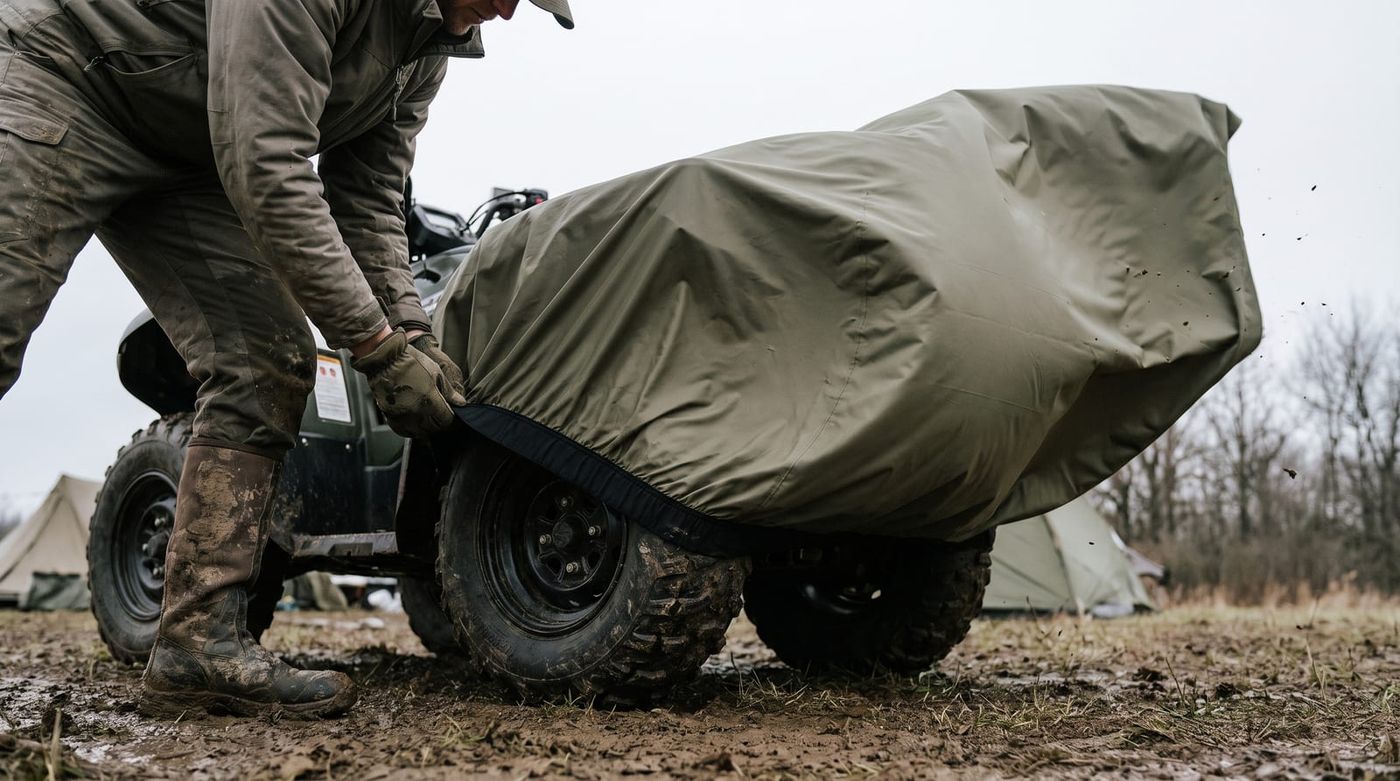
If there's one upgrade that answers "how do you secure a car cover in high wind" better than anything else on this list, it's a gust strap. These run underneath the vehicle and clip to both sides of the cover in a cross pattern, pulling the fabric down against the body instead of letting it sit loose on top.
They're often sold separately from the base cover, which is why so many owners skip them. Don't. A gust strap is the difference between a cover that rides out a windstorm and one that's in your neighbor's yard by morning.
The install itself is simple. Clip one side to the cover, pass the strap underneath the vehicle, pull it snug on the other side, and clip it in without letting the strap twist. A twisted strap won't distribute tension evenly, and that's a weak point waiting to fail. For the full walkthrough with photos, check the gust strap installation guide.
Step 4: Lock It Down With a Cable Lock
A cable lock threaded through the cover's grommets and looped around a fixed point, a wheel or part of the frame, does two jobs at once. It deters theft, obviously. But it also stops the cover from being lifted clean off by a strong gust, even if a strap elsewhere comes loose.
That second part is the one people forget. Straps can slip, clips can pop open, but a cable lock anchored low on the vehicle gives the whole setup a fallback. Put it at the lowest point you can reach, wheel or rocker panel, for the most stable anchor point. The cable lock installation guide covers placement in more detail if you're setting one up for the first time.
Step 5: Use Support Poles or Weighted Anchors for Trucks and Larger Vehicles

Trucks and SUVs have more flat, exposed surface area up top, and taller profiles catch more wind by default. Support poles help by tenting the cover over mirrors and antennas instead of letting it drape flat across them, which reduces the amount of surface wind actually has to push against.
A tripod or support pole system is worth the extra setup time if you're in an open lot or anywhere gusts are a regular thing. For sedans and smaller vehicles, our platinum tripod support pole guide walks through setup, while taller vehicles should check the truck support pole guide instead.
If your cover doesn't come with a built-in strap system at all, weighted anchors or sandbags at the corners are a reasonable backup. Not as effective as a proper gust strap, but better than nothing.
Common Mistakes That Let Covers Blow Off
A few patterns show up again and again when covers end up on the ground:
- Relying on the elastic hem alone. It's fine for a calm driveway. It's not enough in open, windy, or coastal areas where gusts are a regular occurrence.
- Leaving the mirrors loose. If your cover has mirror pockets or ties, use them. Loose fabric at the mirrors is one of the first places wind grabs hold.
- Skipping the gust strap because it feels optional. It's not. It's consistently the single biggest point of failure when a cover doesn't survive a storm.
- Using the wrong size cover. No strap, lock, or pole fixes a cover that was never built to fit your vehicle in the first place.
Fix the fit first. Everything else on this list is reinforcement, not a substitute.
Keep Your Cover (and Car) Protected Year-Round
So, how do you secure a car cover in high wind, start to finish? Get the fit right, use the built-in straps and hem before adding anything else, add a gust strap, back it up with a cable lock, and bring in support poles or weighted anchors if you're dealing with a truck, SUV, or an especially exposed parking spot.
Do all five and a storm forecast stops being something to worry about.
If you're shopping for a cover that's actually built for outdoor exposure, it's worth browsing options designed with wind and weather resistance in mind, and subscribing for more guides like this one so you're ready before the next front rolls through. For the complete picture on outdoor protection, including waterproofing and UV damage, our full outdoor cover guide has you covered.