


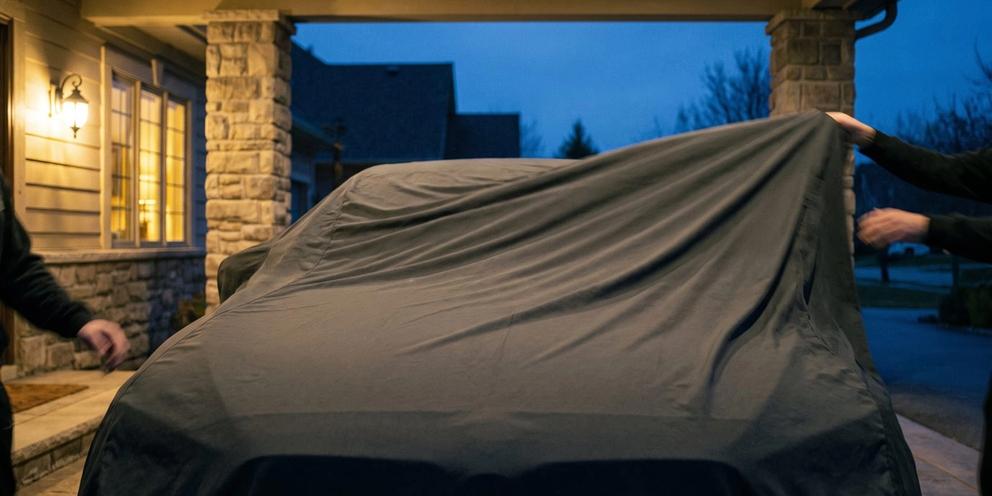
How to Fold a Car Cover for Storage the Right Way
Shake off debris, let the cover dry, then lay it flat before you even think about folding. That's the short version of how to fold a car cover for storage, and getting it right is the difference between a cover that lasts five years and one that's cracked and musty by next spring. Here's the full process, plus the mistakes that ruin covers early.
How Do You Fold a Car Cover for Storage?
Shake off any leaves, dirt, or debris outside, and make sure the cover is completely dry before you touch the storage bag. Lay it flat on a clean surface, fold it in half lengthwise, then in half lengthwise again so you're left with a long strip. Fold that strip crosswise into a rectangle sized to fit its storage bag. Store it somewhere dry and ventilated. Skip any of these steps and you're inviting mildew, odors, or creases that never fully come out.
That's the whole process in a nutshell. The rest of this guide covers why each step matters and where people go wrong.
Why Folding Your Car Cover Correctly Matters
A car cover folded wrong doesn't just look messy in the bag. It causes real damage.
Fold it up while it's even a little damp, and moisture gets trapped between the layers. Mold and mildew set in fast, even on covers marketed as breathable, and once that musty smell works into the fabric it's hard to get out. Then there's the habit of balling a cover up and jamming it into its bag. That creates sharp, deep creases along the same lines every time, and fabric fibers weaken at those points. Eventually you get tears exactly where the fold lines sit, usually right when you need the cover most.
Folded correctly, a cover takes up a fraction of the space, stays organized on a shelf, and unfolds in seconds instead of turning into a wrestling match every time you park. Given what a good cover actually protects your vehicle from, it's worth treating the cover itself like an investment too, not just a disposable accessory you toss in a corner.
What Should You Do Before Folding a Car Cover?
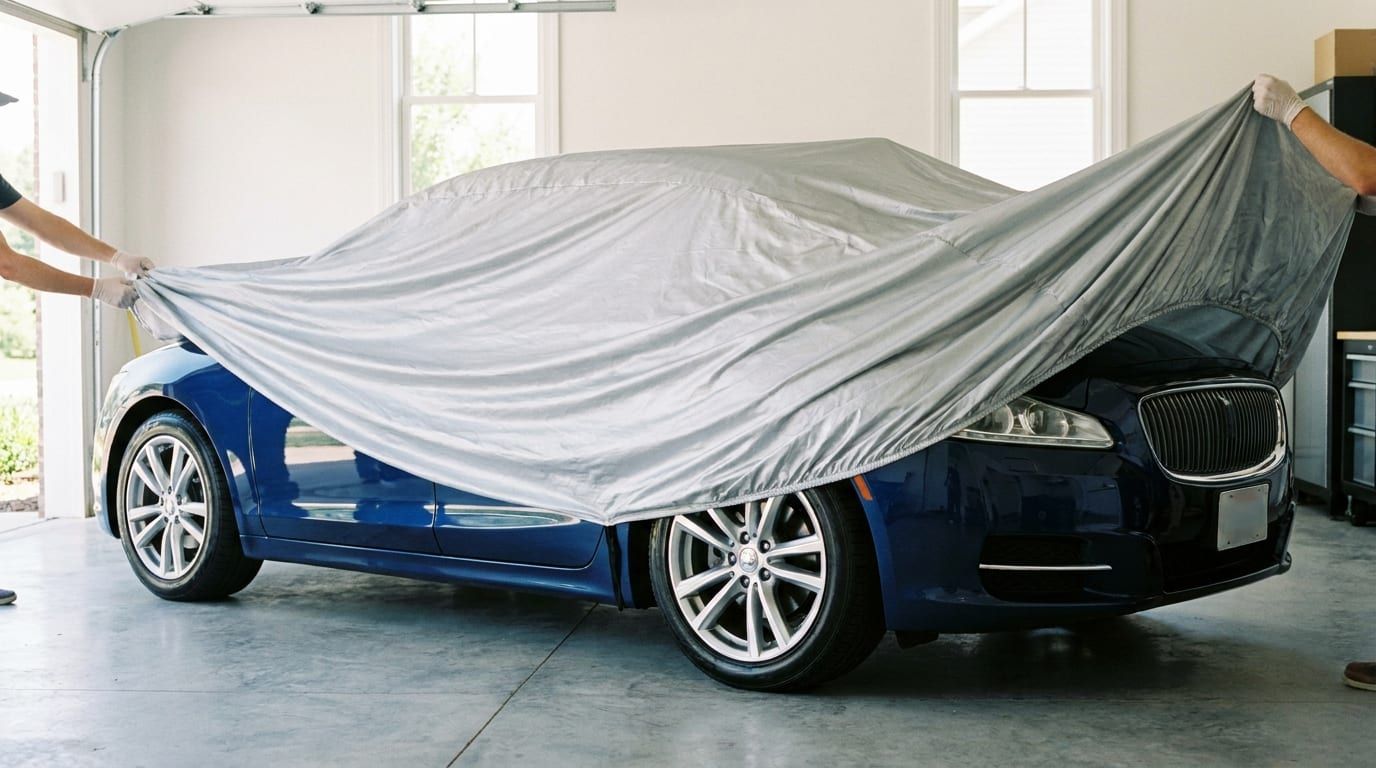
Always clean and fully dry a car cover before you fold it. A damp or dirty cover traps moisture and grime between the layers, and that combination breaks down fabric and invites mold faster than almost anything else you could do wrong.
Start outside. Shake the cover out to knock off loose leaves, dust, and dirt before it comes anywhere near your house or garage shelf. If it needs more than a shake, spot-clean it or hand-wash it according to its care label; don't just hose it down and call it done. Then air-dry it completely, flat or hung, until there's no dampness left anywhere, including in the seams and elastic hems where moisture likes to hide. Folding while damp is one of the most common ways people ruin a cover, and it's completely avoidable. If you're not sure how to clean yours properly, the full car cover cleaning process walks through it by material type.
Step-by-Step: How to Fold a Car Cover
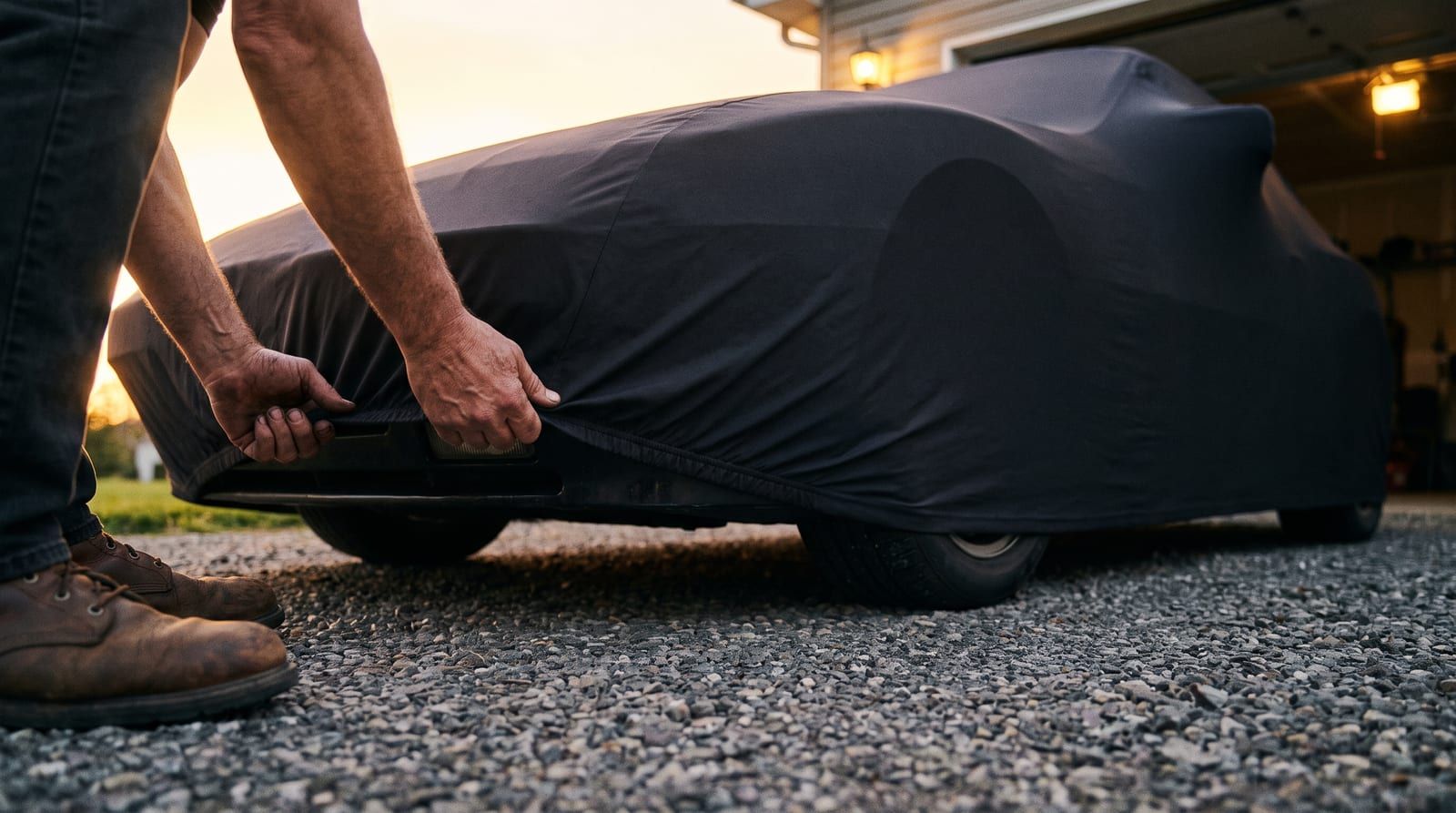
Once it's clean and bone-dry, here's how to fold a car cover for storage the right way.
Step 1: Lay the cover flat on a clean, dry surface, driveway, garage floor, or a large table all work, with the outside of the cover facing up.
Step 2: Fold it in half lengthwise from front to back. Then fold it in half lengthwise again. You should end up with a long strip.
Step 3: Fold that strip crosswise into thirds or quarters. How many folds you need depends entirely on the size of the storage bag it came with.
Step 4: Smooth out air pockets as you go, and press down gently at each fold. Don't crush it. You're just flattening the bulk, not creasing it hard.
One thing worth noting: thicker weatherproof or fleece-lined covers don't fold down as small as thin indoor covers, and they shouldn't be forced to. Fewer folds and a slightly larger bag beats fighting a heavy cover into a bag that was never sized for it.
How Should You Store a Folded Car Cover?
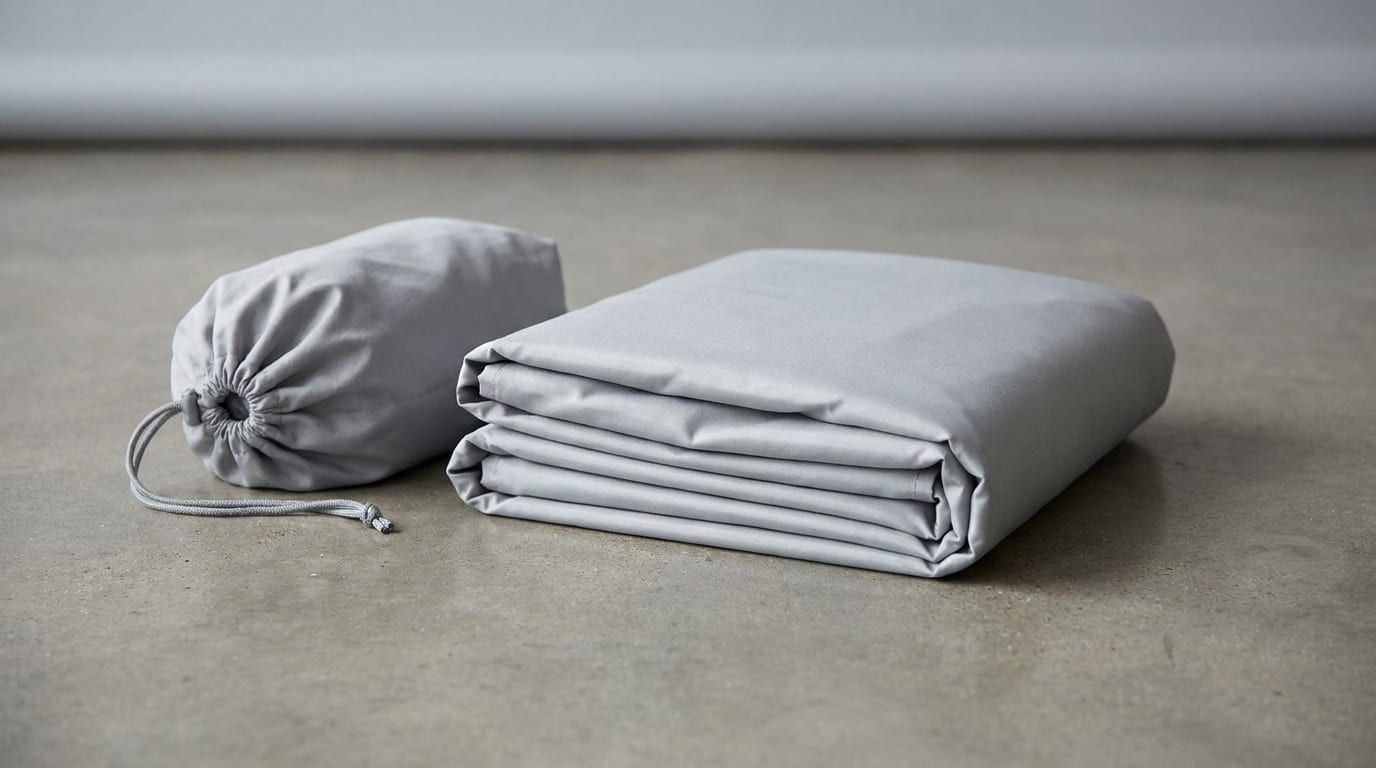
Store the folded cover in a breathable bag, kept somewhere cool, dry, and ventilated, out of direct sunlight and away from moisture. A sealed plastic bin or a damp basement corner is exactly the wrong environment. Both trap humidity, and humidity plus fabric equals mold.
Whenever possible, use the storage bag that came with the cover. It's sized to match the fold pattern, so you're not forcing anything. Don't stack heavy tools or boxes on top of a stored cover either; the weight crushes fibers over time and can bake in creases that won't shake out later. And if you're rotating between seasons, an indoor cover in summer and an outdoor one in winter, for instance, keep them labeled and stored separately. It sounds obvious until you've grabbed the wrong bag on a rainy morning and realized your indoor car cover isn't built for what's happening outside. Knowing the difference matters here too: an outdoor car cover is built to handle weather exposure, while indoor covers are lighter and meant for dust and minor scuffs, so store and use each one accordingly.
What Mistakes Should You Avoid When Folding a Car Cover?
A few habits account for most of the damage people do to their own covers.
Don't fold a cover while it's wet, damp, or still carrying morning dew. Even a small amount of trapped moisture is enough to start mildew growth inside the folds. Don't force a cover into a bag that's too small either. Cramming it in creates sharp creases exactly at the stress points where the fabric is already working hardest, which is how you end up with tears along fold lines within a season or two.
Material matters more than people assume. A heavy, weatherproof cover doesn't fold or flex the same way a lightweight indoor one does, and treating them identically is a common mistake. If you're not sure what you're working with, what makes one car cover material better than another is worth a read before you settle into a fold routine. And lastly, don't store a folded cover near sharp tools, chemicals, or anywhere rodents like to nest. A single snag or a chewed-through corner undoes all the careful folding in the world.
Do You Need to Fold a Car Cover the Same Way Every Time?
No. The exact fold pattern shifts a bit depending on cover thickness and bag size, but the core principle stays fixed: fold lengthwise first, then crosswise, always starting from a cover that's clean, dry, and laid flat.
Don't stress over getting a "perfect" factory fold. That's not really the goal. What matters is avoiding trapped moisture and avoiding sharp, repeated creases in the same spots. Get those two things right and the rest is flexible. One practical tip: unfold it in reverse order from how you folded it. If you folded crosswise last, unfold that first. It keeps installation quick and saves you from wrestling with a tangled cover in a parking lot.
Keep Your Car Cover in Top Shape All Year
Clean it, dry it completely, fold lengthwise then crosswise, and store it in a breathable bag somewhere dry. That's really the whole system for how to fold a car cover for storage, and once it's a habit it takes about two minutes.
If your current cover is already stiff, torn at the folds, or holding onto a musty smell no wash will fix, that's usually a sign of storage damage rather than normal wear, and it might be time to browse car covers built for how you actually use yours. When you're ready to put a new one on right, this step-by-step installation guide covers it. And if you're still narrowing down fit or material, the vehicle cover buying guides are a solid place to start before you buy again. Worth bookmarking the articles section too if you want more of this kind of practical car care advice as it comes out.
Updated