
I Have a Convertible and Live in a Rainy Climate Like Seattle — What Car Cover Should I Buy?
Published

The Quick Answer: What to Buy
If you've got a convertible and you're staring down another gray, drizzly Seattle winter, here's the short version: get a 100% waterproof outdoor cover, not a water-resistant one, with a soft non-abrasive lining that won't chew up your soft top, a breathable membrane so moisture doesn't get trapped underneath, and an elastic hem or strap system that holds the cover snug when the wind kicks up off the Sound. That combination is the actual answer to "I have a convertible and live in a rainy climate like Seattle, what car cover should I buy?" Anything less and you're gambling with your convertible top.
The single biggest mistake people make here is buying water-resistant instead of waterproof, or grabbing a cheap indoor cover because it was on sale. Water-resistant covers shrug off a light mist for a while, then eventually soak through during a real Pacific Northwest soaking. Worse, a non-breathable cover can trap the condensation that forms underneath it, which turns your convertible top into a mildew incubator. Neither outcome is good.
So which tier of cover actually gets you there? That's what the comparison below sorts out.
Comparison: Cover Tiers for a Convertible in a Rainy Climate
Not all outdoor covers are built the same, and the differences matter more on a convertible than on a hardtop. Here's how the typical tiers stack up for someone asking what car cover to buy for a convertible in a rainy climate like Seattle.
| Tier | Waterproofing | Breathability / Mildew Resistance | Lining Softness for Tops | Wind / Strap Security | Best Fit Scenario |
|---|---|---|---|---|---|
| Basic outdoor | Light rain only, not fully sealed | Low, traps some moisture | Thin, minimal padding | Basic hem, no strap system | Short-term parking, occasional showers |
| Deluxe waterproof | Fully waterproof | High, breathable layers prevent trap | Soft fleece-style lining | Elastic hem plus strap loops | Daily Seattle drizzle, most convertible owners |
| Platinum all-weather | Fully waterproof, reinforced seams | High, built for sustained exposure | Soft fleece-style lining | Heavy-duty strap and grommet system | Year-round outdoor parking, no garage |
The Basic tier works fine if your convertible sits outside for an afternoon once in a while. It will not hold up to months of near-daily drizzle, and the mildew risk climbs fast once moisture starts getting trapped against the top.
For most people dealing with actual Pacific Northwest weather, Deluxe is the sweet spot. It's fully waterproof, it breathes, and the lining is soft enough to sit against vinyl or cloth without scuffing it. Platinum makes sense if your convertible never sees a garage and you're dealing with wind, UV, and temperature swings on top of the rain. For a true Seattle commuter car with no covered parking, Deluxe or Platinum is realistic. Basic isn't, no matter how tempting the price tag.
Why Seattle-Style Rain Is Harder on Convertibles Specifically
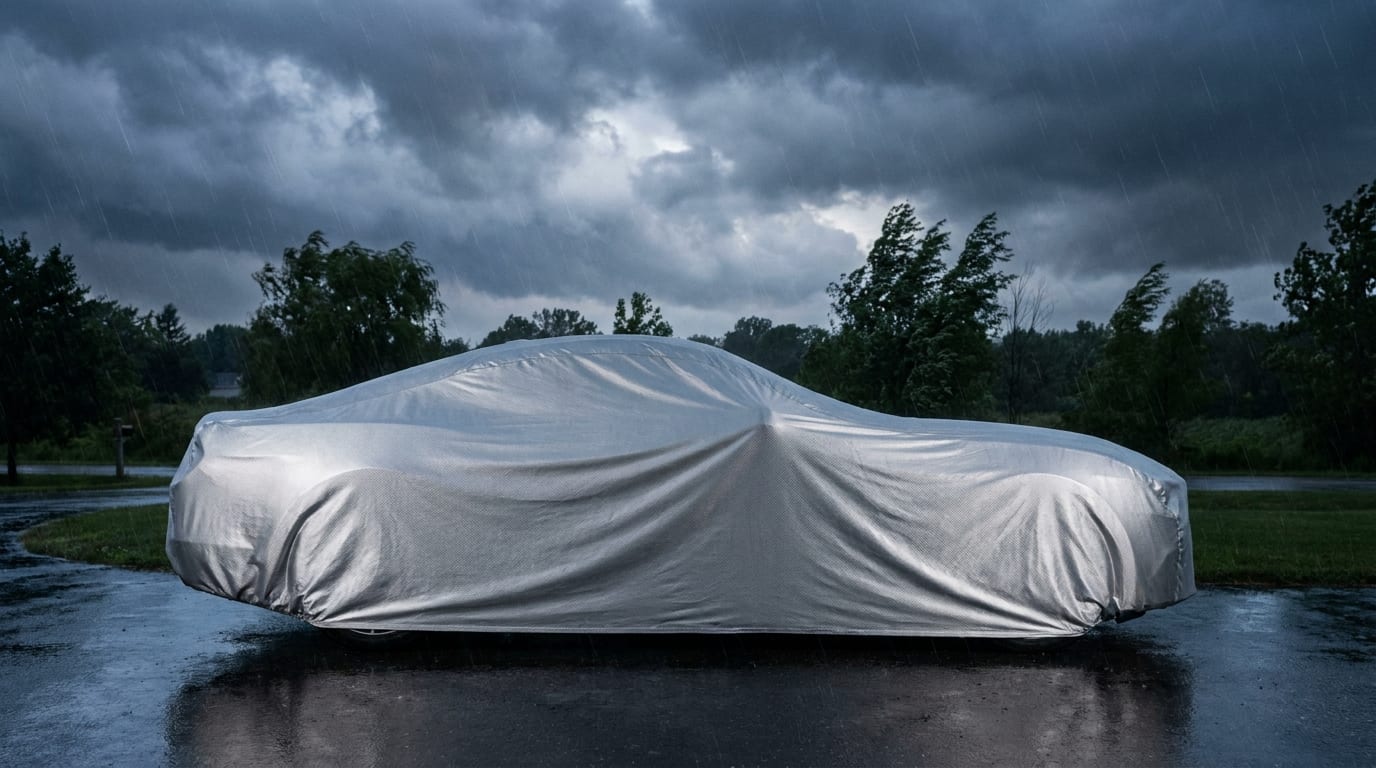
A hardtop sheds water and dries off in minutes. A convertible top doesn't work that way. Vinyl and cloth soft tops absorb moisture into their fibers or surface texture, and if they stay damp for days at a stretch, that's exactly the environment mildew needs to take hold. This is one of the main reasons the "what car cover should I buy" question looks different for convertible owners than it does for sedan or SUV owners.
It's not just the top material. Convertibles have seams, zippers, and window creases where the fabric meets the frame, and every one of those is a potential entry point for water. A cover with taped or sealed seams matters a lot more here than it does on a vehicle with a single continuous metal roof.
Then there's the Seattle rain pattern itself. It's rarely a downpour and done. It's more like months of on-and-off light-to-moderate rain, where the cover almost never gets a chance to fully dry out between uses. That's why breathability matters as much as waterproofing. A cover that blocks water but doesn't let moisture vapor escape just becomes a damp shell sitting on top of your car.
Wind is the other piece people underestimate. Open sightlines near the water, plus the gusts that roll through on a stormy day, can lift a loose cover enough to chafe against the convertible top's surface repeatedly. A cover without a real strap and grommet system is going to move around in that kind of weather, and that movement causes its own damage over time.
Material and Fit Features to Check Before Buying

Read the actual material description before you buy, not just the marketing headline. You want multi-layer fabric rated for sustained outdoor exposure. A single-ply vinyl cover is not the same thing, even if the listing uses the word "waterproof" loosely. If the page doesn't explicitly say waterproof (not water-resistant), assume it isn't.
Check the lining too. Any spot where the cover touches the convertible top, trim, or windows should have a soft, non-abrasive inner layer. This is one of the areas where which material a car cover is made from actually changes the outcome, not just the price.
Fit matters more than people expect. A universal cover that's a little too big will flap, and flapping is what causes water to pool in the folds and wind to work the fabric loose. A custom fit cover built for your specific convertible model sits snug, which cuts down both problems at once. Last thing to check: does it have built-in grommets or loops for a strap system? If you're buying separately, confirm compatibility before you check out.
Accessories That Matter More in Wet, Windy Conditions
A good cover on its own gets you most of the way there, but a few accessories close the gap in a climate like this.
Gust straps, sometimes called wind straps, attach at the base of the cover and cinch it down so storms can't lift the edges. They're a small add-on that solves a real problem, and installing gust straps takes a few minutes once you know where the anchor points are.
If your convertible sits on the street instead of in a garage, add a cable lock. It threads through the cover and secures it to the vehicle, which keeps the cover from walking off in high wind or getting pulled loose by anyone passing by. Installing a cable lock is straightforward and worth the extra step if you don't have covered parking.
One more thing worth considering: a support pole. Convertibles have a low, curved profile, and that shape can create spots where rainwater pools instead of running off. A support pole lifts the center of the cover slightly so water sheds to the sides instead of sitting there soaking through.
Maintenance Tips to Prevent Mold and Mildew
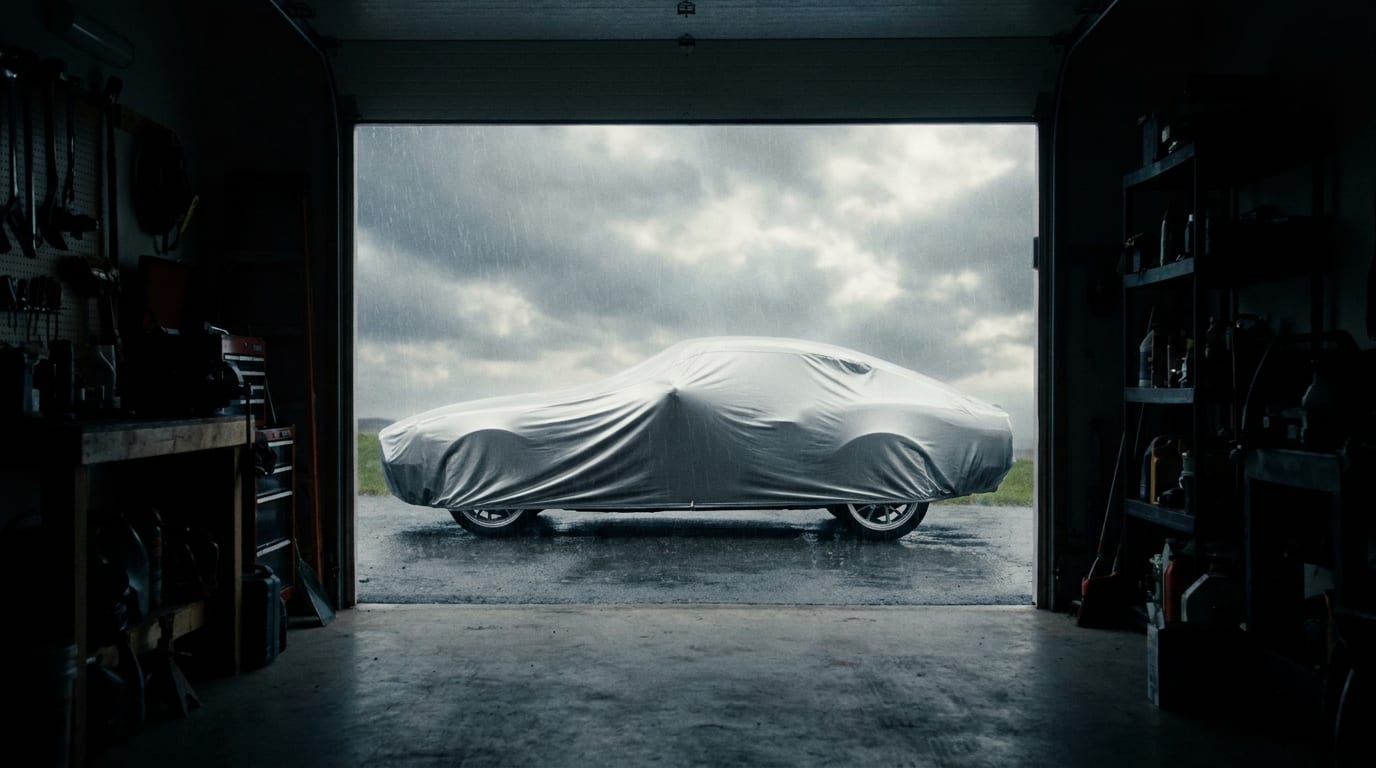
Even the right cover needs a little upkeep in a climate that barely lets anything dry out. Before you store the cover long-term, give both it and the convertible top a chance to dry fully. I know that's easier said than done in a Seattle winter, but even a few dry hours makes a difference.
On the rare dry day, pull the cover off for a bit. Let air get to the top and to the cover itself. This single habit does more for mildew prevention than any fabric feature can on its own.
Clean the cover on a regular schedule too, rinse it off and let it air-dry before putting it back on. Dirt and trapped moisture speed up mildew growth, and a quick cleaning routine keeps that from building up. A breathable cover reduces how often you need to do this, it doesn't eliminate it, especially during a stretch of back-to-back rainy weeks where nothing gets a real chance to air out.
Bottom Line and Next Step
So if you've been asking yourself, "I have a convertible and live in a rainy climate like Seattle, what car cover should I buy," the answer holds steady: a fully waterproof, breathable, custom-fit outdoor cover with a soft lining, backed up by a gust strap and cable lock. That's the setup that actually protects a soft top through a Northwest winter instead of just delaying the damage.
Before you buy anything, nail down the right size and fit for your exact convertible model. A cover that's even a little off will undo a lot of the benefit you're paying for.
If you want to dig deeper before deciding, take a look at our guide on using a car cover outdoors or browse a few waterproof options to see what fits your situation. No pressure, just worth comparing before the next storm rolls in.






