I Have a Convertible and Live Somewhere With Heavy Spring Pollen — What Car Cover Should I Buy?
Published
The Quick Answer: What to Buy
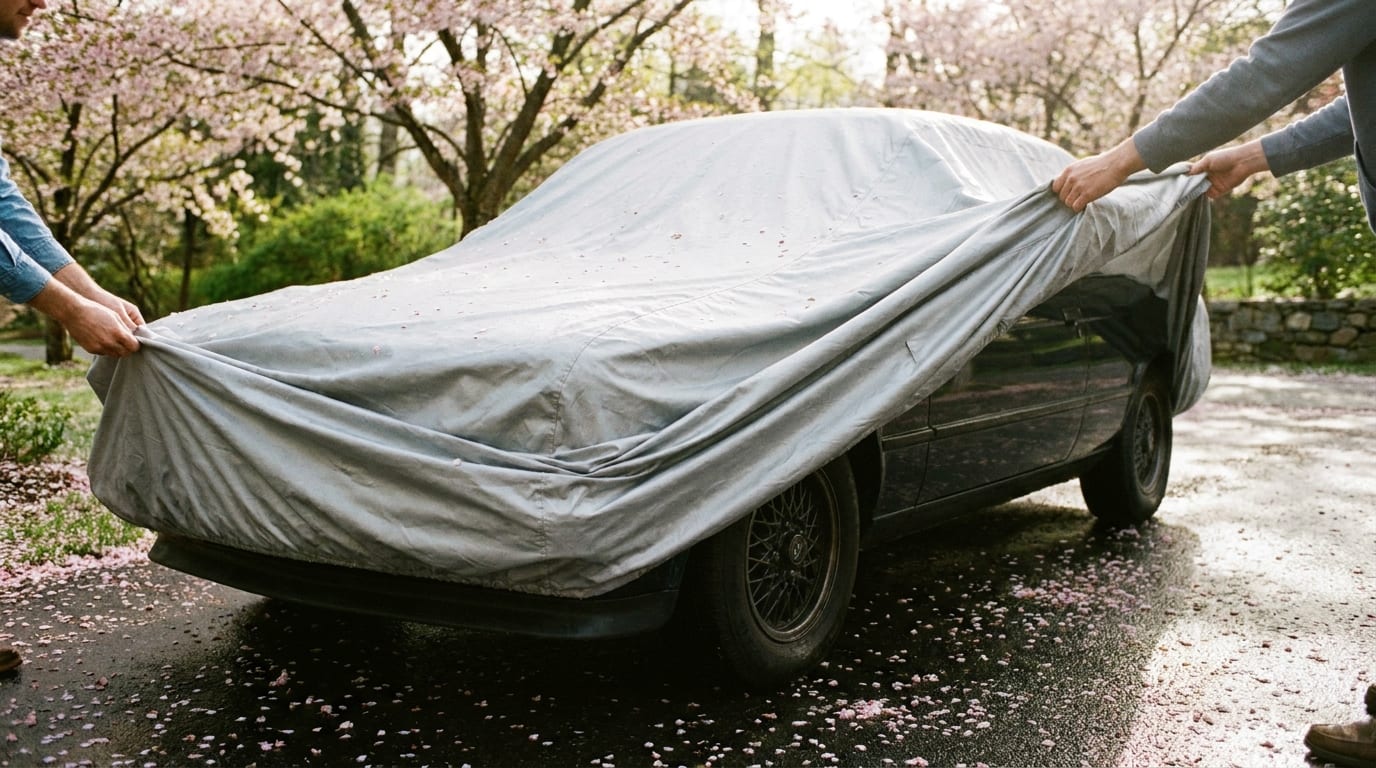
If you've got a convertible and you're asking "I have a convertible and live in a place with heavy pollen in spring, what car cover should I buy?" here's the short version: get a custom-fit outdoor cover with breathable multi-layer fabric, a soft fleece-lined interior, and a snug elastic hem with cable or grommet tie-downs. That combination keeps pollen off your paint and soft top without trapping moisture underneath it, which is the part people get wrong.
Here's why breathability matters more than a fully sealed, waterproof-everything cover in this specific case: a sealed cover traps pollen-laden condensation against the soft top overnight, and by morning that condensation has turned the pollen into a fine paste that stains and works into the seams. You want water resistance, not a plastic bag.
Below is a quick comparison of the three outdoor cover tiers worth considering, and where each one makes sense. Fit type matters just as much as fabric here. Custom-fit matters more for a convertible than it does for a hardtop, because of the raised soft-top profile and the tucked-in mirror pockets a generic universal cover just won't account for. That's why fit is one of the columns in the table below, not an afterthought.
Why Pollen Season Is Uniquely Hard on Convertible Tops
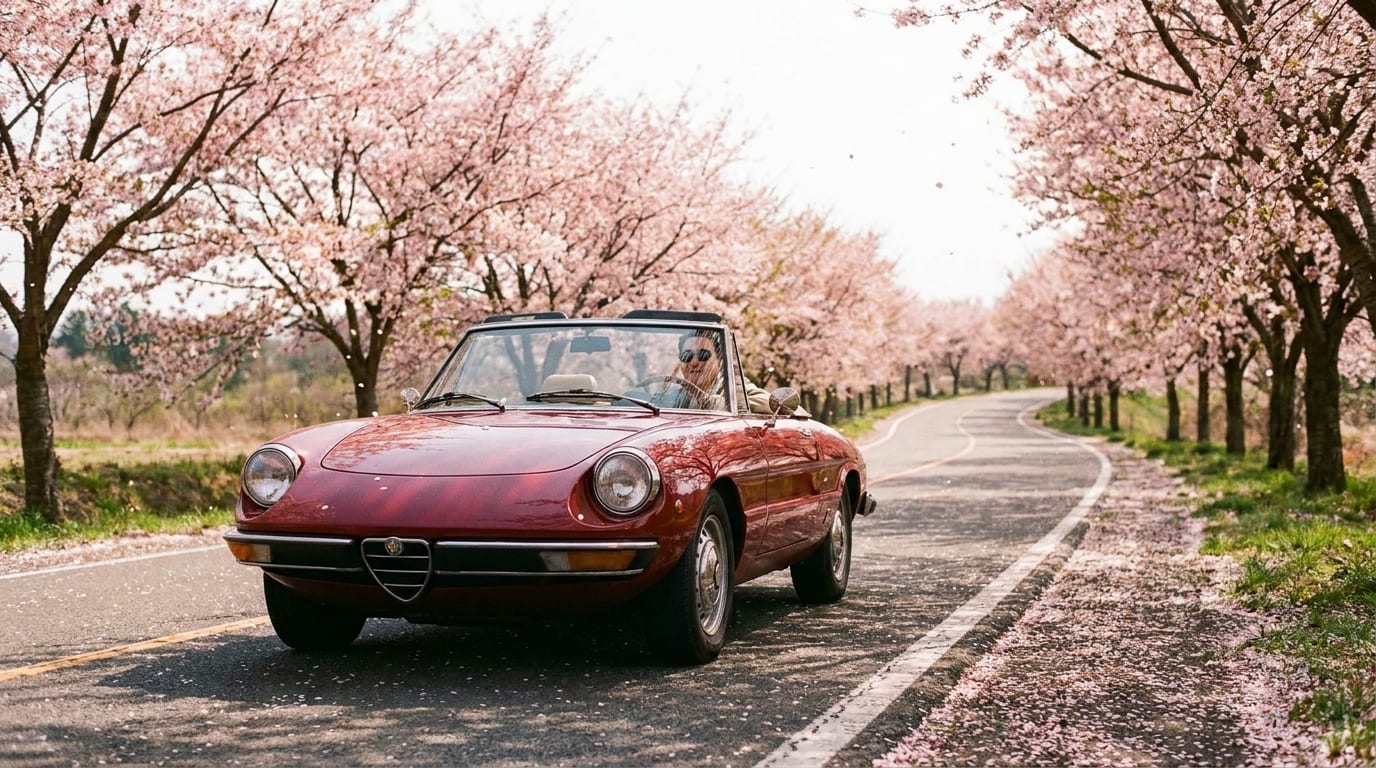
Pollen isn't just dust. It settles into the porous weave of vinyl or cloth soft-top material, and once morning dew hits it, it forms a fine paste that stains and works its way into seams and drainage channels. A hardtop sheds this with a wipe. A soft top holds onto it.
Leave the top uncovered between pollen coatings and you're also stacking up direct UV exposure day after day, which fades and cracks soft-top fabric a lot faster than it ages painted metal. Spring sun isn't gentle on cloth.
And washing the top every few days to keep up with pollen? That wears down the fabric's water-repellent treatment over a season. You end up re-treating or replacing the top sooner than you should have to. A cover is cheaper than that cycle, full stop.
The Cover Features That Actually Stop Pollen Buildup

Not every "outdoor cover" is built for this job. The features that matter:
- Breathable, multi-layer woven fabric. It blocks pollen and airborne dust from settling directly on the top while letting trapped moisture evaporate instead of pooling against the fabric. This is the single biggest factor in waterproof fabrics that still breathe versus ones that just seal everything in.
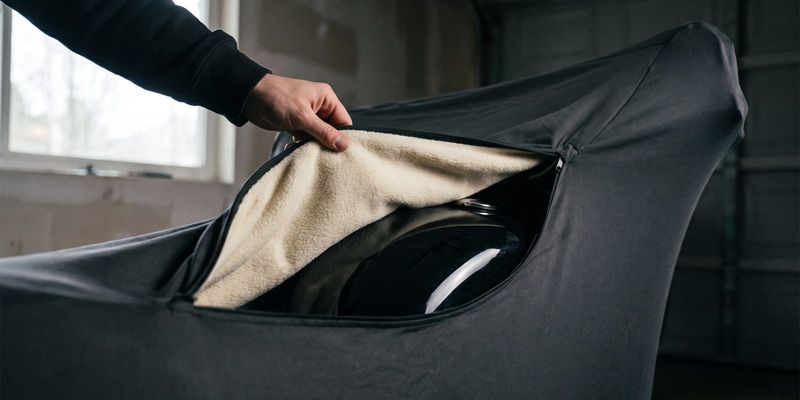
- Soft fleece or flannel lining at contact points. Without it, the cover itself can scuff the top or grind grit into the finish every time you put it on or take it off. You're covering the car to protect it, not to sand it.
- A snug elastic hem plus cable or grommet tie-downs. Spring wind is no joke, and a loose-fitting cover flapping around is exactly how pollen and debris get pulled underneath it in the first place.
- Water-resistant, not fully plastic-sealed, treatment. You want spring showers to bead off the surface, not get walled in against the soft top overnight.
If you want the deeper breakdown of what separates a decent outdoor cover from a bad one, the guide to using a car cover outdoors covers wind, UV, and rain resistance in more detail than I can fit here.
Comparing Outdoor Cover Tiers for Convertibles
So, which tier actually fits your situation? Here's how the three stack up for a convertible dealing with a heavy spring pollen season:
| Tier | Fabric | Lining | Best for |
|---|---|---|---|
| Entry-level outdoor | Single or dual-layer woven, basic UV/light rain resistance | None | Occasional outdoor parking, not daily pollen-season use |
| Mid-tier breathable outdoor | Multi-layer breathable fabric | Soft lining at panel seams | Most convertible owners in high-pollen regions, this is the sweet spot |
| Premium all-weather outdoor | Heaviest multi-layer breathable fabric | Full interior soft lining | Convertibles parked outside year-round across mixed weather, not just spring |
For most people reading this, the mid-tier breathable option is the right call. It's built for exactly this problem: daily on/off use, moderate water resistance, and a lining that won't scuff the top. The premium tier earns its price if your car lives outside twelve months a year through rain, snow, and sun, not just a few pollen-heavy weeks. You're paying for durability you may not need if spring is your only rough patch.
One more thing worth repeating: custom-fit versus universal matters a lot here. A custom-fit car cover follows your convertible's actual top line, mirror cutouts, and antenna position. A universal cover is cut to fit "most" cars in a size range, which for a convertible usually means extra slack around the top. That slack is where wind gets in, and where wind gets in, pollen follows.
Fit Details That Matter Specifically for Convertibles

A few details separate a cover that stays put from one that ends up bunched against your windshield after a windy afternoon:
Mirror pockets and an antenna patch keep the cover anchored at the points that normally shift first. A cover that slides even an inch creates a gap, and that gap is the most common way pollen sneaks underneath despite you doing everything else right.
A gust strap or cable lock cinches things down tight, which matters because spring storms and high pollen often show up in the same stretch of weeks. Check out the gust strap installation guide if you're not sure how these attach, it's a five-minute job once you've done it once.
Also, actually check sizing against your soft top's real height, not just the year/make/model default. Some aftermarket tops sit taller than stock, and a cover sized off the base spec will leave the fabric too tight across the top, which stresses seams over a season. The sizing guide walks through how to measure this properly before you order.
Keeping Pollen From Building Up Over the Season
Buying the right cover is half of it. Maintaining it is the other half, and it's the part people skip.
Rinse the cover's exterior with a hose every week or two during peak pollen, rather than waiting until it's visibly caked on. Pollen that sits and dries is harder to remove and more likely to work into the fabric's coating over time. A quick rinse now beats a deep clean later.
Shake the cover out and wipe it down before you fold it up, too. Otherwise you're just packing pollen into your trunk or storage bag, and it transfers right back onto the car (or your hands) the next time you pull the cover out.
When it does need an actual wash, stick to the fabric-appropriate method. Scrubbing with the wrong detergent or tossing it in a hot dryer can strip the water-resistant treatment that's doing all the work in the first place. The cover care guide has the specifics by fabric type, worth a quick read before your first wash of the season.
Bottom Line and Next Step
So, to circle back to the question: if you have a convertible and live somewhere with heavy spring pollen, buy a custom-fit, breathable outdoor cover with a soft-lined interior and a secured hem. That's the combination that keeps pollen off the paint and top without cooking moisture underneath it overnight.
Before you buy anything, run your convertible's year, make, model, and top height through a cover finder to make sure you're getting the actual fit, not a close guess. And since every cover worth buying should come with a no-hassle guarantee, there's not much risk in trying one for a single pollen season to see if it's the right call for your car.
If you found this useful, stick around and browse a few more car care guides while you're here. Your top will thank you come summer.