


My Car Cover Keeps Blowing Off in the Wind — What Am I Doing Wrong?
Why Does My Car Cover Keep Blowing Off in the Wind?
Short answer: your cover blows off because there's too much loose fabric for the wind to grab, you've got grommets or tie-downs that exist but never got used, or there's no gust strap running under the vehicle to hold everything down. It's almost never a defective cover. It's almost always a fit or installation problem.
That's actually good news, because it means the fix takes minutes, not a return label. My car cover keeps blowing off in the wind is one of the most common complaints we hear, and in nearly every case it traces back to one of three things: the wrong size cover, securement points that never got cinched, or missing a wind strap entirely. We'll walk through each one below, plus how to fix it so this stops happening.
What Actually Causes a Car Cover to Blow Off?
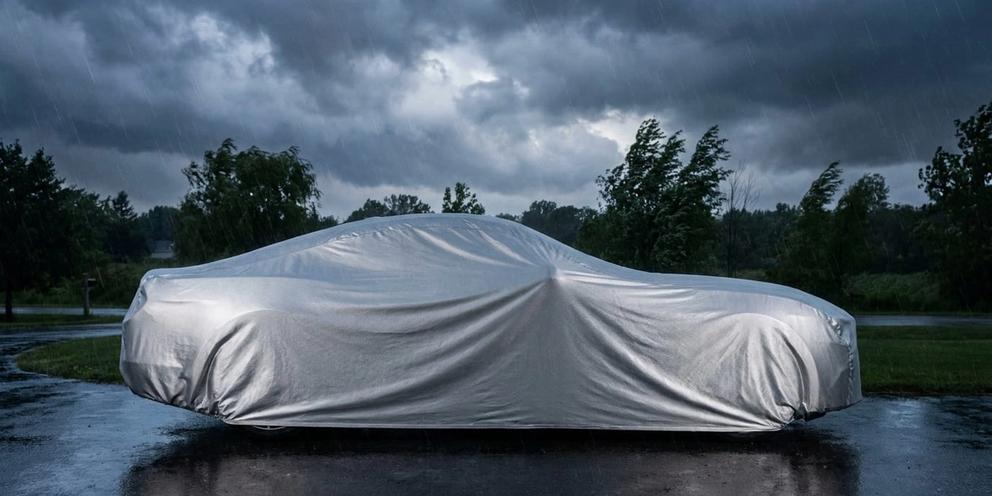
Think of it as a sail problem. A universal or loosely-fitted cover has extra fabric bunched at the bumpers, mirrors, and overhangs. Wind gets under that slack, lifts the front or rear edge, and once one corner's up, the whole cover starts working itself loose. That's the "sail effect," and it's the single biggest reason a car cover keeps blowing off in the wind.
Second cause: grommets and elastic hems that were installed but never actually used. A lot of covers ship with tie-down points that owners skip because they seem optional. They're not. An uncinched hem might as well not exist once the wind picks up.
Parking orientation matters more than people think, too. A car parked broadside to the prevailing wind gives gusts a wide flat surface to push against. Nose-into-the-wind, there's a lot less for the wind to catch.
And fabric quality plays a role. Lightweight, low-denier material without reinforced grommet points wears at the stitching faster under sustained wind, not just one big gust. If you're covering a vehicle outdoors regularly, it's worth reading through a guide to using a car cover outdoors to see what fabric and wind exposure actually look like together over a season.
Is Your Car Cover the Wrong Size?
Here's the thing most people miss: universal and semi-custom covers are built to fit a range of vehicles, which means they fit none of them exactly. That extra slack at the bumpers and around the mirrors isn't a minor cosmetic issue. It's exactly what wind grabs first.
A custom-fit cover hugs the body panels. Less loose fabric means less surface area for wind to catch, period. That's the main reason a properly sized cover just sits there in conditions that would rip a universal one loose in an afternoon.
Not sure if size is your actual problem? Check for these signs:
- Fabric pooling or bunching at the front or rear bumper
- The cover riding up over the hood instead of staying flush
- Visible gaps at the mirrors or along the rocker panels
If you're seeing any of that, no amount of extra strapping is going to fully solve it. Start with a sizing guide to confirm your current cover actually matches your vehicle's dimensions, and look into custom-fit car covers if you're working with a universal one now. If you're just starting the search, finding the right cover for your specific make and model is the fastest way to skip this problem entirely.
Are You Using the Right Wind-Securing Hardware?
Most car covers come with more securement hardware than owners actually use. That's the honest answer to "what am I doing wrong": the gear's already in the box, it just never got installed correctly.
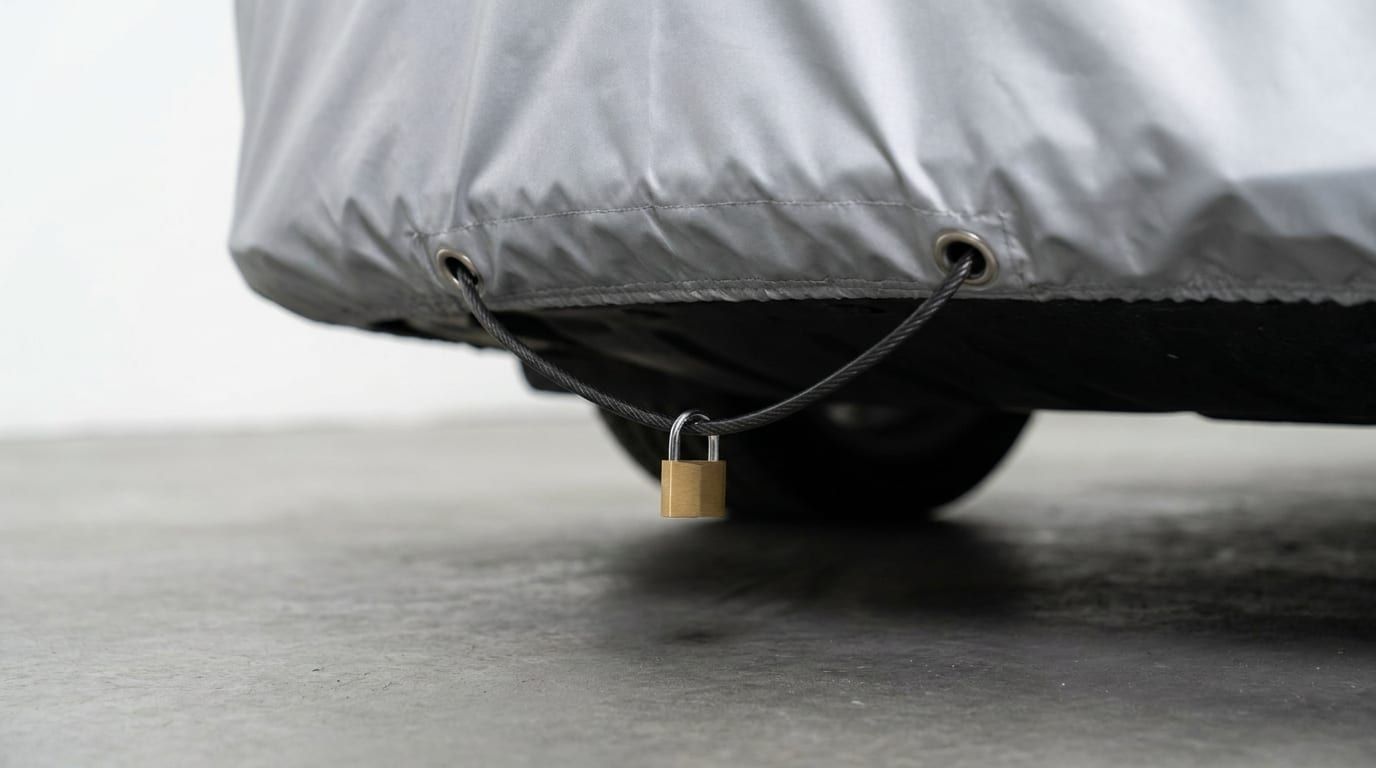
Grommets and cord aren't decorative. Run a cord or bungee through the eyelets and cinch it under the rocker panel, not just draped loosely over the car. The elastic hem should sit snug under that rocker line too. If it's stopping at the door line, you've left a gap right where wind wants to sneak underneath and lift the whole thing.
A cable lock system does double duty. It deters theft, sure, but it also adds a low, tight line of tension across the body that resists lift better than grommets working alone. Worth installing even if theft isn't your main concern.
The single most effective add-on, though, is a gust strap. It runs under the chassis, front to back or side to side, and holds the cover down at the point where wind has the least leverage. For anyone parked in an open lot or a coastal area where wind is a daily fact of life, this is the piece that's usually missing.
Car Cover Wind Securement Methods Compared
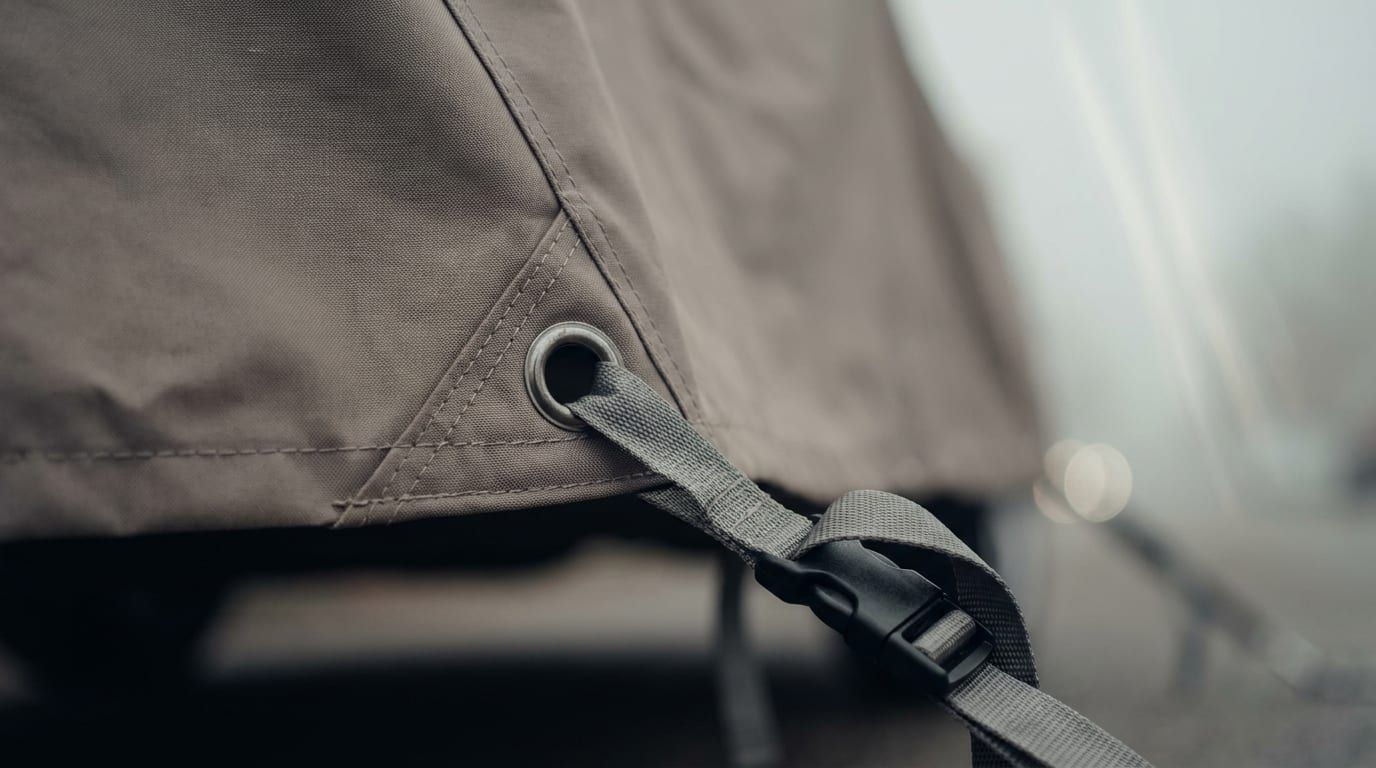
Grommets + Cord
- Wind resistance: Moderate, depends on how tightly it's cinched
- Setup time: A few minutes per side
- Best for: Daily drivers parked in typical residential conditions
- Added benefit: Cheap, usually already included with the cover
Elastic Hem Alone
- Wind resistance: Low to moderate
- Setup time: None, it's built in
- Best for: Mild climates with occasional light wind
- Added benefit: Zero effort, but easiest to neglect and easiest to fail
Cable Lock System
- Wind resistance: Moderate to high
- Setup time: 5 to 10 minutes
- Best for: Street parking or long-term storage where theft is also a concern
- Added benefit: Anti-theft protection plus low, tight tension
Gust or Wind Strap
- Wind resistance: High
- Setup time: 5 to 10 minutes
- Best for: High-wind, open-lot, or coastal parking
- Added benefit: Purpose-built for lift resistance, nothing else does this job as well
If you're dealing with consistent wind or coastal conditions, combining a gust strap with grommets or a cable lock gives you the highest resistance available. Relying on just one method is where most of the "why does my cover keep blowing off" stories start.
How Do You Install a Car Cover So It Won't Blow Off?
Step 1: Drape the cover starting at the front and work your way back. Get the panel fit snug before you secure a single tie-down. Rushing this step is where slack sneaks in.
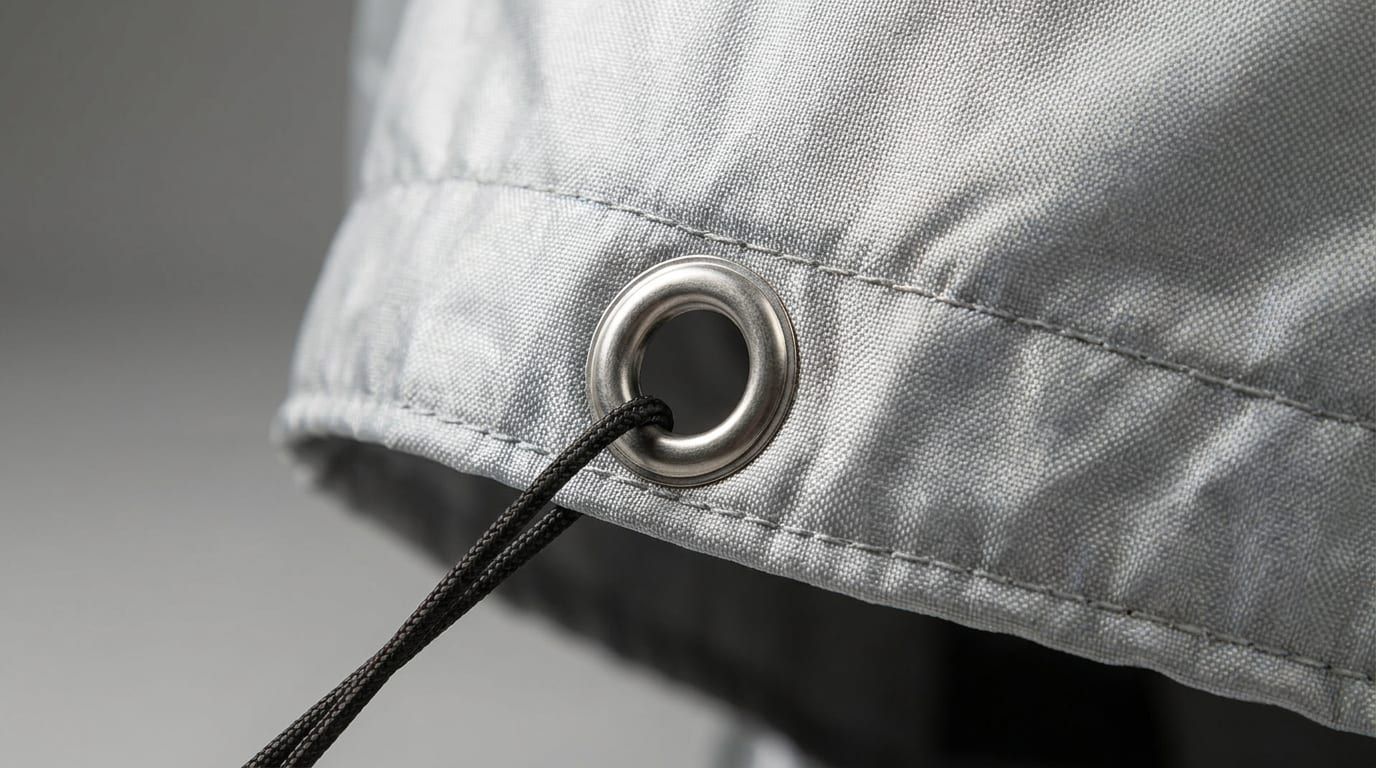
Step 2: Cinch every grommet and pull the elastic hem down under the rocker panel. Not the door line. The rocker panel. This one adjustment fixes a surprising amount of the lifting problem on its own.
Step 3: Add the gust strap, running it underneath the vehicle, and clip it taut on both sides. Don't leave slack in the strap itself, that defeats the point.
Step 4: If you're using a cable lock, thread it through the reinforced grommets and anchor it low, near a wheel or the frame. It's doing two jobs at once here: wind resistance and theft deterrence.
One more habit worth building: park nose-first into the prevailing wind direction when you can. It's a small thing, but it cuts down on how much surface area the wind actually hits.
For a full walkthrough with more detail on each step, this simple installation guide covers the process start to finish.
FAQ: Car Covers and Wind
Will a gust strap alone fix a blowing-off cover?
It helps a lot, but it's not a total fix on its own. A gust strap works best paired with a properly sized cover and cinched grommets. It can't compensate for excess loose fabric if the cover itself is oversized.
Do custom-fit covers really resist wind better than universal ones?
Yes. The closer the fabric sits against the body, the less surface area the wind has to catch. That's the core reason custom-fit covers stay in place in conditions that lift universal covers right off.
How do I know if my cover size is the problem?
Look for fabric pooling at the bumpers, a cover riding up over the hood, or gaps near the mirrors. Any of those means the cover's too loose and needs a better-fitting size, not more straps.
Can I add a wind strap to a cover that didn't come with one?
Yes. Gust straps are sold as a standalone accessory and install on most existing covers that have grommets or any way to loop a strap under the chassis.
Keep Your Cover On, Next Steps
Work through it in order: get the size right first, cinch every grommet and hem so nothing's left loose, then add a gust strap or cable lock if you're in a windy or coastal spot. Skip straight to hardware without fixing size, and you're just tying down a problem that was never going to stay tied.
If you've read this far and suspect your current cover was never sized correctly to begin with, that's worth sorting out before buying more accessories. Poke around our other guides on fit and outdoor protection while you figure out what's actually going on with yours, no pressure, just good information for whenever you're ready to sort it out.
Updated