
The Best Car Cover for a Convertible Parked in Frequent Hailstorms
Published
Our Direct Recommendation
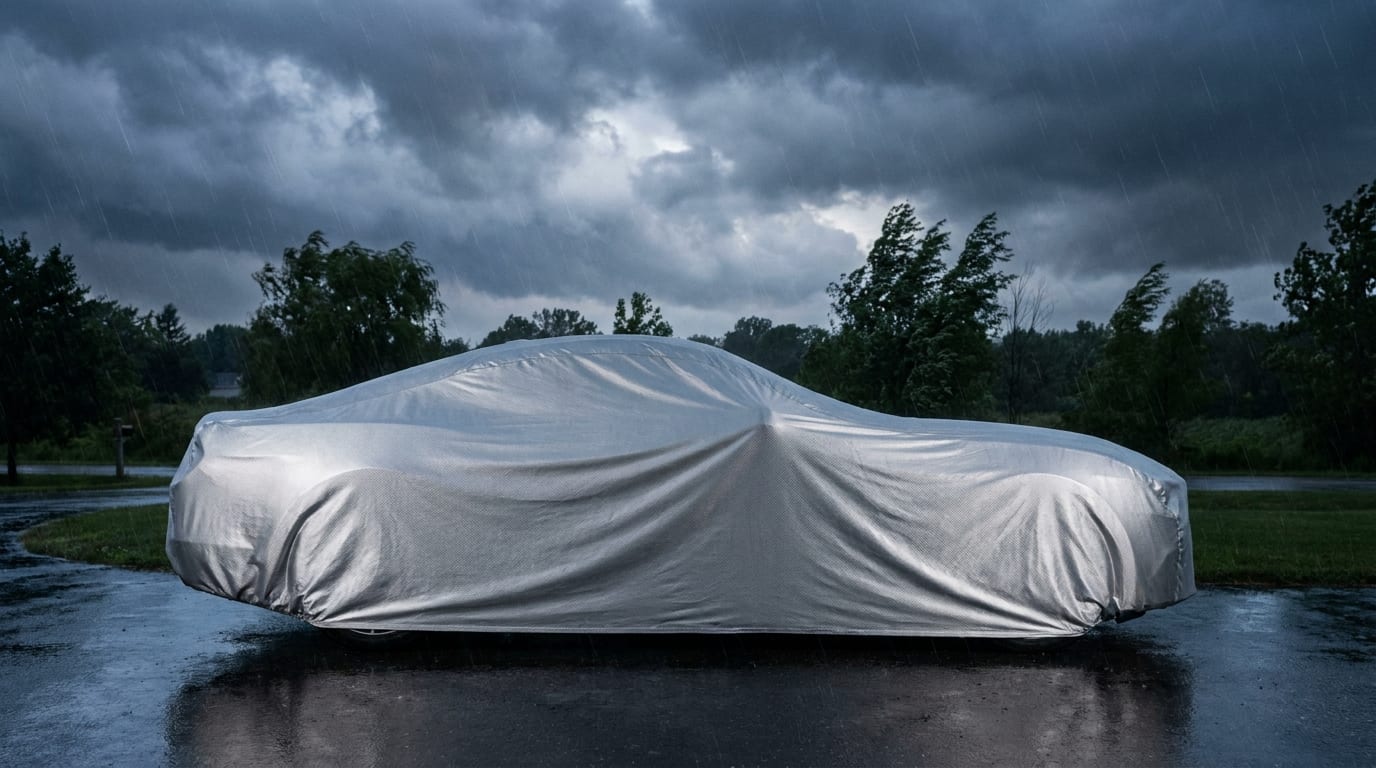
Can you recommend a good car cover for a convertible parked in an area with frequent hailstorms? Yes: go with a custom-fit, multi-layer weatherproof cover that has a padded or fleece-lined outer shell, a reinforced elastic hem, and built-in strap or grommet points for tie-downs. Anything less and you're gambling with a soft top that has nothing underneath it to absorb an impact.
A universal-fit cover or a thin single-layer sheet just isn't built for this job. It'll flap around in the wind that usually shows up before a hailstorm, and flapping fabric does almost nothing to cushion a hailstone hitting your canvas or vinyl top. The right pick for your car still depends on a few things: how often hail actually hits your area, how big the stones tend to get, and whether your convertible lives outside full-time or only gets left out occasionally. That's worth sorting out before you buy, so here's how the main cover types stack up.
Quick Comparison: Cover Types for Hail-Prone Areas
Not all covers are built for the same job. Here's a quick breakdown of what each tier actually does when hail starts falling.
| Tier | Hail Impact Protection | Waterproofing | Wind Resistance | Fit Type | Best Use |
|---|---|---|---|---|---|
| Basic / Lightweight | Minimal | Light rain only | Poor, prone to flapping | Mostly universal | Dust and mild, rare weather |
| Weatherproof / Multi-Layer | Good | Strong | Solid with straps | Universal or custom | Regular storms, moderate hail |
| Premium / Hail-Rated Heavy-Duty | Best | Strong | Excellent, especially custom-fit | Custom-fit | Frequent, severe hailstorms |
If you're dealing with hail more than once or twice a season, cross the Basic tier off your list entirely. It's fine for keeping pollen and bird droppings off a car in a garage-adjacent driveway, but it won't do much when stones start hitting your soft top. The Weatherproof/Multi-Layer and Premium tiers are the two genuinely built for frequent hailstorms, and the difference between them usually comes down to how severe your local storms get and how much you're willing to spend for extra peace of mind.
One thing worth flagging: custom-fit versions of either tier outperform universal ones in wind, not just hail. A cover that hugs your convertible's body lines doesn't have loose fabric for gusts to grab, so it stays put instead of shifting or lifting during a storm. You can browse custom-fit car covers to see the difference in profile versus a generic sheet.
Why Convertibles Need Extra Hail Protection
A hardtop car has sheet metal between the hail and the cabin. It'll dent, sure, but the structure absorbs and spreads out the impact. A convertible's soft top has none of that. It's fabric or vinyl stretched over a frame, and a golf-ball-sized hailstone hitting it directly can dent the frame bows, tear the material, or punch straight through weak seams.
Once that fabric is compromised, you're not just looking at a cosmetic problem. Torn seams and dented bows mess with how the top seals against the body, and a top that doesn't seal right lets water in during the next rain, which can mean a soaked interior, mildew, and electrical gremlins if your convertible has power top motors or sensors near the frame.
Here's the part owners underestimate: frequent hailstorms aren't a one-time risk, they're a seasonal one. One storm might just leave a few small dings. A whole season of storms hitting an unprotected or poorly protected top adds up fast. Buying a "good enough" universal cover to save money up front usually means replacing it, or worse, replacing the top itself, before the season's out. That's the real argument for a hail car cover built specifically for this kind of weather instead of a generic all-purpose one.
What to Look for When Comparing Covers

Material matters more than anything else on this list. You want a multi-layer, non-woven or fleece-lined fabric with actual cushioning built between the layers, not just thicker single-ply fabric. Padding is what absorbs the energy of a falling hailstone before it reaches your top. A thin layer, even a tough one, just transmits the impact straight through.
Fit is the second piece. A custom-fit cover follows your convertible's actual body lines and soft top profile, so there's less gap for wind to sneak under. Less gap means less billowing, and less billowing means the cover stays where it should be exactly when a storm hits. If you're not sure what size or fit your car needs, a sizing guide for your vehicle will save you from guessing and ending up with something too loose to do its job.
Securing hardware is the part people skip reading about, and it shouldn't be. Look for built-in grommets, elastic hems that cinch snugly around the body, and loops for straps. These are what keep the cover anchored when wind gusts show up ahead of or during a hailstorm, which they usually do.
Last, check waterproofing and UV rating together, not separately. Hail events are frequently followed by rain, sometimes within the same storm system, so a cover that handles impact but leaks is only half the job done. And between storms, your cover sits in the sun, so UV resistance keeps the material from degrading and losing its protective qualities before the season's over. A waterproof car cover rated for both jobs is worth the extra cost over one that only advertises one or the other.
Securing the Cover Against Wind and Hail Impact
Even the best cover underperforms if it isn't anchored down. Pairing your cover with a gust or wind strap kit keeps the fabric pulled taut against the body instead of ballooning out in gusts, and taut fabric tears a lot less than loose fabric does. If you haven't installed one before, there's a straightforward guide to installing gust straps that walks through the process.
If your convertible sits outside for extended stretches during storm season, consider adding a cable lock on top of the strap setup. It's not about hail protection directly, it's about making sure nobody walks off with a cover (or decides to peek under it) while your car's left unattended for days at a time. Here's how to install a cable lock if you go that route.
One habit worth building: check your strap and grommet points after every significant storm. These are the first spots to wear out, since they're taking the brunt of repeated wind and hail cycles all season. A small tear in a grommet loop now turns into a cover that won't stay secured later, right when you need it most.
Caring for a Hail-Exposed Cover
A cover that's just weathered a hailstorm needs a quick once-over, not a shrug. Debris collects in folds and seams, and small punctures from stones can be easy to miss until they've widened into real tears. Inspect it, brush off debris, and catch problems early.
When you do clean it, skip the harsh chemicals. Strong detergents and solvents strip the waterproof and UV-resistant coatings that make these covers worth buying in the first place, which defeats the purpose pretty quickly. A proper cover cleaning routine keeps those coatings intact through a full storm season instead of fading after a few washes.
And even with a premium, hail-rated cover, don't treat it as bulletproof. If a severe hail event is forecast, garage the car or use an indoor cover if you've got the option. Outdoor covers are built to handle regular storms well, but nothing beats a roof over the car when a genuinely bad system is rolling through.
Find the Right Fit for Your Convertible
Guessing at sizing is probably the single most common mistake people make buying a cover for a convertible, since soft tops vary a lot more in profile than hardtops do. Use a cover finder tool that matches your cover to your exact year, make, and model instead of eyeballing a generic size chart.
To circle back to where we started: if you're asking whether there's a good car cover for a convertible parked in an area with frequent hailstorms, the answer is a custom-fit, multi-layer, hail-rated cover with proper securing straps. That combination is what actually holds up to repeated storms instead of just surviving the first one.
If you want to dig deeper before you buy, it's worth browsing the full car cover lineup to compare hail-specific and custom-fit options side by side, and keep an eye on our other Car Cover Guides for more on protecting your vehicle through whatever your local weather throws at it this season.






