
The Best Car Cover for a Minivan Parked in a Rainy Climate Like Seattle
Published
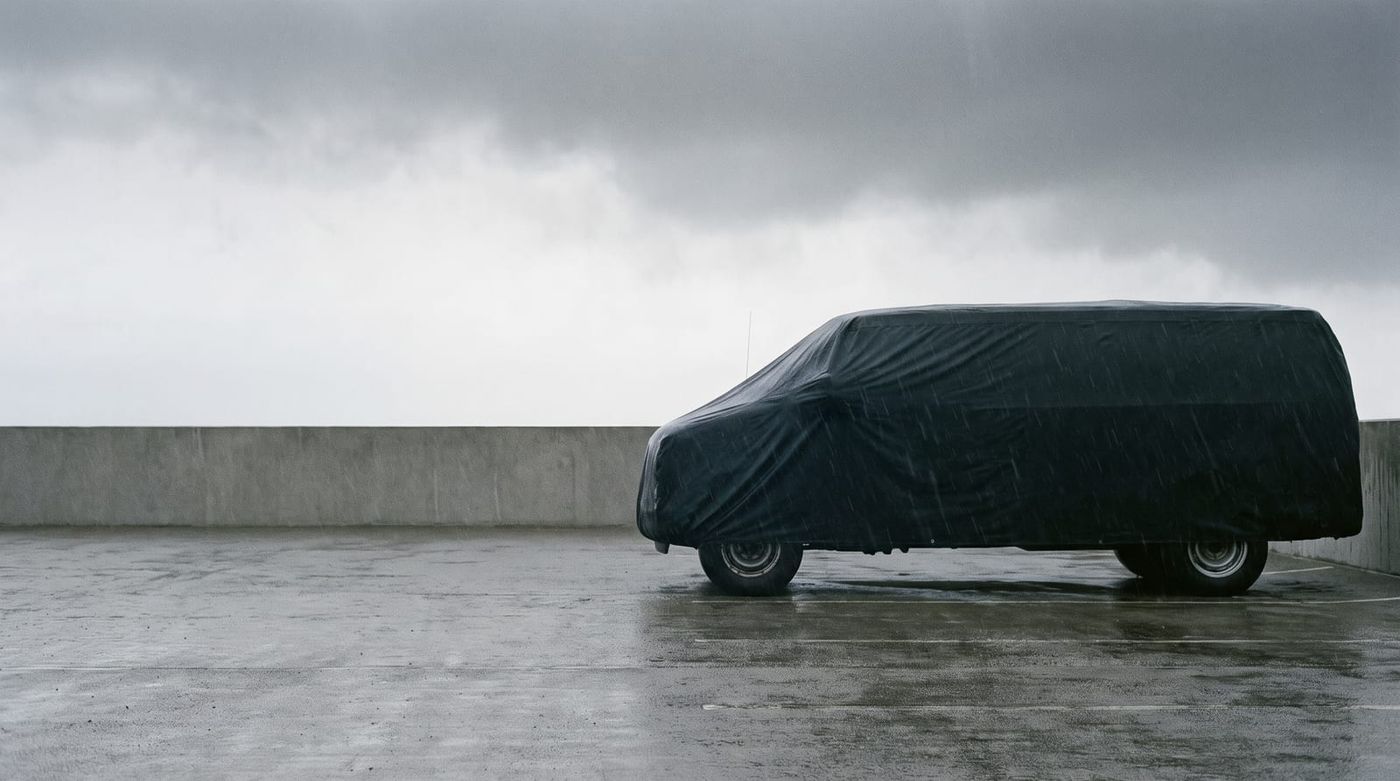
Quick Answer: What to Buy for a Minivan Parked in a Rainy Climate Like Seattle
Can you recommend a good car cover for a minivan parked in a rainy climate like Seattle? Yes: get a custom-fit, fully waterproof outdoor cover with taped or sealed seams, a soft fleece-lined underside, and wind straps or grommets built in. Anything less, and you're fighting a losing battle against drizzle that never seems to stop and gusts that come off Puget Sound sideways.
Seattle doesn't really do dramatic storms. It does months of low-grade wet, which is actually harder on a cover than a few hard downpours. That's why a breathable waterproof fabric, not a cheap tarp or stiff vinyl shell, is the thing that decides whether your van stays dry and clean or ends up smelling like a gym bag. Doesn't matter if you're parking a Honda Odyssey, a Toyota Sienna, a Chrysler Pacifica, or a Dodge Grand Caravan, the fabric and fit matter a lot more than the badge on the hood. Below, a comparison table breaks down the tiers so you can match the level of protection to how often your van actually sits outside.
Why Seattle's Climate Changes What "Good" Means for a Cover
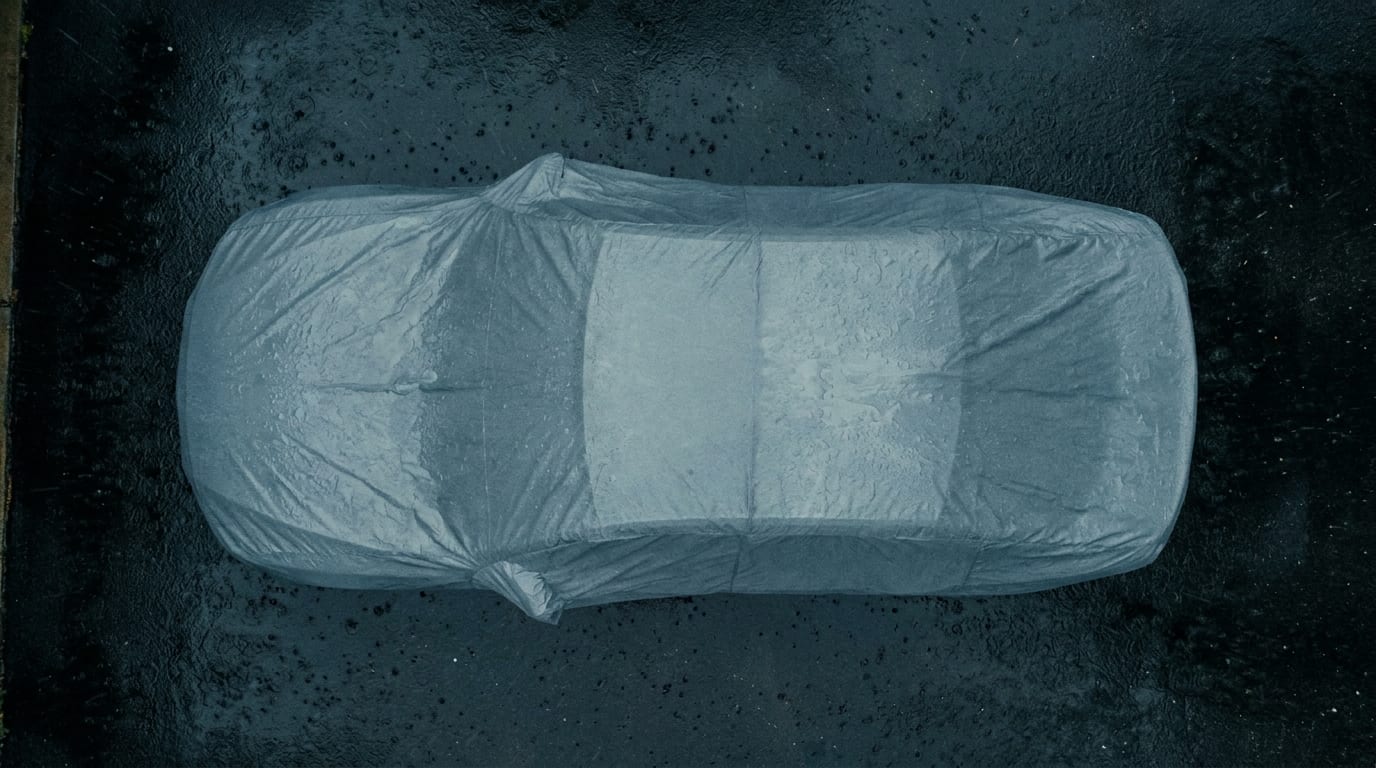
A lot of car cover advice gets written for places that get occasional heavy rain, then sun to dry everything out. Seattle isn't that. It's low-grade drizzle and high humidity, day after day, sometimes for weeks without a real dry stretch. That pattern is what grows mold and mildew and gives you a musty interior if the cover you're using can't breathe.
Here's the part that trips people up: a non-breathable vinyl cover is worse than no cover at all in this kind of climate. It traps moisture right against the paint, and that moisture just sits there since it has nowhere to go. You end up creating a little greenhouse of damp air on top of your minivan every single day.
Even on a gray, overcast afternoon, UV is still working on your paint and rubber seals. It's slower than direct sun, sure, but it adds up over months of daily outdoor parking. Add in fir sap, pollen, and bird debris from all the trees lining Seattle driveways, and you've got a surface under constant low-level assault, rain and sun both.
And most minivans aren't garage queens. They're hauling kids, groceries, and soccer gear, which means they're parked in driveways or on the street, not tucked away indoors. For that reality, outdoor-rated protection isn't a nice-to-have. It's the whole point.
Key Features to Check Before Buying

If you're shopping cover specs and your eyes start to glaze over, here's what actually matters:
- Waterproof and breathable fabric. Look for a layered woven fabric with a waterproof coating and micro-porous structure, so water beads off the outside while moisture vapor from underneath can still escape. This single spec is the difference between a cover that works in the Pacific Northwest and one that doesn't.
- Taped or sealed seams, especially around the roof and hood. Those are the spots where water pools and finds its way through if the stitching isn't sealed.
- A snug fit system, elastic hem, cable and buckle, whatever the model uses, built to handle the wind gusts that come with Pacific Northwest storm fronts.
- A soft inner lining. You'll be pulling this cover on and off more often than someone in a drier climate, since rain means more hand-drying and adjusting. A rough lining will scuff your clear coat over time.
- UV inhibitors or reflective properties, for the stretches of actual sun Seattle does get in summer. Don't skip this just because you associate the city with rain.
Honestly, the waterproof-plus-breathable combination is the one feature most buyers get wrong. People assume "waterproof" automatically means "good," but a fully sealed, non-breathable cover can trap more moisture than it keeps out. You want both properties at once, not just one. For a deeper look at this trade-off, the guide on waterproof car covers breaks down what the coatings and fabric layers are actually doing.
Comparison Table: Cover Options for Rainy-Climate Minivan Owners
Not every outdoor cover is built for the same job. Here's how the tiers typically stack up for someone asking, can you recommend a good car cover for a minivan parked in a rainy climate like Seattle, versus someone who just needs occasional coverage.
| Feature | Basic Cover | Deluxe / Platinum-Tier Cover |
|---|---|---|
| Waterproofing | Light rain and moisture resistant | Fully waterproof with taped seams |
| Breathability | Often sacrificed for low cost | Balances waterproofing and airflow |
| Wind security | Elastic hem only | Grommets, gust strap compatible |
| Fit type | Universal or semi-custom | Custom-fit to minivan body lines |
| Best use | Occasional outdoor parking | Daily outdoor exposure in wet climates |
If your van only sits outside once in a while, a basic cover might genuinely be enough. But for Seattle-style daily exposure, driveway or street parking, rain most days of the week, the deluxe or platinum tier is the one that actually holds up. The outdoor car covers category page is a good place to see what separates those tiers in person before you commit to one.
Getting the Fit Right for Your Specific Minivan
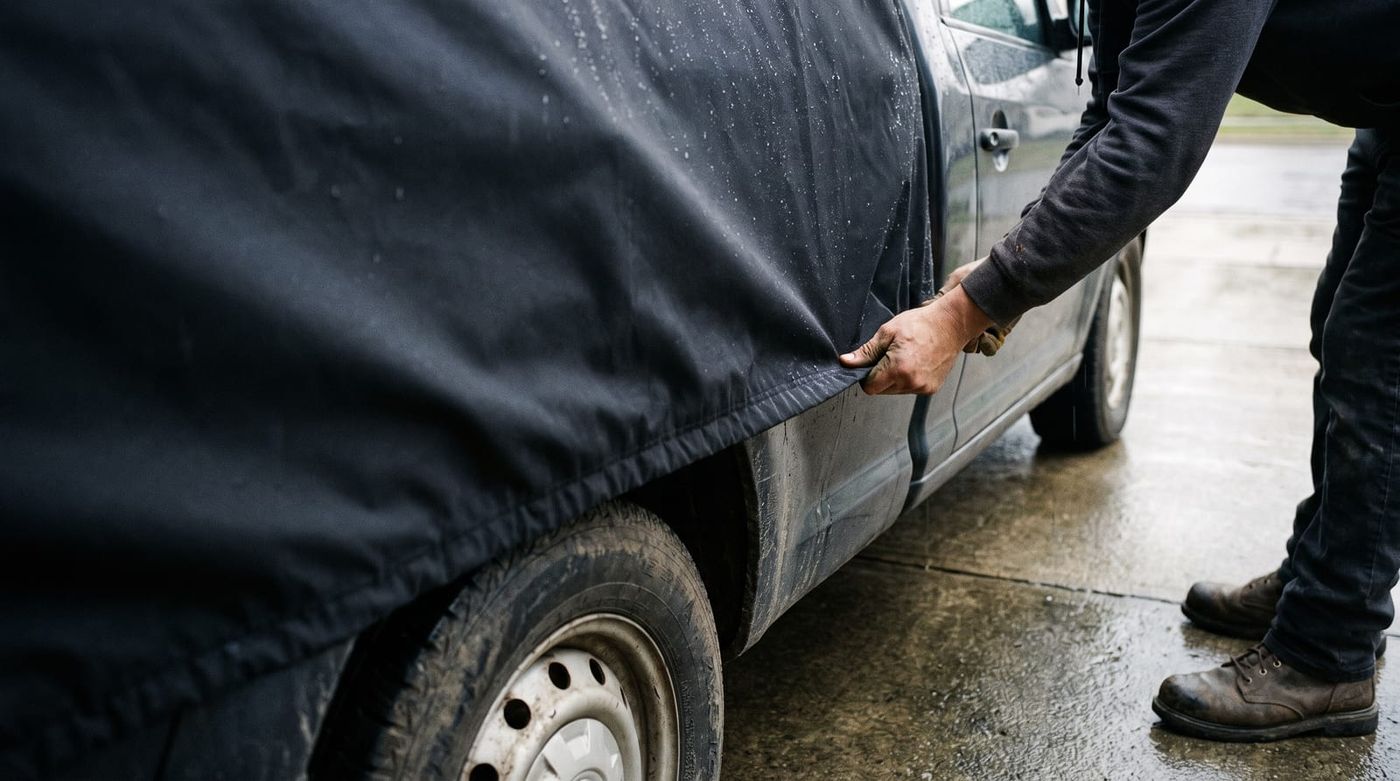
Minivans are trickier to cover than sedans, and people underestimate this. Sliding door tracks, roof rails, rear liftgate curves, they all vary a lot between an Odyssey, a Sienna, a Pacifica, and a Grand Caravan. A cover cut for one body style can bunch up or leave gaps on another, and in a climate where water is constantly looking for an entry point, those gaps matter.
Check a proper sizing and fit guide before you buy instead of just measuring bumper to bumper and guessing. A loose universal cover is going to flap around in the wind, and once it starts moving, rain wicks in at every seam. That's the exact opposite of what you need in a wet climate.
The faster route, honestly, is to skip generic sizing charts altogether and go straight to the brand-specific fit pages: Honda van covers, Toyota van covers, Chrysler van covers, or Dodge van covers. They're built around the actual body lines of each model, so you're not stuck cross-referencing dimensions by hand.
Installing and Maintaining a Cover in a Wet Climate
Getting the right cover is half the job. How you use it day to day is the other half, and this is where a lot of Seattle owners quietly mess things up.
Dry the van off before you cover it, if you can. Throwing a cover over a wet vehicle just seals that moisture in underneath, which defeats the purpose of buying a breathable fabric in the first place. If you're parking in an exposed driveway or on the street, use wind straps or gust straps to keep the cover from shifting during storms. A cover that's flapping around all night isn't protecting much of anything.
Clean the cover periodically. This is the single biggest complaint among owners in wet climates: constant damp exposure builds mold and mildew on the fabric itself, not just under it. The guide to cleaning a car cover walks through how to do this without damaging the waterproof coating, which matters since the wrong detergent can strip it right off.
And before you fold it up and store it, let the cover fully air dry. Packing away a damp cover is basically asking for a mildew smell baked into the fabric by the next time you pull it out. For a broader rundown on running a cover outdoors year-round, from wind to UV to rain, the guide to using a car cover outdoors covers the routine in more depth.
Bottom Line and Next Step
So, can you recommend a good car cover for a minivan parked in a rainy climate like Seattle? A waterproof, breathable, custom-fit outdoor cover with real wind security is the answer, and it's not really close. Anything cheaper or looser is going to let moisture in somewhere, whether that's through the seams, the fit, or just trapped condensation.
If you're still deciding between tiers, warranty coverage is a reasonable tiebreaker. A cover backed by solid long-term coverage tells you the maker expects it to hold up to daily outdoor use, not just the occasional dry weekend.
Browse cover options by your specific van before you buy, rather than guessing at a universal size. It's worth the extra five minutes, and your paint will thank you by October.






