Our Direct Recommendation
Can you recommend a good car cover for a minivan parked in a coastal area with salty air? Yes. Go with a custom-fit outdoor cover made from a multi-layer, breathable woven polyester that's rated for UV and salt/corrosion resistance, and make sure it has a snug elastic hem plus a real strap or grommet system. That combination is what actually holds up against shoreline wind and salt film, not just sun.
A universal-fit cover or a thin single-layer one will let you down fast here. Loose fabric traps moisture right up against salt residue on the paint, and wind works the cover loose night after night until it's flapping instead of sealing. Both problems speed up corrosion, not slow it.
Below, we've broken covers into three tiers by material, waterproofing, and wind security, so you can match the cover to how exposed your actual parking spot is. A driveway three blocks from the water isn't the same as a carport twenty feet from the tide line. The goal isn't shade. It's a cover that sheds salt spray and rinses clean before that film ever gets the chance to work into the fabric or the clear coat underneath.
Why Salty Coastal Air Is Tougher on a Minivan (and Its Cover) Than Inland Storage

Salt in the air doesn't need rain to do damage. It settles as a fine film on every horizontal surface, and once humidity hits it, that film turns corrosive. Clear coat starts to oxidize faster, paint chalks sooner than it would inland, and sliding door tracks and lower body panels, sitting closer to spray and road splash, take the worst of it.
The cover's hardware isn't immune either. Grommets, buckles, and cable locks are usually metal or metal-coated, and salt plus humidity is exactly the recipe that pits and rusts those parts if they're never rinsed. A cover that looked fine in April can have crusty, stiff grommets by August.
Here's the part people miss: a non-breathable cover can be worse than no cover at all in this climate. It seals condensation in against a salt-filmed surface, and that trapped moisture just sits there working on the paint. Breathability isn't a nice-to-have at the coast, it's the difference between a cover that protects and one that quietly cooks the finish underneath it.
Wind is the other coastal variable people underestimate. Shoreline gusts are more constant and more erratic than typical inland wind, and they'll work a loose cover free of its mounts within a few weeks. That's why strap and grommet security matters just as much as the fabric itself, something we cover in more detail in our guide to using a car cover outdoors.
Comparing Cover Types for Coastal Minivan Parking
Not every "outdoor" cover is built for salt air specifically. Here's how the three realistic tiers stack up for someone asking, again, can you recommend a good car cover for a minivan parked in a coastal area with salty air, when their van actually lives outside full time near the water.
| Cover Type | Fabric/Material | Salt & UV Resistance | Breathability | Wind Security | Best Use Case |
|---|---|---|---|---|---|
| Basic/economy outdoor cover | Light woven or non-woven fabric | Limited | Decent | Basic elastic hem only | Mild inland climates, not coastal |
| Mid-weight multi-layer woven cover | Multi-layer woven polyester | Moderate | Breathable | Elastic hem plus tie-down grommets | Occasional coastal exposure |
| Premium custom-fit coastal-grade cover | Heavy multi-layer woven fabric engineered for marine air | High | Fully breathable | Integrated cinch straps or cable/grommet kit | Daily coastal outdoor storage |
The basic tier is fine for a van garaged most nights that occasionally sits out. It's not built for salt film and constant wind, and it'll show wear within a season near the coast.
The mid-weight tier is a reasonable middle ground if your minivan is only coastal part-time, say a beach house you visit on weekends. It has real grommets for tie-downs and decent salt resistance, but it's not engineered for daily marine exposure.
If your van parks outside every day within smelling distance of the ocean, the premium tier isn't overkill, it's the realistic minimum. That's the level of waterproof car cover construction that actually holds up to daily salt spray instead of just the occasional beach trip.
Key Features to Confirm Before Buying

A few specifics separate a cover that lasts from one you'll be replacing by next summer:
- Woven outer shell, not plastic or vinyl. Vinyl cracks with UV exposure and traps moisture against the paint, which is the opposite of what you want in salt air.
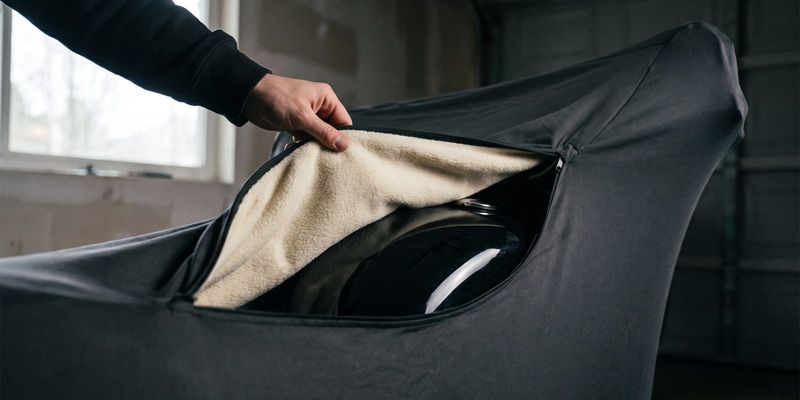
- Soft inner lining. Fleece or similar lining keeps blown sand and grit, both common near beaches, from grinding into the clear coat every time the wind shifts the cover slightly.
- A real windproof retention system. Elastic hem alone won't cut it. Look for grommets paired with a cable lock or gust straps, since coastal wind is a bigger factor here than in most inland parking situations.
- High breathability rating. This matters more in salt air than in a dry inland climate, because trapped humidity on a salt-filmed surface accelerates corrosion fast.
- Seam-sealed stitching at the hood and windshield. These are the highest-exposure points on a minivan cover, and water-resistant seams here keep spray from working its way underneath.
Check these before price. A cheaper cover that fails one of these tests will cost more in paint correction down the line than the premium option would have upfront.
Getting the Fit Right for Your Specific Minivan
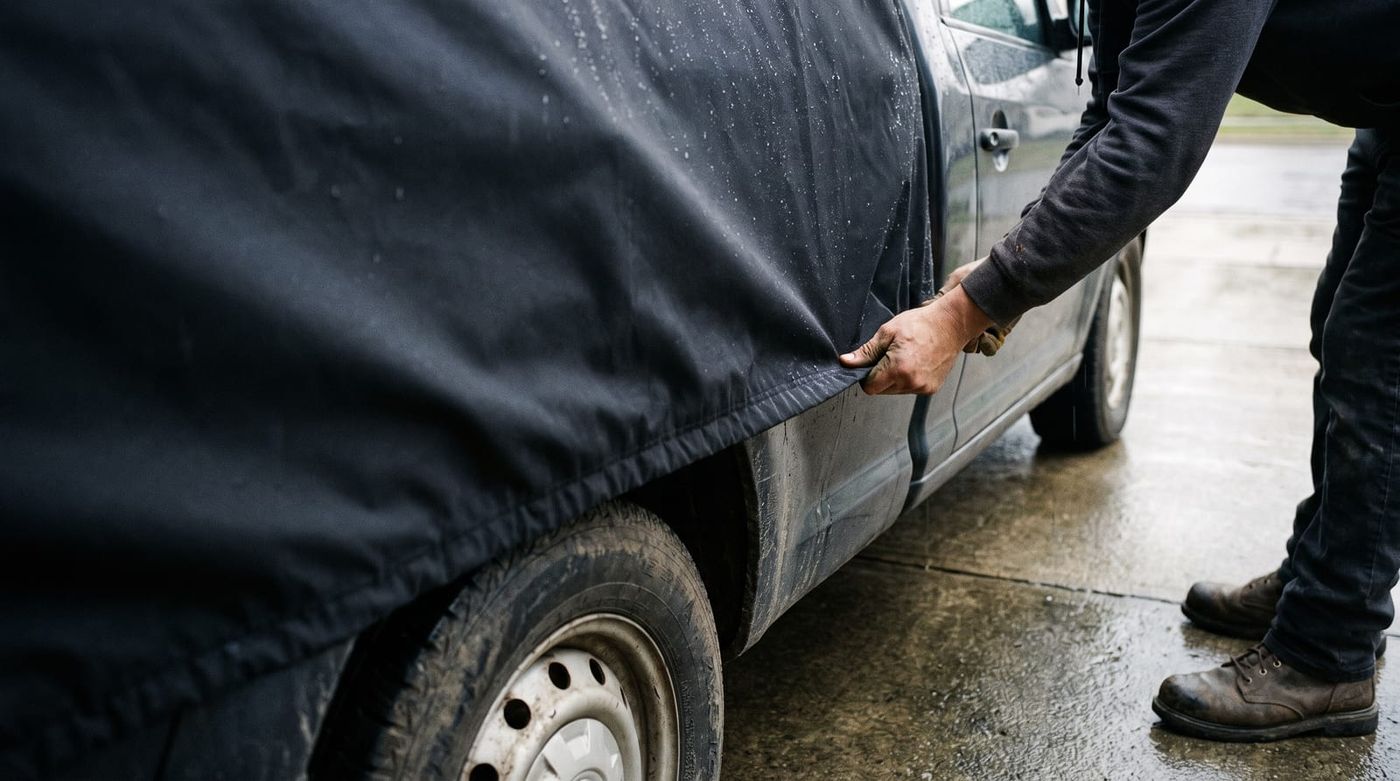
Fit matters more at the coast than it does in a dry garage. A loose universal cover flaps in shoreline wind, and every flap is an opportunity for salt spray to reach the body panels it's supposed to be blocking. Custom-fit covers sit tight against the body, which means less fabric movement and less exposed surface overall.
Minivans aren't interchangeable here either. A Honda Odyssey, Toyota Sienna, Chrysler Pacifica, and Dodge Grand Caravan all have different rooflines, mirror placements, and body lengths, and a cover cut for one won't drape correctly on another. If you're not sure how to measure your specific van, our sizing guide walks through it before you commit to a size.
Small details like mirror pockets and antenna cutouts matter more than they sound. A cover without them has to stretch or gap around those points, and that gap is exactly where coastal wind gets a grip and starts working the whole cover loose. You can browse model-specific options for Honda, Toyota, Chrysler, and Dodge vans directly if you already know your make.
Keeping the Cover (and Minivan) Salt-Free Long Term
Rinse the cover with fresh water on a schedule, not just when it looks dirty. Salt film is invisible for a long time before it's visible, and by the time you can see white residue, it's already working into the fibers.
Never fold a salty cover away for storage, even temporarily. Dried salt left in the fabric accelerates fiber breakdown and gives mildew something to grab onto, so if you're pulling the cover for a trip, rinse it first.
Cleaning itself doesn't need to be complicated: mild soap, a soft brush, and a full air-dry before you put it back on or store it. Our cover cleaning guide walks through the exact steps if you want specifics on products and technique.
Worth building into that same routine: check the straps, grommets, and any cable lock hardware for early corrosion, like pitting or stiffness. Catching that early is usually the difference between a cover that lasts several seasons and one that fails at the hardware long before the fabric wears out.
Bottom Line and Next Step
So, can you recommend a good car cover for a minivan parked in a coastal area with salty air? A custom-fit, multi-layer, salt and UV-resistant woven cover with a genuine strap or grommet retention system, paired with a routine rinse schedule, is the real answer.
Match the tier to how your van actually lives outside. Weekend coastal trips can get by on a mid-weight cover. Daily outdoor storage within reach of salt spray calls for the premium tier, full stop, not the basic option that's priced to look tempting.
If you want to skip the guesswork, a quick way to narrow things down is to search your exact year, make, and model and see what's built to fit. Either way, it's worth taking a few minutes to look over your options and pick a cover that's actually built for where your van parks, not just one that looked fine in a product photo.