What Car Cover Should I Buy for Winter Storage in an Unheated Garage?
Published
What Car Cover Should You Use for Winter Storage in an Unheated Garage?
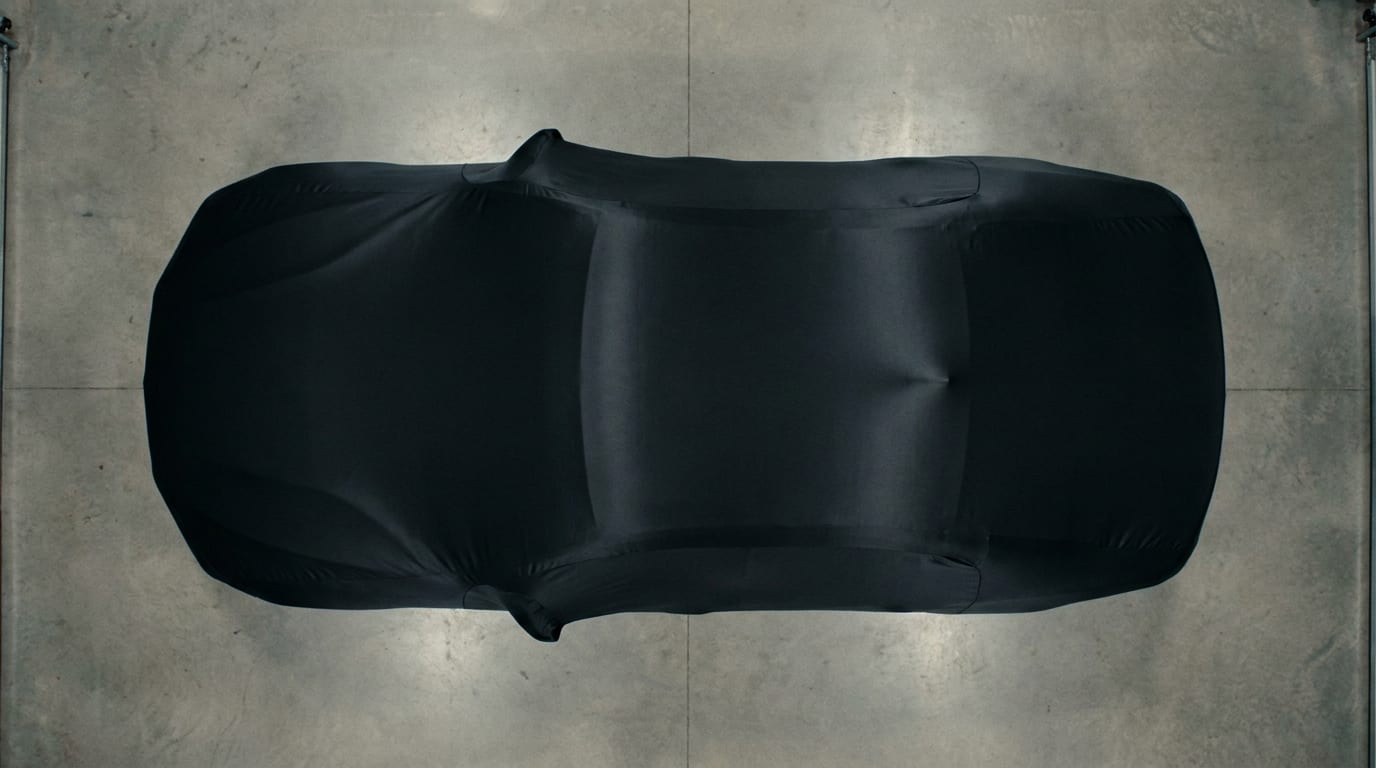
If you're asking "what car cover should I buy if I'm storing my car for the winter in an unheated garage," the short answer is a breathable, soft-lined indoor car cover made from a knit or flannel-style fabric. Skip the waterproof outdoor cover. Skip the plastic tarp from the hardware store, too. The reason comes down to one thing: unheated garages still swing in temperature along with the outside air, and that swing creates condensation. A non-breathable waterproof coating traps that moisture right against your paint instead of letting it evaporate off.
There's an exception worth flagging before you buy anything. If your garage has drafts, a dirt floor, gaps under the door, or any path for snow or blowing moisture to get in, a lighter outdoor-rated cover with breathable waterproofing might serve you better than a true indoor cover. The indoor recommendation assumes a reasonably sealed, dry space.
One more clarification: this is about stationary, multi-week or multi-month storage. If you're still driving the car through winter and just need something for overnight protection between trips, that's a different situation with different cover needs.
Why an Unheated Garage Still Puts Your Paint at Risk
People assume "indoors" means "safe," and it mostly does, just not completely. An unheated garage isn't climate controlled. It cools and warms with the outside temperature, and metal and glass react to that faster than you'd think. Overnight, when the air cools, moisture condenses on the cold hood and roof, the same way a cold glass of iced tea sweats on a humid day. That moisture sits there until something warms it back up or wicks it away. Over a winter of storage, that's a lot of condensation cycles against your clear coat.
Dust is the other quiet threat. A car sitting for weeks collects a fine layer of grit, and grit plus an uncovered panel plus the occasional bump is how you get hairline scratches you didn't notice happening. A soft-lined cover solves this; a cover with rough or non-lined fabric can actually cause the exact scratching you're trying to prevent.
Garages are also where rodents go when it gets cold. Mice and other pests look for warm, undisturbed spots, and the underside of a car or the gap behind a wheel well is exactly the kind of place they like. A snug-fitting cover with secured hems closes off a lot of those entry points. A loose tarp, by contrast, practically invites nesting underneath it.
And don't forget what else lives in your garage. Bikes leaned against a wall, a rake that falls over, a bin of holiday decorations pulled down from a shelf. All of it ends up near your car eventually, and a cover is cheap insurance against the scuffs and scrapes that come from garage clutter doing what garage clutter does.
Indoor vs. Outdoor Covers: Why the Distinction Matters in a Garage
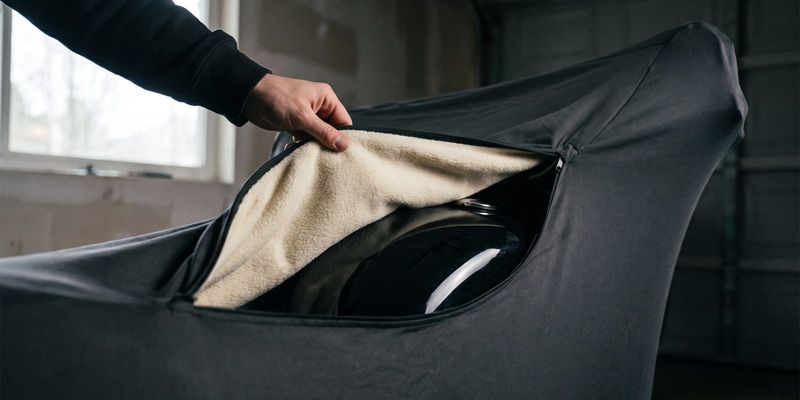
Indoor covers are built from lightweight, breathable materials like flannel or soft knit fabric. They're not waterproof, and they're not meant to be. Their job is blocking dust and preventing the kind of light surface scratching described above. You can read more about how these work in this guide to indoor car covers.
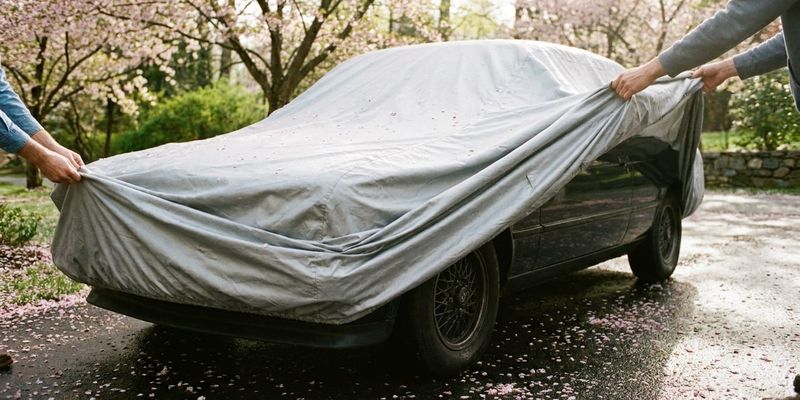
Outdoor covers go the opposite direction. They're treated with waterproof or water-resistant coatings so they can handle actual rain and snow. That coating is great outside, where moisture needs to be kept out entirely. Inside a sealed, dry garage, it works against you: it blocks airflow, which means any humidity that does form has nowhere to go. It just sits against the car.
The decision rule is pretty simple. Fully enclosed, dry, unheated garage: go indoor. Garage with drafts, an open carport-style bay, or any real exposure to blown-in snow: go with a breathable outdoor cover instead. Our indoor car cover guide walks through the setup in more detail if you're not sure which category your space falls into.
What never belongs in this conversation is plastic sheeting or a generic hardware-store tarp. It has no breathability at all, and it can actually scratch paint wherever it rubs against a panel in a draft. We've covered why a tarp isn't a real substitute for a car cover if you want the longer version of that argument.
Key Features to Look For in a Winter Garage Storage Cover
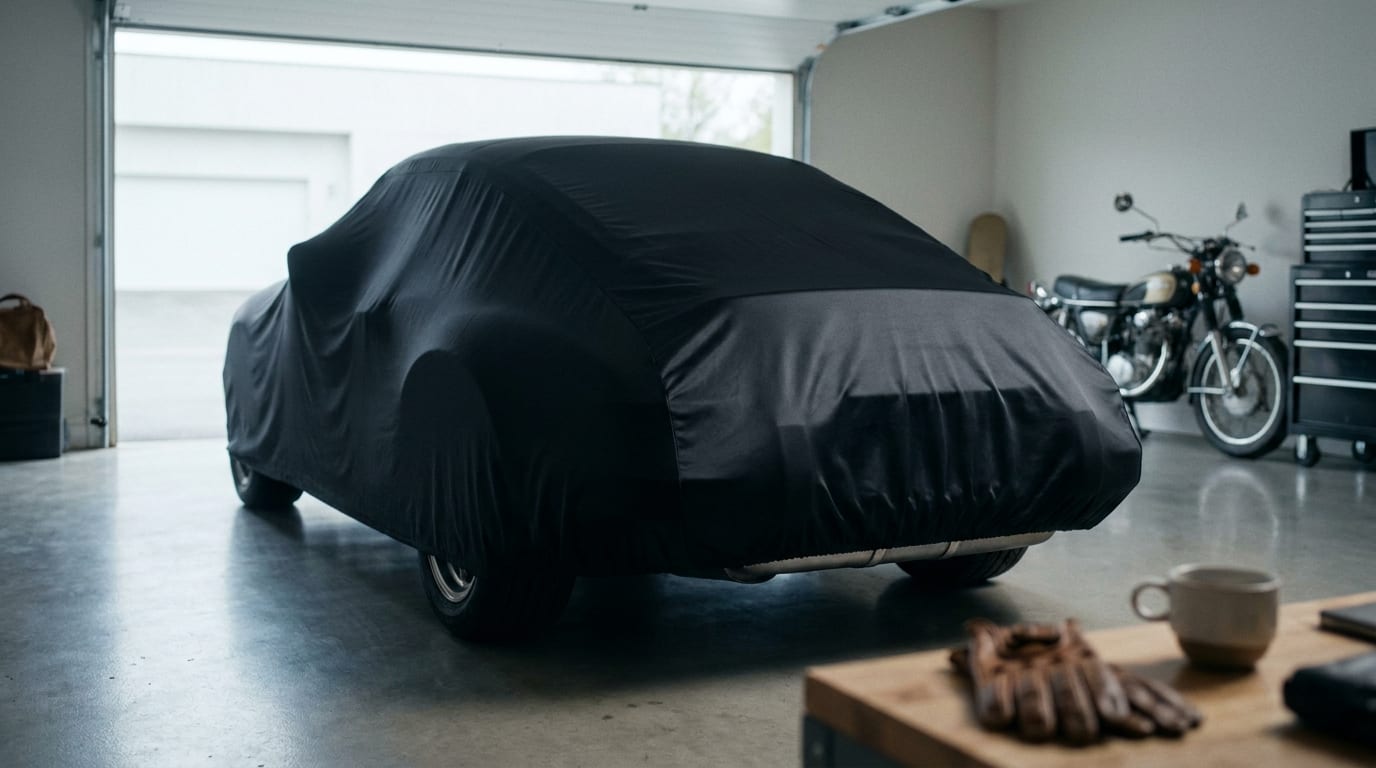
Not all indoor covers are built the same, and a few features matter more than people expect once a car's been sitting for a couple of months.
- Breathable fabric. This is the whole point. Moisture vapor needs a way out, or it just condenses right back onto the paint.
- Soft interior lining. Fleece or napped fabric at the hood, roof, and trunk keeps repeated contact from turning into fine scratches over time.
- A snug, vehicle-specific fit. A loose universal cover sounds like a budget-friendly shortcut, but excess fabric flaps, traps pockets of debris against the paint, and can shift enough to expose a panel. A custom-fit car cover built for your exact make and model avoids all of that.
- Secure closures. A cinching strap, elastic hem, or grommets matter more than people think, especially if there's any airflow in the garage that could lift a loose cover over months of sitting still.
If you're not sure what size you actually need, it's worth checking a sizing guide for car covers before you order. Getting the fit wrong is the single most common reason people end up disappointed with a cover.
Prepping Your Car Before You Cover It for Winter

The cover is only half the job. What you do before you put it on matters just as much.
Wash the car and let it dry completely first. Sealing in surface moisture under any cover, even a breathable one, defeats the purpose. You'll end up with water spotting or, worse, mildew forming in spots the fabric touches.
Pull off anything loose that could snag or puncture the fabric over months of storage. A loose antenna mount or an aftermarket add-on that isn't flush with the body is exactly the kind of thing that'll poke a hole in a cover by March.
Check the floor under the car, too. If your unheated garage has a slab prone to groundwater seepage or just stays damp in one corner, no cover is going to fully compensate for moisture rising up from below. And when you drape the cover on, make sure it clears the ground by a few inches on all sides. Fabric that touches damp concrete will wick that moisture up into the lower edge of the cover, which is the opposite of what you want.
Common Mistakes That Damage Paint During Winter Storage
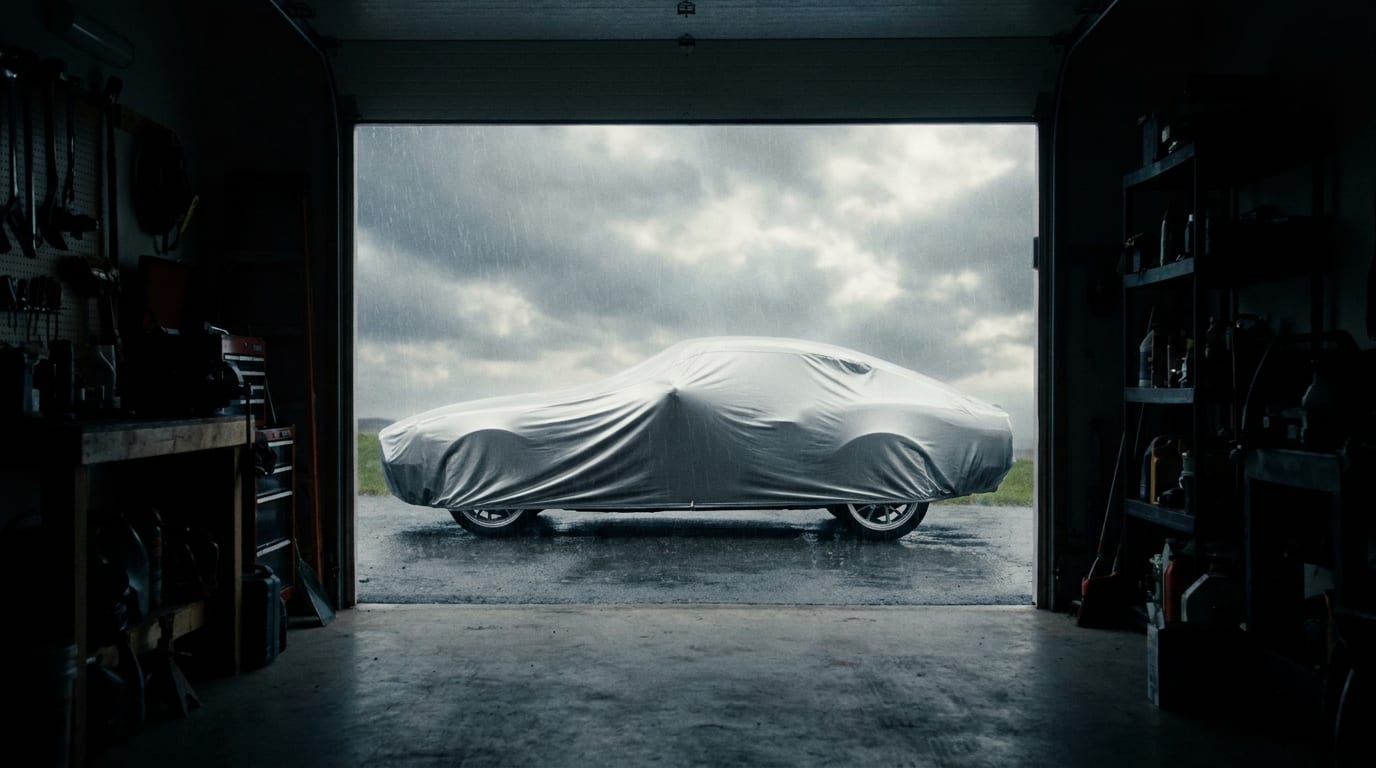
A few mistakes show up again and again, and most of them are avoidable.
Using a plastic tarp instead of a real cover tops the list. No breathability, and it can abrade paint wherever wind pushes it against a panel.
Covering the car while it's still wet, or has snow or ice sitting on it, is another one. That just seals moisture in overnight, right when temperatures are dropping and condensation is most likely to form.
A universal-fit cover that's too loose causes problems too. It shifts, bunches, and exposes panels to dust and the occasional bump from something stored nearby.
And the mistake that costs people the most: skipping a cover entirely because "it's already indoors." An unheated garage isn't a climate-controlled room. Dust still settles. Condensation still forms. Pests still show up looking for shelter. None of that goes away just because the car isn't sitting outside.
Get the Right Fit for Your Winter Storage Cover
So, to recap: a breathable, soft-lined indoor cover is the right call for a sealed, dry, unheated garage. If your space has drafts, an open bay, or any real snow exposure, step up to a breathable outdoor cover instead. Either way, fit matters more than most people expect, so it's worth double-checking sizing details for your specific vehicle before you check out.
Once winter's over, keeping the cover itself clean matters too, so don't skip proper care and cleaning between storage seasons.
If you're getting your car ready to sit for the season, take a few minutes to browse indoor and custom-fit cover options sized to your exact make and model. It's a small step now that saves you from paint damage you won't notice until spring.