What Car Cover Should You Buy for a Minivan on City Street Parking?
Published
The Quick Answer: What to Buy
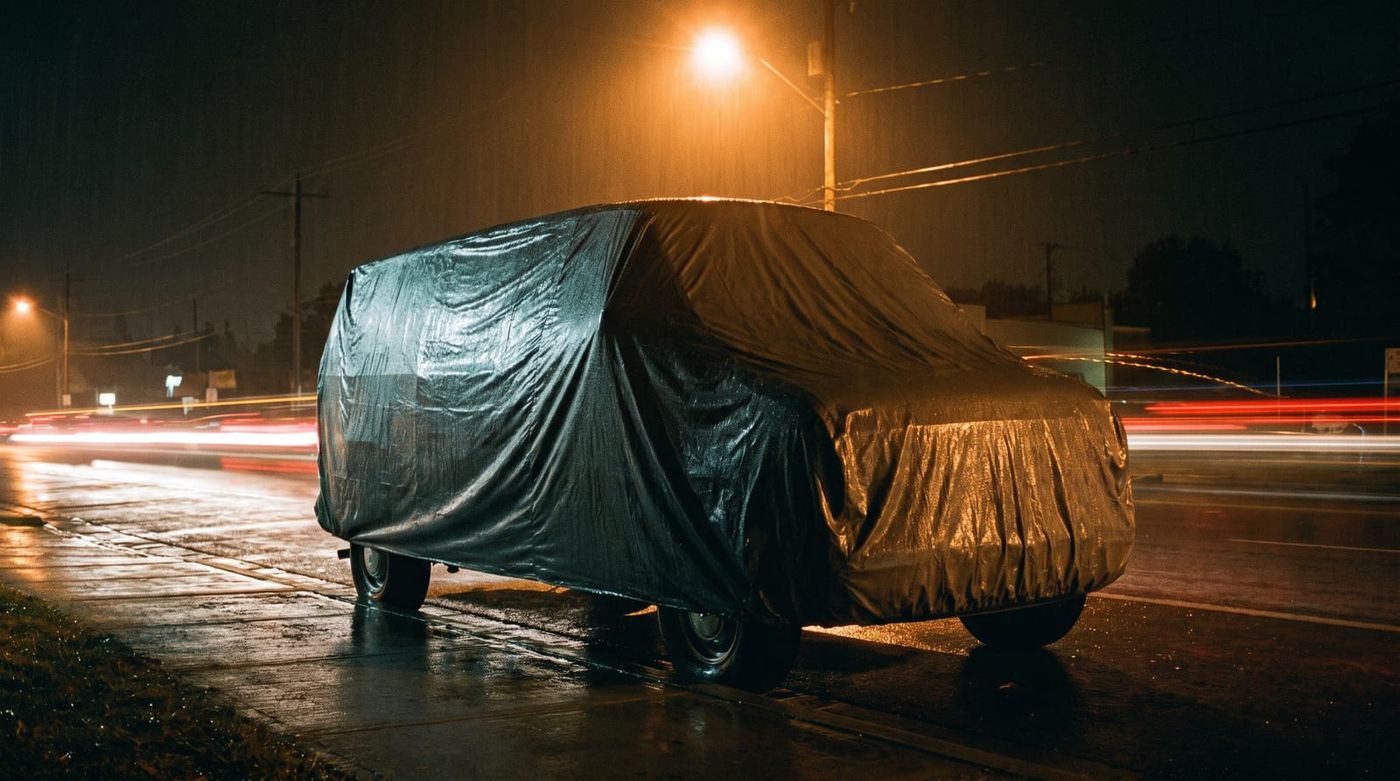
If you've typed "I have a minivan and live in a city with lots of street parking, what car cover should I buy?" into a search bar, here's the short version: get a custom-fit, waterproof, UV-resistant outdoor cover with reinforced security grommets built in for a cable lock. Street parking means your minivan gets full sun, daily grime, and zero garage backup, so the cover has to do more work than one sitting in a driveway.
A universal (non-custom) cover is the cheaper fallback, and it'll technically keep rain off. But it sits loose, flaps in wind, and rubs against the clear coat in ways a fitted cover won't, which matters a lot more on a busy block than in a quiet driveway.
Here's how the main cover types stack up for city street parking specifically:
| Cover Type | Best For | Waterproofing Level | UV Protection | Security Grommets/Cable Lock | Ideal Parking Situation |
|---|---|---|---|---|---|
| Basic Outdoor | Occasional light rain, short-term use | Low to moderate | Basic | Rarely included | Driveway, infrequent street parking |
| Waterproof/All-Weather | Daily street parking, rain, humidity | High | Strong | Sometimes included | Curbside parking, no garage access |
| Premium + Security | Daily street parking in dense, high-traffic areas | High | Strong | Built-in, reinforced | Urban blocks with heavy foot traffic or theft risk |
This table isn't pointing you to one specific product. It's about matching the cover category to your actual parking situation, since "parked on a city street every day" calls for a different tier than "parked in a garage on weekends."
Why Street Parking Changes What You Need

No garage means your van sits in full sun for hours, every day, with nothing between it and the elements. That fades paint over time and wears out thin fabric covers a lot faster than anything stored indoors or tucked under a carport.
City streets add their own layer of mess on top of that. Tree sap, bird droppings, exhaust soot, road grime, it all lands on the van and just sits there until you wash it off or a cover intercepts it.
Then there's the human factor. A minivan parked at the curb gets brushed by pedestrians, nosed by dog walkers, bumped by shopping carts, and clipped by doors from whoever parallel parked six inches away. Driveway-parked cars mostly avoid that kind of incidental contact. Street-parked ones don't.
Theft and tampering risk runs higher in dense areas too. A cover with lockable grommets isn't a security system, it won't stop a determined thief, but it's a visible deterrent that says "this isn't an easy target." Combine that with a cable lock installed through the cover's grommets and you've added a real speed bump for anyone casing the block.
And since you're driving the thing daily, not storing it for winter, the cover needs to go on and off fast. A heavy, bulky cover built for long-term indoor storage is the wrong tool here. You need something you'll actually use every single day, not something that ends up folded in the trunk because it's a hassle.
Features That Matter Most for a Street-Parked Minivan
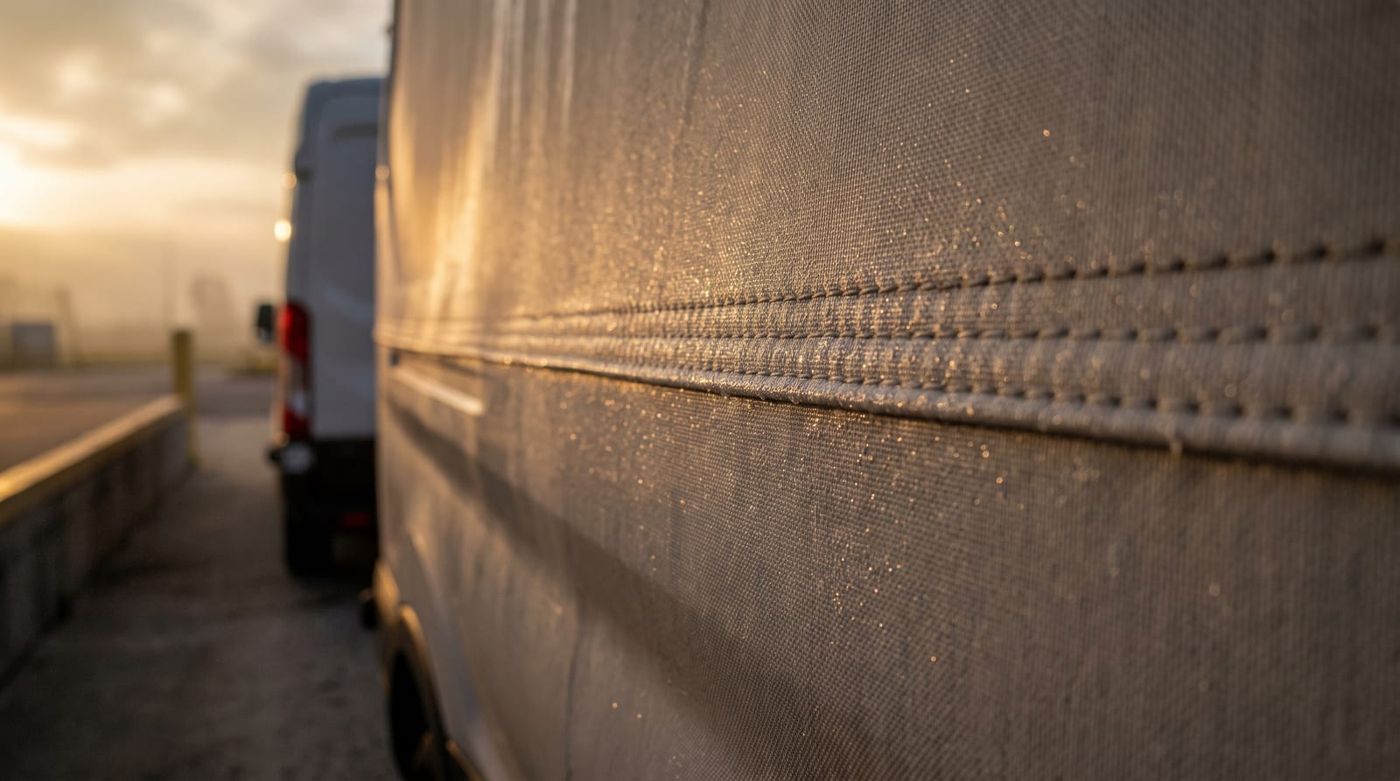
A few features separate a cover that works on a city street from one that just works on paper.
Multi-layer waterproof fabric is the baseline. It needs to shed rain and resist humidity without trapping moisture underneath, because trapped moisture against paint is its own slow-motion problem.
UV-blocking treatment matters just as much, maybe more. Your van's going to sit in direct sun for hours with no tree canopy or garage roof to help out, so a cover without real UV protection is going to degrade fast and let the sun do its damage anyway.
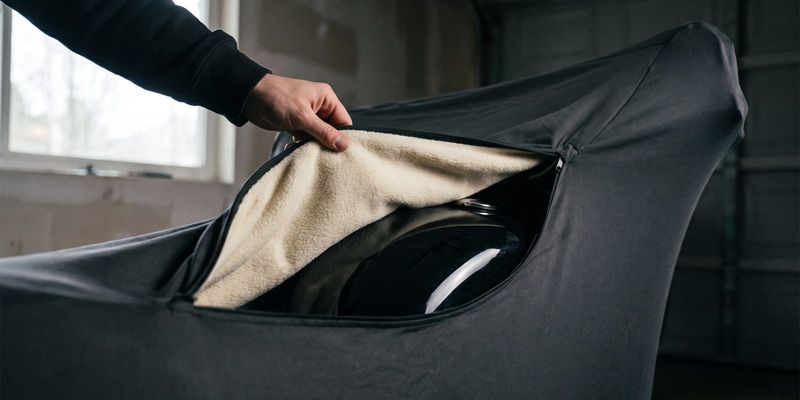
Soft inner lining at the hood, roof, and mirrors cuts down on micro-scratches, the kind caused by pedestrian contact or just wind flutter rubbing fabric against paint over weeks. Built-in grommets positioned for a cable lock are worth having from day one rather than retrofitting. Reinforced loops for gust straps matter in cities too, since buildings create wind tunnels that can catch a loose cover and lift it right off.
Last thing: look for a cover that folds down small with its own storage bag. If you're using this van daily for school runs and errands, the cover's getting put on and taken off constantly. A cover that's annoying to fold is a cover that stops getting used by week two.
Custom-Fit vs. Universal Fit for Minivans
This is where the real difference shows up. A custom-fit cover follows your minivan's actual body lines, the sliding doors, the roofline, the mirrors, which means it doesn't flap loose or snag on whatever's nearby on the sidewalk.
Universal covers cost less, no argument there. But they sit baggy, which means more wind noise at night, more fabric rubbing against the clear coat, and a real chance of partial blow-off on a gusty corridor between buildings. For a car that sits in one spot for eight hours while you're at work, that loose fit adds up to real wear.
Since you're covering and uncovering this van constantly, a custom fit also saves you time at the curb. Less excess fabric means less wrestling with it in the rain while your coffee gets cold.
One more thing worth doing before you buy: check the sizing and fit guide for your exact model. Minivan dimensions vary more than you'd think, sliding door height, roof rack clearance, overall length, and a cover that's "close enough" often isn't close enough once it's actually on the car.
Matching the Cover to Your Minivan's Make
Minivans aren't all built the same, even though they look similar from across the street. A Honda Odyssey, Toyota Sienna, Chrysler Pacifica, and Kia Carnival each have different roofline curves and body heights, so fit accuracy really does vary by brand.
Sliding doors and roof rails are the usual trouble spots. A generic one-size cover tends to gap right at the sliding door track or snag on roof rack hardware, which is exactly why custom fit matters more for minivans than it does for a sedan with a simpler body shape.
If you're trying to figure out which cover actually fits your van, it's worth going straight to the brand page. Honda minivan covers, Toyota minivan covers, Chrysler minivan covers, and Kia minivan covers are good starting points if your model's one of those four.
Installing and Securing Your Cover at the Curb
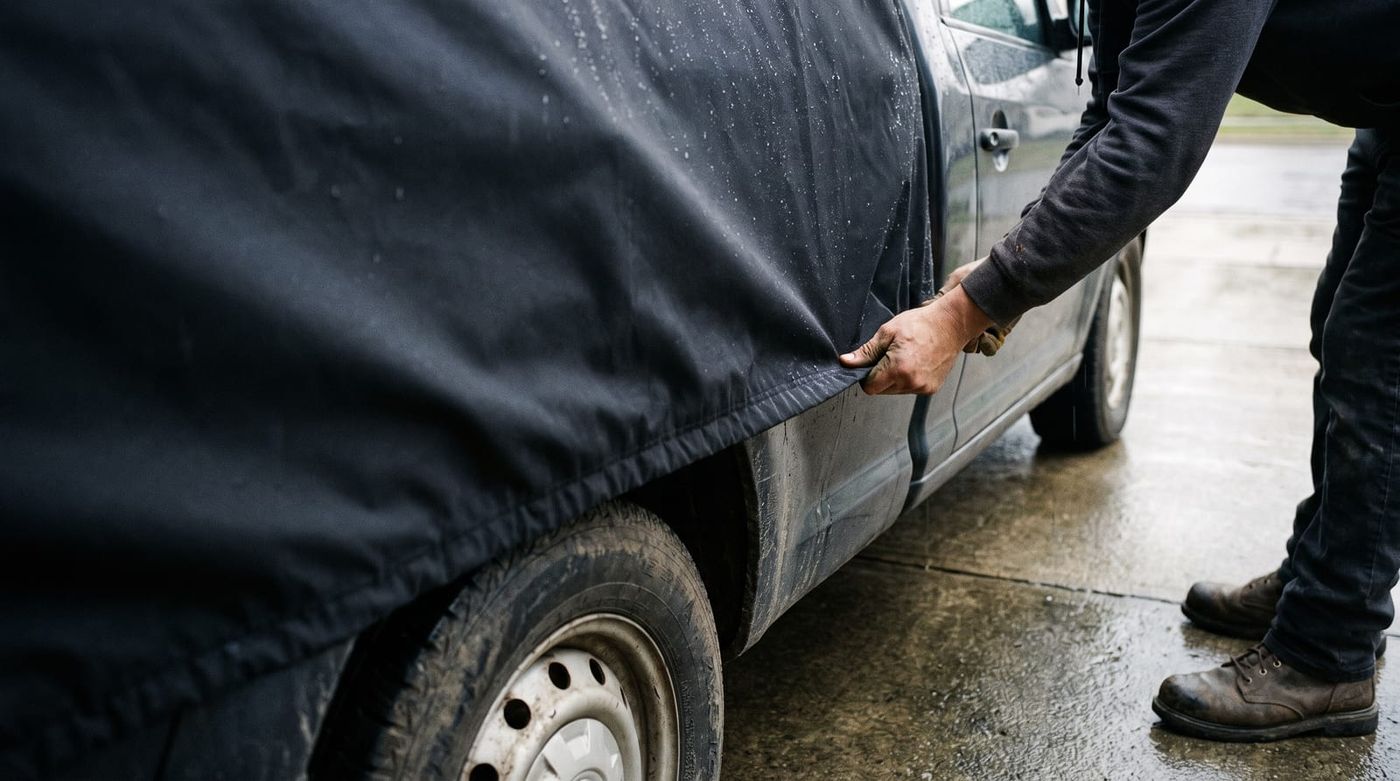
The daily routine should be simple: park, cover goes on, cable lock threads through the grommets and around something fixed, a wheel or a mirror mount works fine. That's it. If it takes longer than a couple minutes, you won't do it consistently, and a cover you don't use isn't protecting anything.
On open or windy blocks, near intersections, waterfronts, or buildings tall enough to funnel wind, add gust straps under the mirrors and at the bumper. That extra anchoring keeps the cover from shifting or lifting overnight, which is the single most common reason covers end up half off by morning.
Street-parked covers also get dirtier faster than driveway ones. More exhaust residue, more bird droppings, more general grime. Letting that sit for weeks can actually mar the paint underneath through the fabric, so cleaning the cover periodically isn't optional, it's part of the job.
Keep the storage bag in the cargo area of the van itself. Sounds minor, but if the bag's at home in a closet, you won't bring the cover with you, and the whole system falls apart.
Bottom Line and Next Step
So, to circle back to the original question: a custom-fit, waterproof, UV-resistant outdoor cover with security grommets, sized specifically to your minivan model, is the right call for daily street parking. It's not the cheapest option on the shelf, but it's the one built for the conditions you're actually dealing with.
One more thing to check before buying: the warranty. A cover doing daily duty on a city street is working harder than one that spends its life in a garage, so a solid warranty matters more here, not less.
If you're still narrowing things down, it's worth browsing van covers by category or looking up your exact minivan model to confirm fit before you buy. And if you found this useful, stick around, there's more practical cover advice where this came from.