
What Car Cover Should You Buy for a Sports Car in Salty Coastal Air?
Published
The Quick Answer
If you have a sports car and live near the coast, buy a custom-fit outdoor cover made from a breathable, multi-layer waterproof fabric, with UV protection built in and a soft fleece lining against the paint. Skip anything generic. So if you're asking "I have a sports car and live in a coastal area with salty air, what car cover should I buy," the short version is: fit and fabric quality matter more here than they would inland, because salt air doesn't wait around for a design flaw to expose itself.
Universal covers are the usual problem. They're cut loose, so they trap moisture and salt residue right against the clear coat instead of letting it breathe off. On an inland car, that's a minor annoyance. On a coastal car, it's a slow-motion paint problem.
Here's how the main cover types stack up for this specific situation:
| Cover Type | Salt/Moisture Resistance | UV Protection | Fit for Sports Cars | Best Use Case |
|---|---|---|---|---|
| Basic outdoor | Low, traps moisture | Minimal | Poor, loose and baggy | Short-term, dry inland storage |
| Mid-tier breathable waterproof | Good | Moderate | Fair, generic sizing | Occasional outdoor use, mild climates |
| Premium custom-fit multi-layer | Excellent | High | Excellent, contoured | Daily coastal exposure, year-round outdoor parking |
The fit matters just as much as the material. A low, curved sports car body doesn't play nice with a cover built for an average sedan. Gaps and slack fabric are exactly where salty wind-driven moisture gets in.
Why Salt Air Accelerates Damage on Sports Cars
Salt doesn't sit politely on top of your paint. It settles into the tiny micro-scratches that every clear coat picks up over time, and it speeds up oxidation from there. Dark and metallic paint, which is basically the default palette for sports cars, shows that damage faster than lighter colors do.
It's not just paint either. Chrome trim, exhaust tips, lug nuts, wheels: all of it corrodes faster when salt residue mixes with coastal humidity. That combination is more aggressive than dry salt alone.
Sports cars also just have more exposed surface area for salt spray to work on. They sit lower, so they catch more road spray and ground-level salt mist. Many have soft-top fabric, targa seals, or exposed carbon panels that a sedan or SUV simply doesn't have to worry about. If you've got a convertible top or a vinyl roof, that fabric is especially vulnerable. Left uncovered near the coast, it can develop mildew and the fibers start breaking down faster than people expect.
Key Features Your Cover Needs for Salty Coastal Air

Four things actually matter here, and they all work together.
Breathable waterproof fabric. This is the one people get wrong most often. You want a fabric that blocks rain and salt spray from getting in, but still lets trapped moisture escape from underneath. A cover that's waterproof but not breathable just seals humidity against your paint, which invites mildew.
UV-resistant coating. Coastal sun is intense, and when it combines with a thin film of salt on the surface, paint fades faster than it would under UV alone.
Soft fleece or microfiber inner lining. Wind moves a cover around, even a well-fitted one, and a cheap inner lining will slowly scuff delicate sports car paint over months of that movement.
A secure anchor system. Grommets, a cable lock, or built-in straps. Coastal wind tends to run higher and more sustained than inland wind, and a loose cover doesn't just flap, it grinds salt grit into your paint like sandpaper.
For a deeper breakdown of how these factors interact outdoors, including how waterproofing and UV protection actually hold up over a season, the guide to using a car cover outdoors covers it well. It's also worth understanding the waterproof fabric options available before you buy, since not all "waterproof" covers are built the same way underneath the marketing language.
Custom-Fit vs Universal Covers for Sports Cars
A custom-fit cover is cut to your car's actual contours. That matters more than it sounds like it should. When a cover hugs the body properly, there's no slack fabric for wind to catch, and no gaps for salty rain to sneak through at the seams.
Universal covers, on the other hand, tend to leave loose fabric exactly where sports cars don't have room for it: around low front spoilers, side skirts, rear diffusers. That slack rubs against the paint every time the wind picks up, and it traps grit right at the friction point. Over a few months near the coast, that's a visible problem, not a theoretical one.
If you're shopping, start with the custom-fit car covers guide for sizing details by make and model. And if your car is a specific brand, check that brand's dedicated page for an accurate contour match. Porsche owners can look at the Porsche cover lineup, Corvette owners at the Chevrolet cover lineup, and Mustang owners at the Ford cover lineup. Generic "sports car" sizing just doesn't account for how different these body shapes actually are.
Cover Care Routine to Fight Salt Residue Buildup
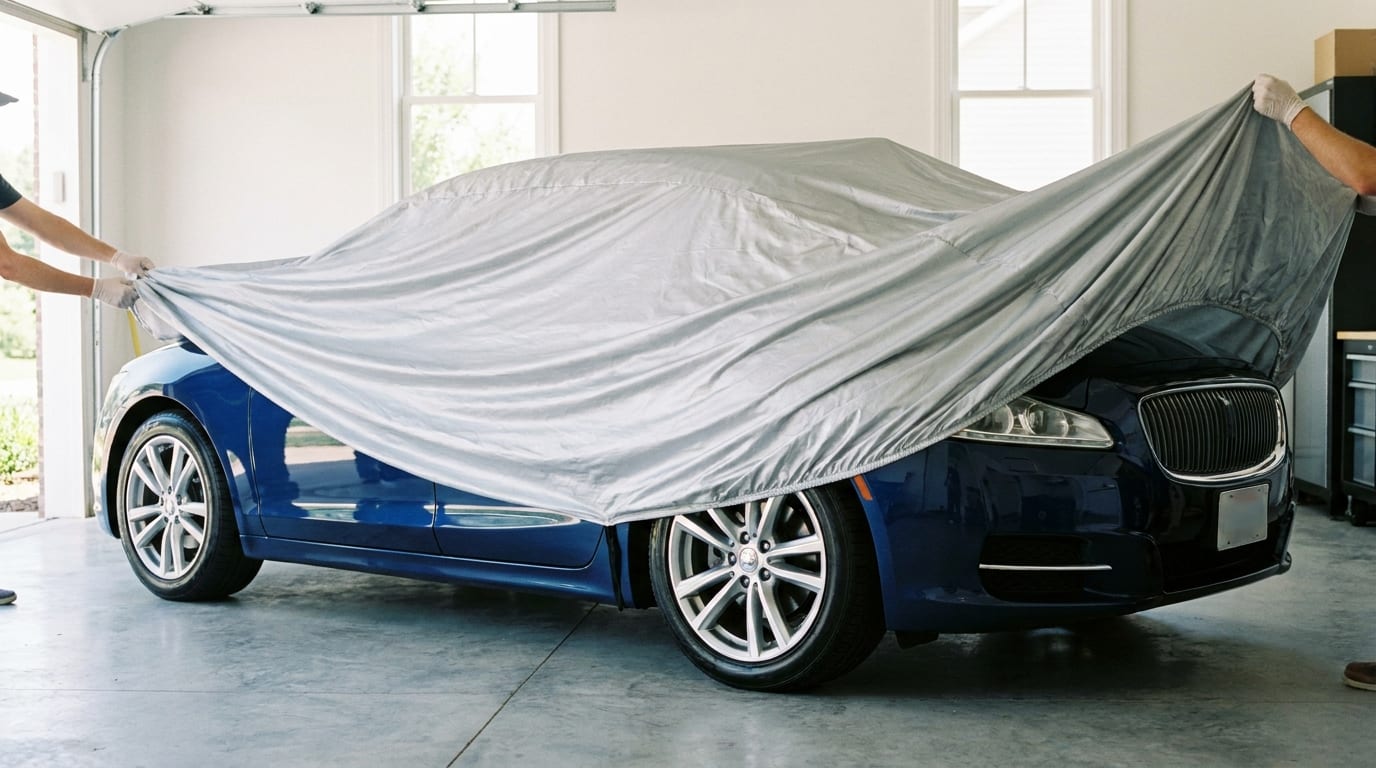
People rinse their cars obsessively near the coast and then forget the cover is collecting the same salt film. It is. Salt builds up on the outer shell over weeks, and if you don't clean it off, it eventually transfers right back onto your paint the next time you put the cover on.
The routine isn't complicated. Hose the cover down with fresh water, use a mild soap without harsh detergents, and let it air dry completely before you put it back on the car. Skipping that last step is the most common mistake: a damp cover refitted too soon just traps moisture against the paint, which defeats the whole point.
How often? Inland owners might get away with cleaning a cover once a season. Coastal owners should plan on every two to four weeks, depending on how close you are to the shoreline. If you're a block from the beach, lean toward the more frequent end.
For the full process, the step-by-step car cover cleaning guide walks through it in more detail, and the general cover care page is a good reference to bookmark.
Warranty and Material Longevity in Harsh Coastal Conditions
A warranty means more near the coast than it does inland, simply because salt exposure wears down lower-quality fabric faster. A cover that might last five years in Arizona could show stitching failures or UV fading in half that time if it's parked three blocks from the ocean.
When you're comparing warranty terms, check specifically for coverage against material degradation, stitching failure, and UV fading timelines. Vague "manufacturer defect" language isn't the same thing as coverage against environmental wear, and coastal conditions are environmental wear.
Premium multi-layer covers typically carry stronger protection here. It's worth reading through what's actually included on the lifetime warranty page before you commit to a specific cover, so you know what's covered if the fabric starts breaking down earlier than it should.
Final Recommendation and Next Step
So, back to the original question: if you have a sports car and live in a coastal area with salty air, what car cover should you buy? A custom-fit, breathable waterproof outdoor cover with UV protection and a soft inner lining. That combination addresses the actual failure points, trapped moisture, sun exposure, and wind-driven grit, that generic covers just aren't built for.
Guessing on a size is the one shortcut not worth taking. A cover finder tool will match the cover to your exact make, model, and trim instead of leaving you to eyeball it. From there, it's worth browsing a few top-rated options to see what fits your budget and how each one handles the coastal specifics we've covered here.
If you're still figuring out the right setup for your car, it's worth bookmarking this topic and coming back to it as you narrow things down. Protecting a sports car near the coast isn't a one-time decision. It's a routine, and getting the cover right is most of that battle.






