
What Is a Semi-Custom Car Cover? A Straightforward Guide to Fit, Materials, and Price
Published
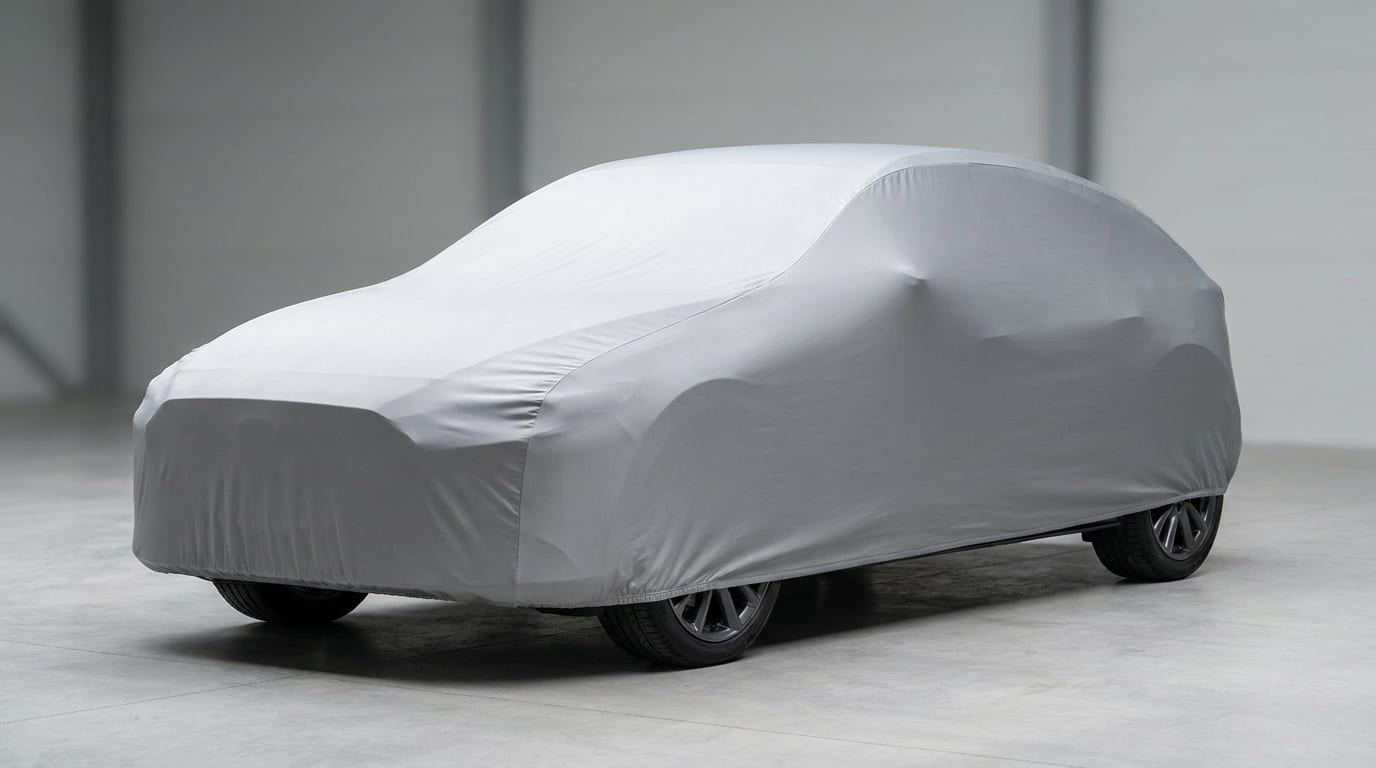
A semi-custom car cover is built to fit a range of vehicles that share similar body dimensions, not your exact make, model, and year. So if you're asking what is a semi custom car cover and how it's different from the cover you saw at the auto parts store, the short answer is: it's sized by body style and length bracket (sedan, coupe, SUV, pickup) instead of a single precise pattern. It sits in the middle of the market, between a loose universal cover and a cover cut to your vehicle's exact specs. Most people land here because they want real protection and a cover that actually looks like it belongs on the car, without paying custom-fit prices.
What Is a Semi-Custom Car Cover? (Direct Answer)
A semi-custom cover is manufactured to fit a category of vehicles, grouped by length, height, and general shape. Buy one for a "mid-size sedan" and it's designed to work across several models that share roughly the same footprint, not one specific car pulled from a VIN database.
That's the key difference from a true custom-fit cover, which is patterned to one exact vehicle. It's also the key difference from universal covers, which are essentially one-size-fits-most and rely on elastic and stretch to make do.
In practice, a semi-custom cover gives you a noticeably closer contour than universal. The cover will hug the roofline and hood better, sit higher off the ground, and generally look intentional instead of draped. Where it falls short of custom-fit: mirrors, spoilers, roof racks, and trim pieces that stick out from the "average" shape of that body style. You might get a little extra fabric bunching around a mirror or a gap near a spoiler. That's the tradeoff.
If you're trying to figure out what a semi custom car cover actually gets you for the money, think of it this way: better protection and a cleaner look than universal, at a price well under what a vehicle-specific pattern costs.
Semi-Custom vs. Universal vs. Custom-Fit Covers
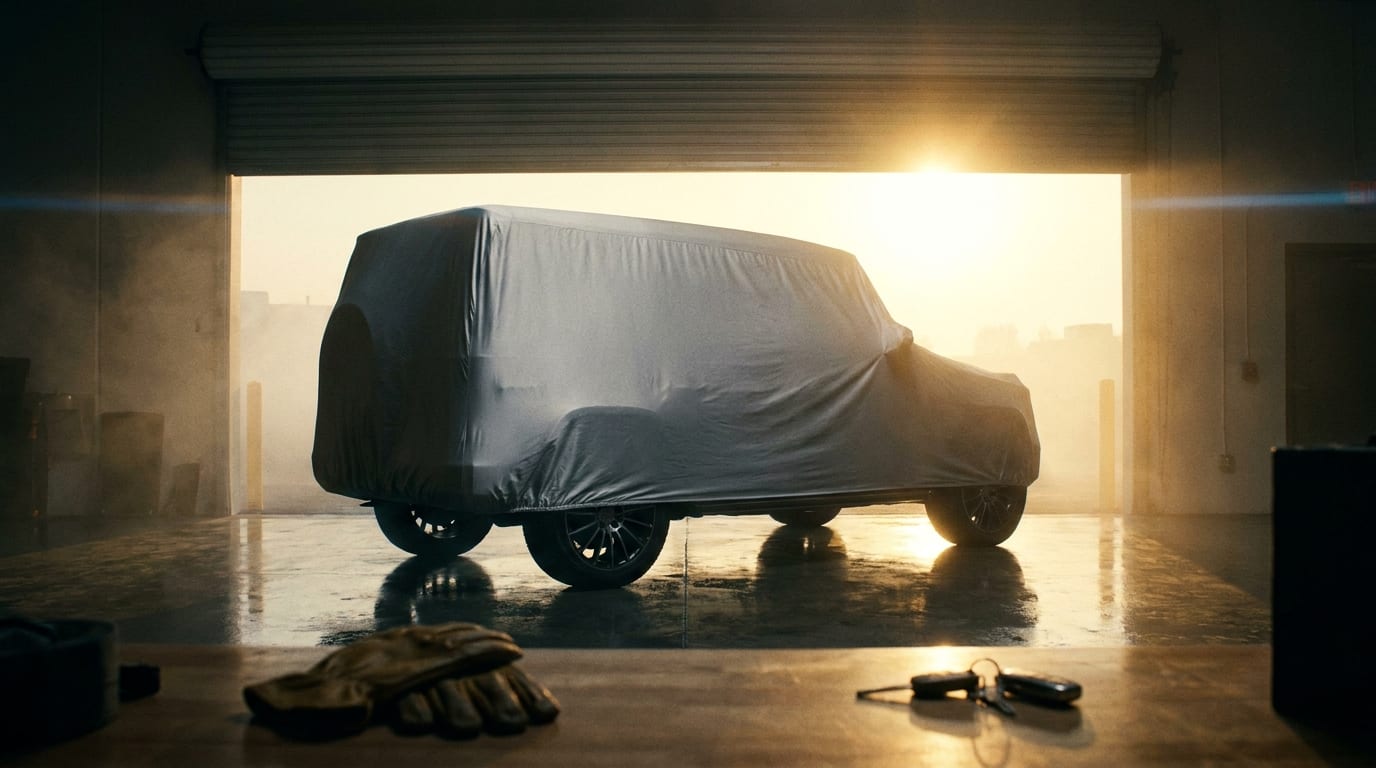
Fit accuracy is the main differentiator across all three types. Universal covers are built off generic size ranges, so there's slack everywhere, especially around the bumpers and undercarriage. Semi-custom covers are sized to a body style and length bracket, which tightens things up considerably. Custom-fit covers are patterned from the exact vehicle, so they sit snug at every line, from the mirror pockets to the exhaust cutout.
Price follows the same order. Universal is the cheapest option on the shelf, semi-custom sits in the middle, and custom-fit commands the highest price because of the vehicle-specific tooling and pattern work behind it.
Wind and flapping risk tracks with fit, too. A loose universal cover catches wind at every loose edge, which leads to flapping, and flapping leads to abrasion against your paint over time. Semi-custom reduces that because there's less excess fabric to move. Custom-fit cuts it down to almost nothing since the cover has nowhere to billow.
Installation is similar across all three in terms of time, maybe a few minutes either way. But semi-custom and custom-fit covers usually come with marked front and back panels and elastic hem points, so you're not guessing which end goes where or fighting the cover to get it seated correctly. Universal covers often skip that, since one size is expected to flex every direction.
If you read through all this and decide you want the tightest possible fit regardless of cost, it's worth looking at custom-fit car covers instead. For most common vehicles, though, semi-custom is the more practical buy.
Semi-Custom Car Cover Materials & Fabric Comparison

Here's the part people skip and then regret: fit level and fabric are two different decisions. A semi-custom cover in the wrong material won't hold up outdoors no matter how well it contours your car. Fabric is what actually fights UV, rain, and moisture buildup underneath the cover.
| Fabric Type | Best Use | Water Resistance | UV Resistance | Breathability | Price Tier |
|---|---|---|---|---|---|
| Lightweight polyester | Indoor, light dust | Low | Low | High | Budget |
| Multi-layer non-woven | Daily outdoor, moderate weather | Moderate | Moderate | Moderate | Mid-range |
| Solution-dyed polyester/ripstop | Heavy outdoor, UV and rain | High | High | Moderate | Higher |
| Satin/fleece-lined | Indoor, scratch protection | Low | Low | High | Mid-range |
| Single-layer budget fabric | Occasional indoor use | Low | Low | Moderate | Lowest |
A couple things worth calling out. The lightweight and satin/fleece options are built for garages, not driveways, they're about protecting paint from dust and incidental scratches, not weather. If your car lives outside, you want something in the multi-layer non-woven or solution-dyed category, both are designed to shed water and resist sun breakdown over repeated exposure, while still letting some air through so moisture doesn't get trapped against the paint.
That breathability column matters more than people expect. A cover that blocks water perfectly but traps humidity underneath can cause its own problems, think water spots, mildew smell, even paint issues in humid climates. If you're dealing with regular rain or snow, it's worth reading through the waterproof car covers guide for the specifics on seam sealing and coating types beyond what fits in a table.
How Semi-Custom Covers Are Sized
Semi-custom sizing is a grouping exercise. Manufacturers take overall vehicle length, general body style (sedan, coupe, hatchback, SUV, truck), and sometimes a height classification, then bucket vehicles that fall within a similar range together.
So instead of a pattern built around your 2019 Accord specifically, you're buying into a bracket like "mid-size sedan, 180 to 195 inches." Anything that falls in that range is expected to fit reasonably well. Brands differ slightly in how they slice these brackets, some use three or four size tiers, others go finer, but the logic is the same across the board: group by dimension, not by exact model.
To make up for the fact that it's not an exact pattern, most semi-custom covers include elastic front and rear hems that cinch down automatically, and some come with a cable or strap kit that runs underneath the vehicle to pull the cover snug and keep wind from getting under the edges. Those two features do a lot of the work that a tighter pattern would otherwise handle.
Before you buy, it's worth checking your vehicle's actual bracket rather than assuming based on make and model alone. The sizing guide walks through how to measure and match your vehicle to the right category.
When a Semi-Custom Cover Makes Sense
For common body styles, sedans, hatchbacks, standard SUVs, semi-custom covers do their job well. These shapes are common enough that size brackets are dialed in from years of covering them, so you're not rolling the dice on fit.
It's also the right call if you want genuine weather protection and a cover that doesn't look like a tarp, but you're not interested in paying custom-fit money for a car you might trade in a few years from now.
Where it gets less reliable: vehicles with add-ons that fall outside the "typical" shape for their category. Large spoilers, roof racks, oversized mirrors, lift kits, these all create gaps a semi-custom cover wasn't designed to account for. If your vehicle has any of these, expect some looseness around those specific points even if the rest of the fit is solid.
And remember, indoor versus outdoor use comes down to the fabric table above, not the fit level. A semi-custom cover in the right outdoor fabric will protect a driveway-parked car just fine. A semi-custom cover in indoor-only fabric will not, no matter how well it hugs the body lines. If you're parking in a garage most of the time, the indoor car covers page covers what actually matters there (mostly dust and scratch prevention). If it's living outside, the outdoor car covers guide is the better reference.
What to Check Before You Buy a Semi-Custom Cover

A few things to confirm before you check out:
- The size bracket matches your vehicle's actual measured length and body style, not just a guess based on "it's a sedan." Brackets can be surprisingly specific.
- The cover includes tie-downs, grommets, or a strap/cable system. Without one of these, a semi-custom cover is more exposed to wind than it needs to be.
- The fabric matches your real storage conditions. Garage, driveway, and harsh climate each call for a different pick from the comparison table above, don't default to whatever's cheapest.
- The warranty actually covers stitching and fabric defects. Semi-custom covers used outdoors see real stress, sun, rain, wind, so it's worth knowing what's covered before something fails. The lifetime warranty page lays out what's included.
Skip any of these checks and you end up with a cover that technically fits but underperforms where it counts.
Find the Right Cover for Your Vehicle
Semi-custom is the practical middle ground for most common vehicle shapes and most budgets. It beats the wind-catching looseness of universal covers and costs less than a cover built from an exact vehicle pattern.
If you're still not sure which bracket your vehicle falls into, running it through a cover finder tool will match your exact vehicle to the right size and fabric combination in a couple of clicks, faster than guessing from a size chart.
Take a look through the full range of car cover options to compare semi-custom and custom-fit choices side by side, and find what actually fits your car and how you store it.






