


What Size Car Cover Fits a Honda Civic? A Quick Sizing Guide
Honda's Civic has been America's default compact sedan for decades, which means there's no single "Civic-size" cover that fits every year on the lot. The short answer to what size car cover fits a Honda Civic is this: most Civic sedans fall into the midsize or compact-midsize sedan bracket on a universal sizing chart, generally covering vehicles between about 180 and 190 inches long. Hatchbacks and coupes run a bit shorter, which can bump them into a smaller bracket. The size class on a chart is a starting point, not a promise. Generation, trim, and body style all push the real-world fit around, and if you want a guaranteed fit, a semi-custom or custom-fit cover built for your exact model year is the way to skip the guesswork entirely.
How Civic Generation and Body Style Affect Sizing
Civics have grown steadily over the years, and that growth matters more than people think when picking a cover. The 8th and 9th-gen sedans (roughly 2006 through 2015) sit shorter and boxier than what came after. The 10th-gen Civic (2016 to 2021) stretched things out, longer and lower than its predecessors, with a more aggressive fastback roofline on the sedan. Then the 11th-gen Civic (2022 and up) grew again, longer and wider than any Civic before it, enough that it can land in a different bracket on a universal chart than a 9th-gen model would.
Trim level plays a role too. The Civic Si and Type R share most of their body dimensions with the standard sedan, but they're not identical fits. The Type R's wide-body kit adds real width at the fenders, and its rear wing sits taller than a stock trunk lid. Ground clearance differs slightly across trims as well. None of that ruins a cover's fit outright, but it's exactly the kind of detail that turns a "close enough" universal cover into one that strains at the mirror pockets or won't clear a spoiler.
Body style is the bigger issue, honestly. Hatchback Civics are shorter overall than the sedan, but taller and boxier at the rear where the hatch and roofline meet. A sedan-shaped cover drapes fine over a trunk and rear glass, but it wasn't built for a hatch's steeper rear angle. Drop a sedan cover on a hatchback and you'll usually get loose, sagging fabric right where you need it snug. See Honda-specific cover options if you want to check what's built for your exact body style before you buy.
Universal vs. Semi-Custom vs. Custom-Fit Covers for the Civic
Not all "fits a Civic" claims mean the same thing, so it helps to know what you're actually buying.
Universal covers
- What they are: Sized by broad length and class brackets (compact, midsize, full-size)
- Fit quality: Loosest of the three tiers, with extra fabric that can flap in wind
- Best for: Occasional use, short-term storage, or budget-first buyers
Semi-custom covers
- What they are: Built around body-style groupings like sedan, coupe, and hatchback rather than a single length bracket
- Fit quality: Noticeably tighter than universal, without jumping to full custom pricing
- Best for: Owners who want a real improvement in fit without paying for a fully patterned cover
Custom-fit covers
- What they are: Patterned to the exact Civic year, trim, and body style, following contour lines like the roofline, mirror pockets, and rear spoiler
- Fit quality: Tightest available, minimal excess fabric
- Best for: Daily outdoor storage, long-term protection, or anyone tired of readjusting a cover after every windy night
If your Civic sits outside most of the year, a custom-fit car cover earns its price fast. If it's mostly garaged and the cover is more of an occasional-use layer, universal is fine. Either way, check whether the product actually lists your body style separately. A lot of "universal fit" listings quietly assume sedan dimensions.
How to Measure Your Civic Before Buying
Three measurements decide whether a cover fits: total length bumper to bumper, width at the widest point with mirrors folded in, and height at the roofline. Grab a tape measure, or better yet, pull the factory specs for your exact model year. Honda publishes these, and they're faster than crawling around your driveway with a measuring tape.
Here's the catch: factory specs describe the base vehicle, not necessarily yours. A Type R's wide-body fenders add inches over a stock LX. A roof rack, if you've added one, adds height. A rear spoiler on an Si adds length or clearance requirements the factory sheet won't mention. Cross-check any cover's listed size range against your specific trim, not just the model name.
If you'd rather not do the math yourself, use a size and fit lookup tool by year, make, and model, or run your Civic through the cover finder. Both do the cross-referencing for you, which beats eyeballing a size chart and hoping.
Is a Honda Civic Considered Compact or Midsize for Cover Sizing?
Most cover sizing charts place the Civic sedan in the midsize or compact-sedan bracket, not the smallest "compact car" category that's reserved for shorter subcompacts. Some older Civics and current hatchback models do fall into that smaller compact bracket, though.
This distinction actually matters. Grab the smaller bracket for a longer sedan generation, like an 11th-gen model, and you'll end up with a cover that's too tight at the bumpers. It won't seat properly, and the elastic hem will be under constant strain. Get the bracket right for your specific year and body style, and this problem disappears.
Do Civic Sedans and Hatchbacks Need Different Size Covers?
Yes, in most cases. The hatchback's shorter overall length and steeper rear profile mean a sedan-specific or sedan-sized universal cover typically won't seat correctly around the rear hatch and bumper. You'll see gapping at the back, loose fabric that catches wind, or a cover that simply can't be pulled far enough to tuck under the bumper lip.
Before buying, check whether the semi-custom or custom option you're looking at lists sedan and hatchback as separate SKUs. If it only shows one generic Civic listing, that's a sign it's sized for the sedan by default. Worth a quick email or chat with the seller if it's not clear.
What Happens If I Buy the Wrong Size Cover for My Civic?
Get the size wrong in either direction and you'll feel it fast. A cover that's too large flaps in the wind, pools water in the loose fabric, and can scratch paint from all that constant rubbing against the surface. Not ideal for something you bought to protect the paint in the first place.
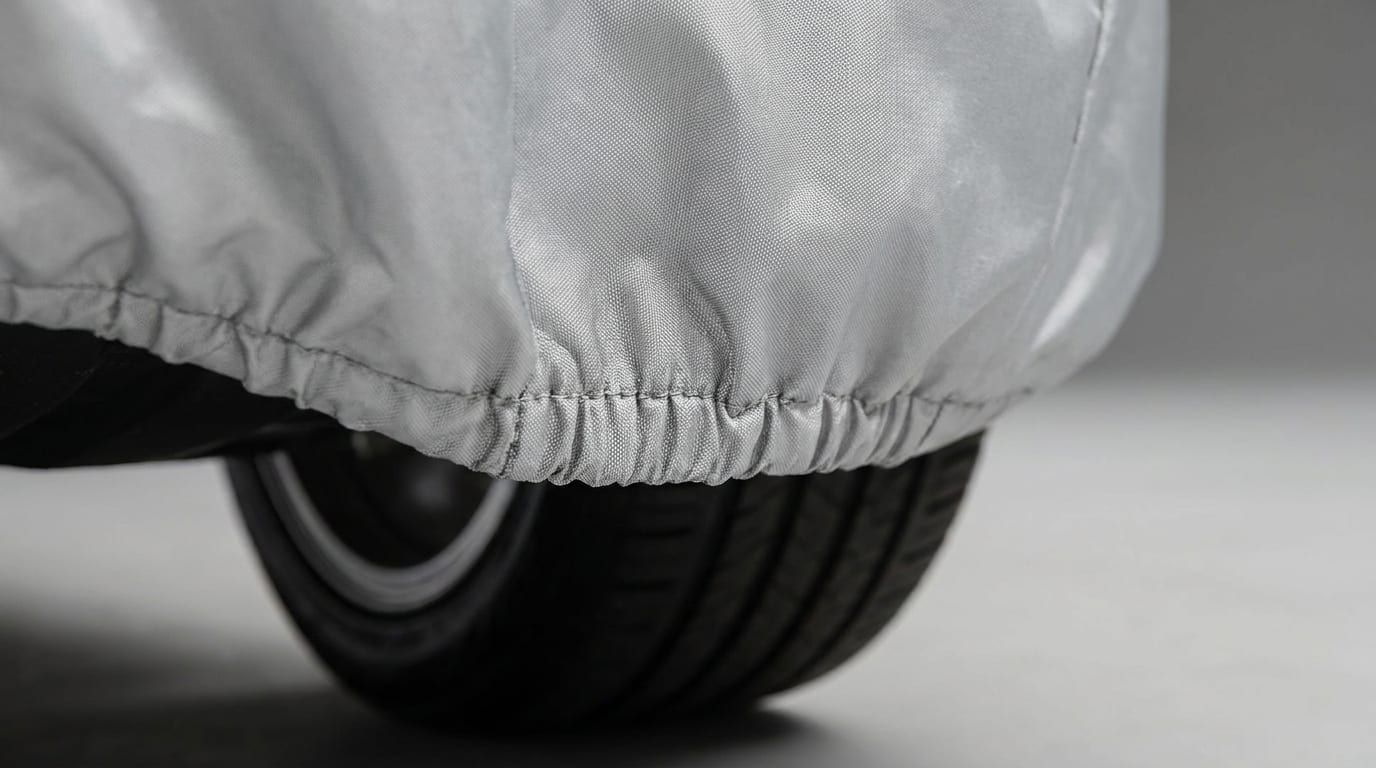
Too small is its own headache. Seams strain under the pressure of stretching over a body they weren't cut for, bumpers stay partly exposed, and elastic hems or straps struggle to grip properly. A cover that won't sit right also makes it harder to use accessories the way they're designed, like installing a cover with cable locks or gust straps meant to keep it anchored in wind. Those features assume a snug base fit. Without one, they're fighting a losing battle.
If your Civic lives outside, this is where sizing mistakes show up fastest. Check out what an outdoor car cover needs to handle before assuming any cover that technically "fits" will hold up to real weather.
Get the Right Fit for Your Honda Civic
Civic sedans generally land in the midsize bracket, while hatchbacks and older generations often sit one size down. Guessing off a generic chart is how people end up with a cover that flaps, sags, or won't quite close around the bumper. Checking by year and body style instead solves that before you ever open the box.
If you're not sure where your Civic lands, a size and fit finder will get you there faster than measuring by eye. And if you're storing the Civic outdoors regularly, or you just want the tightest possible fit around the mirrors, roofline, and rear end, it's worth looking at custom-fit options built for your exact year. Either way, take a few minutes to browse what fits before you buy. It's cheaper than replacing a cover that never fit right in the first place.
Updated