


What to Do If Your Car Cover Doesn't Fit
If your car cover doesn't fit, don't just leave it on and hope for the best. First, recheck your vehicle's actual measurements against the size chart, try tightening the straps and elastic hems, and if it's still too loose, too tight, or oddly shaped for your car, contact the retailer about an exchange instead of forcing it to work.
A bad fit isn't just an eyesore. A loose cover flaps in the wind, and that constant rubbing can scratch or dull your paint over time. A cover that's too tight can strain seams, leave gaps at the wheel wells, and let rain or snow sneak in exactly where you don't want it. So knowing what to do if your car cover doesn't fit matters more than it looks like on the surface.
The rest of this guide walks through the questions that come up next: how to tell if the fit is actually wrong, why it happened, how to measure correctly, and when it's smarter to fix versus exchange.
How Do You Know If a Car Cover Is the Wrong Size?
Some signs are obvious. Others sneak up on you after a windy night.
Look for fabric pooling around the bumpers, like there's extra material with nowhere to go. Check whether the mirror pockets or antenna cutout line up with where your actual mirrors and antenna sit, not a few inches off. If the hem stops well above the ground or the elastic is stretched tight and still won't tuck under the rocker panel, that's a length or width problem, not something a strap will fix.
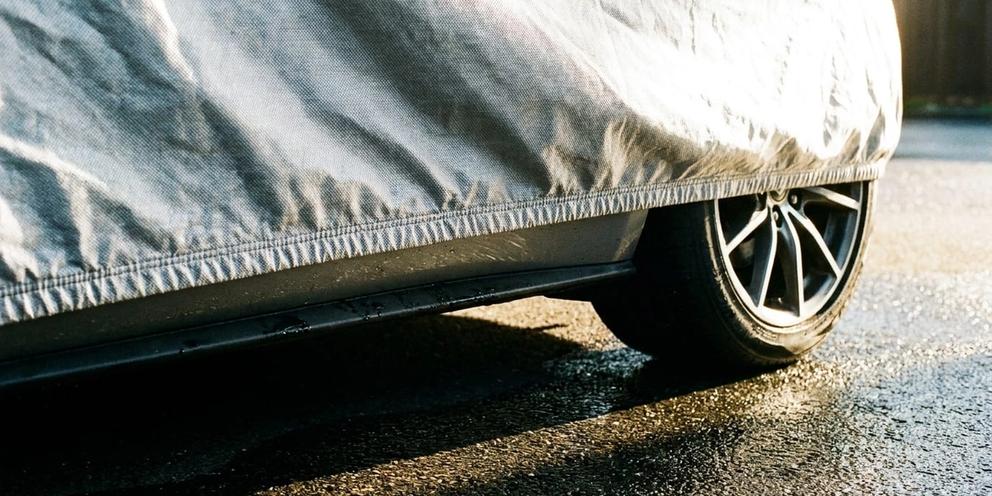
Flapping is the sneaky one. A cover can technically cover the whole car and still be too loose, and you'll hear it before you see it: snapping fabric in a stiff breeze, corners lifting, the whole thing ballooning like a parachute. That's excess material moving in the wind, and over months it wears down the fabric and the clear coat underneath.
Here's a distinction people miss: a cover can be the right length and still be wrong for your car. Universal covers are built to stretch across a size range, not to hug a specific shape. If your vehicle has a sloped hatchback roofline or an unusually long front overhang, a universal cover might reach bumper to bumper and still gap badly at the roof or mirrors, because it was never shaped for that profile in the first place.
Why Doesn't My Car Cover Fit Properly?
A few things usually cause this, and it's rarely the cover's fault alone.
Wrong measurements are the most common culprit. Maybe the length was measured from the wrong point, or the size chart was matched to a model year or trim that isn't quite your car. A two-door and four-door version of the same nameplate can have noticeably different dimensions, and that gap is enough to throw off a cover.
Second, a lot of people buy a universal or one-size cover expecting the fit of something custom-built. Universal covers are designed to fit a range of vehicles reasonably well, not any one of them perfectly. That's the tradeoff for the lower price.
Third, aftermarket add-ons change your car's shape from what the manufacturer specs assume. A roof rack, a tall spoiler, oversized mirrors, or a lift kit on a truck all push your vehicle outside its stock dimensions, and a cover sized to the factory profile won't account for that. If this sounds like your situation, check fit and modifications for car covers before you reorder.
Fourth, and easy to forget: covers shrink or stretch. Machine drying on high heat, using the wrong detergent, or stuffing a wet cover away for storage can all distort the material over time. A cover that fit fine last spring might not fit the same way this fall, and that's a maintenance issue, not a sizing one.
How Do You Measure Your Vehicle for a Better-Fitting Cover?
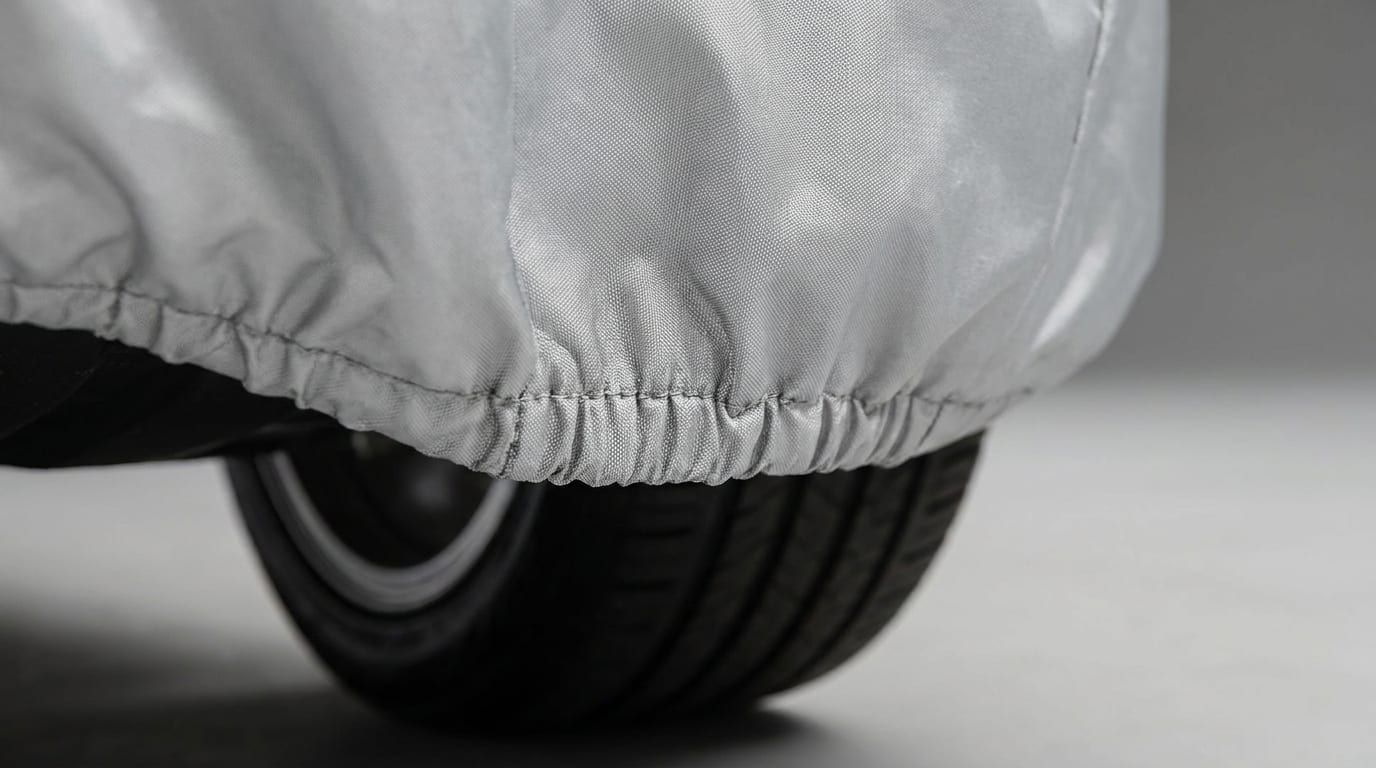
Before you reorder anything, measure your actual car. Not the brochure spec, not what you remember from the dealership sticker, your car, right now.
Park on level ground first. A slope throws off height measurements more than you'd think.
- Length: Measure bumper to bumper in a straight line, including any add-ons like a bike rack or towing hitch that sit outside the body.
- Height: Measure from the ground to the highest point of the roofline, and note if you've got a roof rack or antenna that changes that number.
- Width: Measure at the widest point of the vehicle with the mirrors folded in, since most covers assume mirrors are tucked.
Write down the exact trim and body style too, not just the make and model. A sedan, coupe, and hatchback version of the same car can carry different codes and different dimensions, even in the same model year.
Once you've got real numbers, run them against the car cover sizing guide instead of guessing off memory. That one step catches most reorder mistakes before they happen.
Should You Choose a Universal, Semi-Custom, or Custom-Fit Cover Instead?
If a universal cover keeps letting you down, the real fix might not be a different universal cover. It might be a different tier entirely.
Universal covers fit a broad size range, which means a looser, more generic fit by design. Semi-custom covers narrow that down, matched to a body style or vehicle category (think sedan versus SUV versus pickup), so the shape tracks closer to your actual car. Custom-fit covers are built to your exact make, model, and year, and they fit the tightest of the three, following your car's contours instead of approximating them.
If you've already gone through a universal cover and a straps-and-adjustments routine and you're still fighting flapping or gaps, upgrading a tier is usually the actual solution, not another round of the same size. Custom-fit costs more upfront, but it eliminates most of the loose-fabric complaints that send people back to the return counter in the first place. Worth a look: custom-fit car covers built specifically for this problem.
Can Minor Fit Issues Be Fixed Without Buying a New Cover?
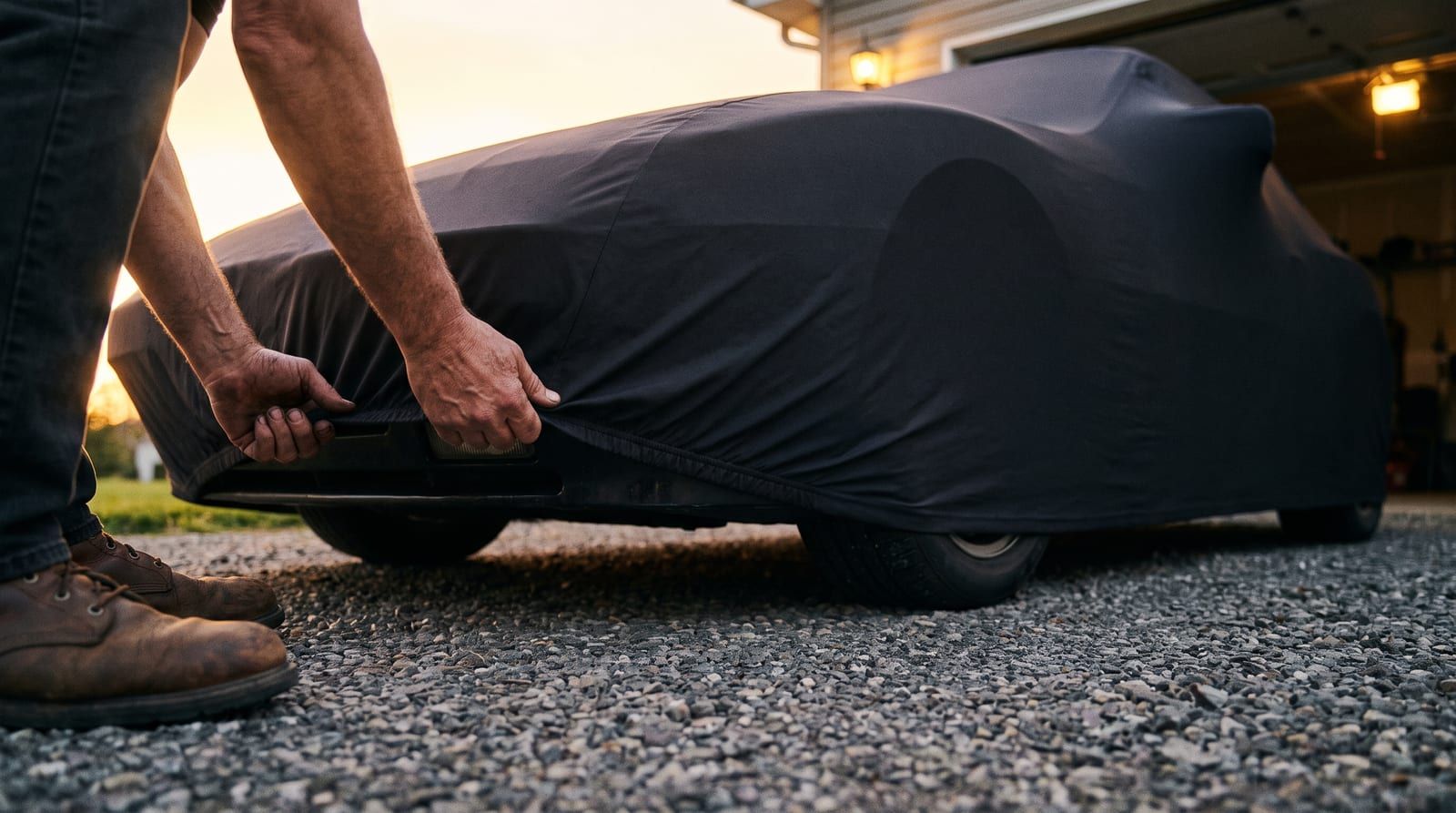
Not every loose cover needs to go back. Some just need to be secured better.
Start with the cinch straps and buckles that run underneath the vehicle. Tightening these pulls out slack at the front and rear and can turn a mediocre fit into a workable one. If your cover doesn't have them, that's worth noting for your next purchase.
For wind, gust straps or a cable-and-lock kit hold a slightly loose cover flat against the body instead of letting it billow. This won't fix a cover that's genuinely the wrong size, but it stops the flapping that causes paint wear on a cover that's just a bit generous.
If the cover is too large and pooling on the hood or trunk, a support pole underneath can lift the center and let water run off instead of sitting in a puddle. It's a cheap fix for a cover that's oversized but not unusable. For general setup, the step-by-step installation guide covers strap placement and pole positioning in more detail.
Draw the line here: these tricks help with mild looseness. If mirrors don't line up, if the cover won't reach the ground, or if it's straining at the seams, straps and poles won't save it. That's a size problem, not a tension problem.
Can You Return or Exchange a Car Cover That Doesn't Fit?
Usually, yes, and it's a more straightforward process than people expect.
Check your return window first, and try to keep the cover unused and in its original packaging if you can. That alone speeds up most exchanges. Then contact support with your vehicle's exact specs (make, model, year, trim) so they can match you to the correct size the first time.
CarCovers backs this with a no-hassle guarantee and standard warranty coverage, which is really the path most people should take when a cover is a genuine mismatch rather than a minor annoyance. Full terms and timelines are on the return policy page.
Before you reorder, though, go back through your measurements against the sizing guide one more time. Skipping that step is how people end up in the same spot twice, with a second cover that doesn't fit for the same reason the first one didn't.
Get the Right Fit the First Time
The path here is pretty simple once you break it down: measure your actual car, not the spec sheet; match that to the right fit tier for your vehicle; use straps or a support pole to clean up minor slack; and exchange when the mismatch is real rather than cosmetic.
If you're still not sure what fits, the cover finder tool matches a cover to your exact vehicle before you spend money again. And while you're at it, take a look at straps and cable locks as cheap insurance against the fit complaints that show up later, once you know it's your car's cover and not a stand-in guess. Worth a browse next time you're on the site, even just to see what's out there.
Updated