
The Short Answer: Soft, Breathable Indoor Fabrics Win
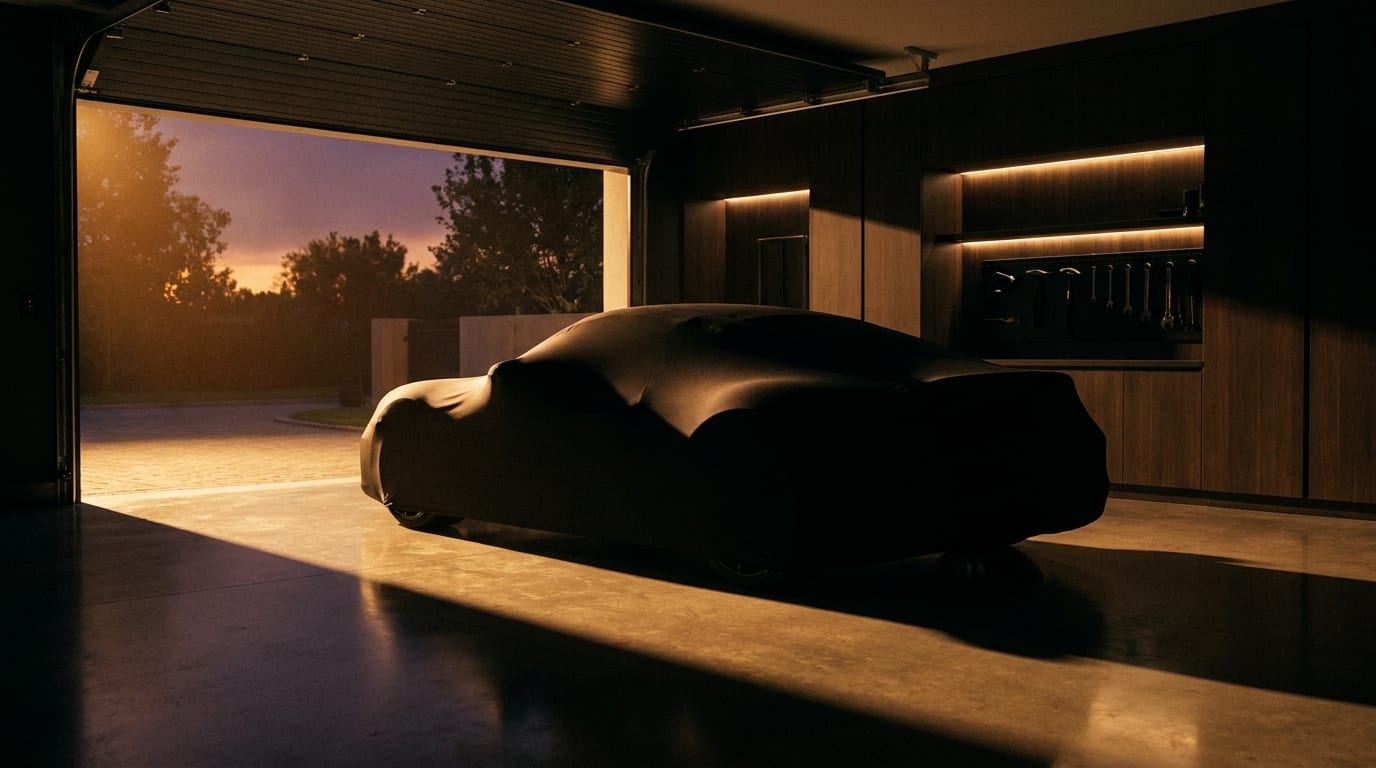
If you're asking what type of car cover is best for a garage, here's the direct answer: go with a soft-lined indoor cover, something in satin, microfiber, flannel, or a stretch-knit blend. Skip the heavy-duty outdoor stuff. A garage already handles the job that outdoor covers are built for, rain, UV, flying debris, so you don't need a cover doing that work twice.
The tradeoff is simple once you see it laid out. Outdoor covers are built around waterproofing and UV resistance, which means thicker, coated fabrics that are stiff and heavier than they need to be indoors. That stiffness doesn't just make the cover annoying to handle. It can trap dust right against your paint, which is the opposite of protection. Indoor covers flip the priority: soft, breathable material that keeps dust, pet hair, and the occasional bump off your paint, without the bulk of a shell meant for a parking lot.
There's one exception worth flagging. If your garage is detached, unheated, or just drafty with humidity swings, a thin dust sheet won't cut it. In that case, you want a breathable multi-layer indoor cover, not the flimsiest option on the shelf. More on that distinction below.
Material Comparison: Best Fabrics for Garage-Stored Cars
Fabric choice is really the whole decision. Here's how the common options stack up for garage use.
| Fabric/Material | Best For | Breathability | Scratch Protection | Dust/Pollen Protection | Relative Cost |
|---|---|---|---|---|---|
| Satin/microfiber | Show cars, daily-covered garage vehicles | Excellent | Highest | Excellent | Mid to high |
| Fleece/flannel-lined | Everyday garage use, budget buyers | Moderate | Good | Good | Low to mid |
| Stretch-knit (spandex-blend) | Snug custom fit, low-dust garages | Good | Moderate | Good | Mid |
| Multi-layer indoor/outdoor hybrid | Drafty or humid garages | Moderate | Good | Good | Higher |
| Lightweight polypropylene dust cover | Short-term, clean, stable garage | Low | Minimal | Minimal | Lowest |
Satin and microfiber sit at the top for a reason. They're the closest thing to putting a pillowcase over your paint, soft enough that you don't worry about swirl marks, breathable enough that moisture doesn't sit trapped underneath. If you're the type who cares about finish, this is the fabric to look at, and it's worth checking out an indoor black satin cover if that's the level of protection you're after.
Fleece and flannel-lined covers are the practical middle ground. They won't baby your paint quite like satin does, but they're soft, they breathe fine, and they cost less. Good fit for a garage car that gets driven often and doesn't need concours-level babying.
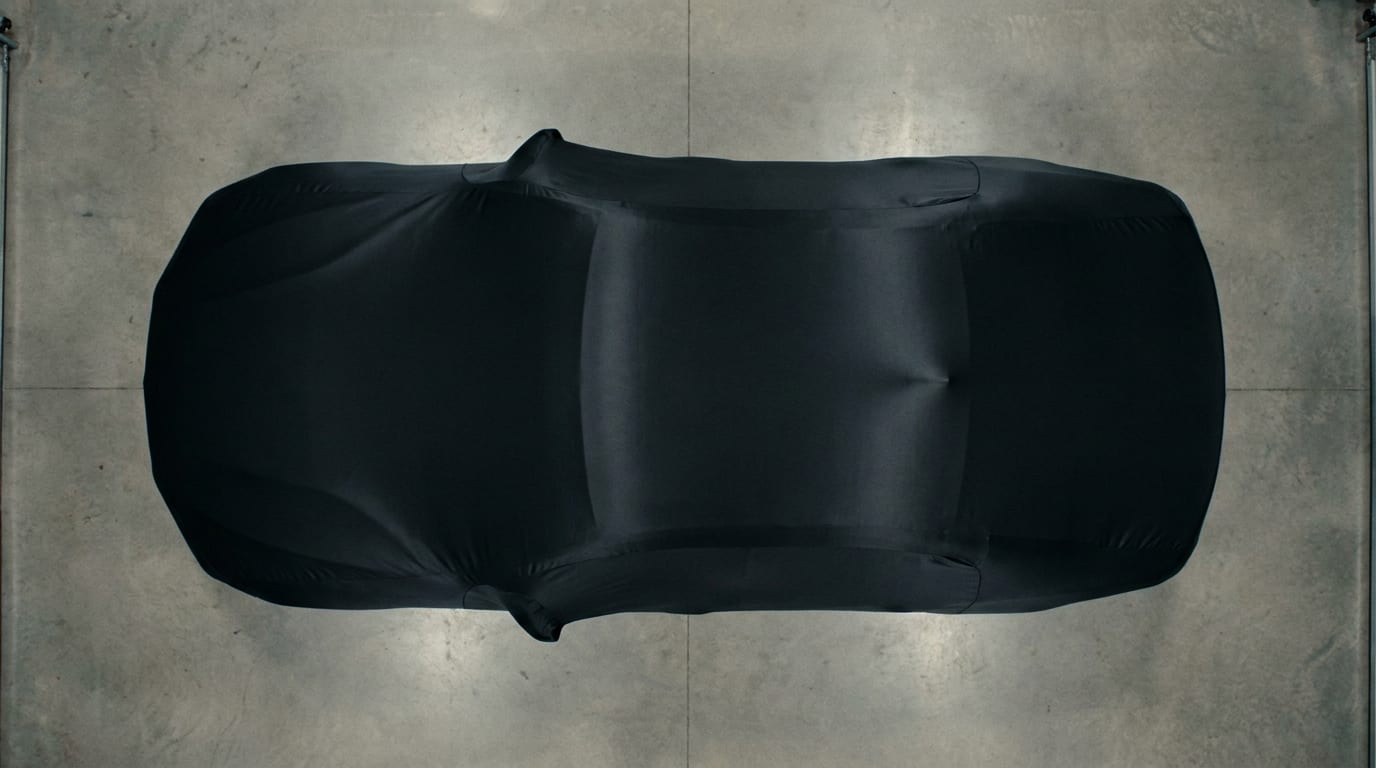
Stretch-knit covers are built for fit first. The spandex blend hugs the body of the car so there's no loose fabric flapping or shifting around, which matters because a cover that moves is a cover that can rub. Less cushioning than satin, but less movement too, so it balances out for cars in low-dust garages.
Multi-layer hybrids exist for garages that aren't fully sealed off from the outside world, think a detached garage with a gap under the door, or an attached garage that still swings ten or twenty degrees with the seasons. They add a bit more weight and cost, but they handle humidity better than a single-layer indoor fabric.
Polypropylene dust covers are the bargain bin option. Fine for a clean, stable garage over a short stretch, like a two-week trip. Not something to rely on long-term.
Why Outdoor-Rated Covers Are Overkill Indoors
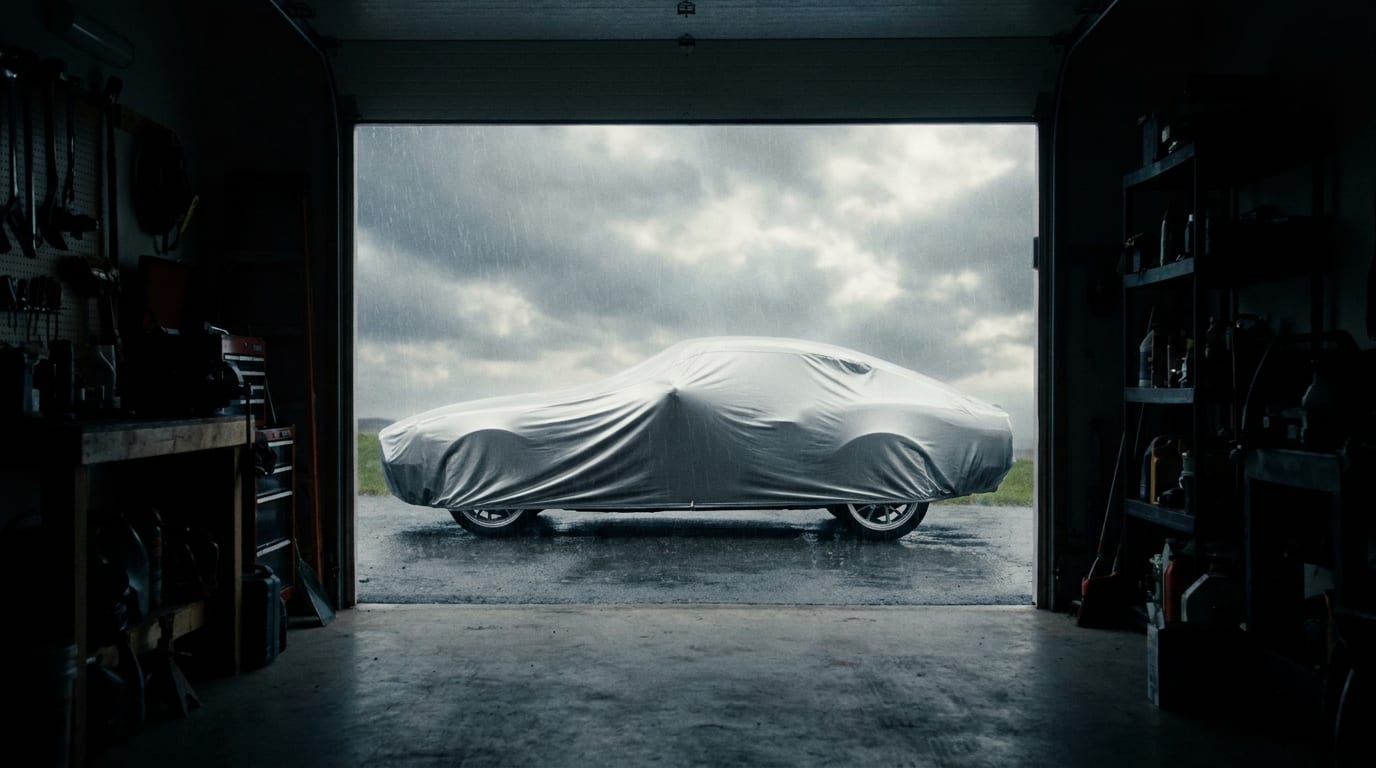
It's tempting to think a tougher cover is always a better cover. Not here. Outdoor covers are built with heavier, coated fabrics specifically to block rain and UV, protection your car simply doesn't need behind a closed garage door. You're paying for weather resistance you'll never test.
Worse, that heavier material works against you indoors. Coated outdoor fabrics don't breathe the way indoor fabrics do, so any trapped moisture or condensation has nowhere to go. It sits against the paint instead of evaporating. That's the exact problem indoor covers are designed to avoid, and putting an outdoor cover in a closed garage can quietly recreate it.
There's a daily-use argument too. Outdoor covers are bulkier, heavier, and more of a wrestling match to put on and take off. If your car is a daily driver that goes in and out of the garage every morning and night, you'll feel that extra weight and stiffness fast. An indoor cover folds down smaller and goes on in under a minute, which matters more than people expect once it becomes a daily routine. Our guide to using car covers indoors gets into the daily-use side of this in more detail.
Garage Conditions That Still Affect Your Choice
Not all garages are the same, and that changes the fabric call even within the "indoor cover" category.
Attached garages tend to run more stable temperatures since they share walls with the house. Detached garages, especially unheated ones, can still get humid, dusty, or downright cold depending on the season, even though the car isn't getting rained on directly.
If the garage is shared space, bikes leaning against the wall, tools on a bench, lawn equipment stacked in the corner, maybe a cat that likes to nap on the hood, your scratch risk goes up. A thicker-lined indoor fabric like satin or a padded flannel buys you more margin there. If pets are part of the equation, it's worth a look at how to protect a cover from cats and animal scratches, since claws are a different kind of threat than dust.
Workshop activity matters too. Sanding, grinding, even just sweeping concrete dust around kicks particles into the air that settle on everything, including your cover. In that kind of garage, pick a fabric that's easy to shake out and toss in the wash regularly rather than something that holds onto grime.
And if your garage runs warm in summer and cold in winter without real climate control, that swing can create condensation on cooler surfaces. A fully sealed, non-breathable fabric makes that worse. Breathable fabric lets the moisture move instead of pooling.
Matching the Cover to How You Use the Garage
The "best" fabric also depends on how the car actually gets used, not just where it sits.
Daily driver parked overnight? Go with something practical, a stretch-knit or fleece cover that goes on fast and comes off just as fast in the morning. You don't need show-car fabric for a car that's back on the road in eight hours.
Classic, collector, or rarely-driven car sitting for weeks or months at a time is a different story. That's where it makes sense to spend more on a premium satin or black satin option, since the car is under the cover long enough for fabric quality to actually matter.
Garages holding more than one vehicle type, a car plus a motorcycle or an ATV, need more than one cover. Each vehicle type has its own shape, pinch points, and indoor-appropriate fabric, so resist the urge to throw a universal tarp over everything and call it done. A cover built for a sedan won't sit right on a motorcycle tank, and vice versa.
Features Beyond Fabric: What Else Matters for Garage Covers
Fabric gets most of the attention, but fit and construction decide whether that fabric actually does its job.
Custom-fit covers hug the car's exact contours, which means less loose fabric moving around and less chance of micro-scratches building up over months of use. Universal covers are cheaper upfront but tend to bunch, shift, and rub in spots a custom fit wouldn't. If you're not sure which route to take, custom-fit car covers are worth comparing directly against universal options before you buy.
Look for a soft inner lining at contact points, mirrors, door edges, anywhere fabric rubs repeatedly. Reinforced stitching in those spots extends the life of the cover a lot.
Elastic hems or a simple strap system are enough indoors. Wind isn't a factor behind a closed door, so you don't need the tie-down straps and grommets outdoor covers rely on. Simpler fastening, faster to use.
Finally, pick a fabric that's actually easy to maintain. Garages collect dust, tracked-in debris, maybe a little oil residue from the workbench. A cover you can machine wash or quickly wipe down stays useful season after season, and our cover care and cleaning guide walks through the specifics for keeping fabric in shape.
Choosing and Caring for Your Garage Car Cover
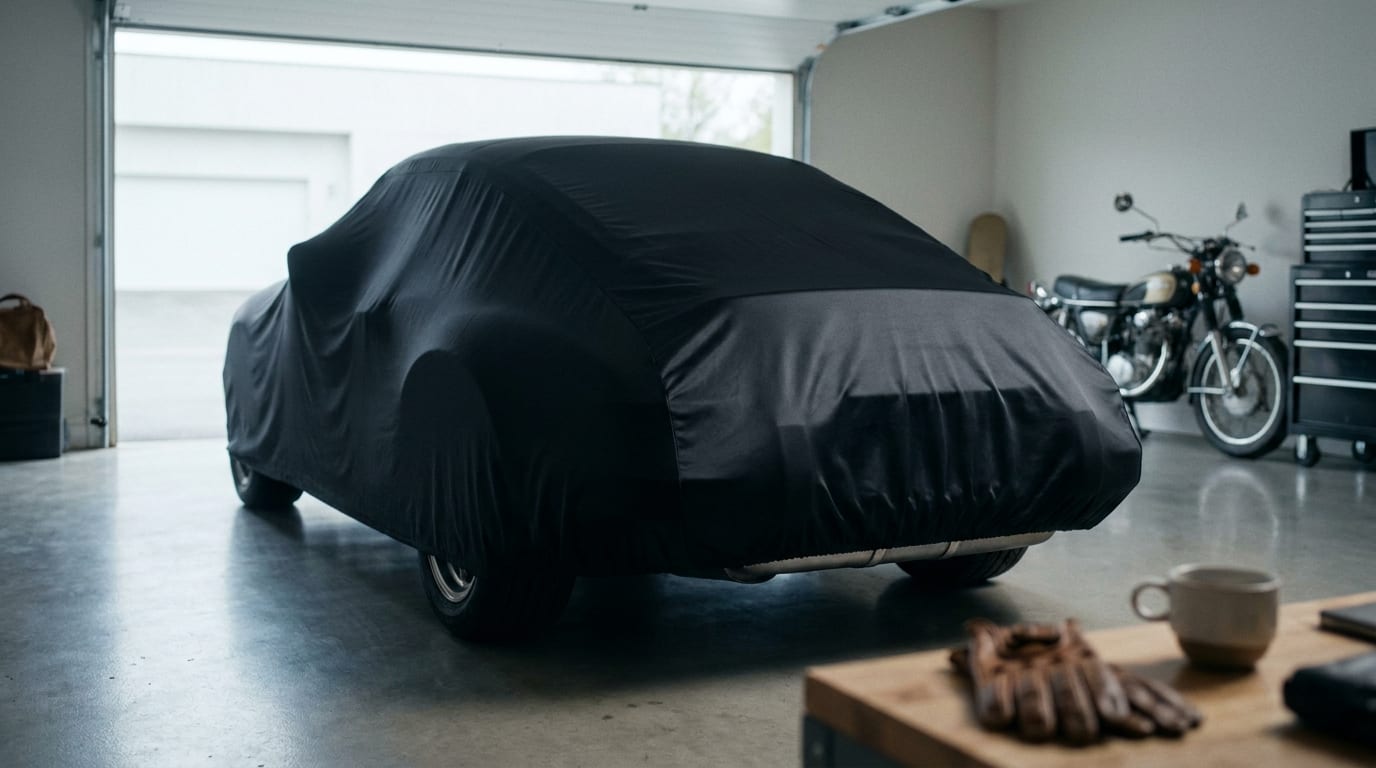
Match the fabric weight to your actual garage conditions: stable and attached leans toward lighter indoor fabrics, drafty or humid leans toward a breathable multi-layer option. For most garage-stored cars, satin or another indoor-rated fabric hits the right balance of softness and practicality, which is really the core answer to what type of car cover is best for a garage.
Before you buy anything, confirm sizing against your specific vehicle. A cover with the right fabric but the wrong fit still lets dust in and still lets fabric shift against the paint, so check what size car cover fits your vehicle before you check out.
Once you've got the right cover, a little upkeep keeps it performing. Shake it out regularly, wash it on the schedule recommended for the fabric, and store it folded rather than crumpled in a corner. Our step-by-step guide to cleaning a car cover covers the basics if you want specifics.
If you're ready to look at options built specifically for garage storage, browse indoor car covers sized for your exact make and model, and sign up for our newsletter if you want more guides like this one as they come out.






