The Short Answer
If you live somewhere humid, the best car cover is a breathable, multi-layer woven fabric, something like a polypropylene or polyester blend with a breathable underside. It blocks rain and dew from reaching the paint while still letting trapped moisture and condensation work their way back out. That second part matters more than people realize.
What to avoid: solid vinyl or non-breathable plastic covers. They seal moisture right against the paint and basically turn your car into a greenhouse for mold and mildew. Here's the tradeoff most people miss when they're figuring out what type of car cover is best for humid climates: waterproof and breathable aren't the same thing. A fully waterproof, sealed cover sounds like a win, but in a humid region it traps the moisture already on your car's surface. You need breathability more than you need a cover that's 100% waterproof.
Why Humidity Is a Unique Threat to a Car's Finish
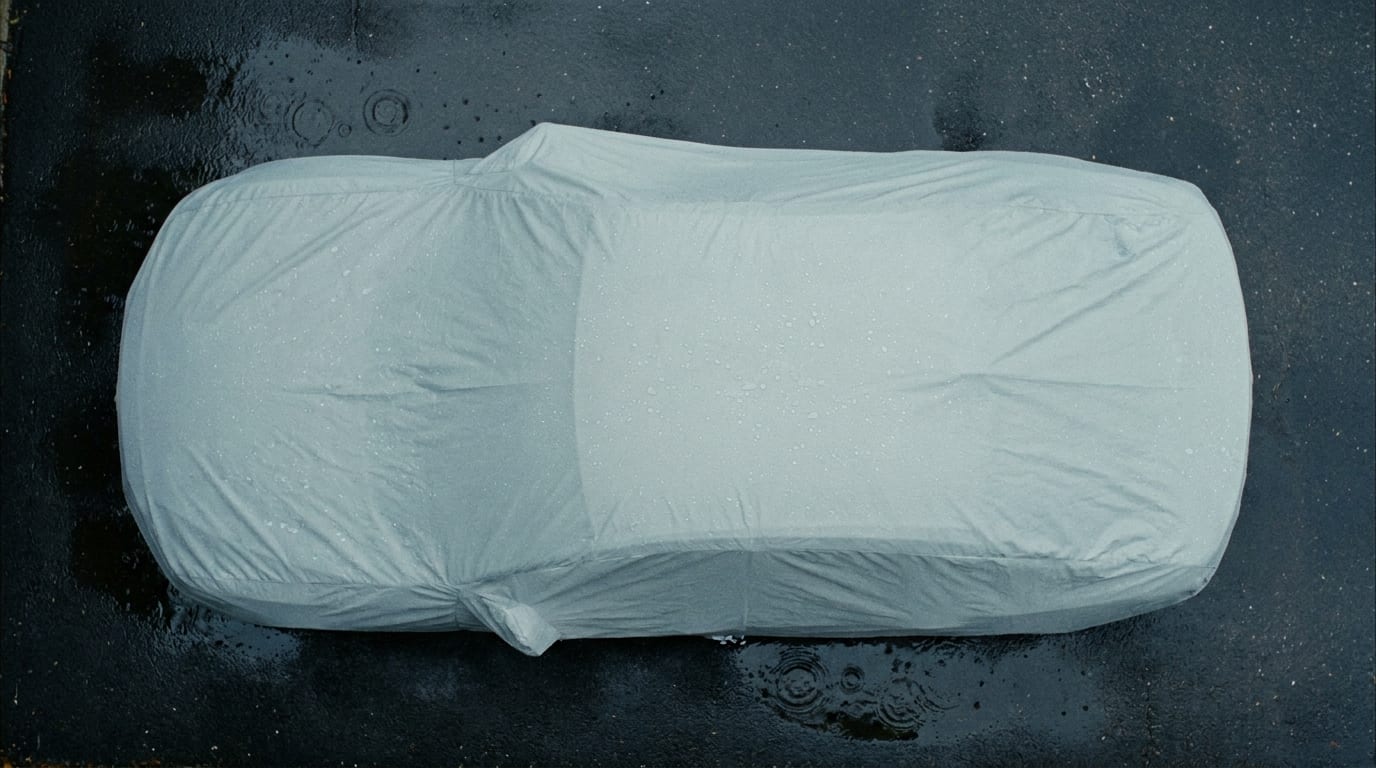
Rain isn't the main problem in humid regions. The air is.
Humid air condenses on a car's surface overnight even when it never rains a drop. Dew points climb, temperatures drop after sunset, and moisture settles on the hood, roof, and windows the same way it beads up on a cold glass of water. If your cover is a sealed barrier, that condensation has nowhere to go. It just sits against the paint for hours, sometimes all night, every night.
Over time that shows up as mold and mildew spotting on the paint, a musty smell inside the cabin if moisture wicks through seams and seals, and faster corrosion on chrome trim and exposed metal. None of it happens overnight. That's actually the trap: humidity damage is slow and quiet compared to hail dents or sun-bleached paint, so cover material gets overlooked until someone notices spotting on the hood or opens the door to a smell that wasn't there before. By then the fabric's already been working against the car for weeks.
This is also why a cover rated for outdoor use in a dry climate can underperform in a humid one. UV resistance and water-shedding matter everywhere, but in muggy regions, airflow is doing just as much work.
Comparing Car Cover Materials for Humid Climates
Not all "water resistant" fabrics behave the same way once humidity gets involved. Here's how the common materials stack up.
| Material | Breathability | Water Resistance | UV Resistance | Best Use Case | Mold/Mildew Risk |
|---|---|---|---|---|---|
| Multi-layer breathable polypropylene | High | High | High | Outdoor, humid or mixed climates | Low |
| Single-layer polyester | Moderate | Moderate | Moderate | Outdoor, mild/dry climates | Moderate |
| Cotton/flannel | High | Low | Low | Indoor storage only | Low (if kept dry) |
| Vinyl/PVC | Very low | High | Low to moderate | Short-term outdoor, dry climates | High |
| Satin | Moderate | Low | Low | Indoor storage only | Low (if kept dry) |
The category to look for, specifically for outdoor use in humid regions, is multi-layer breathable polypropylene. These blends pair a water-shedding outer shell with a breathable inner layer, so rain beads off the top while vapor from condensation and ambient humidity can still escape from underneath. Single-layer polyester can work in milder, less consistently humid climates, but it doesn't manage trapped moisture nearly as well. Vinyl looks tough on paper thanks to its water resistance, but that same solid, non-porous surface is exactly what seals humidity in. If you want the deeper breakdown of how these fabric layers are actually built, our guide on waterproof fabrics covers the construction side in more detail.
Beyond Material: Other Features That Matter in Humid Regions
Material is the biggest factor, but it's not the only one.
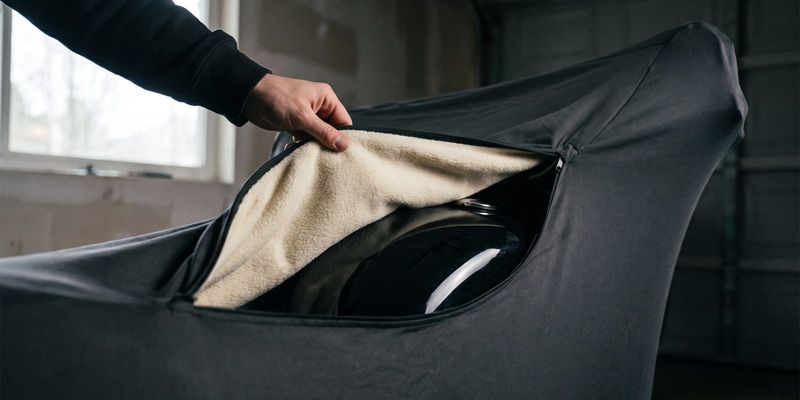
The inner liner matters almost as much as the outer shell. A soft, breathable lining won't trap moisture directly against your clear coat the way a rough or rubberized lining can. Rubberized backings are great at blocking water from one direction, but they hold whatever moisture is already there against the paint, which defeats the purpose in a humid climate.
Ventilation panels and grommets help too. They let air move through the cover instead of just sitting stagnant underneath it, which cuts down on the condensation that builds up inside a sealed cover overnight.
Fit matters more than most buyers expect. A loose, universal-fit cover traps pockets of humid air and flaps around in the wind, which actually pushes moisture around the surface instead of letting it escape cleanly. A custom-fit car cover sits closer to the body, which reduces those trapped air pockets.
One thing that trips people up: elastic hems and cable or strap systems that cinch the cover down too tightly at the bottom can backfire. If there's no airflow path at all, a tight seal just locks humid air in rather than keeping it out. You want secure, not vacuum-sealed.
Indoor vs. Outdoor Storage in Humid Climates
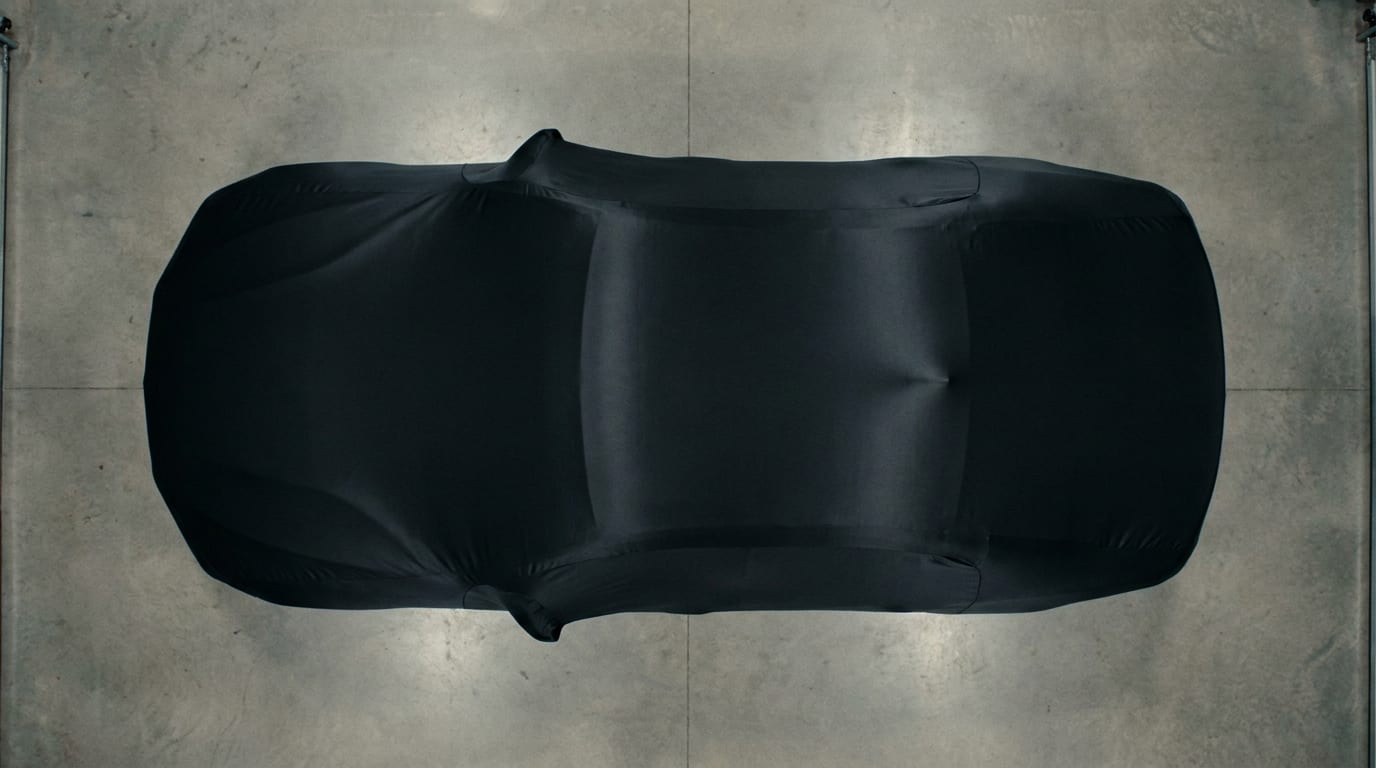
Garaging your car doesn't get you off the hook here. Unless that garage is climate-controlled, it's still trapping ambient humidity, and a non-breathable cover indoors can cause the same spotting and musty-smell problems as one left outside.
Indoor-rated covers are generally lighter, soft fabrics like flannel or satin, built mainly to stop dust and scratches rather than fight off moisture. Indoor car covers do that job well in dry climates. But in a humid region, even a garage can hold enough moisture in the air that an outdoor-rated, multi-layer breathable fabric is the safer default, even for a car that never sees rain directly. It's built to manage moisture either way, so you're not gambling on how dry your garage actually stays through the seasons.
Before you buy either type, it's worth running your vehicle through a size and fit lookup tool. A cover with gaps around the mirrors or bumper gives humid air a place to collect and linger, which undercuts even a good fabric choice.
Keeping a Cover Mold-Free in Humid Conditions
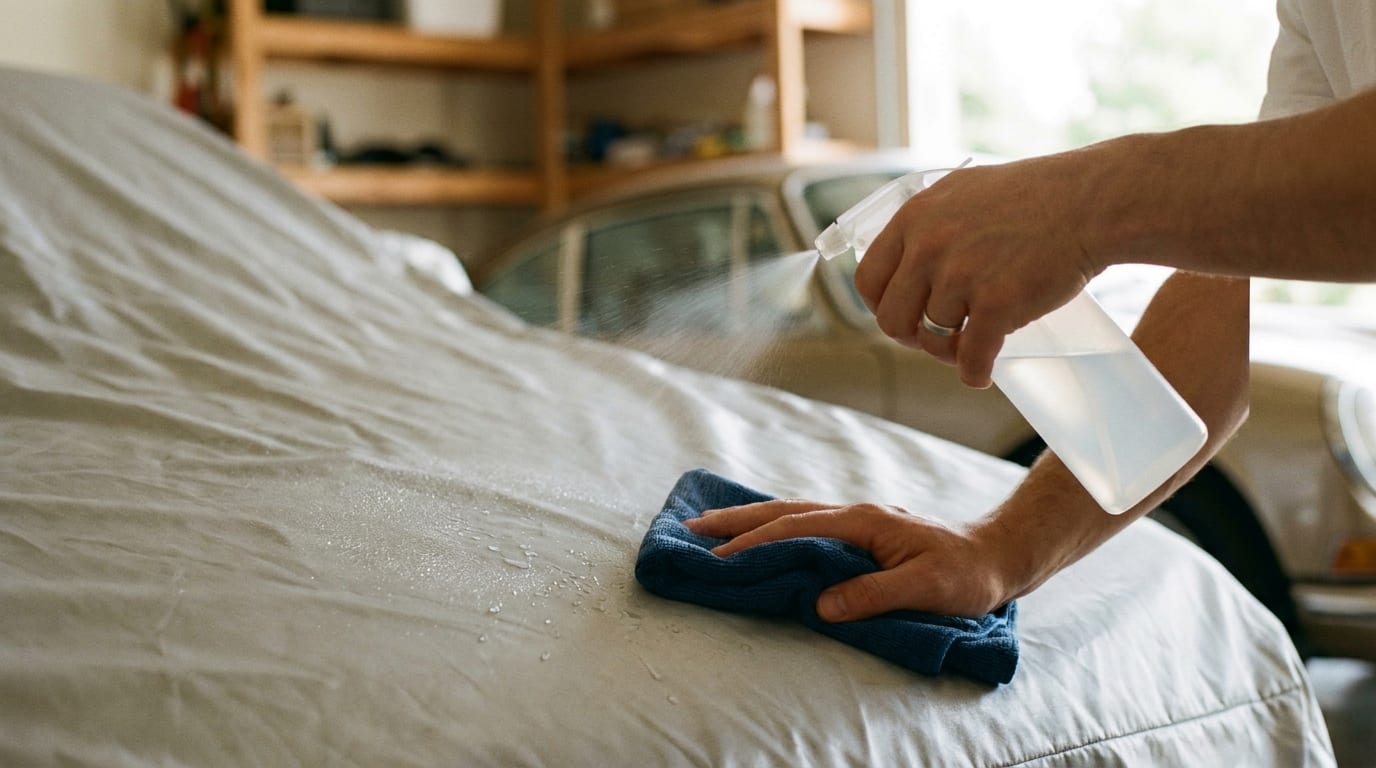
Even the right fabric needs upkeep in a humid climate. Set a cadence: pull the cover off and let it air out periodically, especially after a stretch of rain or a run of high dew-point days. Letting it sit sealed against the car for weeks on end, even a breathable one, gives mold spores more opportunity than they need.
When you do clean it, use the proper steps rather than just hosing it down. Mold spores can embed in the weave of the fabric if they're not fully rinsed out, and they'll keep spreading every time you put the cover back on. Our guide to cleaning a car cover walks through the right detergents and rinse method. After cleaning, the important part is patience: let the cover fully air dry before you fold it up or store it. Folding anything away damp, even for a day, is basically an invitation for mildew.
One more thing. Skip the machine dryer, or at least skip the heat setting. High heat breaks down the water-repellent coating on most multi-layer fabrics and can reduce how breathable the material stays over time, which puts you right back where you started.
Find the Right Cover for Your Climate
If you're storing outside in a humid region, go with a breathable multi-layer fabric. If you're in a garage without climate control, lean the same direction rather than trusting a basic indoor cover to handle the moisture. Either way, a custom fit beats a universal one, since it leaves less room for humid air to pool and sit against the paint. That combination (breathable fabric, right indoor or outdoor rating, snug fit) is really the whole answer to what type of car cover is best for humid climates.
Our full guide to using a car cover outdoors is worth a read if you want to go deeper on wind, UV, and rain alongside humidity. And if you're just getting started on whether a cover makes sense for your situation at all, why you should buy a car cover lays out the basics. Stick around and browse a few more of our care and fit guides, they're built for exactly this kind of decision.