What Vents Does a Good RV Cover Need? (Quick Answer)
A good RV cover needs three things: roof-area vents or breathable fabric zones, side panel vents placed near the mid-body, and clearance cutouts for AC units, roof vents, and satellite domes. Without these, moisture and heat get trapped under the cover with nowhere to go. "Vents" doesn't always mean a mesh-covered hole either, sometimes it's just a breathable, non-waterproof-trapping fabric woven across the cover's largest panels. If you're browsing the full lineup of RV covers, this is the first spec worth checking, right after size.
This matters a lot more for long-term or seasonal storage than it does for covering your rig overnight between trips. A weekend cover that comes off Monday morning doesn't have time to build up a mold problem. A cover that stays on all winter does.
Why Do RV Covers Need Vents in the First Place?
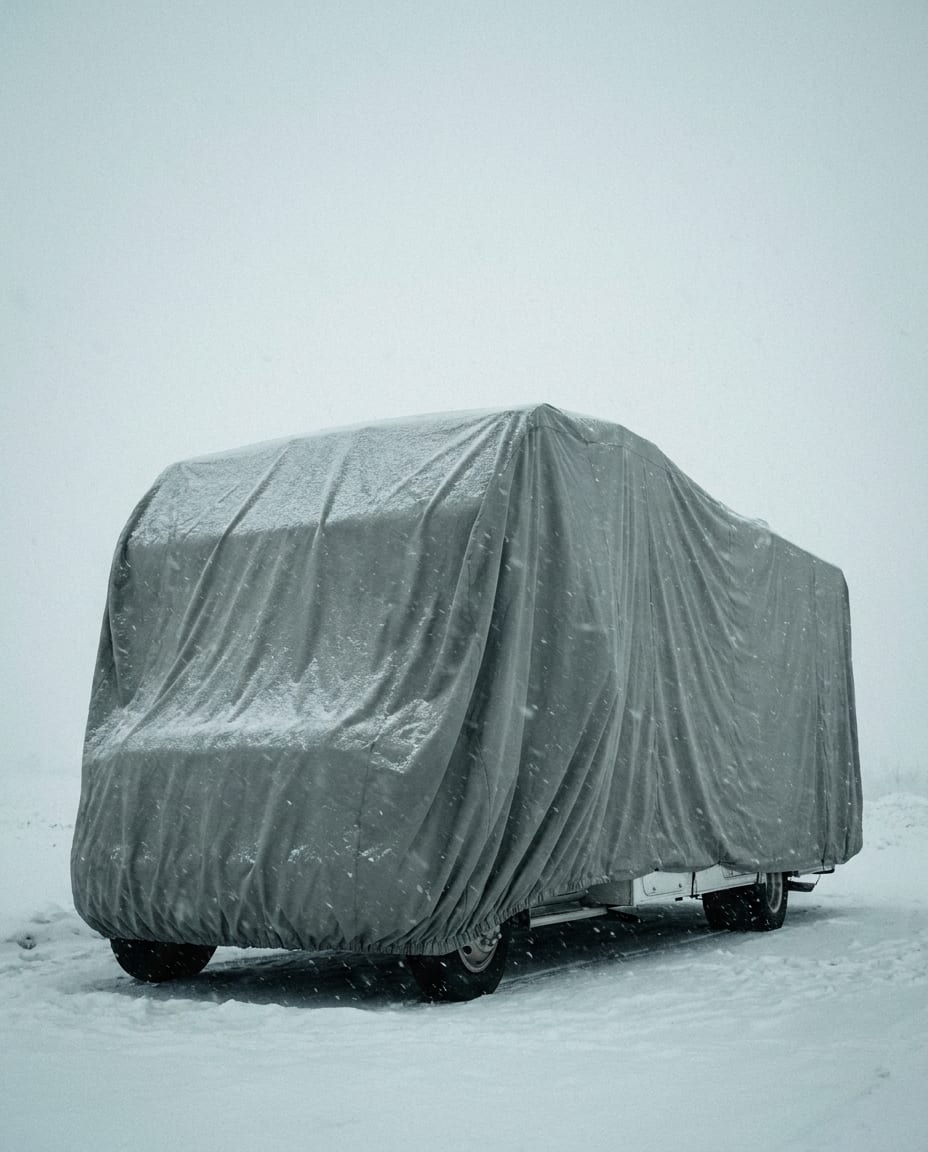
Here's what happens under a sealed cover with no airflow path. The sun heats the roof during the day, moisture inside the RV and trapped under the cover material turns to vapor, and then overnight, as temperatures drop, that vapor condenses right back into liquid water. With nowhere to escape, it just sits there. Day after day.
That cycle is what causes mold and mildew to take hold on the roof membrane, along the sidewalls, and in the seams where the cover touches the RV body. It also stains gel coat and fiberglass in ways that don't always come off with a wash. On top of the moisture issue, heat with no airflow path accelerates wear on rubber roofing, sealants, and decals, basically everything that's already vulnerable to UV and temperature swings. This is the same principle covered in our broader guide to using a car cover outdoors, just scaled up to RV-sized surfaces where the stakes (and the square footage) are a lot bigger.
Where Should Vent Panels Be Placed on an RV Cover?
Placement matters as much as having vents at all. Roof vents, or breathable top panels where mesh isn't practical, need to sit over the RV's highest heat-accumulation zone, usually the center of the roof where direct sun hits hardest and stays longest.
Side vents belong mid-body, generally behind the front cap and ahead of the rear cap. That positioning creates actual cross-airflow instead of just a single stagnant pocket of air. And then there are the cutouts: flaps or openings positioned right around roof-mounted AC units, vent covers, and satellite domes so the cover material isn't compressing against equipment or trapping heat in tight pockets around it.
Where exactly these zones need to be depends on what you're covering. A Class A has a different roofline and equipment layout than a fifth wheel, and a truck camper's hot spots aren't the same as a travel trailer's. That's why vent placement isn't really a one-size-fits-all spec, it's tied to the body style and where the roof hardware actually sits.
How Many Vents Does an RV Cover Actually Need?
There's no magic number here, and honestly, chasing a specific vent count misses the point. What matters is total breathable surface area relative to the size of the cover, not whether it has three vents or five.
A 35-foot Class A cover is going to need multiple vent zones, typically roof plus both sides, just because there's so much more surface trapping heat and moisture. A small pop-up or teardrop trailer cover might only need one or two breathable zones to do the same job. Scale changes the requirement.
One thing worth watching for: covers marketed purely as "100% waterproof" with zero mention of breathability anywhere in the spec sheet. That's often a red flag, not a feature. Fully sealed waterproof fabric with no vapor escape is exactly the setup that causes condensation problems in the first place.
Since vent needs really do vary by RV type, it's worth checking the specific sub-type page for your rig rather than assuming a universal spec: Class A RV covers, Class B RV covers, Class C RV covers, fifth wheel trailer covers, travel trailer covers, and truck camper covers each have different roof layouts and equipment placement to plan around.
Zippered Mesh Vents vs. Breathable Fabric: What's the Difference?
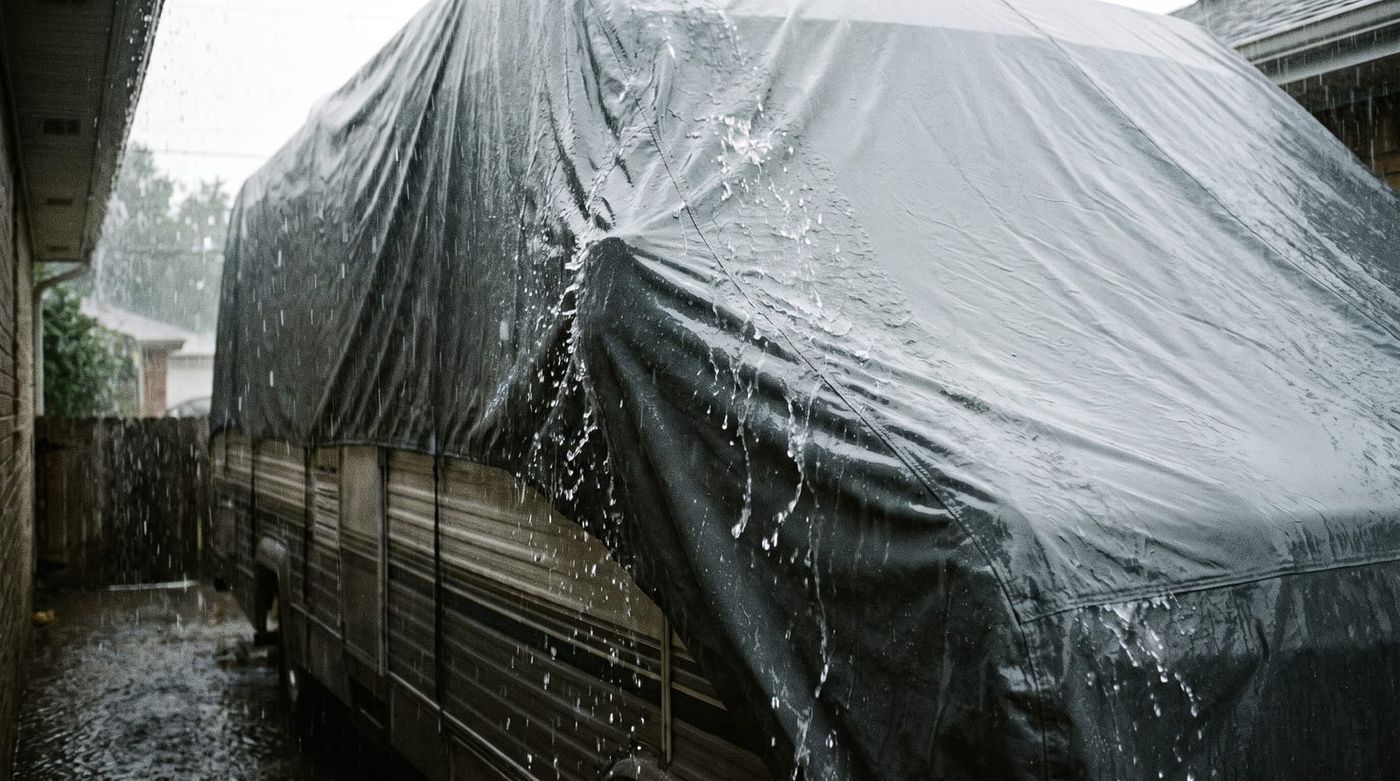
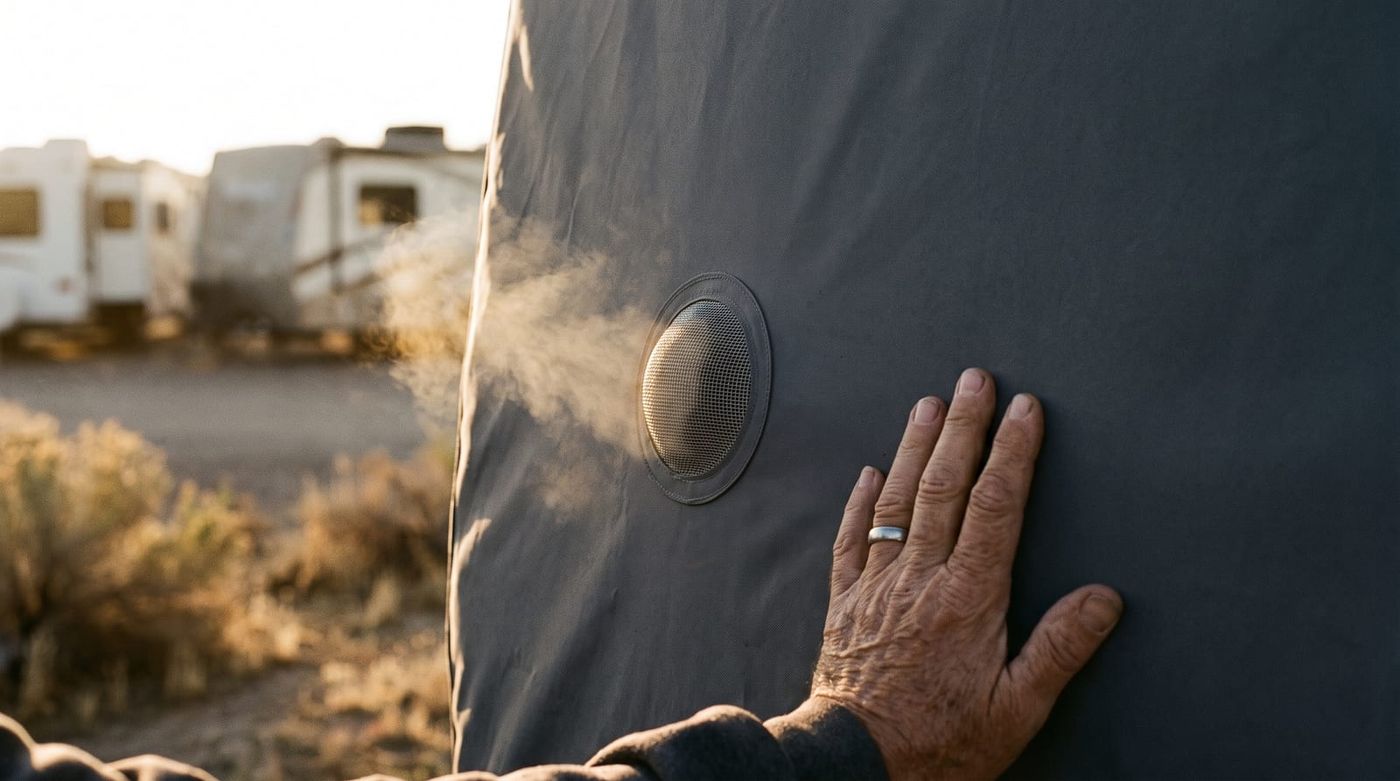
Two approaches solve the same problem differently. Zippered mesh vent panels are physical openings. You can zip them shut during heavy rain and open them back up once the weather clears and the RV's sitting in dry storage. They give you control.
Breathable multi-layer fabric skips the physical opening entirely. Instead, the material itself is engineered to let water vapor pass through while still blocking liquid water from getting in, the same concept behind waterproof-breathable fabrics used in outdoor gear. No zipper, no seam to manage.
The trade-off is straightforward. Mesh vents give you more hands-on control over airflow, but that's one more zipper and seam that needs occasional maintenance and can fail over time. Breathable fabric is maintenance-free since there's nothing to open or close, but it puts all the weight on fabric quality. A cheap "breathable" fabric that doesn't actually breathe well is worse than a mesh vent you forget to open. For more on how these waterproof and breathable claims generally stack up across vehicle covers, our waterproof car covers guide breaks down the fabric side in more depth.
What Happens If an RV Cover Doesn't Have Enough Ventilation?
The signs show up fast, usually within one storage season. A musty smell when you pull the cover off. Black mold spots creeping across fiberglass or rubber roofing. Decals that start streaking or lifting at the edges. None of that is cosmetic only, it's evidence of trapped humidity doing real damage.
It's not just the RV that takes the hit, either. Trapped moisture degrades the cover's own interior lining too, so a poorly vented cover can ruin itself over a single season of storage. This, more than fabric thickness or stitching quality, is the single most common complaint behind badly rated budget RV covers. People assume "waterproof" means "good," and then they pull the cover off in spring to a surprise.
Airing out the RV periodically and giving the cover a proper wash helps as a partial fix, especially if you're stuck with a cover that's already marginal on ventilation. Our step-by-step guide to cleaning a car cover covers the basics, though it won't fully compensate for a cover that was never designed to breathe in the first place.
How to Check Vent Quality Before You Buy an RV Cover
A few things worth confirming before you check out:
- Vent locations match your rig's equipment layout. If your AC unit sits dead center on the roof and the cover's vent zone is offset to one side, that's a mismatch.
- Vents are reinforced, ideally double-stitched. They take repeated wind stress every time the cover flaps or shifts, so a weak seam here fails before the rest of the cover does.
- Vent panels sit clear of gust-strap and tie-down points. This one gets overlooked a lot. If a strap runs directly over a vent panel once the cover's installed, you've effectively sealed it shut. Proper fit and strap placement directly affect whether vents can actually do their job once the cover's on, which is exactly why installation technique matters as much as the cover itself. Our RV cover installation guide walks through strap placement so you're not accidentally defeating your own ventilation.
Choosing a Well-Vented RV Cover
Boil it down and there are three must-haves: breathability across the roof and top panels, side vents positioned mid-body for cross-airflow, and cutouts that accommodate AC units and roof fixtures without compressing around them. Skip any one of those and you're trading a little rain protection for a mold problem down the road.
If you're shopping with this in mind, take the time to match the cover to your specific body style rather than grabbing whatever's cheapest. And if you want more on storage prep, cleaning routines, or picking the right fit, it's worth subscribing or poking around our other RV care guides while you're at it.
Frequently asked questions
What vents does a good RV cover need?
A good RV cover needs roof-area vents or breathable fabric zones, side panel vents near the mid-body, and cutouts or flaps for AC units, roof vents, and satellite domes. These let trapped heat and moisture escape instead of building up under the cover during storage.
Do all RV covers need physical mesh vents?
No. Some covers use breathable, multi-layer fabric that lets water vapor pass through without a physical opening, achieving the same airflow effect as a mesh vent panel.
How many vents does an RV cover need?
There's no fixed number. What matters is total breathable surface area relative to the cover's size. Larger Class A covers typically need multiple vent zones, while smaller trailer covers may only need one or two.