What's the Best Car Cover for a Pickup Truck in an Area with Frequent Hailstorms?
Published
The Quick Answer: What to Buy for Hail-Prone Areas
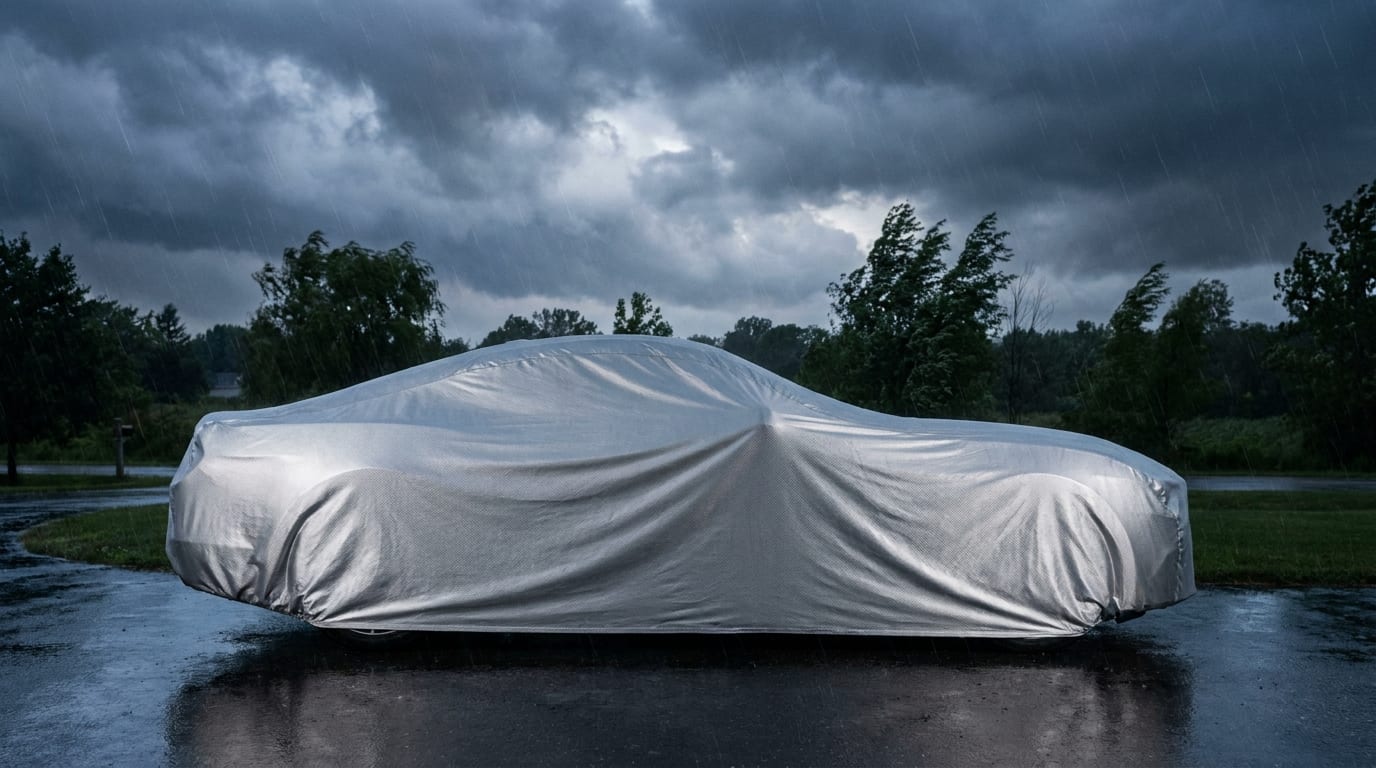
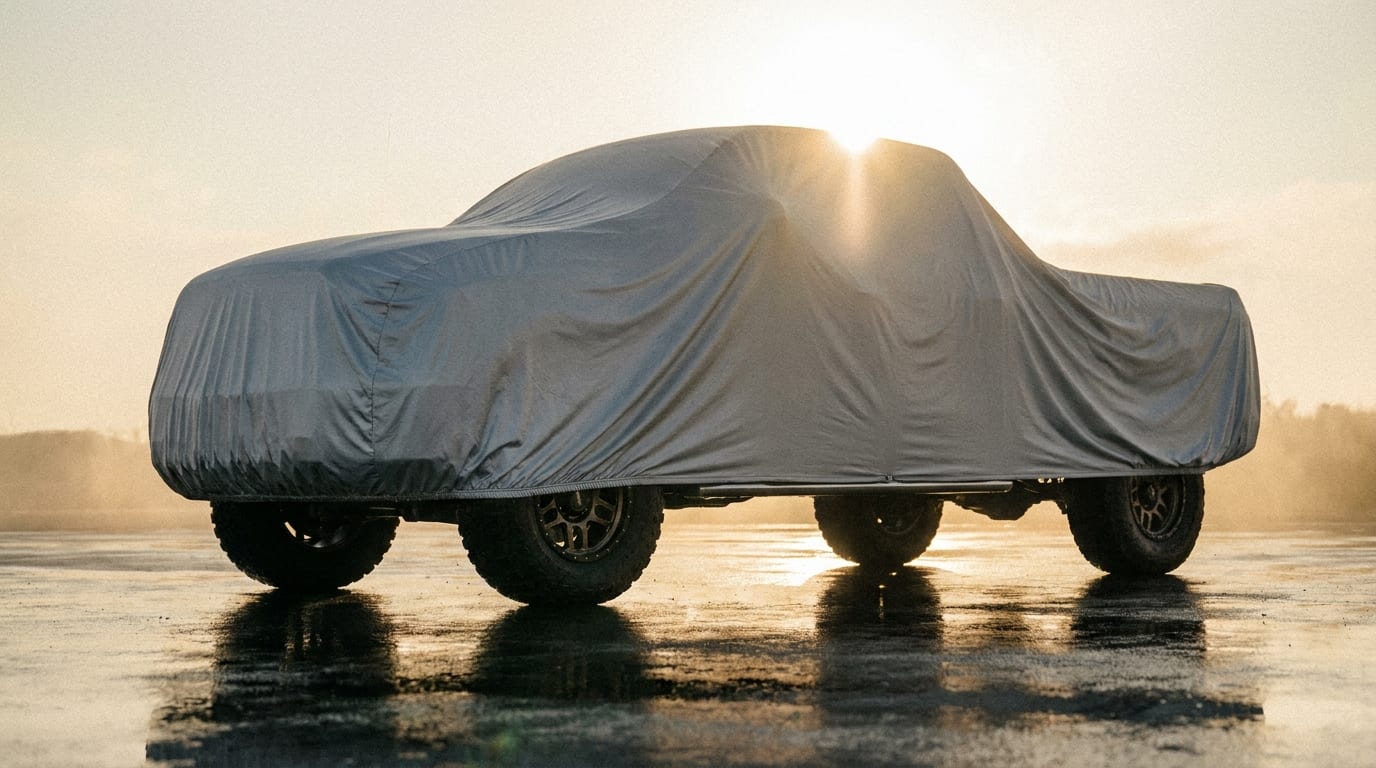
If hail is a regular threat where you live, the best car cover for a pickup truck is a custom-fit, multi-layer cover with a padded or foam-lined outer shell, sometimes sold as a "hail cover" or heavy-duty padded cover. Skip the basic universal-fit cover entirely. It won't hold up, and it might shift around in wind and do more harm than good.
The logic is simple. Padding and foam absorb impact energy and spread it out before a hailstone's force reaches your paint, while a custom fit keeps the cover locked against your truck's body instead of ballooning or flapping when wind picks up mid-storm. That combination (fit plus padding) is really the whole answer to what's the best car cover for a pickup truck in an area with frequent hailstorms.
Here's how the main cover types stack up:
| Cover Type | Hail Protection Level | Best For | Approx. Price Range |
|---|---|---|---|
| Universal Lightweight Cover | Low | Dust and light rain | $30 to $80 |
| Custom-Fit Multi-Layer Cover | Moderate to High | Daily drivers in mixed weather | $150 to $300 |
| Padded/Foam-Lined Hail Cover | High | Frequent hail zones | $250 to $450 |
| Indoor Cover | None (not for outdoor storm use) | Garage dust protection | $50 to $120 |
One honest caveat: no cover stops every dent. A large enough hailstone, moving fast enough, can still mark up a panel even through good padding. What a padded, custom-fit cover does is cut down the number and depth of dents compared to leaving your truck bare or relying on a thin universal cover, and that difference usually shows up in your repair bill.
What Actually Makes a Car Cover 'Hail-Resistant'?
Three things decide whether a cover actually protects against hail: how many layers it has, how thick the padding or foam is, and how snugly it's tensioned against the truck's panels. Get any one of those wrong and the rest doesn't matter much.
People mix up "waterproof" and "hail-resistant," but they're solving different problems. A waterproof shell keeps rain and moisture out. It does nothing to stop a chunk of ice from denting your hood. Padding is the part that actually absorbs the hit. A cover can be fully waterproof and still leave you with a roof full of dimples after a storm.
A real hail cover is built in layers: a weather-resistant outer shell bonded to an inner foam or dense fleece layer, often a quarter inch thick or more in the heavier versions. That foam layer is doing the actual work during impact.
Expect tradeoffs. These covers weigh more and take up more space than a standard cover, they're harder to fold into a neat bundle, and putting one on a full-size truck solo isn't always fun. Two people makes it a lot easier. If you want the full rundown on specs and construction details, the hail car cover buying guide covers that in depth.
Why Pickup Trucks Need Different Hail Protection Than Cars
Trucks and sedans don't face the same hail exposure. A sedan's body has curves and contours that deflect some impact. A pickup truck has a flat bed, a wide hood, and a big flat roof, all prime real estate for hailstones to land square and leave a mark. More flat surface area means more exposed panel, plain and simple.
Fit complicates things further. An F-150, Silverado, Ram 1500, and Tacoma all come in different cab and bed combinations, regular cab, extended cab, crew cab, short bed, long bed, and a cover sized for one won't sit right on another. If you're not sure which configuration you have, the pickup truck bed size guide walks through how to check before you buy.
This matters more during hail than almost any other weather event. A cover that doesn't fit right leaves gaps where exposed panels take direct hits, or worse, it lets wind get underneath and lift the whole thing, which can do more damage flapping around than just leaving the truck uncovered. For hail specifically, custom fit isn't a nice-to-have, it's the difference between protection and a false sense of it. The custom-fit buying guide breaks down why a cover built for your exact model outperforms a generic one, especially in storm conditions.
Comparing Cover Materials for Hail vs. Everyday Weather
Not all cover materials are built for the same job. Polyester blends and basic woven fabrics are fine for dust, light rain, and UV exposure, but they offer almost nothing in the way of dent protection. Multi-layer woven fabrics do better because they add some cushioning between layers. Foam-laminated fabrics are the real deal for hail, since the foam layer itself absorbs impact instead of just transferring it straight through to the paint.
A cover marketed around sun and rain protection, the kind with a thin, breathable fabric designed to let moisture escape, will do close to nothing when ice starts falling. That's not a knock on the cover, it just wasn't built for that job.
There's a real tradeoff here for truck owners who drive daily. Maximum padding means maximum hail protection, but it also means a heavier, bulkier cover that's more work to put on and take off every day. If you're covering and uncovering your truck constantly, a cover that's all foam and no breathability gets old fast. For a full breakdown of fabric types across different weather scenarios, the material comparison article is worth a read.
Practical take: if you're driving your truck daily in a hail-prone area, look for a cover with enough padding to matter in a storm but still manageable enough that you'll actually use it every day. The best cover in the world doesn't help if it's such a hassle that it stays folded in the garage.
Installing and Securing a Cover Before a Storm Hits
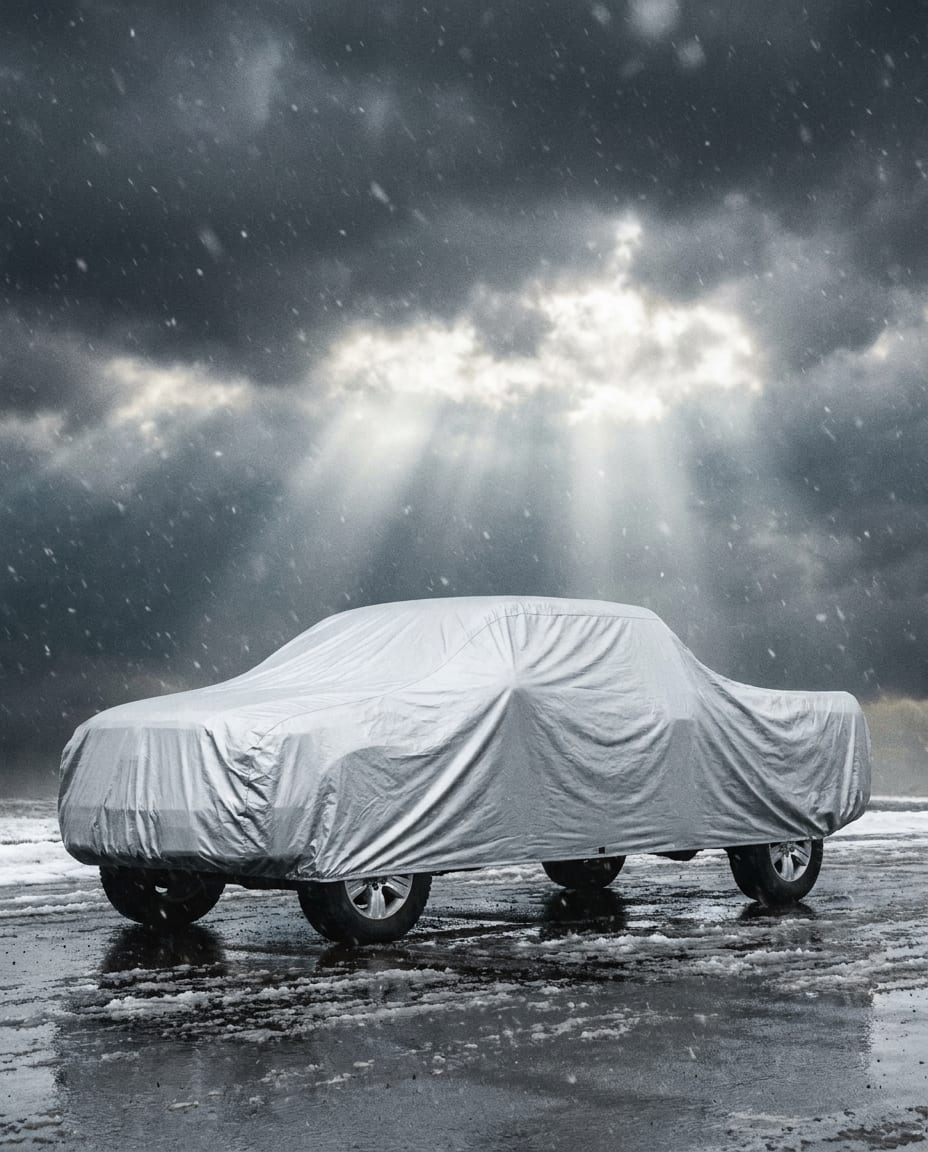
A good cover installed badly won't protect much. Before a forecasted hailstorm, drape the cover front to back, not side to side, so water and hail don't pool in the wrong spots. Then tension it down. Use the cable lock or straps at the mirrors and bumpers, and pull everything snug. Check along the bed rails for gaps, since that's a common spot for loose fabric to bunch up and leave panels exposed.
Gust straps matter more on trucks than on cars. That big flat bed and wide hood catch wind like a sail, and a cover that's not strapped down can start flapping, working itself loose right when you need it most. The gust strap installation guide covers how to set these up properly.
A support pole across the windshield area helps too. Without one, covers can sag between the hood and cab, and that dip collects water or lets the fabric sit loose instead of pulled taut, which cuts down the padding's effectiveness exactly where you need it most. The truck-specific support pole installation guide walks through the setup for pickup configurations.
After the Storm: Inspecting and Cleaning Your Cover
Once the storm passes, don't just pull the cover off and move on. Check the outer shell for tears or small punctures, since a hole that goes unnoticed now becomes a bigger failure point in the next storm. Feel around for compressed or shifted padding, especially over the hood and bed where impacts concentrate. Check your straps and cables too. Repeated storms put real wear on the hardware, not just the fabric.
Debris, ice melt, and grit build up fast during storm season, and if you leave it sitting on the cover it can wear down the material faster than normal use would. A quick rinse and wipe-down after each major storm keeps things in shape.
If you're noticing the same spots showing consistent indentation or the padding feels thinner than it used to, that's your sign to replace the cover rather than try to patch it. Compressed foam doesn't bounce back. For the full process on keeping a cover clean and in good shape, check the step-by-step cover cleaning guide.
Warranty Protection Matters for Hail-Zone Buyers
A cover sitting outside in frequent hailstorms takes a beating most covers never see. That physical stress adds up, which makes warranty coverage a bigger factor for hail-zone buyers than it would be for someone in a mild climate.
A lifetime warranty typically covers manufacturing defects and material failure, things like seams coming apart or fabric degrading faster than it should. It won't cover damage to your actual vehicle from a hailstorm, and it won't cover normal wear from years of use. Worth reading the actual terms rather than assuming. The lifetime warranty page lays out what's actually covered.
Keep your receipt, and register the product if that option is available. It makes any future claim a lot smoother if you ever need one.
Bottom Line: Choosing Your Truck's Hail Cover
Boiled down, the decision comes down to three things: get a cover custom-fit to your truck's exact model and bed length, make sure it's padded or multi-layered for actual impact absorption, and install it properly with straps and a support pole so it stays put when the wind picks up. Skip any one of those three and you're leaving protection on the table.
No cover guarantees zero damage in severe hail. But the right one, fitted right and installed right, meaningfully cuts down how many dents you end up with and what it costs to fix them afterward.
If you're ready to look at options, browse truck covers by category or search for your specific truck brand to find the exact fit you need. And if you found this useful, stick around the blog, there's more here on getting your vehicle ready for whatever the weather throws at it.