Affordable Car Cover for Dodge Durango: A Budget Buyer's Guide (Without the Junk)
Published
Why Durango Owners Are Hunting for an Affordable Cover
You want real protection from sun, rain, tree sap, and road grime, and you don't want to pay what feels like a second car note for it. That's the honest version of what most people searching for an affordable car cover for Dodge Durango actually want. Not the cheapest possible tarp. Something that works and doesn't bleed money.
Here's the wrinkle: the Durango is a big SUV, not a compact sedan. Generic "one-size-fits-most" covers are sized around smaller vehicles, and when you stretch one over a Durango's roofline, mirrors, and rear spoiler, you get gaps. Gaps let wind in. Wind flaps the fabric against your paint for months. Buy twice, pay twice, and you've spent more than if you'd gotten the right size the first time.
So let's set expectations early: affordable doesn't have to mean disposable. This guide walks through what actually drives cover pricing, where there's a real quality floor you shouldn't drop below, what changes at each price tier, and how Durango-specific sizing keeps you from wasting money on a mismatch.
What Actually Drives the Price of a Car Cover
Material is the biggest line item. A thin, single-layer polypropylene sheet costs less to produce than a multi-layer woven fabric with a breathable inner lining and a water-resistant outer shell. That difference shows up directly in the price tag, and it shows up again a year later in how the cover looks.
Fit is the second driver. Universal covers are cut from a handful of generic size templates and sold for a huge range of vehicles. Semi-custom and custom-fit car covers are patterned to a specific vehicle's dimensions, which costs more to manufacture but cuts down dramatically on wind flap, fabric sag, and the slow abrasion that comes from loose material rubbing against trim and paint for months on end.
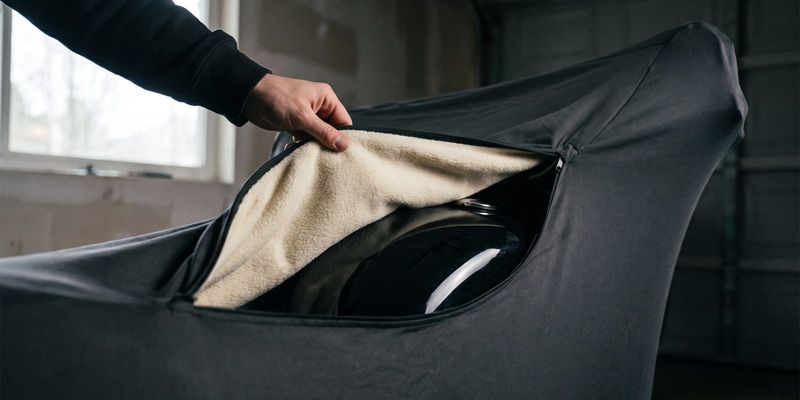
Then there's hardware. Grommets for a cable lock, elastic hems, buckle straps, an antenna patch cutout. None of these cost much individually, but they're the difference between a cover that stays put in wind and one that ends up three yards down your driveway after a storm.
And then there's brand markup, which is a different thing entirely. Some of the price gap between two covers reflects actual material and construction differences. Some of it is just logo tax. Worth knowing the difference before you assume the pricier option is automatically the better one.
The Minimum Quality Bar: What Not to Skimp On

This is the part budget shoppers skip, and it's the part that actually matters most.
Water resistance has to be real, not marketing language. "Water repellent" on a label often just means a light coating that washes off after a few rounds of rain. You want a cover that's genuinely waterproof or water-resistant by construction, not by spray treatment.
UV protection is non-negotiable too. A cover that fades, chalks, or cracks after one Arizona summer isn't affordable, it's a cover you'll be replacing again in eight months. The whole point was to spend less over time, not more.
Breathability matters just as much as waterproofing, and people get this backwards constantly. A cover that blocks all moisture from getting in but also traps condensation underneath will sit there cooking your clear coat. That kind of damage costs way more to fix than any cover costs to buy.
Check the seams too. Bonded or glued seams are cheaper to produce, but they're usually the first thing to fail, and on a Durango they tend to split right around the roof rails and mirror cutouts where the fabric gets stressed the most. Stitched, reinforced seams hold up longer under that kind of repeated tension.
Last thing: warranty. Even a budget-tier cover should come with a real manufacturer warranty behind it. If you're not sure what a solid one looks like, CarCovers' lifetime warranty page is a decent benchmark to measure other covers against, warranty length and coverage terms included.
Budget, Mid-Range, and Premium: What Changes at Each Price Point

| Tier | Typical construction | Best use case |
|---|---|---|
| Budget | Lightweight, single-layer, universal fit | Short-term or indoor use, occasional coverage |
| Mid-range | Semi-custom or custom-fit, multi-layer fabric | Daily outdoor parking, regular weather exposure |
| Premium | Heavy-duty all-weather fabric or indoor satin, best fit precision | Harsh climates, year-round outdoor storage, long-term ownership |
Budget covers aren't bad, they're just built for a narrower job. Fine for a Durango that spends most of its life in a garage and only gets covered occasionally, or for short-term storage. Push one into daily outdoor duty through wind and rain and it'll wear out fast.
Mid-range is where most Durango owners actually land, and for good reason. SUV covers built with semi-custom or custom-fit patterns and multi-layer fabric handle daily outdoor parking without the premature wear you get from a thin universal sheet.
Premium makes sense if you're dealing with genuinely harsh conditions: heavy snow load, desert sun, coastal salt air. Otherwise, you're paying for durability you won't stress-test.
Practical take: if your Durango lives outside most of the year, mid-range custom-fit is the sweet spot between cost and protection. Save premium tier for climates that actually demand it.
Getting the Fit Right for Your Durango (So You Don't Overpay for a Mismatch)

Durango generations aren't identical. Roof rails, rear spoilers, and body dimensions have shifted across model years, and that changes which size or pattern actually fits. A universal "large SUV" cover might technically stretch over your Durango, but stretch isn't the same as fit.
This is where an ill-fitting "affordable" cover quietly becomes expensive. Excess fabric flaps in wind, and that flapping grinds against paint over weeks and months. A cover that was $40 cheaper upfront isn't a deal if it leaves swirl marks that cost real money to buff out.
Before you buy anything, confirm your exact fit rather than guessing off a generic size chart. CarCovers has a sizing guide and a cover finder tool built for exactly this, matching year, generation, and body configuration to the right cover pattern. There's also a dedicated Dodge SUV covers page if you want to browse options built around Dodge's SUV lineup specifically.
One more variable: where the Durango actually sits most of the time. If it's garage-kept and only exposed occasionally, you don't need full all-weather armor, an indoor cover built for dust and light scuffs is lighter, cheaper, and does the job. Save the heavier weatherproofing spend for vehicles parked outside full-time.
Where and When to Find Real Discounts Without Sacrificing Protection
The smartest way to save isn't dropping down a quality tier, it's timing your purchase. Clearance and seasonal sales regularly put higher-tier covers at lower prices without touching material quality. Worth checking the clearance collection before settling for a lower-spec cover at full price.
Buy your accessories at the same time, too. Straps, cable locks, lock kits, whatever you need, bundling them into the original order is usually cheaper than buying each one separately down the line once you realize you need it.
Don't forget shipping and returns when you're comparing prices across retailers. A cover that's $10 cheaper upfront isn't actually cheaper if you're paying for shipping on top, or if a bad fit means an expensive return. Check free shipping terms and the return policy before you check out, they're part of the real total cost.
One caution: marketplace listings with no verifiable warranty or return path can look like the cheapest option, but if the fit's wrong or the material falls apart in month three, you've got nowhere to go. A slightly higher price from a retailer with an actual return process is often the better deal once you factor in that risk.
Making an Affordable Cover Last Longer
Even a solid mid-range cover won't last if it's treated badly. Fold it properly instead of balling it up, and never drag it across pavement to pull it on or off, that's how you put holes in the fabric fastest.
Clean it regularly, too. Dirt and grit act like sandpaper against fabric fibers every time the cover shifts in wind. There's a full cover-cleaning guide worth following if you want this cover to last multiple seasons instead of becoming an annual repurchase.
Climate matters for storage habits too. If you're dealing with heavy snow, brush it off regularly rather than letting weight sit on the fabric for days. In intense sun regions, a cover with real UV protection is worth the slightly higher spend, since that's exactly the condition that breaks down cheap material fastest.
Bottom Line: Picking the Right Affordable Cover for Your Durango
Fit first. Then weatherproofing and UV protection. Price comes last in that order, not first, and that's really the whole decision framework for finding an affordable car cover for Dodge Durango that actually holds up.
Don't default to whatever's cheapest just because it's convenient. Water resistance, UV protection, breathable fabric, stitched seams, a real warranty, those aren't luxury extras, they're the floor. Below that line, you're not saving money, you're postponing a second purchase.
If you want to skip the guesswork, use a cover finder tool to match your Durango's exact year and configuration to the right size before you start comparing prices. Getting fit right first makes every other decision in this guide a lot easier. And if you're the type who likes to geek out on this stuff, stick around and check out more car care guides, there's always another corner of ownership worth getting right.