What 'Affordable' Really Means for an Elantra Cover
Shopping for an affordable car cover for your Hyundai Elantra, you'll notice prices all over the map, from $25 tarps to $300 "premium" kits. Ignore both ends. For a compact sedan like the Elantra, a genuinely usable cover runs somewhere between $40 and $150, depending on how it's built and what it's made of. You don't need the $300 tier.
Here's the upside of owning something Elantra-sized: less material, lower price. A cover sized for a full-size SUV or crew-cab truck eats up a lot more fabric, hardware, and stitching than one cut for a compact sedan. So Elantra owners are already starting from a cheaper baseline than their neighbor with the Tahoe. That's good news for your wallet.
This guide isn't about finding the cheapest option on the page. It's about spending less while still buying a cover that survives its first real season, not one that rips at the seams after the first windstorm.
What Actually Drives the Price of a Car Cover
A few variables separate a $45 cover from a $120 one, and it's worth knowing what you're paying for before you decide what to skip.
Fit type matters most. Universal and semi-custom covers, sized roughly to your vehicle's class and length, cost less because the manufacturer isn't cutting a pattern specific to the Elantra's body lines. True custom-fit car covers cost more because they're built to match your exact mirrors, roofline, and contours.
Material layering is the other big one. A single-layer fabric is cheap to produce and cheap to buy, but it won't hold up as long outdoors. Multi-layer woven fabrics with taped seams cost more upfront, mostly because they take more material and more manufacturing steps, but they tend to outlast single-layer covers by a wide margin.
Then there's hardware. Grommets for a cable lock, a built-in cable-and-lock system, tripod support for sedans with low rooflines, an antenna patch cutout: each one adds a few dollars. None of these individually breaks the budget, but stack enough of them and you've moved from entry-level pricing into mid-tier.
Brand and warranty backing round it out. A cover backed by an actual manufacturer warranty typically costs a bit more than an unbranded import with no support behind it. That premium isn't always worth paying, but it's worth knowing it's there.
The Minimum Quality Bar: What Not to Cut on a Budget

Budget shopping doesn't mean "cheapest thing that fits." There's a floor below which a cover stops doing its job, and it's worth knowing where that line sits before you buy.
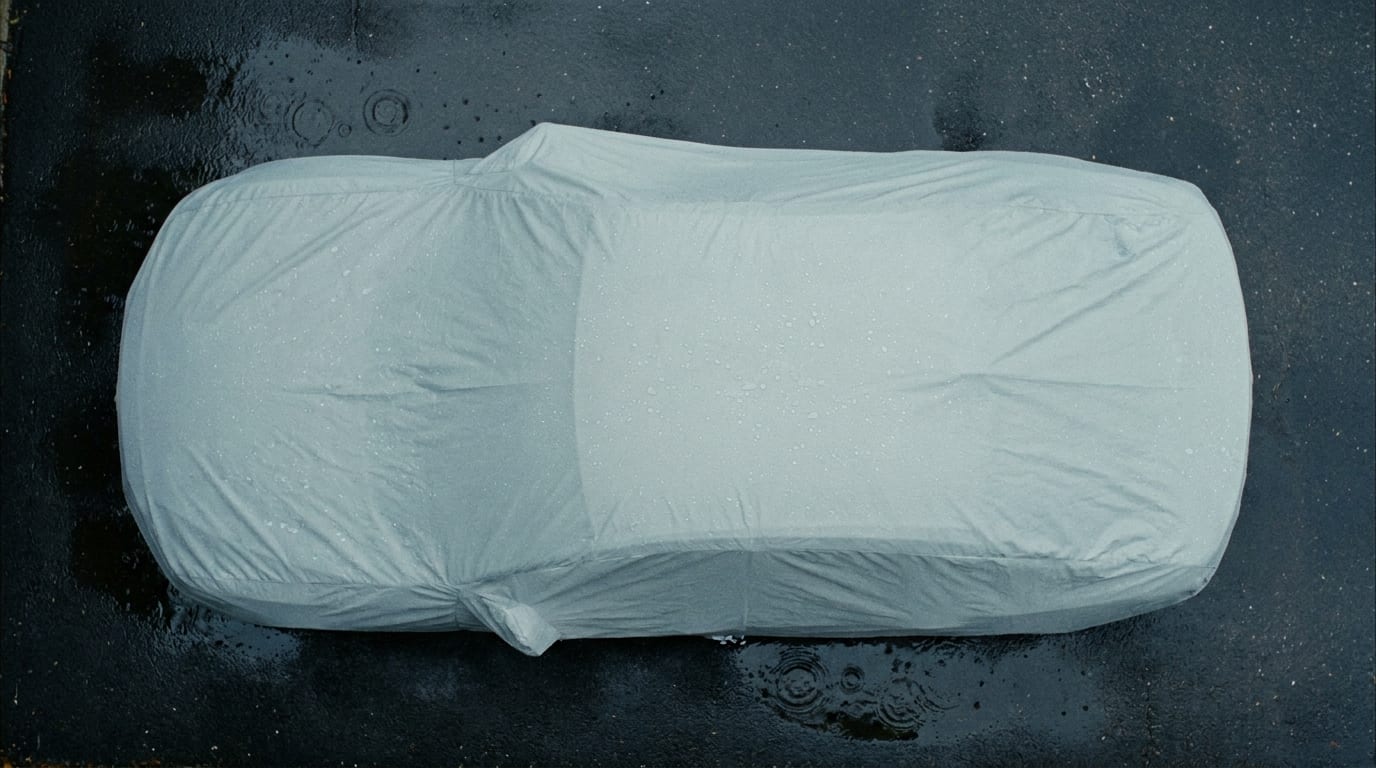
Water resistance is non-negotiable if your Elantra ever sits outside, even occasionally. A plain dust cover will not cut it the first time it rains. Look for fabric that's at least water-repellent or treated, not just a thin woven layer meant to catch garage dust.
UV protection matters just as much, especially in sun-heavy states. Cheap, untreated fabric fades, stiffens, and starts cracking within a single season of real sun exposure. That's not a slow failure, it happens fast once the fabric starts to go.
Breathability gets overlooked constantly. A cover that seals in moisture instead of letting it escape will trap condensation right against your paint, which defeats the entire purpose of covering the car in the first place.
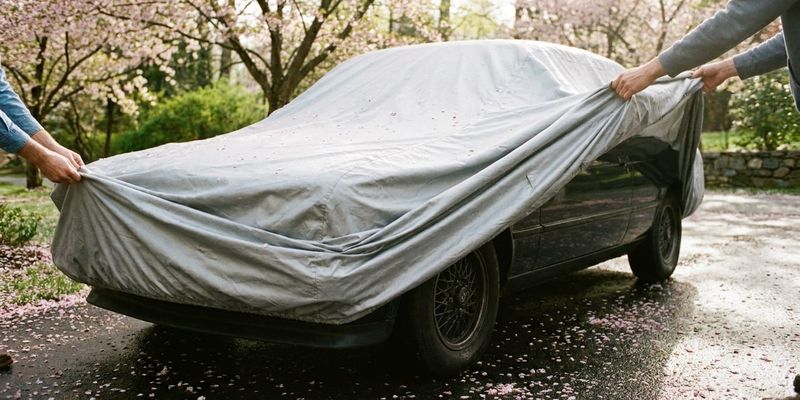
Last, check for a secure fit: elastic hems, under-body straps, or a cable-and-lock setup. Without one of these, wind will find the loose edge and start working it loose, especially if you're parked anywhere near open road or exposed to regular gusts.
If your Elantra lives outdoors, even part-time, it's worth reading through the details on waterproof car covers before you commit to anything in the entry-level tier.
Semi-Custom vs. Custom-Fit: Which Is the Better Value for an Elantra?
Semi-custom covers, sized to your vehicle's general class and length, are the cheaper entry point, and honestly, they're fine for occasional or short-term use. If you're covering the car for a two-week trip or storing it seasonally, semi-custom gets the job done without overspending.
But if your Elantra sits outside daily, the math changes. True custom-fit car covers cost more, but they cut down on flapping, fit the mirrors and antenna properly instead of leaving gaps, and tend to last longer because there's less loose fabric for wind to grab. For daily outdoor storage, that difference pays for itself.
One mistake that trips up a lot of budget buyers: assuming every Elantra is the same shape. It isn't. Sedan-generation Elantras and the older hatchback-era models have different lengths and rooflines, and a cover sized wrong will either sag or strain at the seams. Check sizing against your specific generation using the guide to sizing a car cover before you add anything to cart. A cheap cover in the wrong size is still a wasted purchase, no matter how good the fabric is.
Budget Price Tiers for a Hyundai Elantra Cover
Roughly speaking, Elantra covers break into three price bands, and matching the right one to your actual situation is where the real savings happen.
| Tier | Price range | What you get | Best for |
|---|---|---|---|
| Entry | $40 to $60 | Basic single-layer fabric, minimal weatherproofing | Garage storage, indoor/light-duty use |
| Mid | $60 to $100 | Treated multi-layer fabric, better seam construction | Daily outdoor exposure |
| Upper-budget | $100 to $150 | Reinforced grommets, cable systems, manufacturer warranty | Street or driveway parking, long-term outdoor use |
The entry tier is genuinely fine for a garage-kept Elantra. You're paying to keep dust and scratches off, not to fight weather. Don't let anyone upsell you past that if your car never sees rain.
But if your Elantra parks in the driveway or on the street, lean mid-tier at minimum. The jump from entry to mid buys you real weather protection, and skipping it to save $20 usually means replacing the cover again next spring.
Indoor vs. Outdoor Storage: Don't Overpay for Protection You Don't Need

This is where a lot of budget shoppers waste money in the other direction: paying for protection they'll never use.
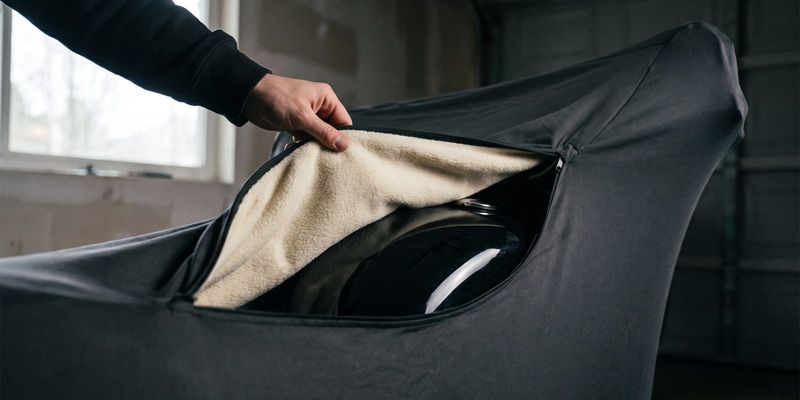
If your Elantra lives in a garage, a lightweight dust cover is genuinely all you need. Skip the heavy waterproofing, skip the UV treatment, skip the reinforced hardware. None of it does anything useful indoors, and you're just paying extra for features that sit unused. Check indoor car covers for what actually matters in that scenario: softness against the paint and breathability, mostly.
If it's outdoors, flip your priorities. Water and UV resistance come first, every time. Reflective trim, fancy storage bags, extra pockets: nice to have, not worth paying extra for on a budget build. Spend your money on fabric quality instead of features. The outdoor car covers overview breaks down what's actually worth paying for in that environment versus what's just marketing.
Knowing which category you fall into before you shop saves you from either overpaying or underbuying, both of which are easy mistakes on a tight budget.
Making a Budget Cover Last Longer

A budget cover doesn't have to mean a short-lived cover. How you use it matters almost as much as what you bought.
Installation is the biggest factor. A loose cover flapping in the wind wears out fast, the fabric rubs against itself and against the paint, and that friction is what kills cheap covers faster than sun or rain ever does. Check your straps and elastic hems every time you put the cover on. Takes thirty seconds, saves you a season.
Cleaning matters too, more than people expect. Dirt and grit ground into the fabric wear it down from the inside, and the wrong cleaning method strips whatever water repellency the fabric started with. The step-by-step cleaning guide walks through a method that won't damage treated fabric, which is exactly what you want to protect on a lower-cost cover that doesn't have much margin for abuse.
Treat a budget cover right, and there's no reason it can't get you two or three seasons instead of one.
Finding the Right Affordable Cover for Your Elantra
The floor doesn't move, no matter your budget: water resistance, UV protection, breathability, and a secure fit. Drop below any one of those and you're not buying a cheaper cover, you're buying a cover that fails early, which usually ends up costing more.
Within that floor, there's real room to save. Match the tier to how your Elantra is actually stored, skip features you don't need, and you'll land on something that works without overspending. Browse Hyundai-specific cover options to see what's available by fit and price, and use the cover finder tool to filter by budget and model year so you're not guessing. When you're deciding between two similarly priced options, check whether one carries a lifetime warranty, that's often the tiebreaker that makes the slightly pricier option the better value.
If you're still weighing whether a cover is worth it at all for your situation, our guide on why buy a car cover is a good next read. And if you want more buying advice like this as you shop, keep an eye on our other car cover guides. It's a quick way to make sure you land on the right pick the first time, instead of replacing a bad one next season.