
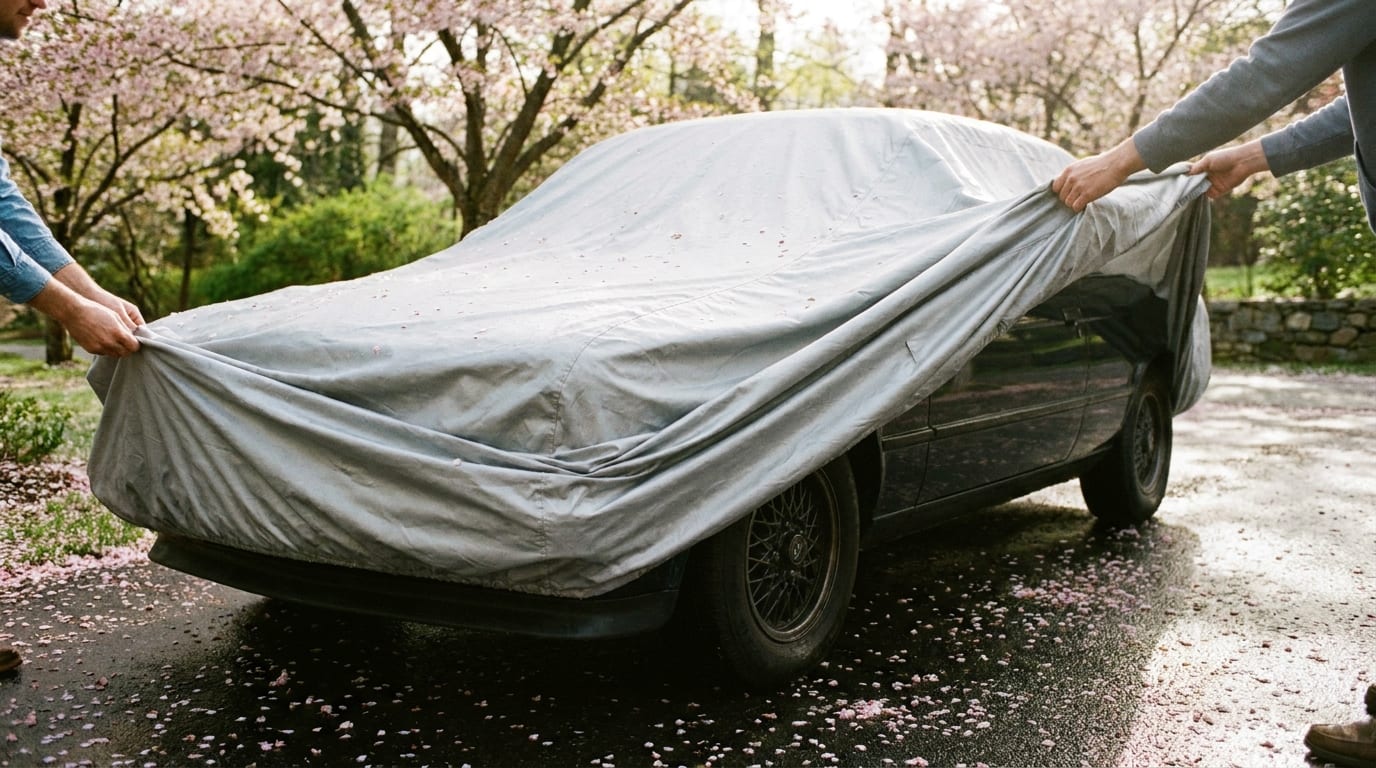
If you're googling "what's the best car cover for a hatchback in a place with heavy pollen in spring," here's the short version: get a breathable, multi-layer, custom-fit outdoor cover. It blocks pollen from settling into your paint and seams, but still lets trapped moisture escape so that pollen doesn't bake into a sticky film on your clear coat. Skip anything vinyl or tarp-like. It'll trap condensation and turn fine pollen dust into paste against your paint.
Hatchbacks have a specific vulnerability here. That sloped rear glass and the seam where the hatch meets the body create extra surface area and extra gaps, places where a loose-fitting cover lets pollen collect and work its way in rather than sliding off.
Here's how the main cover types stack up for this specific problem:
| Cover Type | Pollen Defense | Breathability | Fit Precision | Price Range |
|---|---|---|---|---|
| Custom-fit breathable outdoor | High | High | High | Mid to high |
| Universal-fit breathable | Medium | High | Loose | Low to mid |
| Waterproof-only vinyl/tarp | Low | None | Varies | Low |
| Indoor-only satin/fleece | Not viable outdoors | Low relevance | High (indoor use) | Low |
One caveat before you buy anything: this is a decision aid, not a push toward one specific product. The right custom-fit car cover depends entirely on your hatchback's actual dimensions, not just its general size class. A Golf and a Soul are both "compact hatchbacks" but they don't share a hatch seam.
Why Spring Pollen Is Especially Tough on Hatchbacks
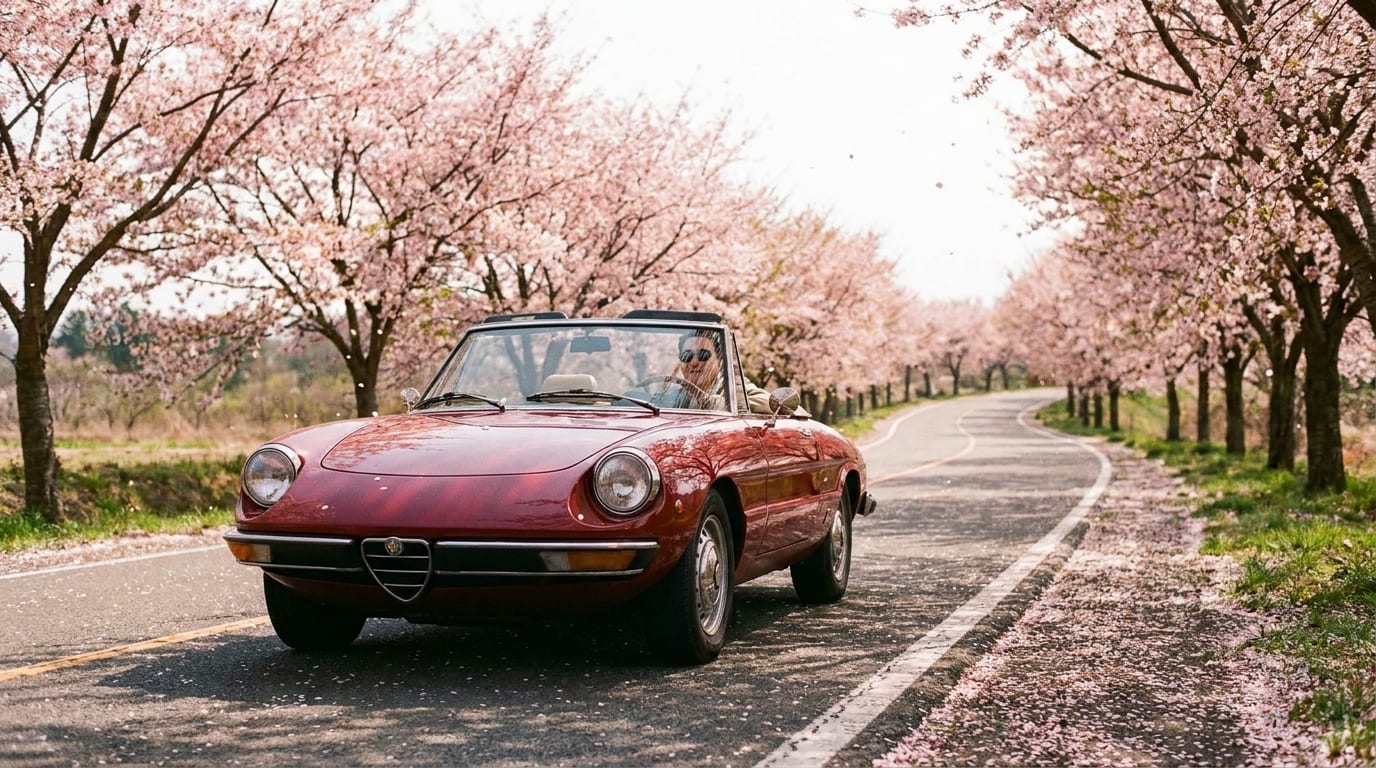
Pollen on its own is mostly harmless dust. Add morning dew or a light spring rain, though, and it turns into something else: a sticky, faintly acidic film that bonds to clear coat if you let it sit.
Hatchbacks catch more of this than other body styles. That big rear glass and the hatch lip act almost like a funnel. Pollen settles there, and if your cover is loose or universal-fit, it seeps past the edges and works into the seals and the cargo opening itself. Once it's in the seal, it's not coming out with a quick wipe.
Peak tree pollen blooms usually run two to four weeks. That's a short window, but it's long enough. Sun exposure plus pollen residue sitting on paint can etch into the clear coat faster than most owners expect, especially if the car just sits outside uncovered during that stretch.
And most hatchbacks aren't garage queens. They're daily drivers. Which means the cover isn't going on once for a season of storage, it's going on and coming off every single day. That changes what "good" looks like in a cover: it needs to be quick to install, not just effective.
What to Look For in a Pollen-Season Car Cover

Breathable, multi-layer woven fabric beats tarp-style vinyl or PVC every time for this job. Non-breathable material traps condensation underneath it, and that moisture mixes with whatever pollen is already sitting on the surface, turning it into a paste that stays pressed against your paint for hours.
Fit matters just as much as material. A custom-fit cover sized to your actual hatchback closes the gaps at the hatch seam, the roofline, and the mirrors, places a generic universal cover simply can't seal. If you're not sure what dimensions you're working with, it's worth checking what size car cover fits your vehicle before you buy anything.
A lighter or reflective-colored cover has a practical upside beyond heat: pollen buildup actually shows up on the surface. You'll see the yellow-green dust accumulating and know it's time to rinse the cover, instead of leaving it to sit and eventually transfer back onto the car.
Check the lining too. A soft fleece or flannel interior isn't a nice-to-have here, it's necessary. Pollen grit under a rough-lined cover acts like fine sandpaper the second wind shifts the fabric against your paint. Material quality genuinely varies across brands, so it's worth a look at which material makes the best car cover before you commit.
Last piece: elastic hems and straps, or a proper gust strap kit, to keep the whole thing sealed down in spring wind. Gusty afternoons are common this time of year, and a lifted edge is basically an invitation for pollen to blow straight underneath.
Cover Type Comparison: Which Fits Best for Pollen Protection
Custom-fit breathable outdoor cover. High pollen defense, high breathability, tight fit precision, mid-to-high price. This is the one to get if you're driving your hatchback daily through a bloom-heavy climate. You can browse options and match one to your exact model through a cover finder tool rather than guessing at a generic size.
Universal-fit breathable cover. Medium pollen defense, since gaps remain around the hatch and mirrors no matter how well you tension it. Still breathable, still cheaper. Fine for budget buyers or anyone who's only parking outside occasionally rather than every day.
Waterproof-only vinyl or tarp-style cover. Low pollen defense. Trapped moisture turns surface pollen into paste, and the material usually isn't breathable at all. If you've already got a waterproof cover, know that it's built for rain protection, not pollen season, and the two problems aren't the same.
Indoor-only satin or fleece cover. Not viable outdoors against pollen at all. Breathability is basically irrelevant here because it's not designed for weather exposure. This only makes sense if the car lives in an indoor cover setup inside a garage that's itself free of pollen drift.
How to Use Your Cover During Peak Pollen Weeks
Rinse the car with plain water before you cover it. Every time. Dragging a dry cover over caked pollen just grinds grit straight into your clear coat, which defeats the entire purpose.
Installation should take under two minutes once you've got a rhythm. Front to back, drape it over the hood and roof first, then work backward, securing the hatch end and mirror pockets last. That order keeps the fabric from dragging across the body while you're still positioning it.
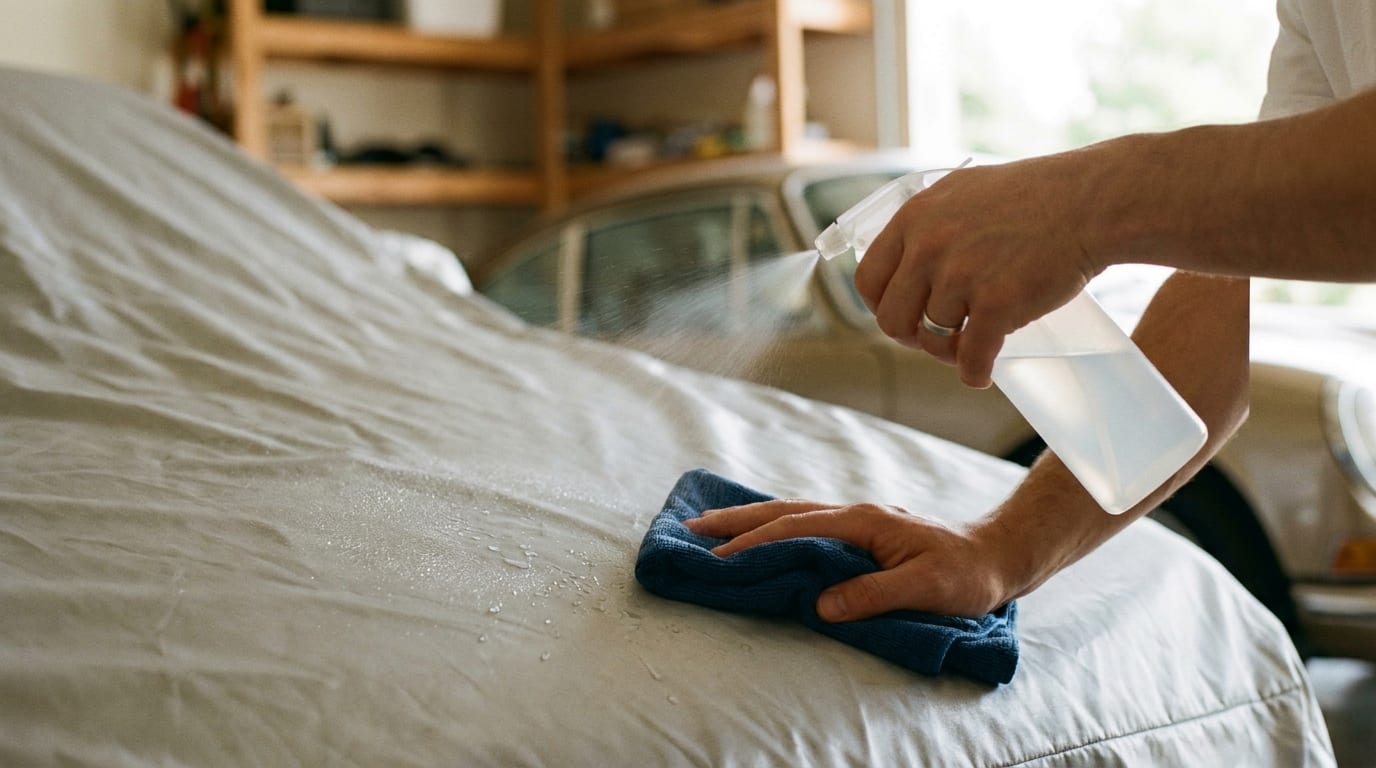
Wash the cover itself every one to two weeks during peak bloom. There's a full step-by-step process worth following, but the short version is: pollen accumulates on the top surface of the cover whether you notice it or not, and it will transfer right back onto your paint if you ignore it long enough. If you're new to the whole process, a simple installation guide is worth a few minutes too.
Check the fit weekly around the hatch seam and wheel wells. Pollen works into gaps slowly, straps loosen over time, and a five-second re-tension beats discovering a yellow film under the cover a week later.
Mistakes That Let Pollen Win
Using a tarp instead of an actual car cover is the big one. Tarps trap condensation, they turn surface pollen into a sticky film, and most don't have any kind of soft lining, so they can scratch the exact surface you're trying to protect. If you're on the fence about this, it's worth reading why a tarp isn't actually a substitute for a car cover.
Leaving a non-breathable cover on for days during a heavy pollen dust event is almost as bad. That traps moisture directly against the paint and the hatch seal, for days, with nowhere for it to go.
Buying on price alone is a quieter mistake, but it adds up the same way. Cheap vinyl covers often skip the breathable weave that pollen season actually requires, so you save ten dollars and lose a paint job.
And sizing a cover off your vehicle's general class instead of its real hatchback dimensions leaves pollen entry points at the rear glass and sides exactly where you can't afford them.
FAQs: Hatchback Covers and Pollen
Does a car cover actually protect against pollen? Yes. A breathable, snug-fitting cover keeps pollen from settling directly on paint and glass, and it's a lot easier to rinse a cover clean than to remove pollen residue that's baked onto a clear coat.
Can I leave a waterproof-only cover on all spring? Not ideally. Non-breathable covers trap moisture underneath, and combined with pollen, that moisture can form a paste sitting against the paint longer than if the car had just been left uncovered and washed on a normal schedule.
How often should I wash my car cover during pollen season? Roughly every one to two weeks at peak bloom, or sooner if you can see pollen dust built up on the top surface.
Bottom Line: Protecting Your Hatchback This Spring
A breathable, custom-fit outdoor cover with a soft lining is the most reliable way to keep spring pollen off a hatchback you're driving every day. Skip the tarp, skip the generic universal fit, and your clear coat will thank you come summer.
If you're still weighing options or want to see what's out there before deciding, it's worth browsing a bit more or subscribing for more seasonal car care tips like this one. Spring pollen isn't the only thing coming for your paint this year, and it helps to be ready for the next one too.






