Best Car Cover for a Pickup Truck in a Snowy Climate Like Minnesota
Published
The Quick Answer: What to Buy
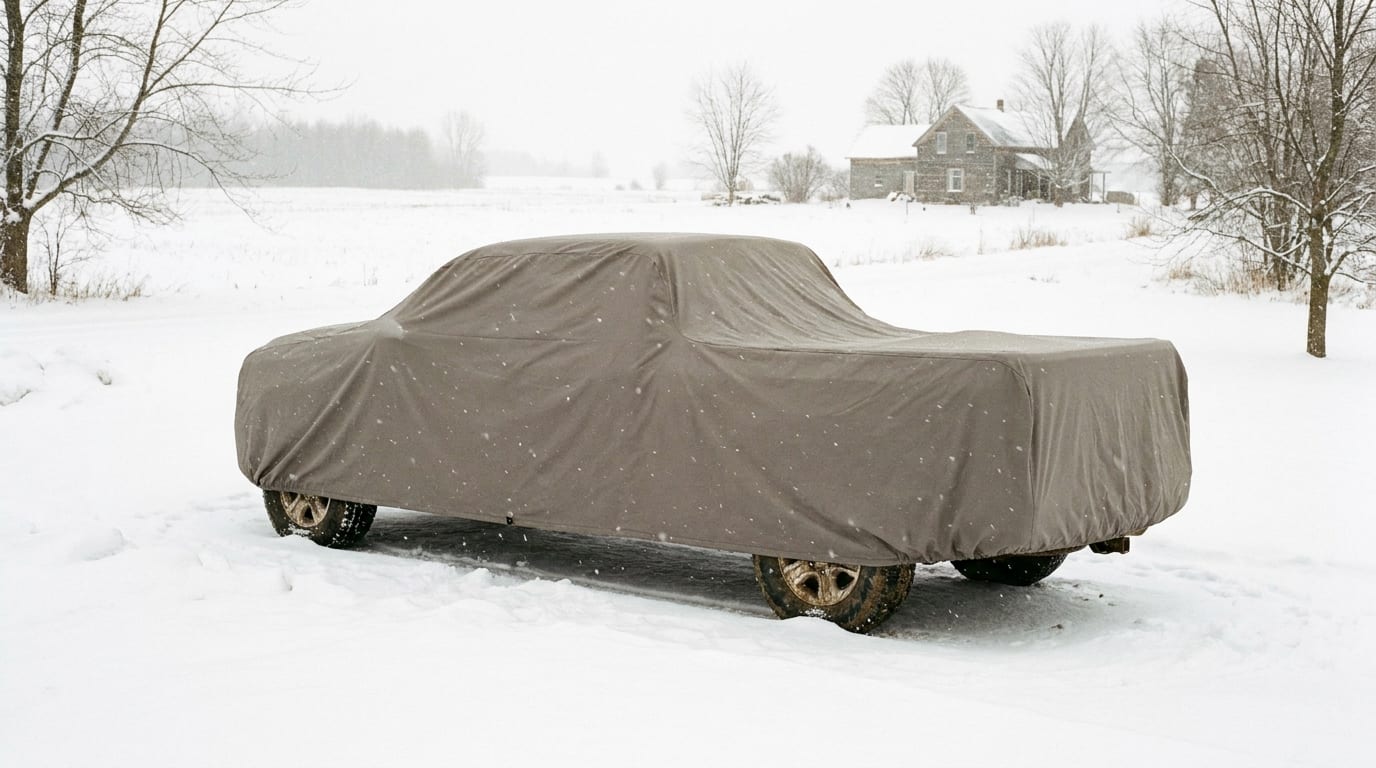
If you have a pickup truck and live in a snowy climate like Minnesota, buy a custom-fit, waterproof, outdoor-rated truck cover with built-in wind straps and reinforced seams. Skip anything marketed as universal-fit or indoor-use, no matter how cheap it looks in January. A full Minnesota winter puts three specific stresses on a cover (snow load, wind-driven ice, and road salt spray) and a generic cover just won't hold up to all three at once.
The single biggest mistake truck owners make here is grabbing an indoor satin cover or a one-size-fits-most universal cover because it's sitting on the shelf at the hardware store. Those covers aren't built for a truck's bed and raised cab height, and they definitely aren't built for 10 inches of wet snow sitting on top overnight. Here's how the main cover categories stack up before you spend money on the wrong one.
| Cover Type | Waterproof Rating | Snow/Wind Performance | Best For | Not Recommended For |
|---|---|---|---|---|
| Universal-fit outdoor cover | Moderate | Poor, prone to shifting in wind | Budget or short-term use | Sustained Minnesota winters |
| Custom-fit outdoor waterproof cover | High | Strong, strap system holds it in place | Daily winter driveway or street parking | Trucks kept in a garage |
| Indoor/satin cover | None | Not designed for snow or wind | Garage dust protection only | Any outdoor winter use |
| Heavy-duty multi-layer outdoor cover with support pole | Highest | Best snow-load resistance for long-term storage | Trucks parked outside all winter, uncovered for weeks | Trucks garaged most of the time, overkill |
Cover Type Comparison for Snowy-Climate Truck Owners
Look at that table again and the pattern is pretty obvious: waterproofing and wind/snow performance move together. A cover that can't shed water properly also can't hold its shape under a few inches of wet snow, because the fabric saturates, sags, and loses its ability to resist wind lift.
Universal-fit covers fail the Minnesota test in a specific way. They're cut generically to "fit" a range of trucks, which means loose fabric at the mirrors, tailgate, and wheel wells. That slack is exactly what a 30 mph gust needs to work the cover loose overnight. You wake up to find it wrapped around your antenna three houses down, or worse, torn on a fence.
Indoor covers aren't even really in the running here. They're built for dust and light scratches in a climate-controlled garage, not moisture. Putting one on a truck parked outside in January is close to pointless. The heavy-duty option with a support pole is the right call if your truck sits outside, uncovered by any structure, for the entire season. If it's garaged most nights and only exposed during storms or work trips, a standard custom-fit outdoor cover is enough.
Why Minnesota Winters Demand More From a Cover
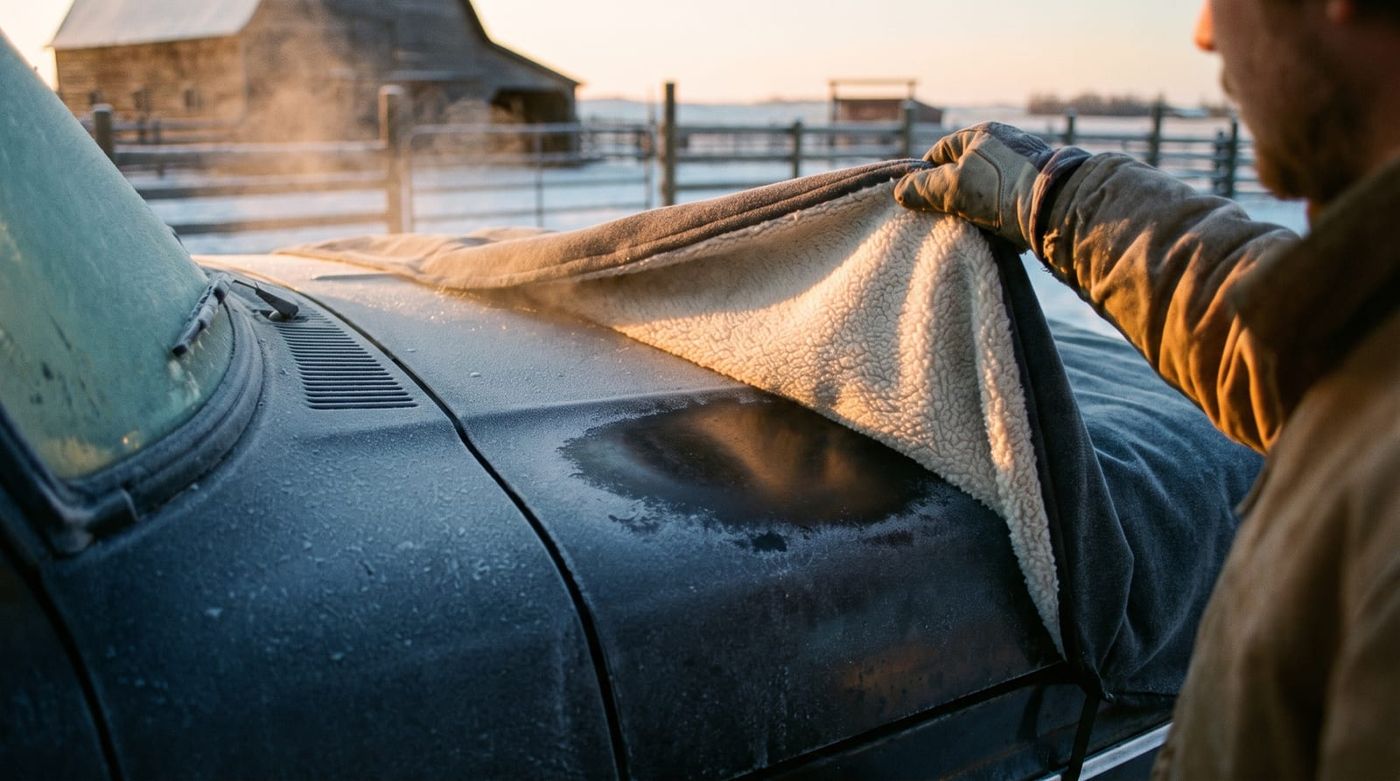
Three things make a snowy climate harder on a cover than, say, a rainy one in the Pacific Northwest.
First, accumulated snow weight. A cover draped loosely over a truck bed can pool snow in the low spots, and several inches of wet snow is heavier than people expect. That weight stresses seams and can stretch cheap fabric until it loses its shape entirely.
Second, sustained sub-zero wind. Wind doesn't need to be a full-blown storm to do damage. A steady, cold overnight wind works at loose fabric for hours, finding the one strap that wasn't cinched tight enough. That's the failure mode most universal covers run into.
Third, road salt and slush spray. If you drive the truck at all during winter, salt residue ends up on the lower panels and wheel wells. A cover that traps that moisture against the paint is arguably worse than no cover at all, since it keeps the salt wet and in contact with metal instead of letting it dry and blow off. This is why breathable-but-waterproof fabric matters more here than in a mild, dry climate. In a freeze-thaw cycle, trapped condensation doesn't just sit there, it freezes, thaws, refreezes, and that repeated cycle is what accelerates rust at seams and trim.
One thing people forget: UV protection still matters in winter. Sun reflecting off fresh snow is intense, and it'll fade a dashboard or crack weatherstripping just as fast as a summer sun will, maybe faster given the glare off white ground.
Truck-Specific Fit Considerations
Car covers and truck covers aren't interchangeable, and treating them that way is where a lot of these problems start. Trucks are longer than sedans, they've got a bed instead of a trunk, sit higher off the ground, and depending on whether you've got a tonneau cover or a bed cap installed, the whole silhouette changes. A cover cut for a bare bed won't sit right over a cap, and vice versa.
Before buying, measure for mirror pockets and antenna cutouts, and note any bed accessories, toolboxes, bed racks, that change the shape the cover needs to clear. If you're not sure which fit category your specific truck falls into, check a sizing guide before ordering rather than guessing from the model name alone.
Minnesota's most common pickups, the Ford F-150, Chevy Silverado, Ram 1500, and GMC Sierra, all come in multiple cab and bed length combinations, and fit varies meaningfully even within the same model year. A crew cab short bed F-150 needs a different cut than a regular cab long bed F-150. If you're shopping by brand, start with the Ford truck cover lineup or the Ram truck cover lineup and narrow from there by cab and bed configuration. Our pickup truck bed size guide walks through how bed length changes which cover size you actually need.
Winter Accessories That Make the Cover Actually Work
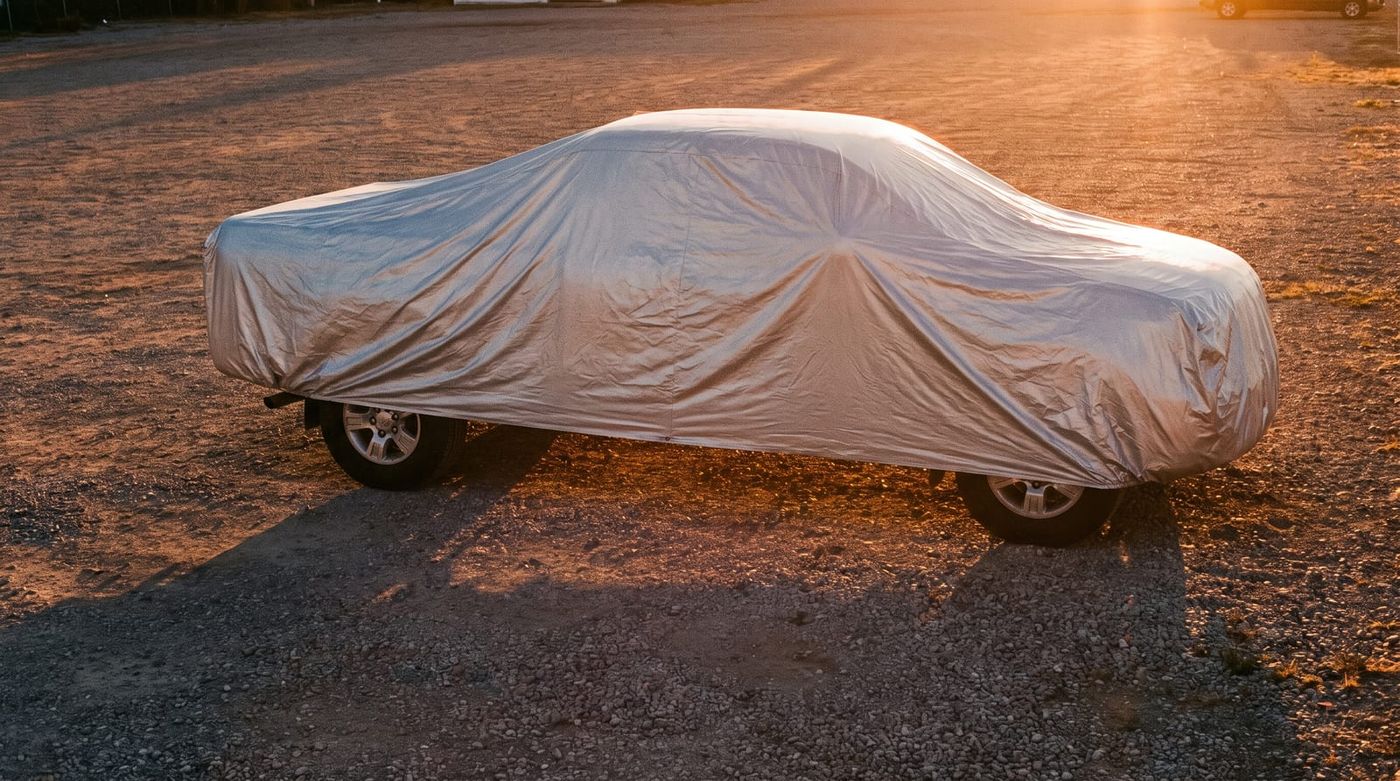
A cover by itself isn't the full answer in a high-wind snowy climate. It's the accessories that keep it where you put it.
Wind straps, sometimes called gust straps, are what anchor the cover under the truck so a storm can't lift the edges and work it loose. If your cover didn't come with a strap system built in, or you want a tighter hold, it's worth learning how to install gust straps properly rather than relying on the stock hem alone.
If the truck sits on the street overnight or in a shared lot, a cable lock threaded through the cover and around a wheel or mirror adds a basic theft deterrent. It won't stop a determined thief, but it does stop someone from just yanking the cover off on a whim.
For trucks stored outdoors for the whole season, a support pole is worth the extra ten minutes of setup. It keeps the fabric from sagging into the bed, which is exactly where snow likes to pool and sit.
And before you buy anything, check the warranty terms. Extreme cold and constant snow-shedding wear a cover down faster than mild climates ever will, so a lifetime warranty on car covers is worth more to a Minnesota owner than it is to someone in Arizona.
Winter Cover Care and Common Mistakes
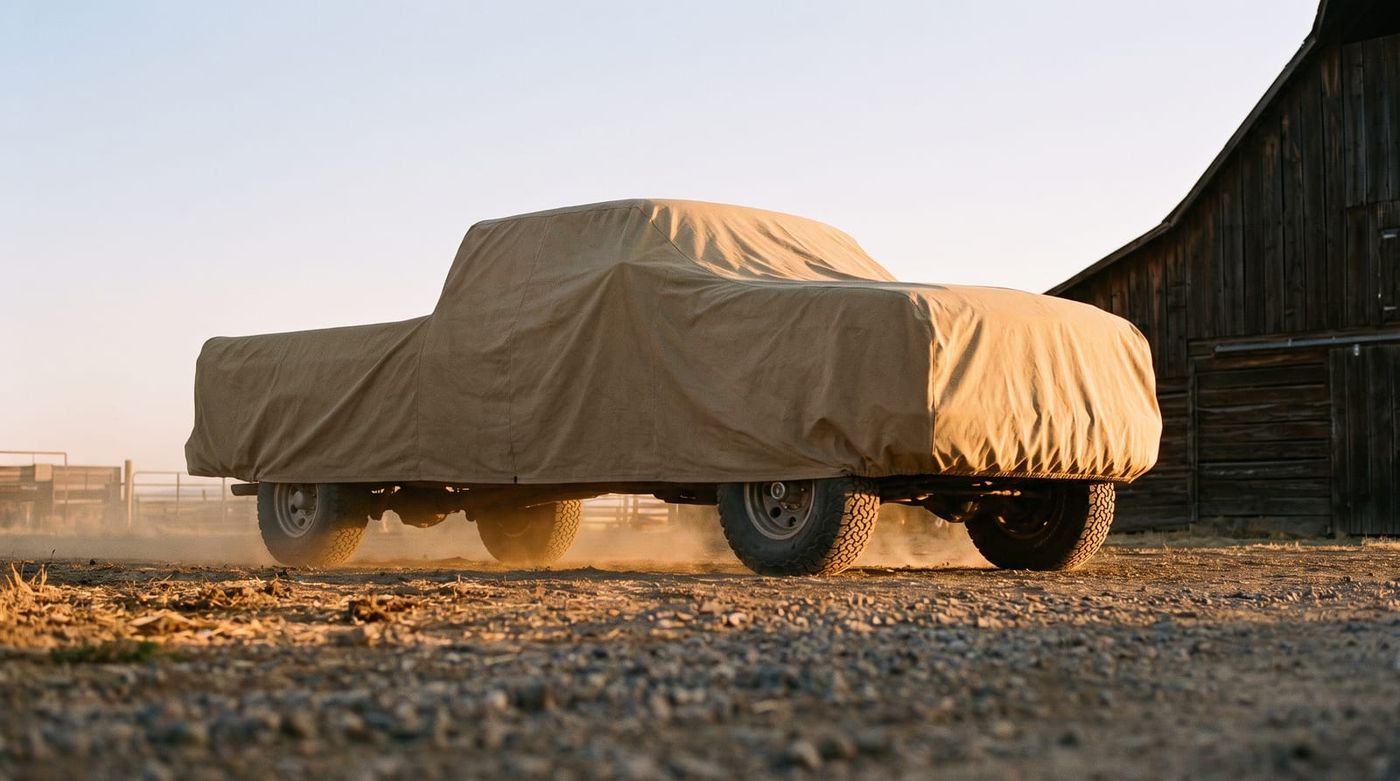
Snow sitting on a cover needs to come off, but not with the same ice scraper you use on your windshield. Brush it off gently, working with the fabric's grain, not against it. Scraping tears fibers and weakens the waterproof coating over a season of repeated use.
Road salt builds up fast if you're driving through winter, so clean the cover every few weeks rather than waiting until spring. Letting salt sit on the fabric for months degrades the coating and the stitching both.
Don't throw the cover on a truck that's still wet or snow-covered. It feels like you're saving time, but you're just sealing moisture in, which is the exact trapped-condensation problem a good waterproof fabric is supposed to prevent in the first place.
By the end of the season, check the cover over. Stiff or cracked fabric, torn grommets, a stretched-out elastic hem, these are signs it won't make it through another Minnesota winter and needs replacing before the next one starts, not halfway through it.
Bottom Line and Next Step
For skimmers: if you've got a pickup truck and live somewhere that gets Minnesota-level snow, the answer is a custom-fit, waterproof, outdoor-rated truck cover with wind straps. Nothing less holds up.
One quick way to decide which tier to buy: is the truck garaged most of the winter, or parked outside daily? Garaged trucks do fine with a standard outdoor cover for the occasional storm. Trucks living outside all season need the heavier multi-layer option with a support pole, since they're taking the full brunt of snow load and wind every single day.
If you're still narrowing down the right fit or style for your specific truck, it's worth browsing truck covers by category and comparing a couple of options side by side before you commit. And if you found this useful, stick around the blog for more cold-weather vehicle care guides as the season goes on.