Best Cover for a Dirt Bike: Fit, Straps, and Lock Picks That Actually Hold Up
Published
Why Dirt Bikes Need a Different Kind of Cover
A dirt bike doesn't live the same life as a street bike. It gets ridden through mud, parked dusty at the trailhead, loaded into a truck bed still wet from a creek crossing, then left in direct sun while you load gear for the next moto. Find the best cover for a dirt bike and you're really solving for abuse, not just weather.
Here's the problem: most covers on the market were designed around cruisers and sportbikes. They assume a low, wide seat, a modest front fender, and smooth bodywork. Dirt bikes don't fit that mold. Tall front fenders, number plates, handguards, and high-mounted exhaust pipes all throw off a cover built for a Harley or a Ninja. Drape a generic cover over a motocross bike and you'll get gaps at the fender, pulling at the seat, and fabric that rides up over the bars.
This isn't a general best-covers roundup. It's specifically about fit, straps, and lock hardware for dirt bikes, the stuff that actually determines whether a cover holds up through a season of trail riding instead of shredding itself in the first month.
Getting the Fit Right for a Dirt Bike Cover
Universal motorcycle covers are cheap for a reason. They're cut to fit "most" bikes, which in practice means they fit none of them well. On a cruiser's broad, low-slung frame, a baggy universal cover just looks a little sloppy. On a dirt bike's narrow, tall bodywork, that same bagginess turns into flapping fabric, fender gaps, and a cover that slides off during a bumpy trailer ride.
A semi-custom fit costs more upfront, but it's the difference between a cover that stays put and one you're re-adjusting every time you check on the bike.
Before you buy, measure the bike, not just eyeball it. The numbers that matter most:
- Overall length, measured from the front fender tip to the rear fender
- Seat height, since that drives the cover's vertical drop on each side
- Handlebar width, especially with aftermarket bars
- Clearance for number plates and handguards, which add inches in places most size charts don't account for
Here's the part people miss: a loose cover is actually worse on a dirt bike than on a cruiser. On a cruiser, excess fabric just bunches near the ground. On a dirt bike, that same slack snags on foot pegs, catches on the brake lever, or wraps around the rear sprocket during loading and unloading. You end up ripping the cover, not just wearing it out.
Check the cover's listed dimensions against your bike with accessories installed, not the bike as it rolled off the showroom floor. A skid plate adds width at the bottom. Handguards add width at the bars. Those inches add up, and most cover specs are written for the stock bike. Starting from your bike's motorcycle cover category and narrowing by brand and size, rather than guessing off a generic chart, saves a return shipment.
Material and Weatherproofing Features That Matter Most

Waterproofing gets all the attention in cover marketing, but for a dirt bike, abrasion resistance matters just as much, maybe more. Think about how often the cover actually gets handled: on and off in a cramped garage, dragged over a tailgate, stuffed into a dusty trailer compartment between motos. That's a lot of friction on the fabric itself, separate from whatever the weather throws at it.
Venting matters too, and it's easy to overlook. A bike that comes back from a wet ride and gets covered while still damp will trap moisture underneath a non-breathable cover. That's how you get rust on fasteners and a musty smell in the seat foam. Covers with vented panels or breathable zones let that moisture escape instead of stewing against the paint and chrome overnight.
If you store the bike outdoors at a track, a campsite, or in the bed of a truck between runs, UV protection isn't optional. Plastic bodywork and graphics fade fast under direct sun, and seat covers can crack within a season of regular UV exposure. Look at waterproof cover options that also spec out UV-resistant materials, not just water resistance, since the two don't always come bundled together.
Separate from long-term storage, there's the daily grind of dust and mud. A cover that wipes down easily after a day at the track saves you from packing a dirty cover against bodywork you just cleaned. That's a small thing, but it's one you'll notice every single ride day.
Straps That Keep a Dirt Bike Cover in Place

Car covers deal with wind sitting in a driveway. Dirt bike covers often deal with wind at 65 mph on an open trailer or in the bed of a truck heading down the highway. That's a completely different load, and elastic hems alone won't survive it.
What actually works is a strap that cinches under the bike itself, routed beneath the frame or skid plate, not just a stretchy edge that relies on friction to stay put. An under-bike strap anchors the cover from below, so wind can't get underneath and start peeling it off.
Grommets matter here too. A cover with reinforced grommet points gives you somewhere to anchor a tie-down during trailer transport, not just during stationary garage storage. If the cover you're looking at only has a drawstring at the bottom hem and nothing else, that's a flag it wasn't built with transport in mind.
Gust straps (sometimes called wind straps) are worth installing correctly rather than cinching down randomly. A proper gust strap installation keeps the cover tight across the bodywork instead of ballooning at highway speed, which is exactly how covers tear loose and end up shredded on the road behind the truck.
Locking Down Security for Garage, Truck Bed, and Trailer Storage
Dirt bikes get stolen more easily than street bikes for a simple reason: they're light. Two people can lift one into a truck bed in under a minute, no key needed. A cover alone does nothing to stop that. It just hides the bike from casual passersby, which helps, but it's not security.
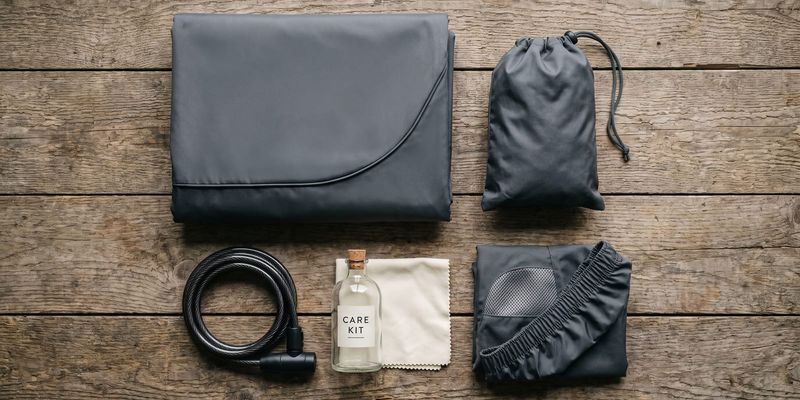
Pair the cover with a cable lock, routed through the cover's built-in grommets and around something the bike can't be lifted away from, a frame member, a trailer tie-down point, an anchor bolted to the garage floor. A cable lock installed correctly threads through real structure, not just fabric loops.
Placement matters more than people think. Looping a cable around the handlebars alone does almost nothing, since the bike can still be carried off with the front wheel dangling. Route the lock through the wheel and a frame member instead. That forces a thief to either cut the cable or wheel the bike out, and cutting a quality cable takes time most opportunistic thieves won't spend at a trailhead parking lot.
Some covers come with integrated lock loops sewn into the design, built specifically so a cable can pass through without you jury-rigging something. Others need you to thread an aftermarket cable through the hem, which works but is less secure since the hem fabric can tear under enough force. If security is a real concern (and for a dirt bike stored at a trailhead or in an open truck bed, it should be), the integrated option is worth paying extra for.
Fit Notes by Dirt Bike Brand
Not every dirt bike is built the same way, and cover sizing reflects that. KTM's bodywork runs narrower through the tank and seat than a lot of Japanese bikes. Honda, Yamaha, Kawasaki, and Suzuki each have their own fender shapes and seat heights that shift slightly year to year. A cover sized for one brand can end up loose or tight in spots on another, even when the stated "fits most dirt bikes" length matches up on paper.
Husqvarna models in particular have distinctive bodywork, lower and sleeker through the tank than some competitors, so a generic size that's "close enough" for a KTM may not drape the same way on a Husky.
Smaller or specialty brands are where this trips people up most. Beta and Gas Gas owners often find universal sizing is even less reliable, since these brands aren't the default reference point most cover makers design around. If you ride something outside the big-name lineup, including bikes covered under broader American dirt bike listings, don't assume a universal size chart has you covered. Check brand-specific fit details first.
Starting from your bike's actual brand page, whether that's KTM, Honda, Yamaha, Kawasaki, or Suzuki, confirms what's actually available for your model before you guess off a generic size category and end up sending something back.
Find the Right Cover, Straps, and Lock for Your Dirt Bike
Three things decide whether a dirt bike cover actually earns its keep: fit confirmed with your accessories installed, not just the stock bike; straps rated for transport, not just sitting still in a garage; and a cable lock routed through real anchor points, not just draped over the handlebars.
Get those three right and the best cover for a dirt bike stops being a guessing game. It becomes a short checklist you run through once, and then you stop thinking about it every time you load up for a ride.
If you want to skip the back-and-forth measuring and sizing debates, CarCovers' cover finder matches a cover to your specific bike and shows what strap and lock accessories are actually available for it. Measure your bike first, with the skid plate and handguards on, before you lean on a general size category. It's a five-minute job that saves you a return label and a ripped cover down the line.