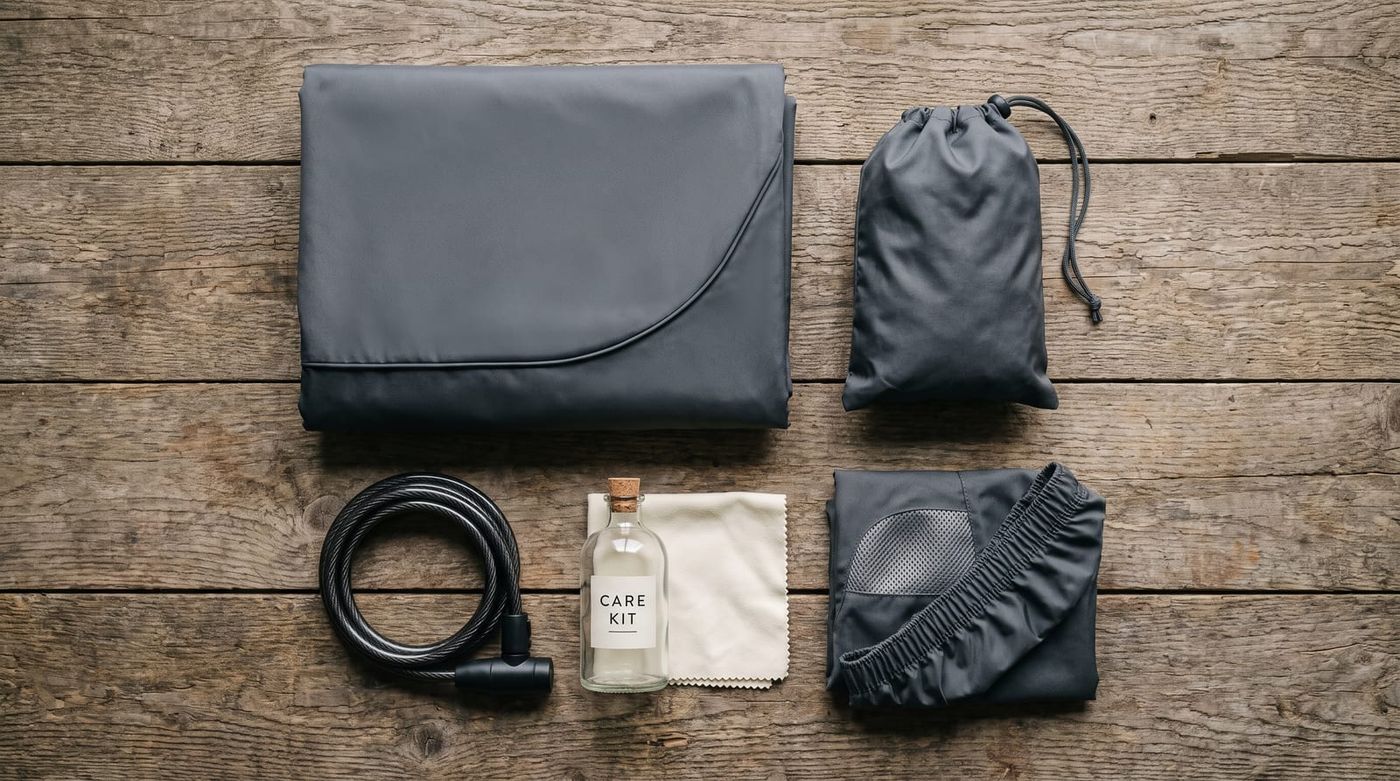
Why Scooters Need a Different Cover Than Motorcycles or Cars
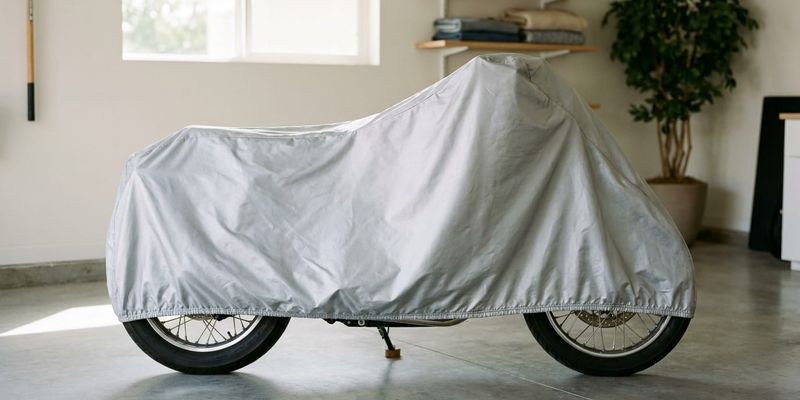
A motorcycle cover looks like it should work on a scooter. It doesn't, not really. Scooter bodywork is its own shape: step-through frame, a tall windscreen up front, and that rounded bulge where the under-seat storage lives. Drape a generic motorcycle cover over that and you'll usually end up with gaps around the front fairing or excess fabric sagging over the seat, catching wind like a sail.
There's also where scooters actually live. A lot of them get parked curbside, in an open carport, or against a fence at an apartment complex, not tucked into a garage like a car. That means daily sun and whatever the sky decides to do, not occasional exposure. Add in the lighter weight and shorter wheelbase, and you've got a vehicle that needs a snugger-fitting cover with real anchoring, or it'll either blow halfway off in a gust or scrape paint rubbing against the body all day.
So finding the best cover for a scooter really comes down to four things: getting the fit right, picking a material suited to how you park, setting up straps so wind can't lift it, and in a lot of cases, locking it down. That's the order we'll go through below.
Getting the Fit Right: Measuring Your Scooter for a Cover
Before you buy anything, grab a tape measure. Three numbers matter: overall length from front fender to rear, handlebar width, and the height from the seat up to the top of the windscreen. Write them down. Seriously, don't eyeball it from memory when you're shopping later.
Covers generally come in two flavors. Semi-custom covers are sized by length range, something like "under 70 inches" or "70 to 90 inches," and they work fine for a lot of scooters as long as you're not right on the border between sizes. Model-specific covers go further, cut to account for mirrors, windscreens, and top cases on a particular make and model. If you want the closest fit possible, that's the route.
Get the size wrong in either direction and you'll feel it. Too big, and the cover flaps around in wind, loosens at the seams, and lets rain track in anywhere it bunches up. Too small, and you're stressing seams every time you stretch it over the seat, plus it won't cinch properly around the wheels, leaving the tires exposed. Neither is a small annoyance, both shorten the life of the cover.
One more thing that trips people up: accessories. An aftermarket windscreen, a top case bolted to the rear rack, saddlebags hanging off the sides, any of these changes what "fits" actually means. A cover sized for a bone-stock scooter often won't clear a trunk box. Check what size car cover fits your vehicle as general sizing logic, then confirm against your scooter's actual dimensions with accessories mounted, not without them.
Material and Weather Protection to Look For
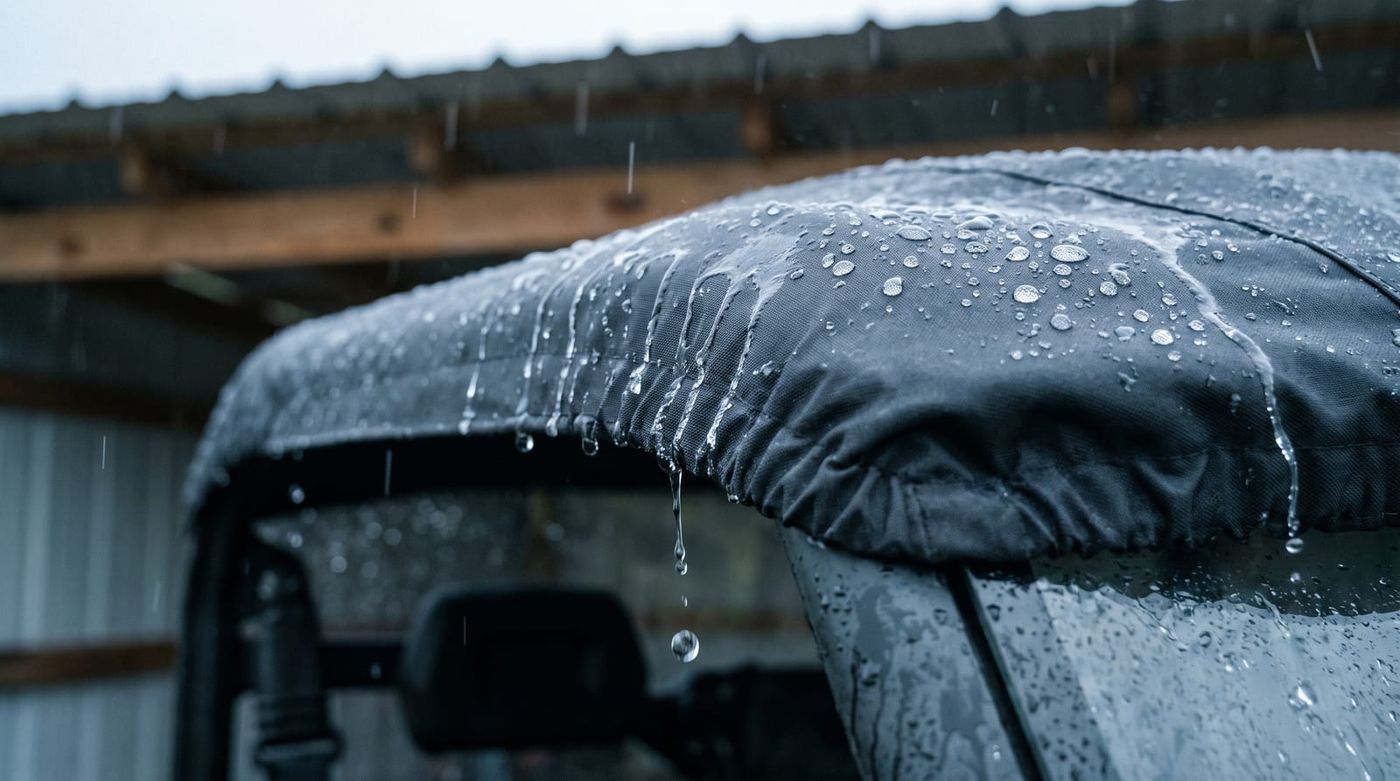
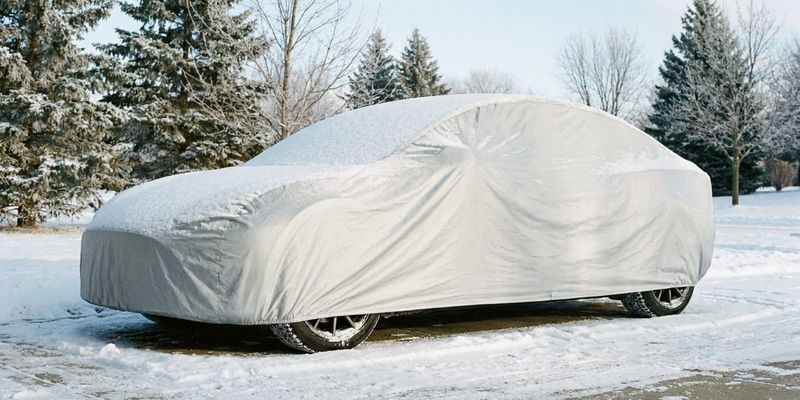
If you live somewhere dry and mild, a lightweight breathable fabric is honestly enough. It keeps dust and bird droppings off, breathes so moisture doesn't get trapped underneath, and it's easy to fold up and stash under the seat. But if you're dealing with regular rain, humidity, or snow, you want a multi-layer waterproof fabric instead. A waterproof car cover built for layered weather resistance applies the same logic to a scooter: the goal is to shed water, not just slow it down.
UV resistance matters more here than people expect. A scooter parked outside a workplace from 9 to 5, or sitting in the same driveway spot every day, takes a beating from sun exposure that a garaged car never sees. Without a UV-rated coating, plastic bodywork and seat material fade and crack faster than you'd think.
Worth checking for: a soft inner lining around where the cover meets the windscreen and mirrors. Wind moves the cover around even when it's strapped down, and a rough fabric rubbing against a windscreen for months will leave fine scratches. A lined panel there is a small detail that saves you from a bigger annoyance later.
And be honest with yourself about how you actually park. If the scooter spends most nights in a garage or shed, a thinner indoor car cover built mainly for dust is plenty. If it's outside full-time, you want the reinforced outdoor car cover category instead, built for sun, rain, and wind together, not just one of those.
Straps and Tie-Downs: Keeping the Cover On in Wind
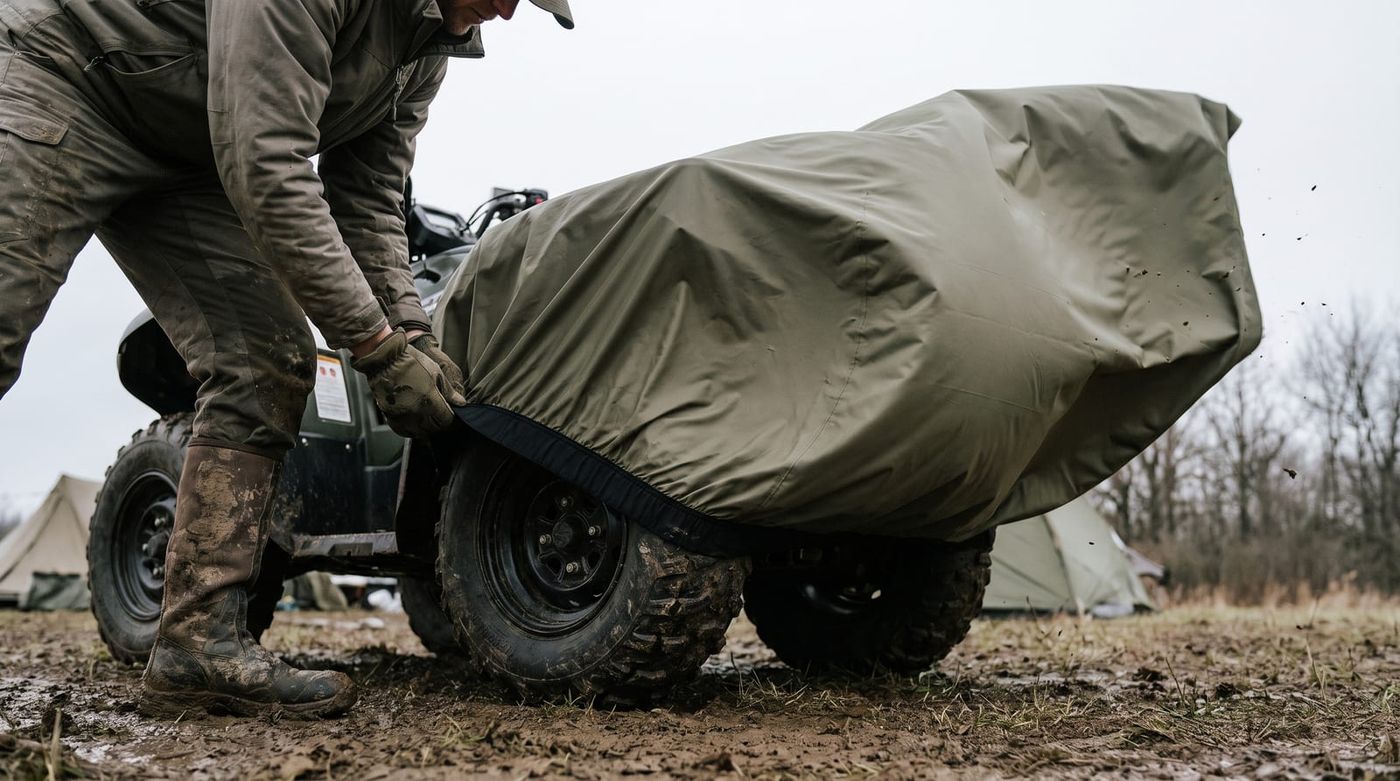
This is where a lot of scooter covers fail, not in the fabric but in how they stay on. The bottom hem usually does this one of two ways: a built-in elastic edge that stretches around the wheels and frame, or a drawcord you pull and tie off yourself. Elastic is faster and more forgiving if you're sizing is slightly off. A drawcord gives you a tighter, more deliberate seal once you've cinched it, which matters more in windy spots.
Hem alone isn't enough, though, especially on a vehicle this light. A belly strap, sometimes called an under-chassis strap, buckles underneath the scooter and stops wind from getting under the front edge and lifting the whole cover like a parachute. If you've ever walked out to find your cover half off and draped over the mirror, this is almost always the fix.
For genuinely windy areas, like coastal parking or anywhere gusts are a regular thing, grommet and wind-strap kits add another layer. These anchor the cover to the ground or to the scooter frame itself through small eyelets sewn into the fabric. Not everyone needs this. But if your scooter cover has gone airborne once already, it's worth the extra step. Our guide on how to install wind straps and gust straps walks through the setup, and the same principles carry over to scooters even though it's written broadly.
One quick tip on installation order: secure the front strap first, then work your way back. If you start at the rear, the cover tends to shift and bunch as you tighten toward the front, and you end up redoing it anyway.
Lock Options: Securing the Cover and the Scooter Together
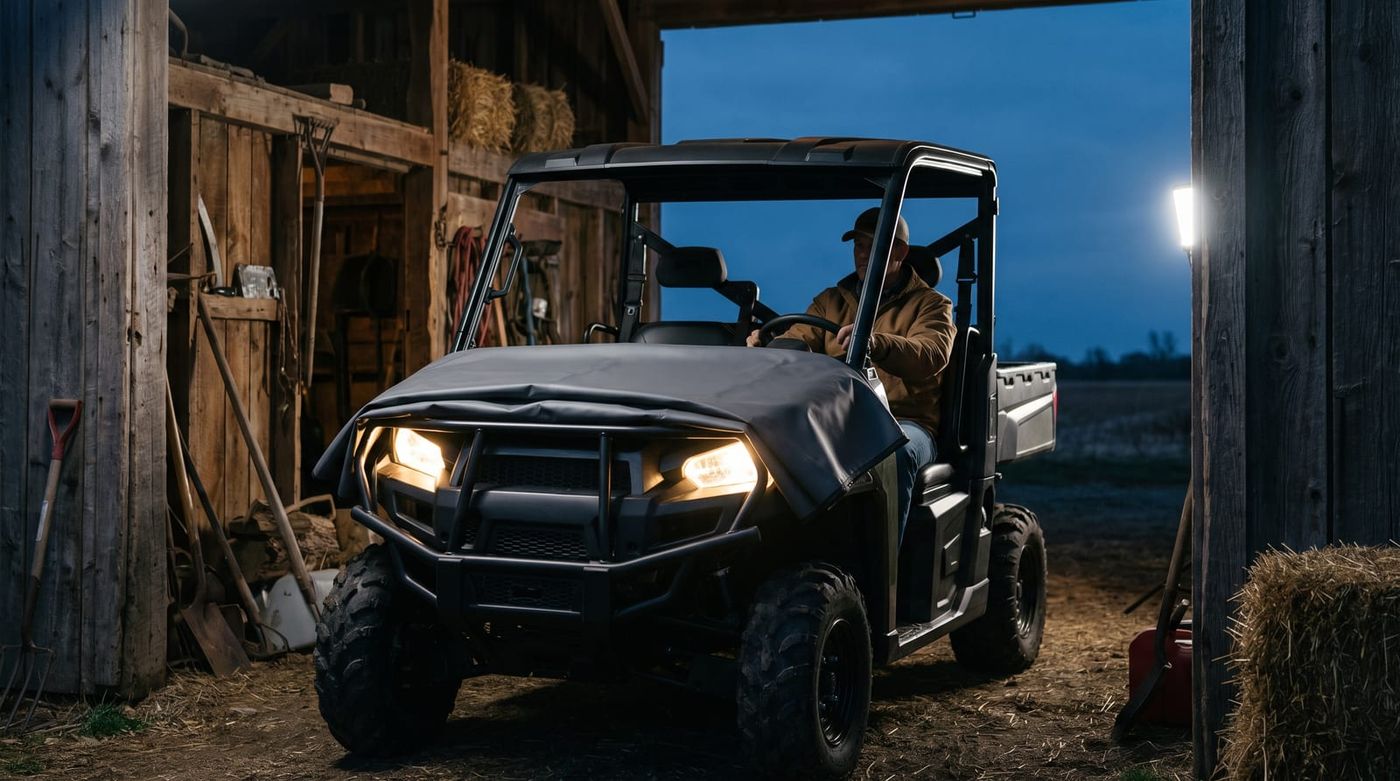
If your scooter lives on a street, in a shared lot, or anywhere outside your direct view, a cable lock earns its keep. Thread it through the cover's grommets and around the frame or a fixed post, and you've accomplished two things at once: deterred a casual thief and kept the cover from walking off with the wind or a curious passerby.
Not all cable locks are equal. A basic cable is fine for casual deterrence, somewhere low-traffic where theft isn't a major concern. In a higher-risk area, a thicker braided steel cable holds up a lot better against bolt cutters and general tampering. It costs more and weighs more, but if you're parking on a city street every night, that's the trade worth making.
Here's the part people miss: locking just the scooter isn't the same as locking the cover to the scooter. If the cover itself isn't secured, someone can lift it right off, mess with the mirrors, pop the seat, whatever, without ever touching your actual lock. Running the cable through the cover's grommets closes that gap. For the actual setup, how to install a cable lock on a car cover covers the mechanics, and it applies just as well to a scooter-sized cable.
Last thing: keep the key or combination somewhere you can actually get to, but not on the scooter itself. Sounds obvious, but it's the detail people forget after the fifth time locking up in a hurry.
Fit Notes by Scooter Type and Brand
Not all scooters are built the same shape, and that affects what "best cover for a scooter" means for your specific bike.
Compact step-through models, think Vespa and Piaggio, have that rounded tail and sometimes a spare wheel housing that needs extra room in the cover's rear panel. A cover that's too tight back there will stretch the seams every time you put it on.
Maxi-scooters are a different story. Brands like Yamaha, Honda, and Kymco make models that are closer in size to a small motorcycle than a city scooter, and they often need the longer end of a cover's size range, or a model-specific cut, to get full coverage without stretching.
Electric scooters and mopeds bring their own quirks. NIU models, for example, have battery compartment shapes that don't always match a traditional gas-scooter silhouette. Worth checking the brand-specific page before assuming a universal size chart has you covered.
General rule: don't guess from a size chart alone if a brand-specific fit page exists. It'll save you a return.
Choosing and Buying the Right Scooter Cover
Quick recap, because this is easy to get right once you've got the pieces straight. Measure your scooter first, accessories included. Match the material to your actual weather, not the weather you wish you had. Add a belly strap if wind is ever a factor where you park. And if the scooter's outside on a street or in a shared lot, plan for a cable lock from the start instead of adding one later.
Indoor storage can get away with something lighter. Daily outdoor parking can't, it needs the waterproof, UV-rated cover with reinforced straps we've been talking about this whole article. Browse CarCovers' scooter cover selection to see fit options by size and brand, and if you're not sure which one matches your model, the cover finder tool narrows it down fast based on your scooter's details.
Take the five minutes to measure before you buy. It's the difference between a cover that does its job quietly for years and one you're fighting with every morning. And if you want more guides like this one, we're adding them regularly, so it's worth checking back or poking around the rest of the site while you're here.