


Best Jet Ski Cover: Comparison Table, Buyer Checklist & FAQs
Buying a jet ski cover feels simple until you actually start comparing options. Universal fit, semi-custom fit, three different "waterproof" claims, and a dozen listings that all look identical from the thumbnail. The best jet ski cover for your situation depends less on brand hype and more on three practical variables: where you store the ski, how often you ride, and what your local climate throws at it. Get those three right first, and the rest of the decision gets a lot easier.
What Makes a Jet Ski Cover the Best Fit for Your Ride

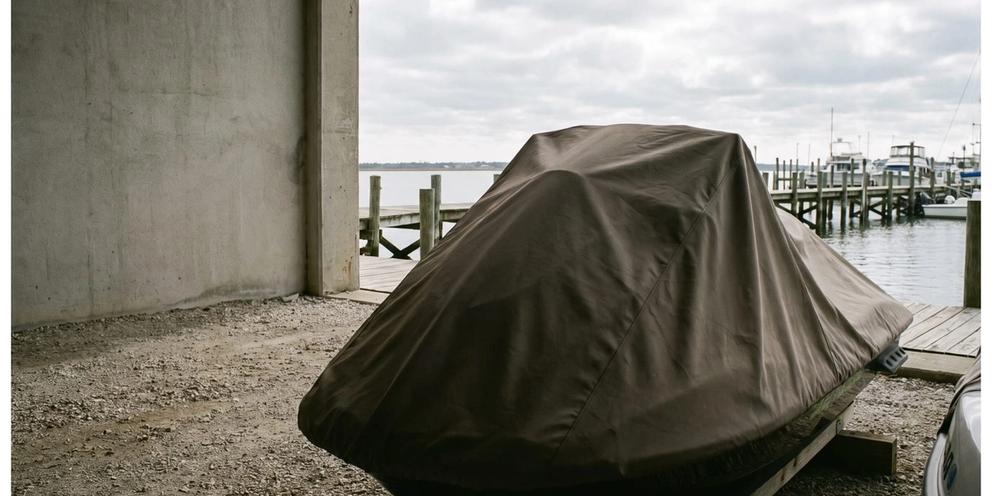
Start with storage. A ski parked on a lift at the dock deals with different stress than one sitting on a trailer in a driveway, or one tucked into a garage all winter. Dock storage means constant humidity and bird traffic. Trailer storage means road grit and wind at highway speeds. Garage storage is the easy mode, but even indoors, dust and scratches from nearby gear are real risks.
Then there's usage. A ski you ride every weekend needs a cover that goes on and off fast without a fight. One that sits for months between trips can handle a bulkier, more heavy-duty cover since speed of installation matters less than long-term weatherproofing.
Climate is the third piece. Salt air corrodes zippers and buckles faster than fresh water ever will. Intense UV breaks down cheap fabric within a season or two. Snow and freeze-thaw cycles stress seams. If you're storing through winter, it's worth reading up on how to de-winterize a jet ski so you know what condition to expect it in come spring, and what kind of cover would've prevented the damage you're looking at.
Here's the part people miss: a bad cover is often worse than no cover at all. A loose universal cover that flaps in the wind will rub against the hull for hours, grinding in dirt and scratching gel coat. Trapped moisture under a non-breathable fabric turns into mildew and mold. A cover that's technically "on" but doesn't seal against the hull is basically just decoration.
This is where fit type matters. Universal covers use straps and elastic to stretch across a range of ski lengths. Semi-custom covers are cut to the actual contours of specific models, whether that's a Sea-Doo, a Yamaha, or a Kawasaki hull. The tighter the fit, the better the UV and water protection, because gaps and loose fabric are exactly where sun and rain get in. Browsing jet ski covers by category is a fine starting point, but narrowing by brand gets you closer to true semi-custom fit.
The rest of this guide gives you two tools: a comparison table breaking down fit, material, and protection level, and an eight-point buyer checklist to run through before you check out.
Jet Ski Cover Comparison Table: Fit, Material, and Protection Level
Not every cover on the market is built for the same job. Breaking it down by fit type, material tier, lining, and trailering compatibility makes the differences obvious fast.
Universal Fit
- Sizing method: Adjustable straps and elastic hem, stretches across multiple ski lengths
- Fit quality: Loose in spots, prone to shifting or lifting in wind
- Best for: Occasional short-term coverage, budget-conscious buyers, skis stored indoors
Semi-Custom Fit
- Sizing method: Contoured to match specific hull shapes for named models like Sea-Doo, Yamaha, or Kawasaki
- Fit quality: Snug against the hull, minimal flapping, better seam-level water shedding
- Best for: Long-term outdoor storage, skis stored uncovered against elements year-round
Entry-Level Material
- Weatherproofing: Breathable weave, handles light rain and moderate sun
- Durability: Fine for mild climates or covered storage, wears faster under constant UV
- Best for: Garage storage, seasonal use in dry regions
Mid-Tier Material
- Weatherproofing: Water-resistant coating, sheds rain better, moderate UV resistance
- Durability: Holds up to regular outdoor exposure without full-time direct sun
- Best for: Dock storage under a carport or partial shade
Top-Tier Material
- Weatherproofing: Fully waterproof, UV-stabilized fabric built for constant sun and rain
- Durability: The longest lifespan under full outdoor exposure, including waterproof car cover grade material logic applied to marine use
- Best for: Year-round outdoor storage, coastal or high-UV climates
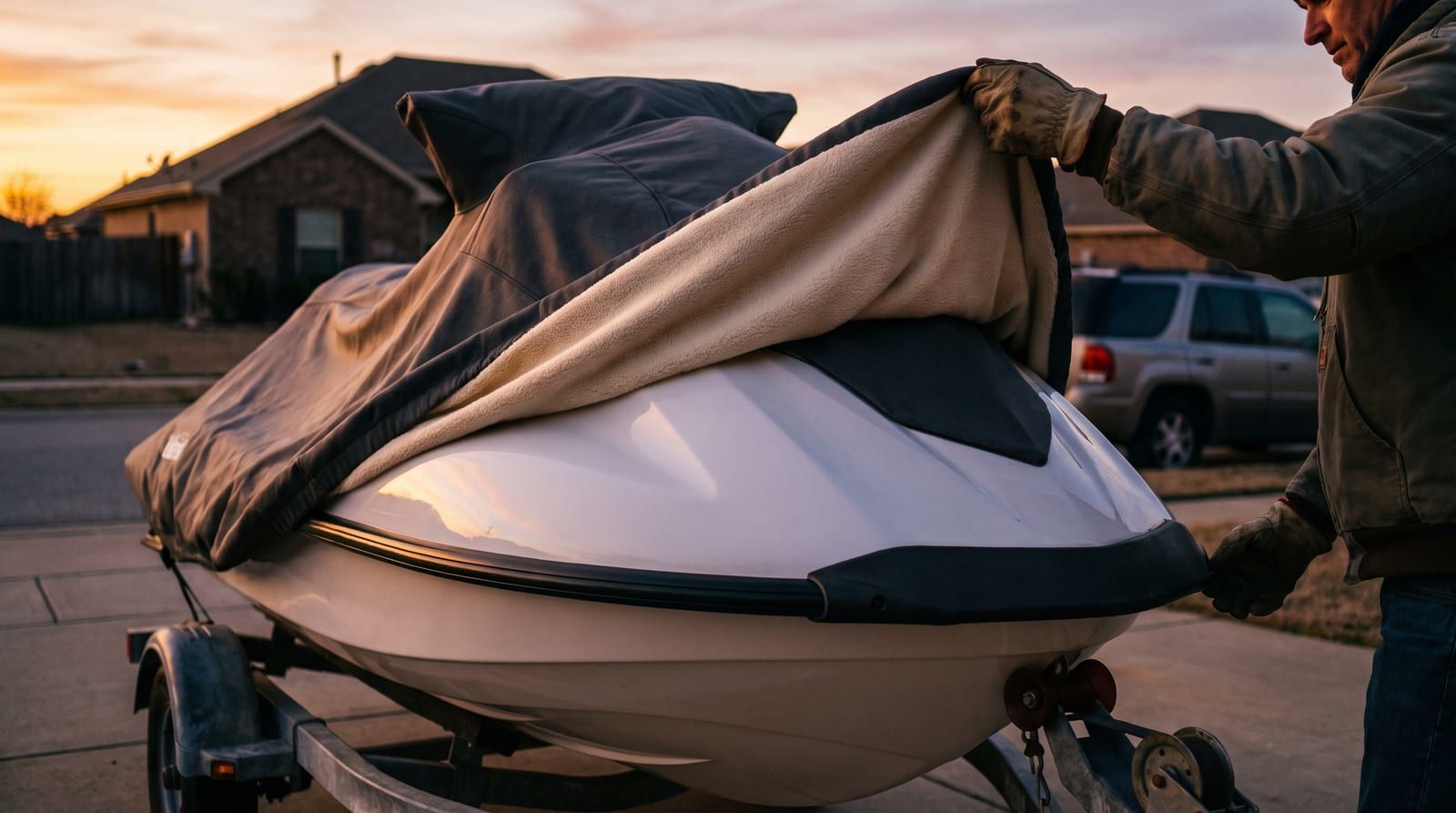
Interior lining is the detail people skip, and shouldn't. An uncoated interior is fine if the ski's already got a layer of wax or protectant on the gel coat. But if it's stored bare, a soft fleece-guard lining prevents the fabric itself from scuffing paint and gel coat over hundreds of on/off cycles.
Trailering compatibility splits the field further. Most universal covers are rated for storage only, not highway speeds. Semi-custom covers with reinforced hems and cinch systems are more likely to hold up during transport, but you still need to confirm that on the specific product page, not assume it.
Included hardware varies too. Some covers ship with tie-down straps, cinch cords, and a storage bag as standard. Others sell those as separate accessories, which adds cost you might not expect at checkout. If you're comparing a Yamaha-specific cover against a Sea-Doo model, check what's actually bundled before comparing price tags directly.
Buyer Checklist: 8 Things to Check Before You Buy
Run through these eight points before you add anything to cart. Skipping even one is how people end up with a cover that doesn't fit right or fails within a season.
- Measure the ski yourself. Don't rely on model year to guess dimensions. Hull length and beam width can shift between production years even within the same model line, so get a tape measure on it.
- Confirm trailering rating if you tow regularly. Not every cover is built to survive 65 mph wind. If yours gets towed more than it sits parked, look for language on the product page confirming highway-speed use.
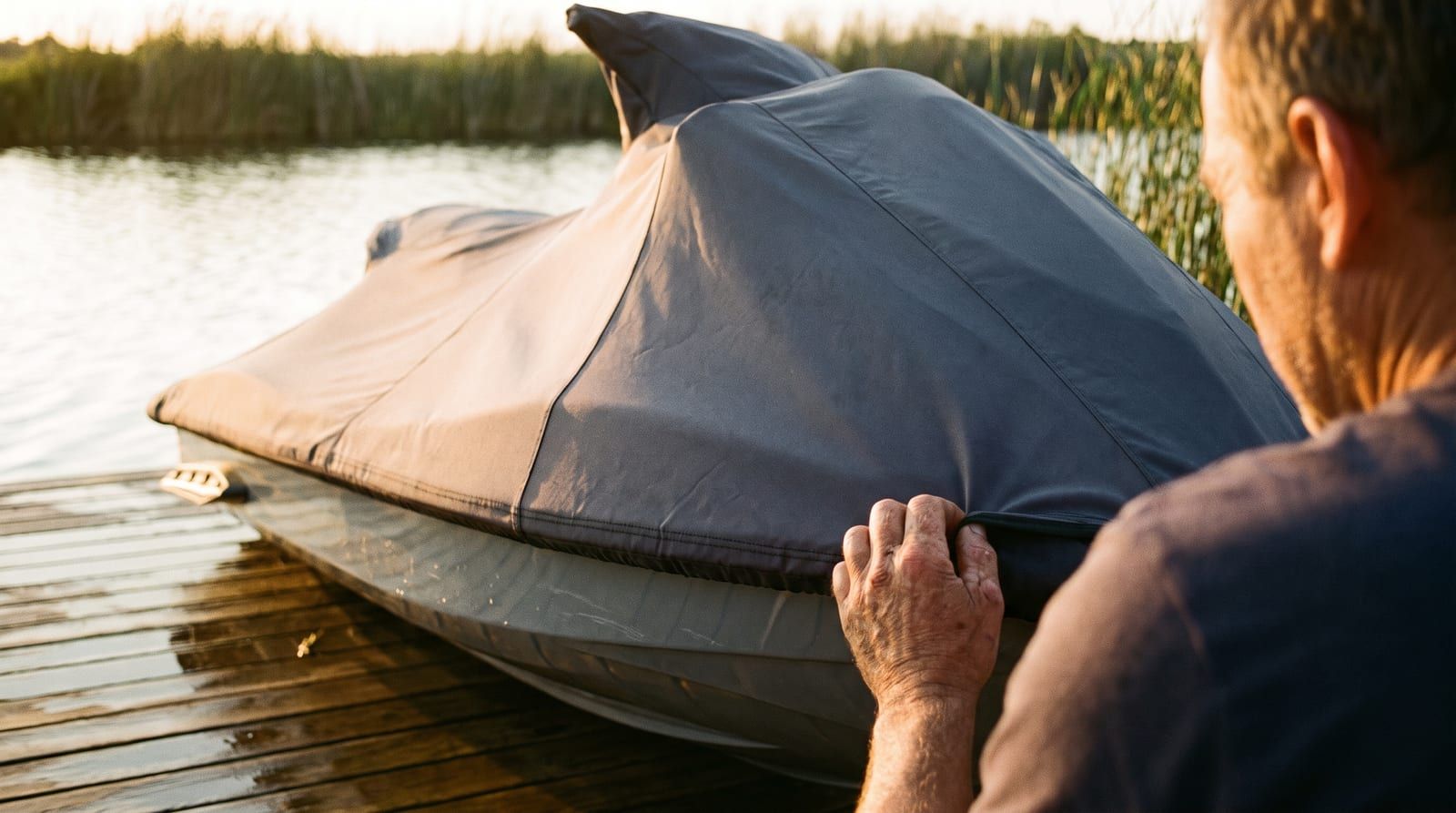
- Check the hem and elastic system. A reinforced hem or a proper elastic band keeps the cover cinched tight against the hull. Loose hems are the first thing to fail in wind, and once one section lifts, the whole cover starts working itself loose.
- Match UV and waterproof ratings to your actual storage spot. A cover rated for occasional light rain isn't going to hold up parked outdoors in Florida for six months. Be honest about your storage conditions, not your ideal ones.
- Look for interior lining if storing uncovered against paint or gel coat. A soft-touch liner adds a small cost but prevents years of accumulated micro-scratching.
- Check what's included. Tie-down straps, a storage bag, and lock/cable compatibility for theft deterrence should all factor into your price comparison, not just the base cover cost.
- Read the warranty terms. Seams and stitching are where covers fail first. Some brands back their covers with real warranty coverage, similar to how CarCovers backs its car covers with a lifetime warranty, so it's worth checking what's actually covered if stitching gives out early.
- Buy from the specific brand/model page when you can. A generic "one-size-fits-most" listing is a guess. A Kawasaki-specific page or Polaris-specific page is built around real hull measurements for that line.
None of these eight are optional if you're trying to land on the best jet ski cover for your specific ski, not just a cover that technically fits in the box it shipped in.
Do I need a cover if I always store my jet ski on a trailer?
Yes. Trailered skis still sit outdoors between rides, which means UV fading, bird droppings, tree sap, and road dust all have time to do damage even if the ski never touches water storage. A cover rated specifically for trailering, with a secured hem and reinforced strap system, protects the hull during actual transport too, not just while it's parked in the driveway. If you only cover it at the dock and leave it bare on the trailer, you're protecting it half the time it actually needs it.
What's the difference between a universal and a semi-custom jet ski cover?
Universal covers rely on adjustable straps and elastic to stretch across a range of ski lengths. That flexibility comes at a cost: a looser fit that can flap in wind and let water in at the seams. Semi-custom covers are cut to match the actual hull contours of named models, which cuts down on wind lift and sheds water more effectively where panels meet.
If your ski sits outdoors long-term, semi-custom is worth the extra cost. Universal is fine for occasional, short-term coverage, like a quick cover-up between weekend trips when the ski's mostly under a roof anyway.
How do I know what size jet ski cover to buy?
Measure the ski's overall length and beam width directly. Don't assume model year tells you the size, because hull dimensions can change across production years even within the same model name. Once you've got real numbers, cross-check them against the brand-specific cover page for your exact model, since those listings are built around actual hull measurements rather than a generic range.
Getting the size wrong causes problems either direction. Oversized covers flap around and let moisture in at the gaps. Undersized covers stress the seams every time you stretch them over the hull, and eventually they just stop closing all the way.
Can I leave a jet ski cover on while trailering at highway speed?
Only if the cover is specifically rated for it. Check the product description for language about reinforced straps or a cinch system built for towing before you assume it's fine. A cover that's only rated for storage can tear loose at highway speeds, and once that happens mid-transport, the hull's exposed to road debris with zero warning. Adding a tie-down strap or cable lock accessory gives extra security for the drive, on top of whatever strap system the cover ships with.
Find the Right Jet Ski Cover for Your Model
The decision path is simpler than the number of options makes it look. Figure out your storage environment and how often you trailer first. That narrows you down to a fit type and a material tier. From there, confirm exact sizing against the brand and model page rather than trusting a generic listing.
Take your time on this one. A cover that fits right and matches your climate will outlast two or three cheap universal ones, and it'll actually do the job of protecting the ski instead of just sitting on top of it looking like protection. If you want more ownership and storage guides like this one, keep an eye on our articles section for the next one.
Updated