Why a Snow Plow Mount Changes the Cover Equation
A standard pickup cover is cut to match your truck's factory front end. That's it. No plow mount, no push beam, no A-frame bolted to the frame rails. Attach a plow, and suddenly there's hardware sitting several inches in front of (and often above) where the cover's leading edge was designed to land.
This is where things go wrong. The hem catches on the mount bracket and won't seat properly. Fabric stretches tight across the headlight and grille area, straining at the seams. Sometimes the front panel just doesn't reach the ground anymore because the plow frame has pushed the whole profile forward and up. None of this is a defect in the cover. It's a mismatch between a factory shape and aftermarket steel.
We hear this question a lot from municipal fleet managers, landscaping crews, and rural truck owners, people who plow through winter but still want their paint and front end protected once the season's done or during long stretches of storage between storms. Finding a workable car cover for a truck with a snow plow isn't about tracking down one magic product. It's closer to a checklist: measure correctly, pick the right cover category, then focus on the features that actually matter once a mount is in the picture. That's the order we'll go through below, because plow setups vary enough by truck and mount brand that a one-size-answer doesn't hold up.
Measure Before You Buy: What Changes With a Plow Attached
Start at the ground and measure straight up to the top of the plow frame or push beam, not the hood. With most setups, that beam becomes the new tallest point at the front of the truck, and if you measure off the hood like you normally would, you'll end up with a cover that's too short in exactly the spot that matters most.
Length matters just as much. Measure front-to-back with the plow mounted, and again with it off, if you're someone who pulls the plow for storage. A lot of owners do exactly that in the off-season, and a cover sized only for the plow-on configuration can end up loose and flappy once the mount's removed, which brings its own wind-related problems.
Don't skip the small stuff either. Plow wiring harnesses and aftermarket light bars often shift where mirrors and antennas sit, which changes how a cover drapes around the cab. None of this happens in isolation. Before you factor in any plow clearance, you need an accurate baseline on bed length and overall truck dimensions, something the truck cover sizing guide walks through in more detail. If you're unsure how your specific bed configuration affects sizing, the pickup truck bed size guide is worth a look too. Get the baseline right first. Plow adjustments come after.
Custom-Fit vs. Universal Covers for Plow Trucks
A custom-fit cover built for your exact year, make, and model gives you the tightest possible line along the factory body. That's the whole appeal. But custom-fit patterns are drawn from the stock truck. They have no idea an A-frame mount is bolted to your frame rails, so you're still working around that part yourself.
Universal and semi-custom covers go the other direction. They're cut looser through the front end, which actually works in your favor here, there's more fabric to play with around a mount. The tradeoff is fit everywhere else. A universal cover rarely hugs the mirrors, bed rails, or tailgate the way a custom pattern does, so you're trading precision for flexibility.
Here's the workaround a lot of plow owners land on: buy the cover sized for the truck without the plow attached, then lean on elastic hems, cable or strap closures, and any front cutout allowance built into the design to work around the mount itself. It's not elegant, but it's practical, and it avoids paying for a cover that still fights the hardware either way.
Some owners skip the conflict entirely and go with a cab-only or three-quarter cover. You lose front-end coverage, which matters if paint protection up there is the whole point, but you gain a guaranteed fit with zero plow-mount wrestling. Worth considering if the front end rarely leaves your plow's shadow anyway.
Features That Matter Most for a Plow-Equipped Truck
Not every feature on a spec sheet matters the same amount once a plow's involved. A few do the heavy lifting:
- Reinforced or elasticized front hem. It needs to stretch over a mount bracket repeatedly without tearing at the stitch line. This is the single most common failure point on a plow truck cover, full stop.
- Grommets and cable-lock points positioned for the plow frame, not just the bumper. A standard tie-down point assumes a flat bumper line underneath. A plow frame breaks that assumption.
- Abrasion-resistant fabric at the front panel. Plow hardware creates friction wherever the cover makes contact, and a thin cover edge wears through fast in that one spot.
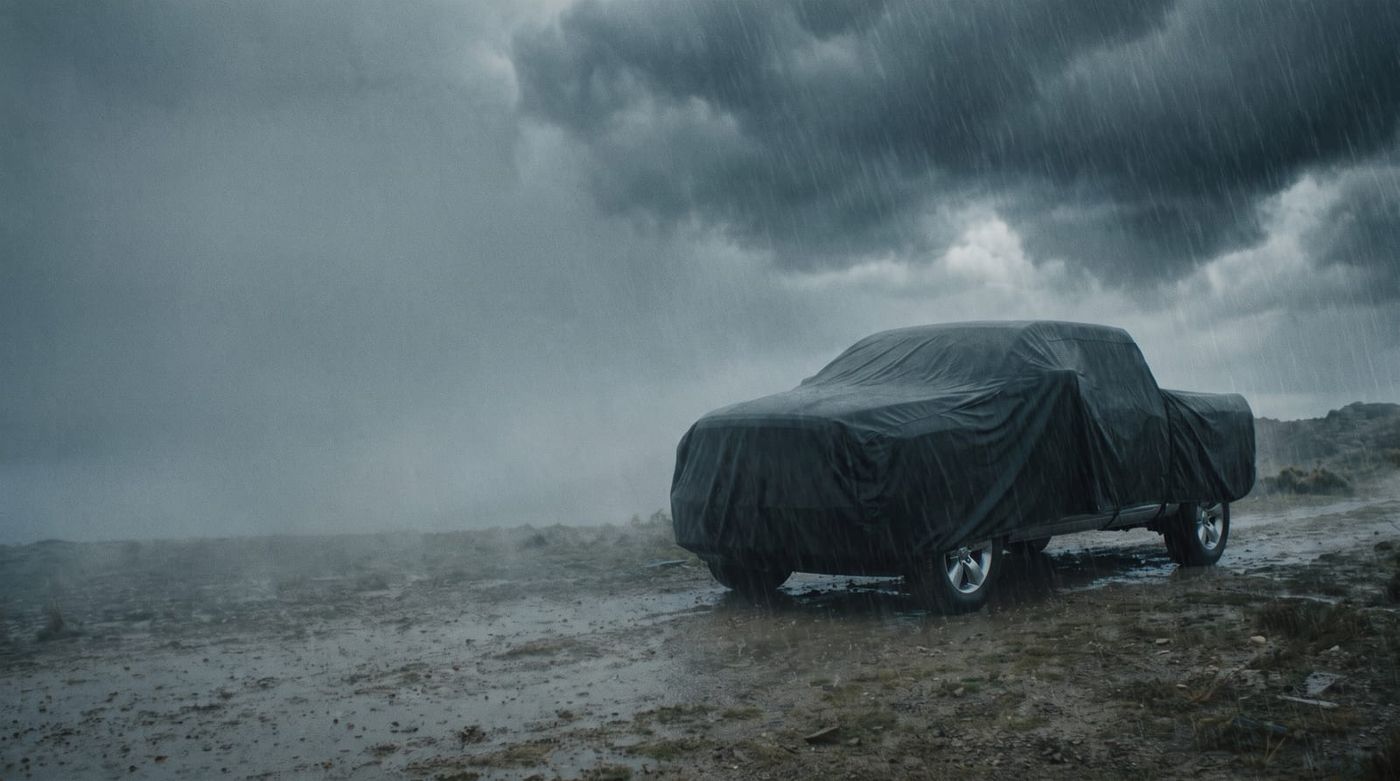
- Waterproofing and UV resistance. Plow trucks rarely get garaged in winter. They sit outside between storms, which means the cover's doing real weather duty, not just light dust protection. A waterproof cover built for outdoor use is the baseline here, not a nice-to-have.
- A support pole. This one's easy to overlook. A pole lifts the fabric off raised plow components, which keeps snowmelt and ice from pooling against the mount area under the cover instead of running off.
If you're comparing specific products, the Platinum Shield truck cover is one option built around this kind of reinforced front-panel durability, worth a look if abrasion resistance is your main concern.
Installing and Securing the Cover Around the Plow
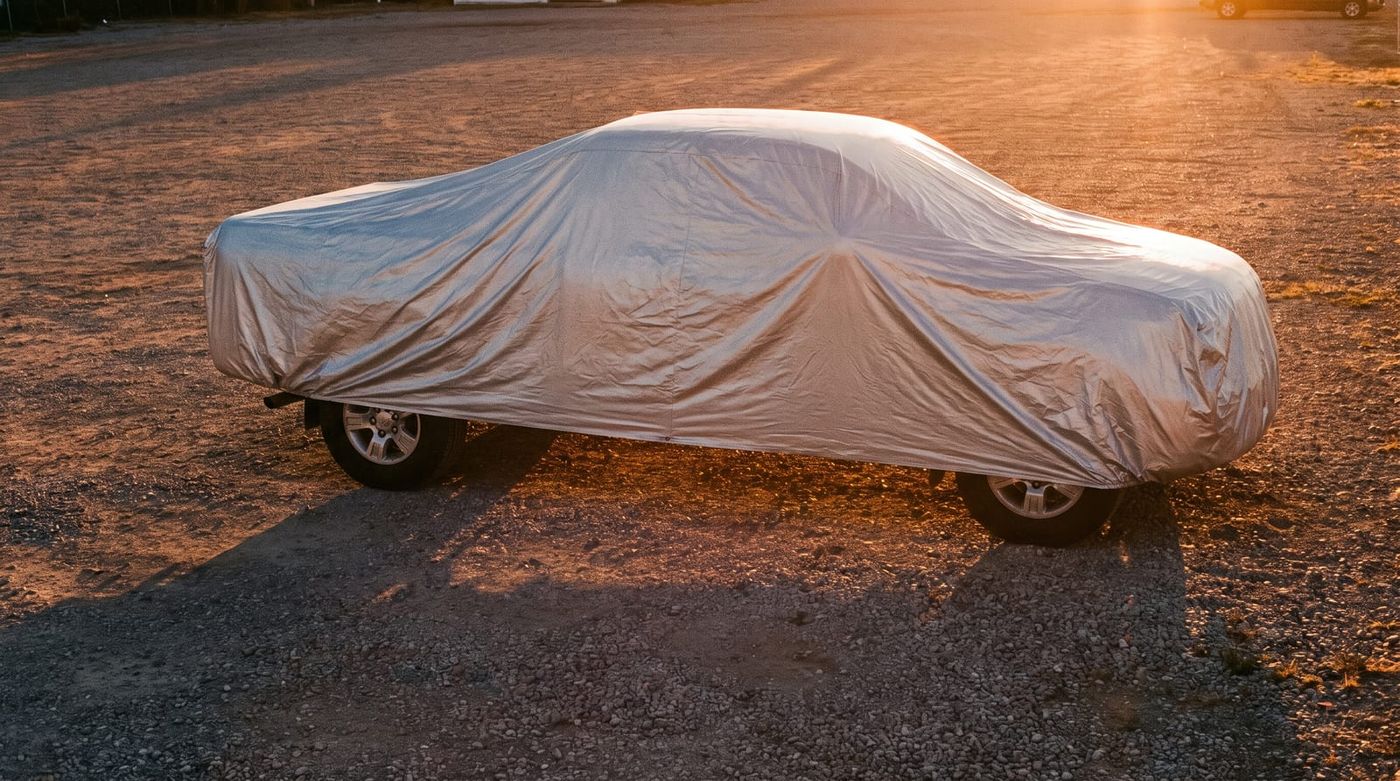
Order of operations matters more than people expect. Drape the cover from the cab backward first, get the rear and mid-sections settled, then work the front panel down and around the mount. Pulling the cover straight down over the grille, mount and all, is how you tear a hem on day one.
Once it's on, secure the front end specifically. A plow mount is a wind-catch point the stock front end never was, so a gust strap or cable lock right at the front does more work here than anywhere else on the truck. Skip it, and you'll find the cover worked loose after the first real windstorm.
A support pole earns its keep on a plow truck too. It relieves tension on the fabric around the raised components and cuts down on rub-through over a full winter of use, not just a weekend.
Last thing: check the front hem and anywhere the cover contacts the plow frame every few weeks. That's the first spot a cover fails on a plow truck, and catching early wear before it turns into a tear costs you nothing but a two-minute look.
Common Plow Truck Brands and Fit Notes
Plow mounts aren't identical across brands, and the differences actually affect cover fit.
| Truck | Typical mount style | Fit consideration |
|---|---|---|
| Ford Super Duty (F-250/F-350) | Front-mounted push plate | Extends past the stock bumper line, adding front length |
| Chevrolet/GMC heavy-duty | A-frame mount | Raises the effective front height more than the hood line suggests |
| Ram 2500/3500 | Mount points closer to grille | Reduces front-panel clearance right where the hem needs to seat |
If you're shopping by brand, start with the base dimensions on the Ford truck cover page, Chevrolet truck cover page, or Ram truck cover page, then adjust upward for whatever plow hardware you're running. The brand page gets you the stock truck's numbers. The plow is still your adjustment to make on top of that.
Finding the Right Cover for Your Plow Truck
The path here isn't complicated, it's just sequential. Measure with the plow attached. Decide between custom-fit, universal, or cab-only based on how much front-end coverage you actually need. Then prioritize front-hem durability and proper securing points over anything else on the spec sheet.
No single cover works across every plow brand and mount style out there. That's just the reality of aftermarket hardware bolted onto a stock frame. Matching the cover's features to your actual mount setup gets you a lot further than chasing a specific product name because someone recommended it.
Browse the full truck cover lineup to compare sizes and features side by side, and if you're new to fitting a cover around aftermarket hardware, it's worth reading through an installation guide before you buy rather than after. And if you want more guides like this one on fitting covers to oddball setups, keep an eye on future posts, it's a topic we'll keep coming back to.