Pontoon Boat Cover Size Chart: How to Measure and Choose the Right Fit
Published
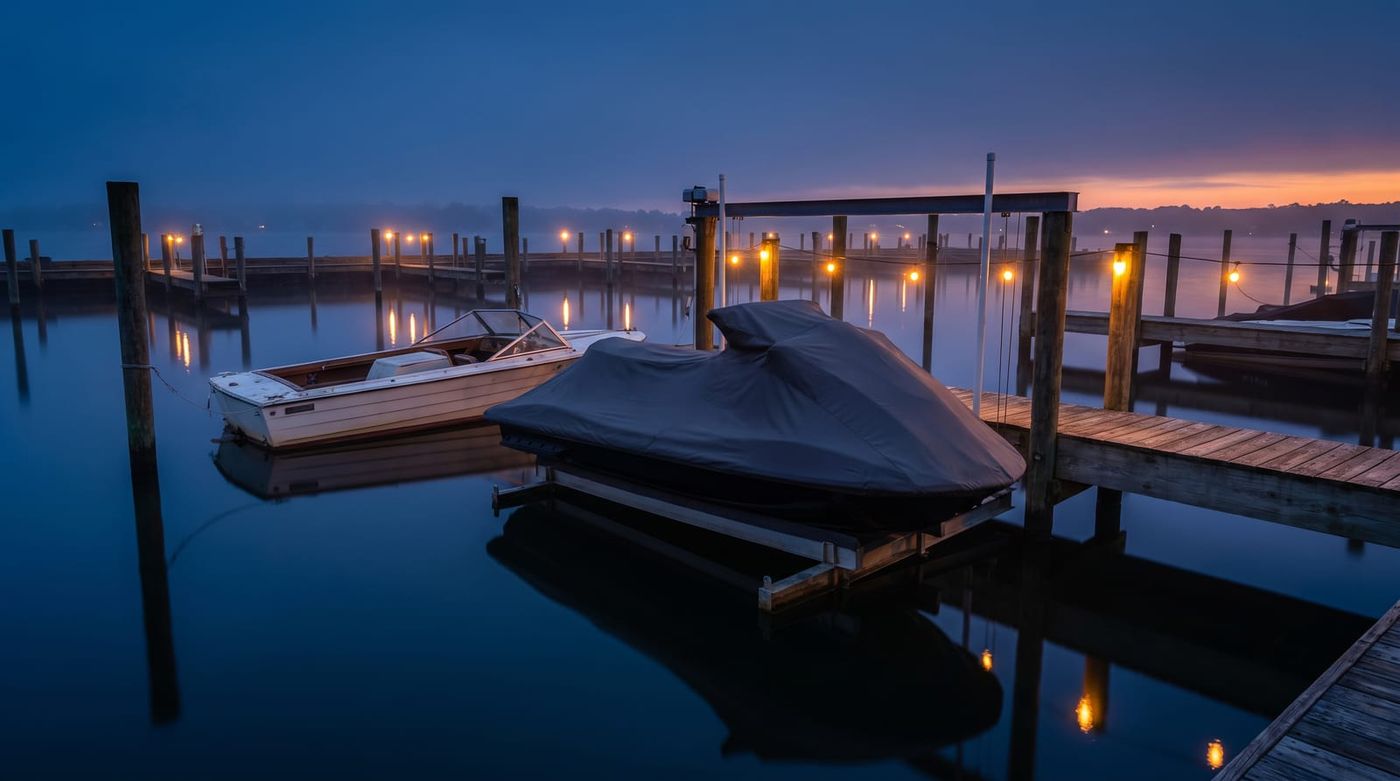
A pontoon sits low and wide, which sounds simple until you're trying to buy a cover for one. Most sizing headaches trace back to the same problem: people measure the boat like a car, picking one number and hoping for the best. A pontoon boat cover size chart only works if you know which measurements actually matter, and where to take them. Get the length, beam, and height right and the cover does its job. Get them wrong and you'll be fighting flapping fabric or water pooling in the first storm.
Why Getting Pontoon Cover Sizing Right Matters
A loose cover is its own kind of problem. Wind gets underneath it, it flaps against the furniture and gel coat all night, and low spots in the fabric start holding rainwater instead of shedding it. Give it enough seasons and that rubbing wears through the finish on your rails and seats.
Too tight is worse in some ways. A cover stretched past its size strains the seams every time the wind picks up, and it often can't reach all the way down the pontoon tubes. That gap at the bottom is exactly where rain gets in and UV does its damage, which defeats the whole point of covering the boat.
Pontoons are genuinely harder to size than a car or truck. You're not just dealing with length. Beam width varies a lot between models, fencing and ladders add bulk in places a tape measure doesn't expect, and a bimini top folded down changes the whole profile. This guide walks through how pontoon covers are actually measured and sized by manufacturers, then how to measure your own boat so you're buying against real numbers instead of a guess.
How Pontoon Boat Covers Are Measured and Sized
Length overall, or LOA, is the first number on any cover's spec sheet. It's measured bow to stern, and it includes the swim platform or rear ladder hanging off the back. A lot of buyers measure just the deck and end up a size short.
Beam width is the one people underestimate most. On a pontoon, the widest point usually isn't the deck rail, it's the outer edge of the tubes or the fencing around them. If you measure at the rail, you'll come in several inches narrow and the cover won't wrap down far enough on the sides.
Height matters too, though it's less obvious. Most pontoon covers are cut with enough clearance for a steering console, a folded bimini frame, or raised fishing seats. If your boat has a taller windshield or a tower, you need the cover built to clear it, not just drape over it loosely.
Because of all this, covers aren't usually sold against one fixed length. They're sold in length brackets, each paired with a maximum beam width, since two 22-foot pontoons can have completely different beams depending on tube count and fencing style.
Pontoon Boat Cover Size Ranges at a Glance
Most of the pontoon cover market uses a handful of standard length brackets: under 20 feet, 20 to 22 feet, 22 to 24 feet, 24 to 26 feet, and 26 feet and up. Each of those gets paired with a beam cutoff, something like "up to 96 inches" or "up to 102 inches," rather than one single beam number for the whole bracket.
| Length Bracket | Typical Beam Pairing |
|---|---|
| Under 20 ft | Up to 90-96 in |
| 20-22 ft | Up to 96-102 in |
| 22-24 ft | Up to 102 in |
| 24-26 ft | Up to 102-108 in |
| 26 ft+ | Up to 108 in or custom |
Tritoons throw a wrench into this. A triple-tube pontoon often needs the next beam size up even when its deck length lines up perfectly with a standard double-tube model of the same length, because that third tube pushes the width out further than the bracket assumes.
These brackets are general industry sizing, not a guarantee for your specific boat. Before you order anything, check your own measurements against the chart rather than matching by length alone. If you want a deeper look at how sizing logic works across vehicle types, the guide to choosing the right cover size covers the same measure-first principle.
How to Measure Your Pontoon Boat Before Buying a Cover
Skip the model spec sheet and grab a tape measure. Here's the order that actually works:
Step 1: Length overall. With the boat level, either on a trailer or sitting still in the water, measure from the tip of the bow to the back of the swim platform or ladder, whichever sticks out furthest. Not the deck. The whole boat.
Step 2: Beam width. Find the absolute widest point of the boat, which is almost always the fencing or rub rail rather than the tube itself, and measure across there. This is the number people get wrong most often.
Step 3: Height. Measure from the deck up to the tallest point, whether that's the steering wheel, the windshield, or a bimini frame folded flat. Use whichever is tallest, not the average.
Step 4: Add-ons. Fishing towers, ladders, raised captain's chairs, anything that changes the boat's profile needs to be noted separately. These can bump you into the next size bracket even if your base length and beam fit the smaller one.
If your numbers land right on a bracket line, round up. A slightly loose cover with a strap cinched down is a far smaller problem than one that won't reach.
Universal, Semi-Custom, and Custom Pontoon Covers: Sizing Differences
These three categories handle the same measurements very differently.
Universal covers use wide length and beam ranges, built with the assumption that drawstrings and straps will take up whatever slack is left. That's by design. Fit is loose, but it's adjustable, and it's the most affordable option.
Semi-custom covers narrow those brackets considerably and often build in allowances for console height and bimini placement, so there's less excess fabric flapping around once it's on.
Custom covers are cut for a specific make, model, and year. They fit close with almost no slack, but they only exist for pontoons common enough to justify the pattern, so less common models or heavily modified boats may not have one available.
Which one you need depends on where the boat lives. A pontoon trailered and stored in a garage can tolerate a looser universal fit just fine, since it's not fighting wind and sun every day. A boat parked on a lift outdoors through the season needs something closer to semi-custom or custom, because that looseness turns into wear fast. For a broader rundown on fit tiers across vehicle types, see the custom-fit cover guide.
Common Sizing Mistakes That Lead to a Poor Fit
A few mistakes show up again and again:
- Measuring the deck only and forgetting the swim platform, ladder, or an outboard motor hanging past the stern
- Measuring beam at the tube itself instead of the fencing or rub rail, which runs wider
- Ignoring the bimini top because it's folded down, when it still adds real bulk under the cover
- Buying by model name alone, since the same model line often changes length and beam across trim levels and years
- Skipping tie-downs, which lets even a correctly sized cover shift and work itself loose in wind
That last one trips people up because it's not really a sizing issue, it's an installation one. A perfectly sized cover without secure tie-downs will still flap and slide. If you've just bought a cover, the installation walkthrough covers the basics of getting straps and gust protection set up right, and the guide to wind strap installation is worth a look if your dock or lift location gets exposed to open wind.
Accessories That Help a Pontoon Cover Fit Securely

Size gets you most of the way there, but a few accessories close the gap:
Support poles. A center support system keeps fabric from sagging between the console and the bow, which is usually where water pools first.
Tie-down straps and buckles. These cinch a universal or semi-custom cover down tight after it's on, which matters most for boats stored outdoors or on a lift exposed to wind.
Vents. A vented cover or add-on vents cut down on trapped moisture, which matters for boats covered for weeks at a stretch between outings.
None of these fix a cover that's the wrong size to begin with. But paired with correct measurements, they're what keeps a properly sized cover tight and dry long-term. You can see straps, poles, and other fit accessories in the accessories collection.
Getting the Right Size the First Time
Measure length overall, beam at the widest point, and height to the tallest fixture. Round up when you're between brackets. Account for anything that changes the boat's shape, towers, ladders, raised seats, before you check out. That's really the whole process, and most bad fits trace back to skipping one of those steps rather than the chart itself being wrong.
A correctly sized cover does the heavy lifting, but it's the tie-downs, poles, and vents that keep it doing that job through a full season outdoors. If you're putting together a setup, it's worth browsing the accessories collection to round things out, and keep an eye on the blog's articles section for more boat and vehicle cover guides as they go up.